GS Eye Clinic in Cheongdam: Modern Vision Care in Seoul for International Patients

Direct summary for international patients
GS Eye Clinic is a modern ophthalmology clinic in the Cheongdam area of Seoul, offering comprehensive eye care in one place. From routine eye examinations to advanced vision correction procedures like LASIK, LASEK, and SMILE LASIK, as well as cataract and presbyopia treatment with lens implantation, the clinic is designed for people who want clearer, more comfortable vision and long-term eye health. With a patient-centered approach, detailed pre-examinations, and personalized treatment plans, it can be a practical option for overseas visitors considering eye treatment in Korea.
Overview of GS Eye Clinic
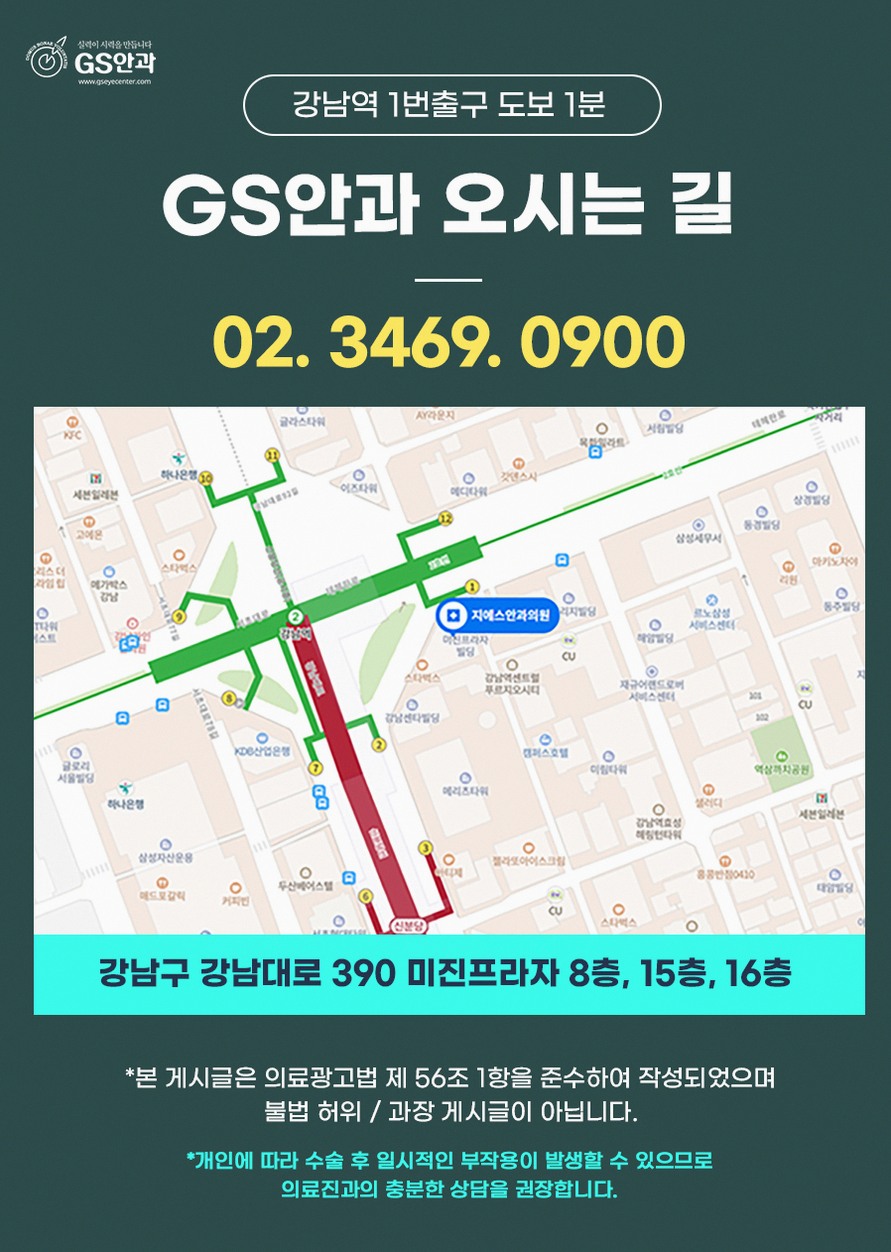
GS Eye Clinic is a specialized ophthalmology clinic located in Cheongdam, one of Seoul’s central and easily accessible districts. The clinic focuses on helping patients achieve clear vision while protecting eye health over the long term.
Rather than offering only a single type of procedure, GS Eye Clinic provides a full range of eye services. This means you can receive basic eye checks, medical treatment for eye conditions, and surgical solutions such as laser vision correction and cataract surgery in one coordinated system.
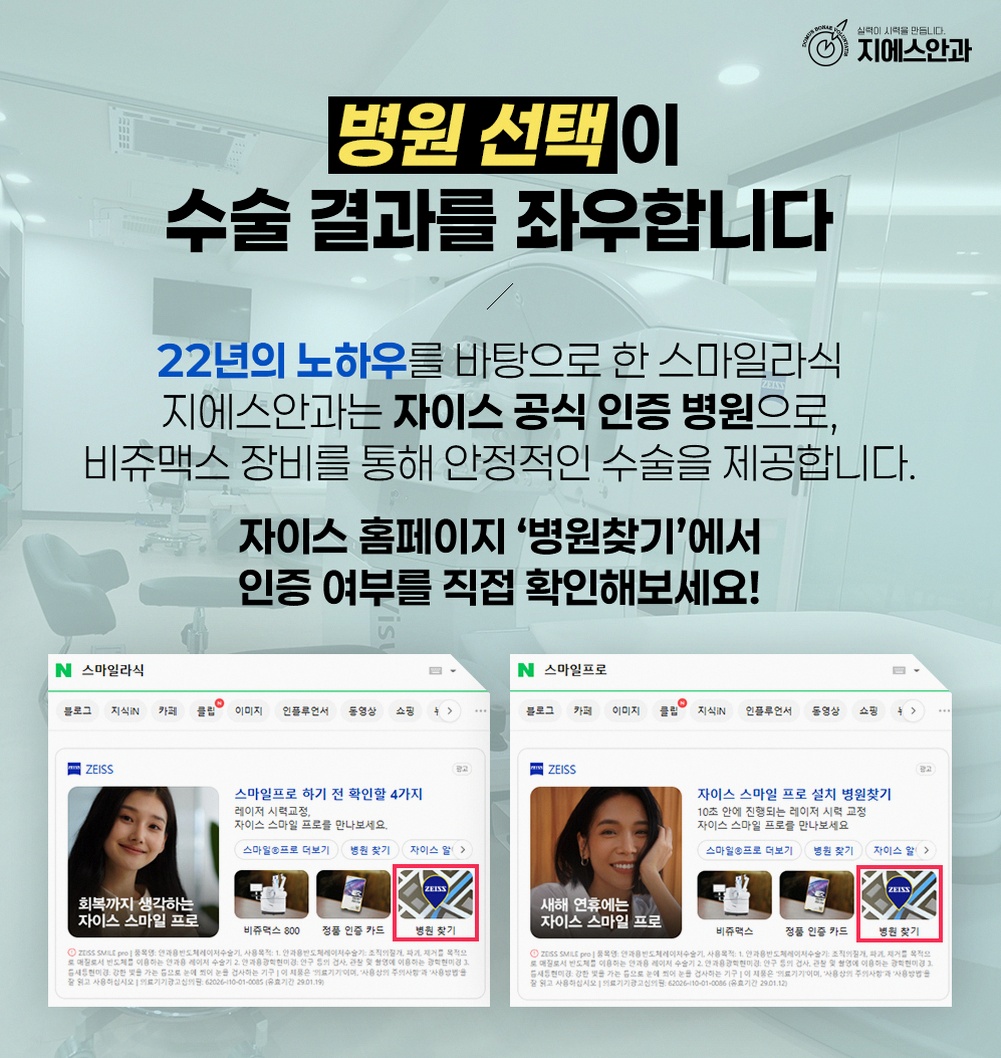
The clinic emphasizes careful pre-examination and customized planning. Before recommending any procedure, the medical team evaluates your eyes thoroughly, explains your options in simple language, and helps you choose a plan that fits your vision needs, lifestyle, and travel schedule.
Comprehensive ophthalmology services
GS Eye Clinic is structured as a comprehensive eye clinic, not just a laser center. This is especially helpful for international patients, because you can have a complete evaluation to check for hidden eye problems before deciding on any treatment.
The clinic’s services include:
Eye examinations and vision checks
A detailed eye examination is the starting point for all care at GS Eye Clinic. For international patients, this is often done on the first visit to Korea.
Typical examination items include:
- Vision testing to measure your current eyesight and prescription
- Intraocular pressure checks to screen for glaucoma risk
- Corneal thickness and shape analysis for vision correction suitability
- Retinal and macular examination to detect conditions at the back of the eye
- Screening for common eye diseases such as dry eye, keratoconus, cataract, and early glaucoma
These tests help the ophthalmologists determine whether you are a good candidate for procedures like LASIK, LASEK, or SMILE LASIK, or whether another solution such as lens implantation or cataract surgery would be more appropriate.
Vision correction procedures: LASIK, LASEK, and SMILE LASIK
GS Eye Clinic offers several types of laser vision correction so that treatment can be tailored to different eye conditions and lifestyles.
LASIK
LASIK is a widely used procedure for correcting nearsightedness, farsightedness, and astigmatism. A thin flap is created in the cornea, the underlying tissue is reshaped with a laser, and the flap is placed back.
Key points for patients:
- Relatively quick visual recovery for many people
- Often suitable for those with adequate corneal thickness
- Commonly chosen by busy professionals and travelers who want a shorter downtime
LASEK
LASEK is a surface laser procedure where the outer layer of the cornea is gently loosened, the laser reshapes the surface, and the layer is repositioned.
Key points for patients:
- May be considered for those with thinner corneas or certain corneal shapes
- Recovery can be slower than LASIK, with a few days of discomfort
- Often chosen when corneal safety margins are a priority
SMILE LASIK
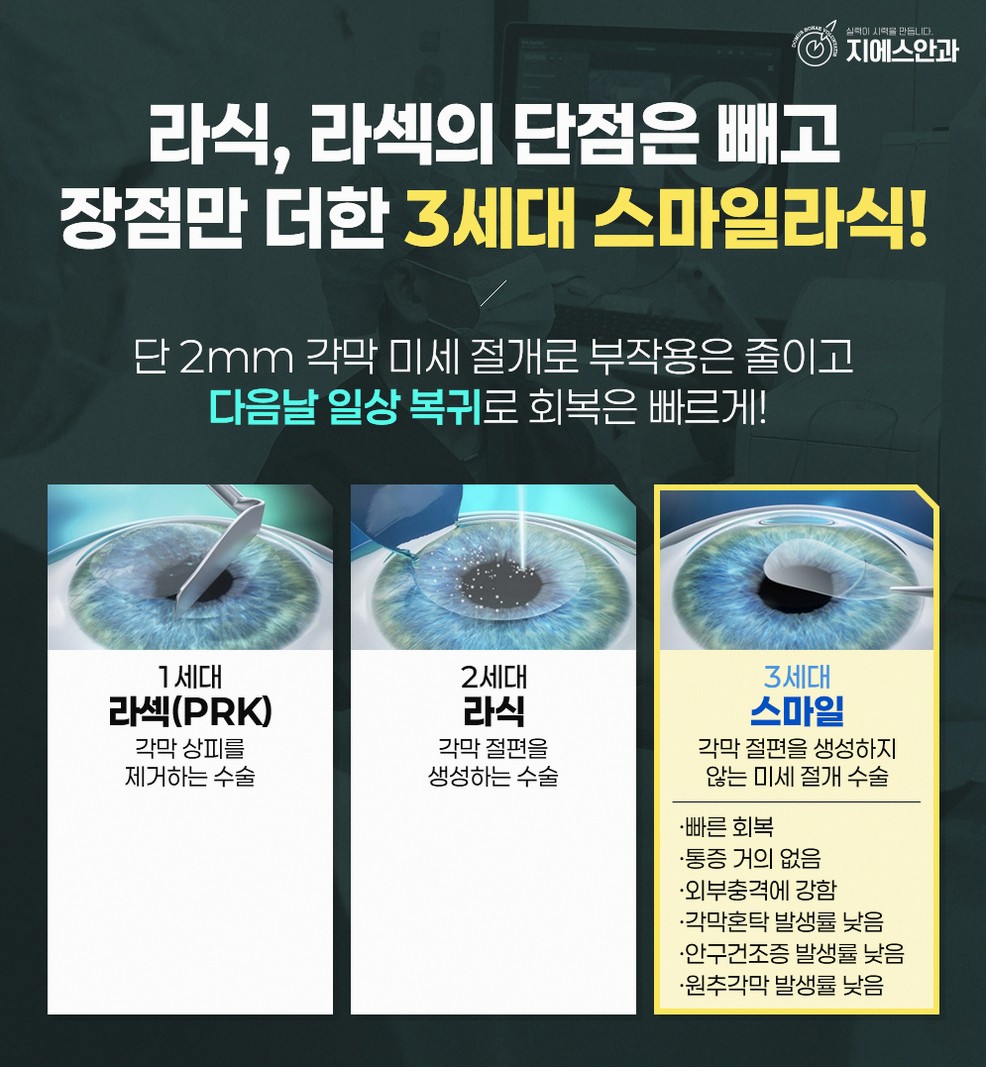
SMILE LASIK is a newer type of laser vision correction that uses a small incision in the cornea instead of a large flap.
Key points for patients:
- Small incision may help preserve more corneal structure
- Can be an option for people with active lifestyles
- Visual recovery is usually relatively quick
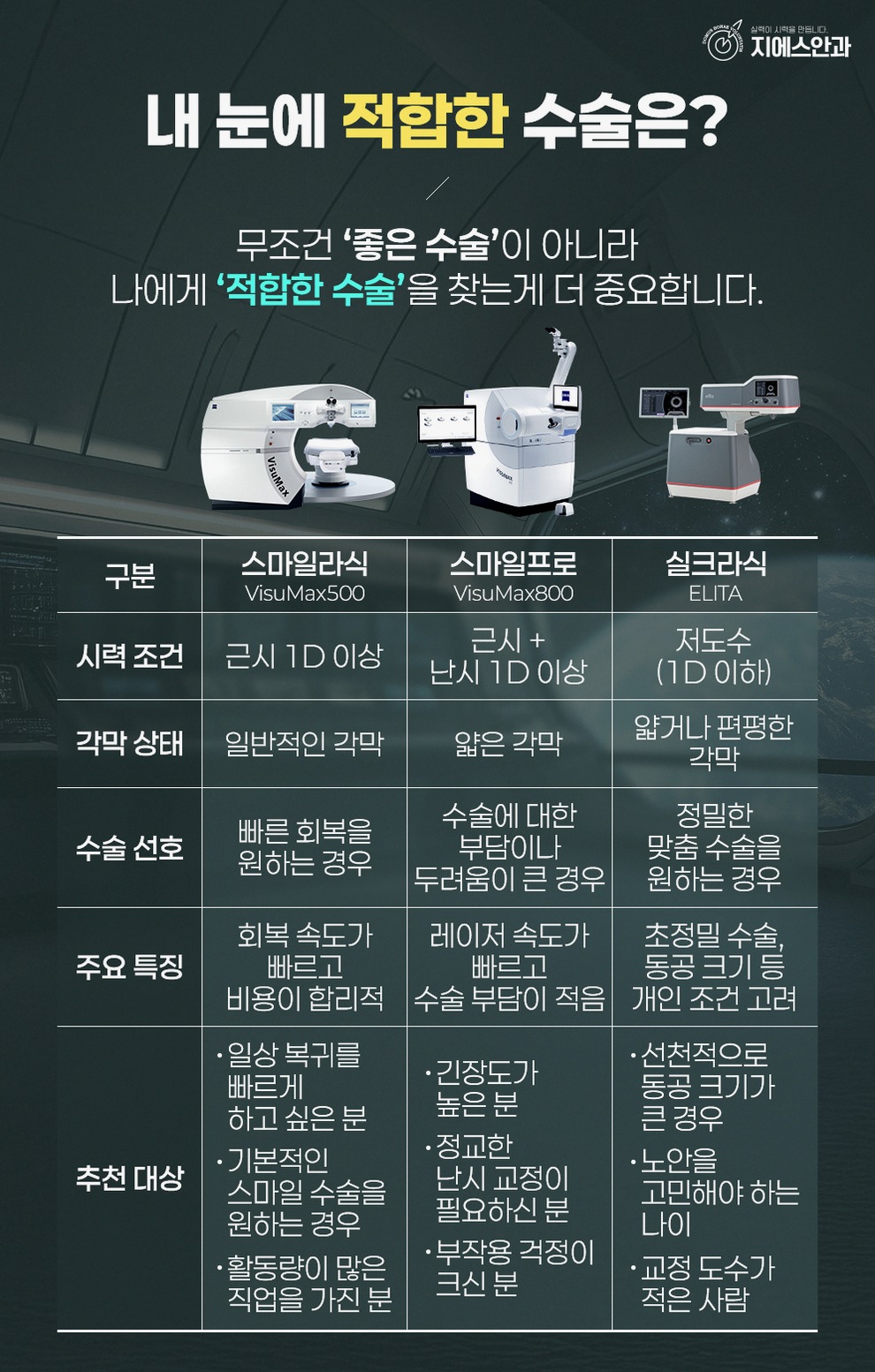
At GS Eye Clinic, the choice between LASIK, LASEK, and SMILE LASIK is based on detailed measurements of your cornea, your prescription, and your personal needs. The medical team explains the pros and cons of each method, including expected recovery time, possible side effects, and how each option fits your travel schedule.
Cataract and presbyopia care
For patients in their 40s, 50s, and older, cataract and presbyopia are common concerns. GS Eye Clinic provides diagnosis and surgical treatment for cataracts, with options that can also address presbyopia.
Cataract diagnosis
Cataracts cause the natural lens of the eye to become cloudy, leading to blurred vision, glare, and difficulty seeing at night. At GS Eye Clinic, cataracts are diagnosed through slit-lamp examination, visual acuity tests, and imaging to assess lens clarity and eye structure.
Cataract surgery with lens implantation
Cataract surgery involves removing the cloudy natural lens and replacing it with an artificial intraocular lens. The clinic offers various lens types, including options designed to improve vision at different distances.
Presbyopia solutions
Presbyopia is age-related difficulty focusing on near objects. During cataract surgery, patients may choose lens options that help reduce dependence on reading glasses. Even patients without significant cataracts but with presbyopia may be evaluated for lens-based solutions, depending on their eye condition.
Lens implantation surgery and premium lens options
Beyond standard cataract surgery, GS Eye Clinic provides lens implantation surgery for patients who want clearer vision at multiple distances.
Premium intraocular lenses can be considered for:
- People who want to reduce dependence on both distance and reading glasses
- Patients with cataracts who also have astigmatism or presbyopia
- Individuals seeking a more customized vision outcome after lens surgery
The clinic’s ophthalmologists discuss the characteristics of different lens types, such as monofocal, toric, or multifocal designs, and help you understand how each choice may affect your vision quality, night vision, and adaptation period.
Technology and medical staff
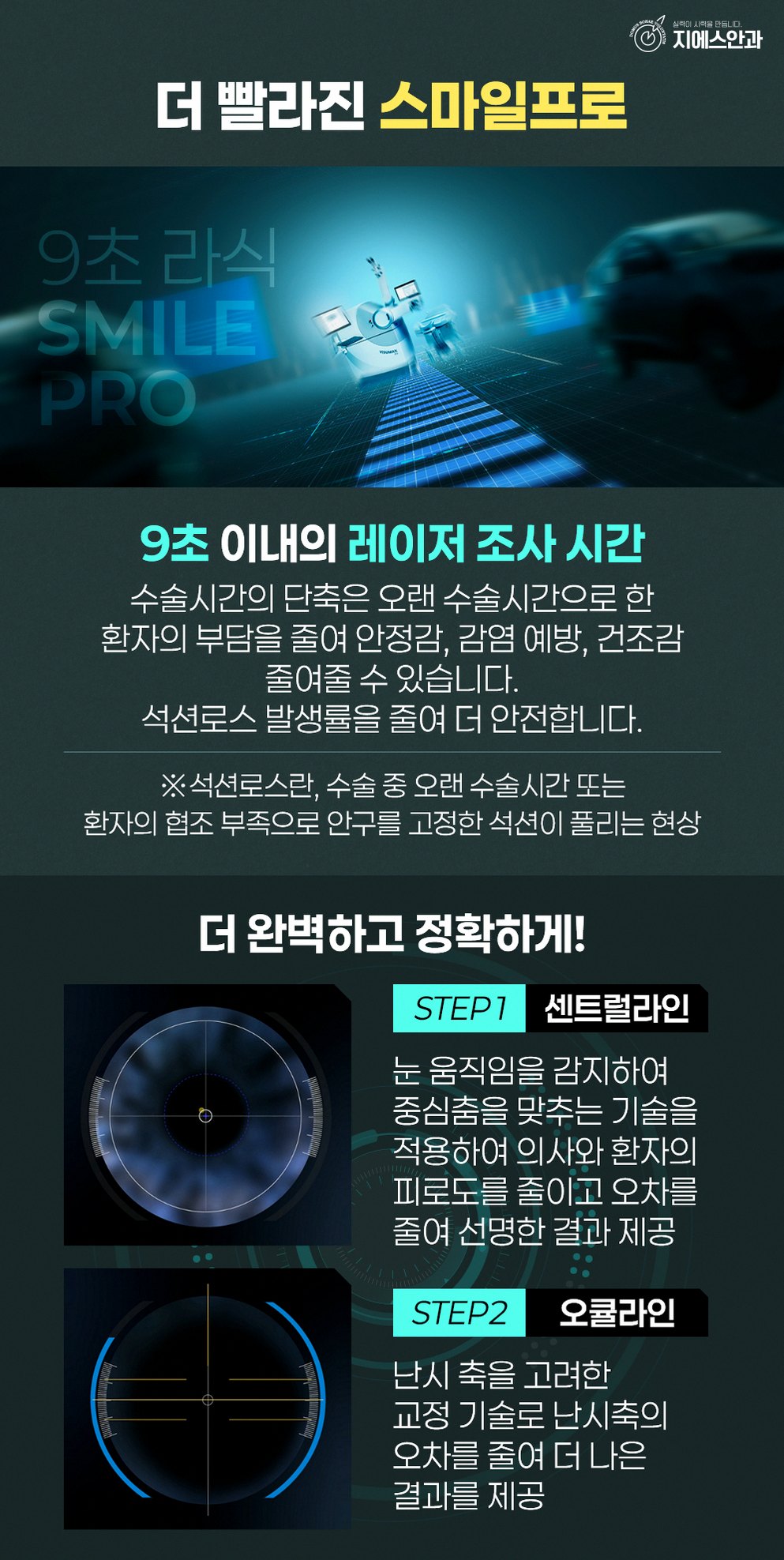
GS Eye Clinic uses up-to-date diagnostic equipment and laser systems to improve accuracy and safety in both diagnosis and treatment.
Examples of technology you may encounter include:
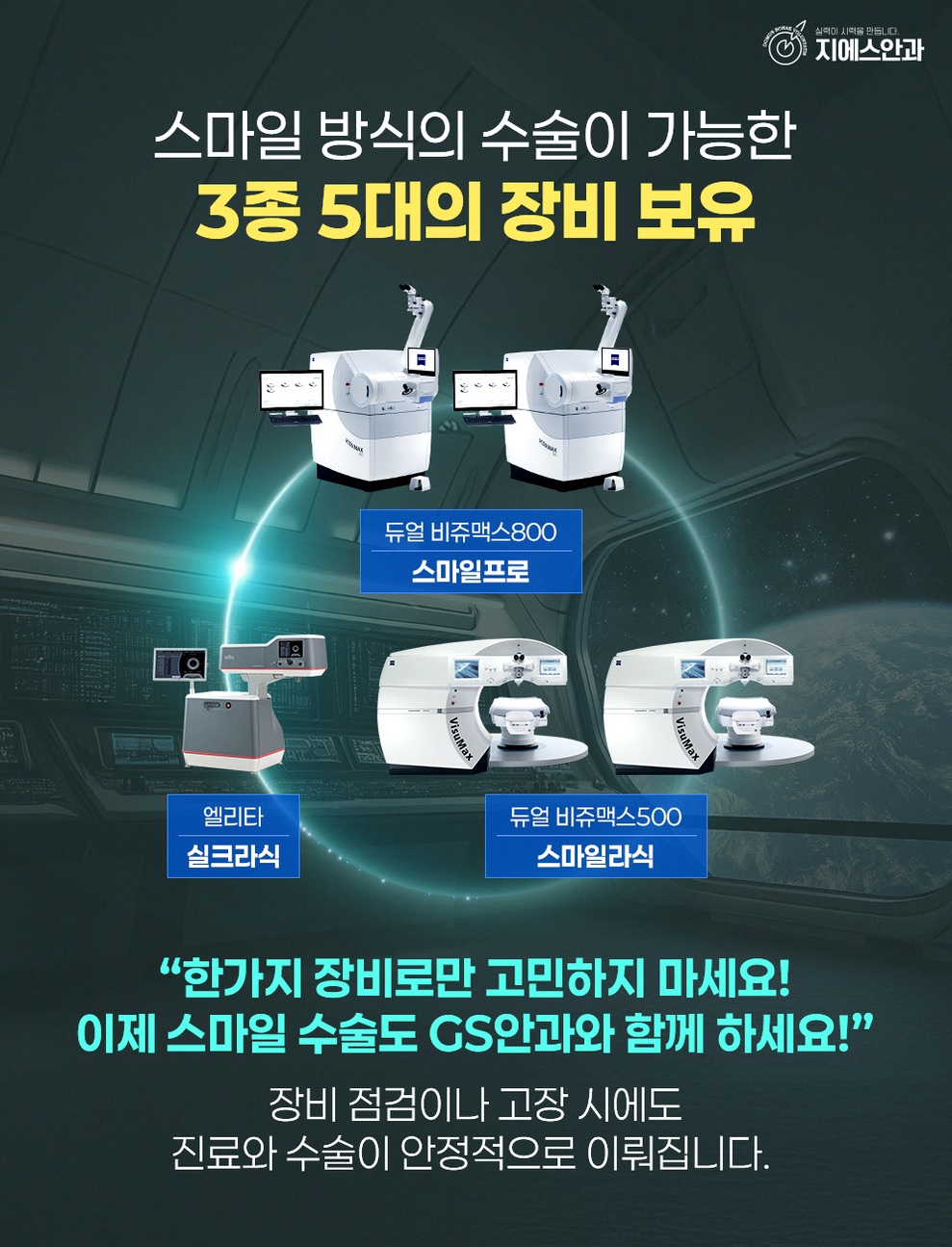
- Corneal topography and tomography to map the shape and thickness of your cornea
- Wavefront or similar analysis to assess optical quality
- Modern laser platforms for LASIK, LASEK, and SMILE LASIK
- Imaging devices for retina and optic nerve evaluation
- Biometry equipment to calculate the power of intraocular lenses for cataract or lens implantation surgery
The medical team consists of experienced ophthalmologists with focused practice in vision correction and cataract surgery. They guide patients through each step, from initial consultation and testing to surgery and follow-up visits. For international patients, the clinic can often adjust explanations and scheduling to fit limited time in Korea.
Patient experience at GS Eye Clinic
The clinic environment is designed to be clean, comfortable, and efficient. Located in Cheongdam, it is convenient for office workers, local residents, and visitors staying in central Seoul.
Minimized waiting and clear explanations
GS Eye Clinic aims to reduce unnecessary waiting time by organizing examinations and consultations in a structured way. Staff explain each test before it is done, so you understand what is happening and why it is necessary.
For surgical patients, the clinic provides:
- Thorough pre-surgery evaluation to confirm suitability and reduce risk
- Clear explanation of expected results, possible side effects, and limitations
- Information about what to avoid before and after surgery
- Written or digital instructions that you can refer to later
Post-surgery follow-up
After procedures like LASIK, LASEK, SMILE LASIK, or cataract surgery, follow-up care is important. GS Eye Clinic schedules regular check-ups to monitor healing, adjust eye drops, and check for any complications.
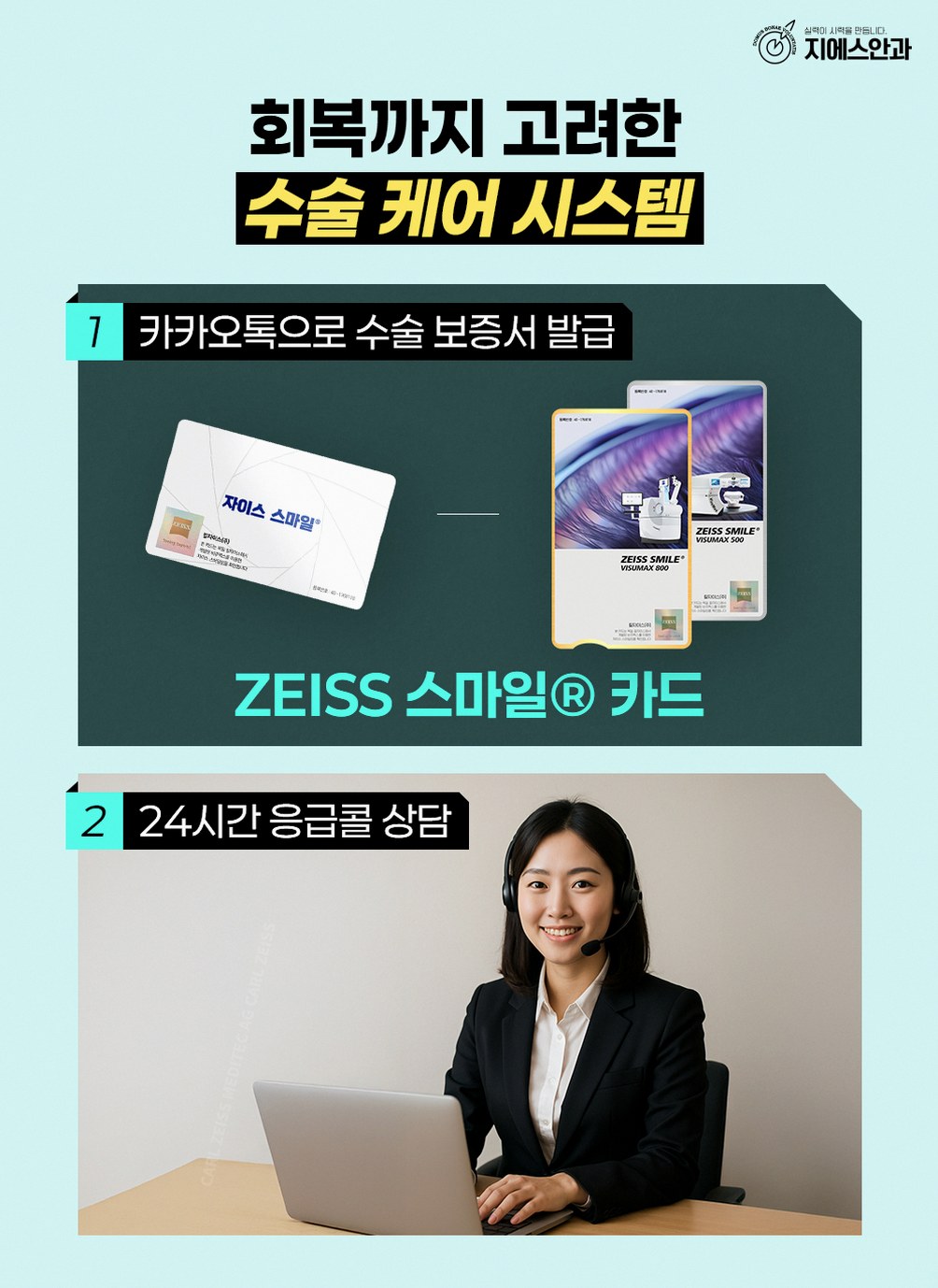
For international patients with limited time in Korea, the clinic can usually cluster key follow-up visits within your stay and provide guidance for follow-up checks in your home country.
Who may consider GS Eye Clinic
GS Eye Clinic may be suitable for:
People who want laser vision correction to reduce dependence on glasses or contact lenses
Individuals with early or advanced cataracts seeking surgical treatment
Patients in their 40s or older who are struggling with presbyopia and want to explore lens-based options
Office workers and travelers who want a thorough eye examination while in Seoul
International visitors who prefer a modern, organized clinic in a central district
If you have complex eye conditions or previous eye surgery, you may still be evaluated, but the clinic will carefully review your history and may recommend more conservative options if needed.
Preparing for an online consultation
Before traveling to Korea, an online consultation can help you understand whether GS Eye Clinic is a good match for your needs and what kind of schedule to expect.
To make the most of an online consultation, prepare the following:
Recent prescription for glasses or contact lenses
Information about any previous eye surgery or trauma
List of current medications and any eye drops you use
Medical history, including diabetes, high blood pressure, or autoimmune conditions
Your main goals, for example: no glasses for distance, better near vision, or cataract treatment
If possible, you can also share previous eye examination reports or images from your local clinic. This helps the ophthalmologists provide more tailored guidance, although final decisions are always made after in-person testing in Seoul.
Pre-visit preparation for your trip to Korea
Once you decide to visit GS Eye Clinic, consider the following steps:
Check your passport and visa requirements for Korea
Plan your stay so that you have enough days for examination, procedure, and follow-up
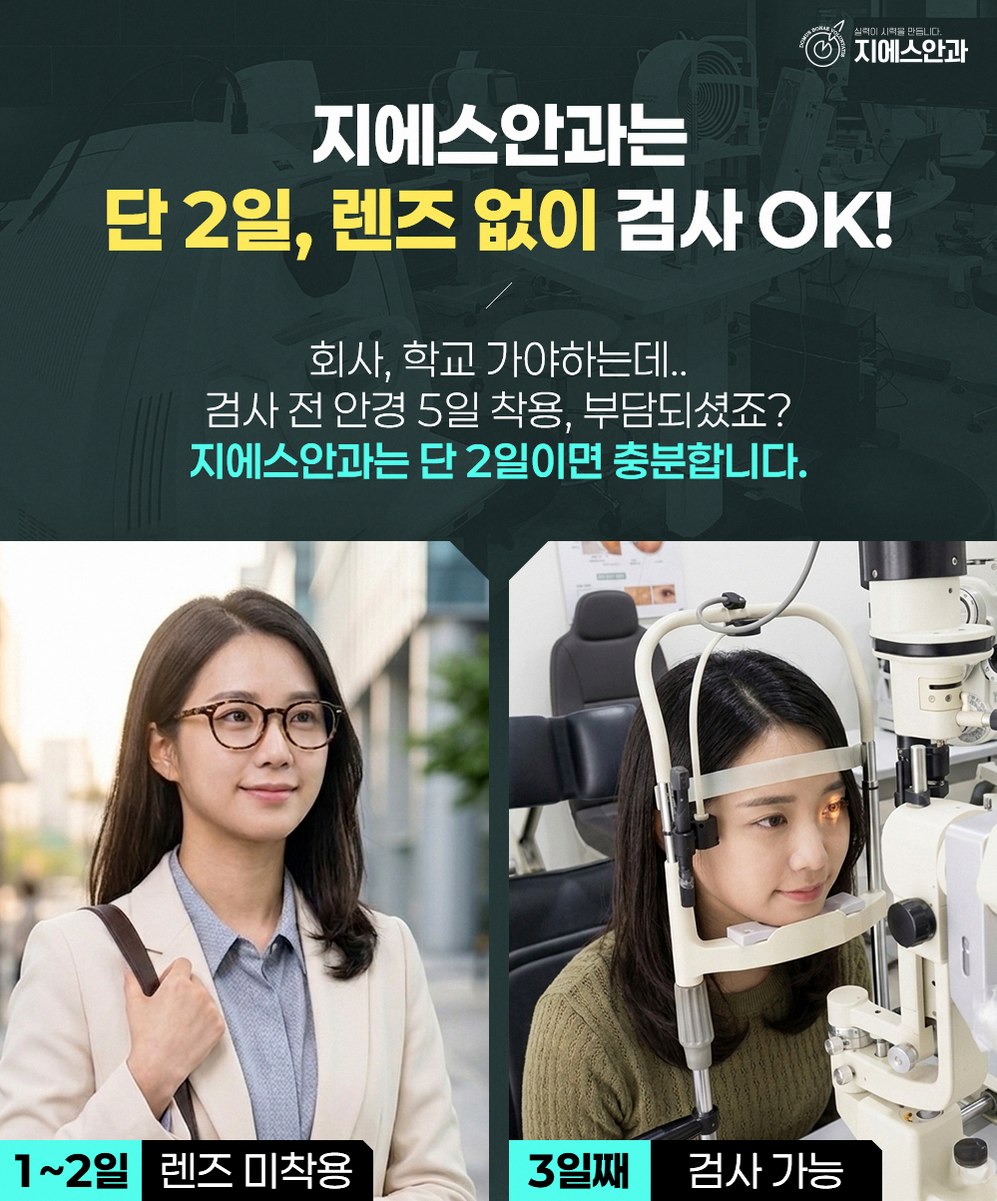
Avoid wearing soft contact lenses for several days before your first exam, and longer for rigid lenses, as they can affect measurements
Arrange accommodation in or near central Seoul for easy access to Cheongdam
Prepare any necessary travel insurance that covers medical care abroad
The clinic can usually inform you how many days of stay are recommended based on your planned treatment.
Typical visit timeline for international patients
Your exact schedule will depend on your eye condition and chosen procedure, but the following is a general example.
For LASIK, LASEK, or SMILE LASIK
Day 1: Comprehensive eye examination and consultation. If you are a suitable candidate and feel comfortable proceeding, surgery may be scheduled for the same day or the next day, depending on your eyes and clinic schedule.
Day 1 or 2: Laser vision correction procedure. The procedure itself usually takes a short time, but you should plan extra time at the clinic for preparation and post-procedure checks.
Day 2 or 3: First follow-up visit. The ophthalmologist checks your healing, vision, and comfort. You receive eye drops and instructions.
Next few days: Additional follow-ups as needed. Many international patients stay in Korea for about 4 to 7 days after surgery, depending on the procedure and personal comfort.
For cataract or lens implantation surgery
Day 1: Detailed examination, including lens power calculations and consultation about lens options.
Day 2: Surgery for one eye, if appropriate. Some patients may have both eyes treated on separate days.
Following days: Regular follow-up visits to monitor healing, adjust medications, and check visual progress. A stay of 1 to 2 weeks is often recommended, especially if both eyes are treated.
The clinic will provide a personalized schedule and can adapt it to your travel plans when possible, while still prioritizing safety and proper follow-up.
Aftercare and returning home
After you return to your home country, ongoing care is important.
General aftercare points include:
- Use prescribed eye drops exactly as directed
- Avoid rubbing your eyes, especially in the early healing period
- Protect your eyes from dust and strong sunlight with sunglasses
- Avoid swimming and heavy exercise for the period recommended by your surgeon
- Attend follow-up eye examinations in your home country according to the schedule advised by GS Eye Clinic
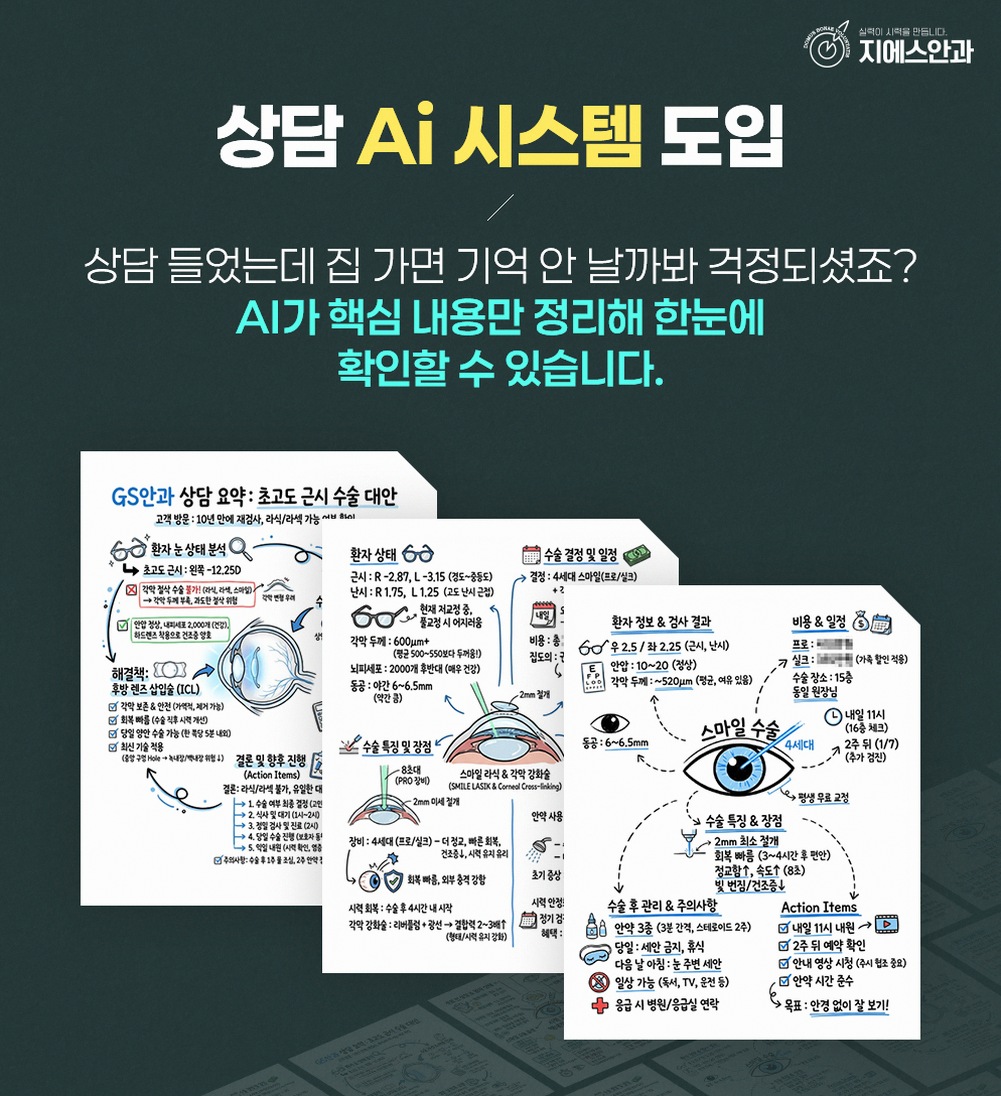
The clinic can usually provide a summary of your treatment and post-operative status, which you can share with your local eye doctor.
Frequently asked questions
Is one trip to Korea enough for treatment?
For many patients, yes. LASIK, LASEK, SMILE LASIK, and straightforward cataract surgery can often be completed within a single trip, including pre-examination, procedure, and early follow-up. However, if your case is complex or if complications occur, additional visits or local follow-up may be needed.
How do I know which procedure is right for me?
The choice between LASIK, LASEK, SMILE LASIK, or lens-based surgery depends on your corneal thickness, prescription, age, lifestyle, and overall eye health. The clinic will not confirm a final plan until after a full in-person examination. During your consultation, the ophthalmologist will explain which options are suitable and why.
Will I be free from glasses after surgery?
Many patients enjoy reduced dependence on glasses after vision correction or lens implantation, but complete freedom from glasses cannot be guaranteed. Factors such as healing, individual eye characteristics, and age-related changes can influence the final result. The clinic will explain realistic expectations for your specific case.
Is it safe to fly after eye surgery?
Most patients can fly a few days after procedures like LASIK or cataract surgery, but this depends on your healing and the doctor’s evaluation. You should use lubricating eye drops during flights and avoid rubbing your eyes. The clinic will give you personalized advice on the best time to travel.
What if I have dry eyes?
Mild to moderate dry eye is common and can be managed with eye drops and other treatments. Before recommending surgery, GS Eye Clinic evaluates your tear film and corneal surface. In some cases, dry eye should be treated first, or a particular procedure may be preferred to reduce the impact on dryness.
Can I have both eyes treated on the same day?
For laser vision correction, both eyes are often treated on the same day. For cataract or lens implantation surgery, the plan may vary. The ophthalmologist will consider safety, your general health, and your travel schedule when recommending whether to treat both eyes on one trip or on separate days.
Soft call to action
If you are considering an eye examination, vision correction, or cataract treatment during your stay in Seoul, GS Eye Clinic in Cheongdam offers a comprehensive, patient-centered approach with modern technology and a clear focus on safety and comfort.
You can start by arranging an online consultation, sharing your current prescription and medical history, and discussing your goals. This early step will help you understand which treatments may suit you and how to plan your visit to Korea for smooth, well-organized eye care.


댓글
댓글 쓰기