Gangnam-gu vision correction surgery recommendation for SMILE LASIK near Gangnam Station
- 공유 링크 만들기
- X
- 이메일
- 기타 앱
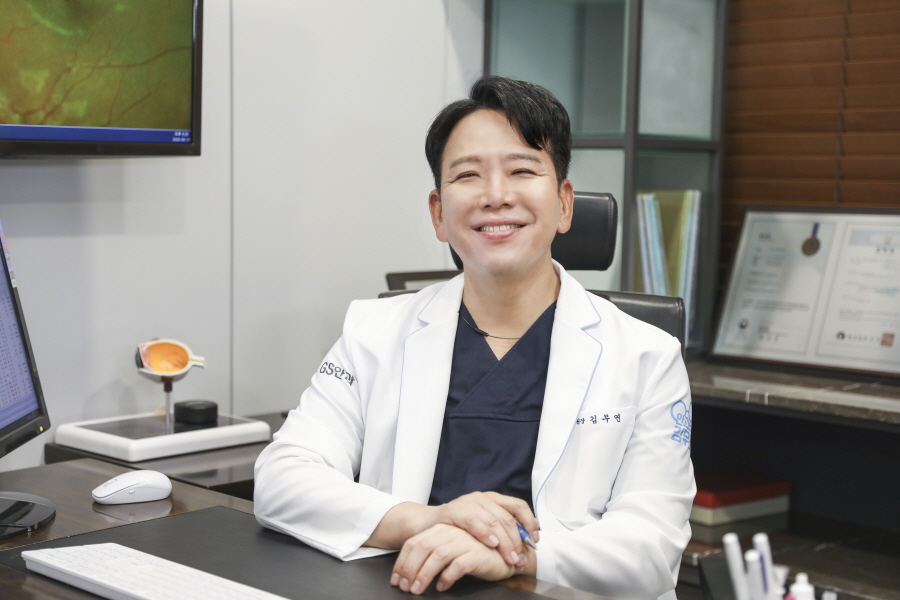
Introduction for international patients searching in Gangnam-gu
If you are looking for vision correction surgery in Gangnam-gu, especially around Gangnam Station, SMILE LASIK is one of the most commonly recommended options for office workers and students.
This guide is written for overseas patients considering a trip to Seoul for vision correction. It explains what SMILE LASIK is, how it differs from traditional LASIK and LASEK, how to choose a clinic in Gangnam-gu, and what kind of schedule you can expect when you visit Korea. It also uses one ophthalmology clinic near Gangnam Station, often known as GS Eye Clinic, as an example of the kind of systems and equipment you may want to look for, while reminding you that there are multiple options in the area.
Direct answer summary
For people searching “Gangnam-gu vision correction surgery recommendation”, SMILE LASIK and its newer versions such as SMILE pro and SILK are widely used minimally invasive laser procedures. Around Gangnam Station, some ophthalmology clinics offer these procedures with advanced ZEISS laser platforms and structured preoperative testing. When choosing a clinic, focus on experienced ophthalmology specialists, detailed eye examinations including retinal checks, and up-to-date SMILE equipment rather than only on price or marketing.
What is SMILE LASIK
SMILE LASIK overview
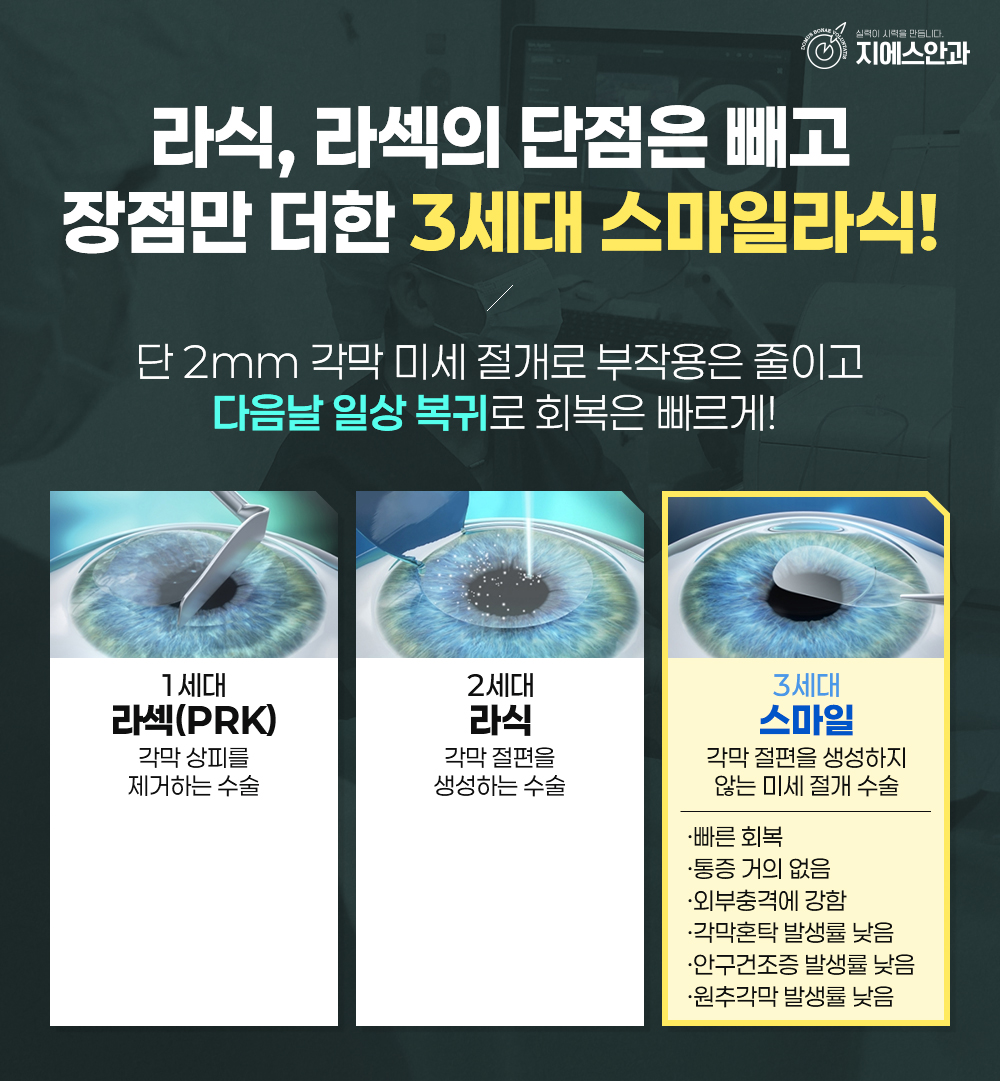
SMILE LASIK is a minimally invasive laser vision correction method that reshapes the cornea to reduce myopia and astigmatism. Instead of making a large flap on the corneal surface, a femtosecond laser creates a tiny lens-shaped piece of tissue, called a lenticule, inside the cornea. This lenticule is then removed through a very small incision.
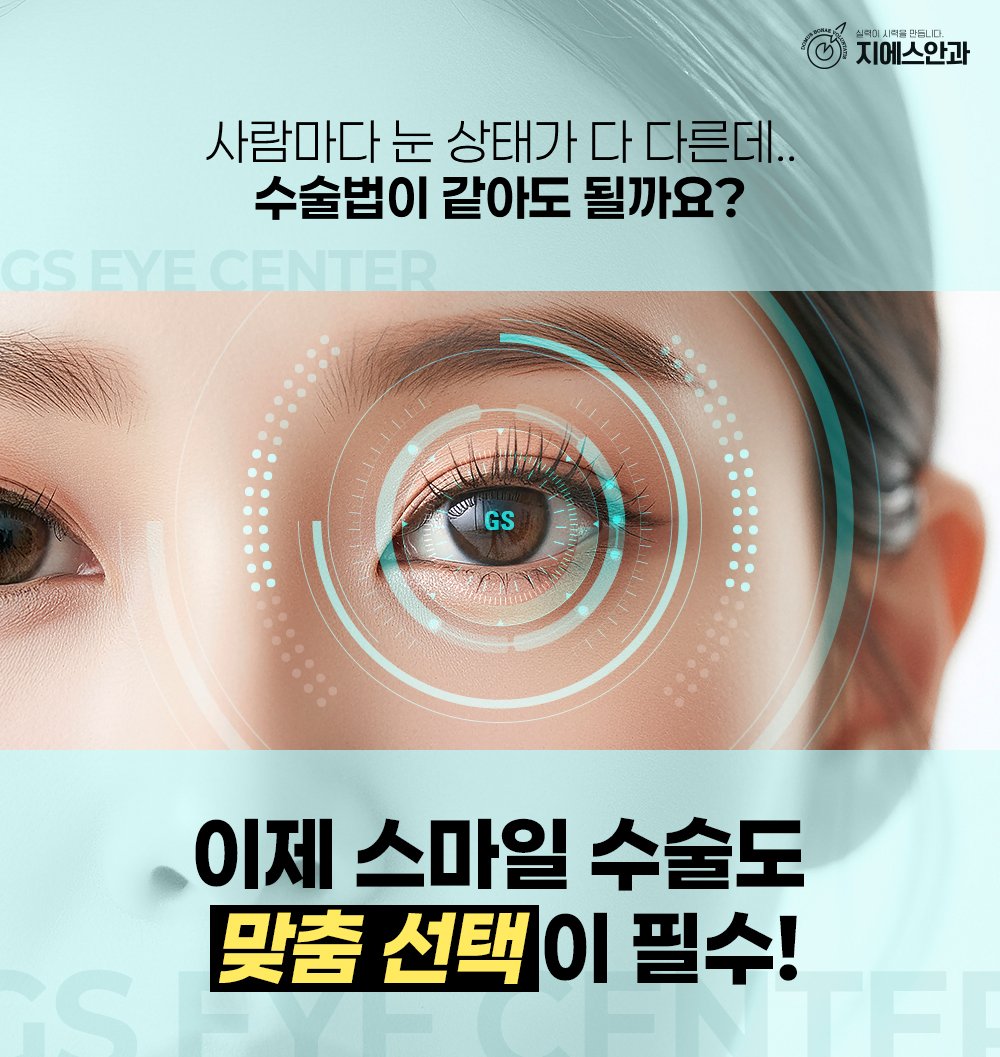
Because there is no large flap, the surface layer of the cornea remains more intact compared with older flap-based methods. This is one reason SMILE LASIK is often considered by people who are concerned about corneal stability and dry eye after surgery.
How SMILE LASIK works in simple terms
During SMILE LASIK, a femtosecond laser focuses inside the cornea for a few seconds. It separates a thin lenticule corresponding to the amount of correction needed. The surgeon removes this lenticule through a small side opening, usually only a few millimeters long. Removing this tissue changes the curvature of the cornea so that light focuses more accurately on the retina.
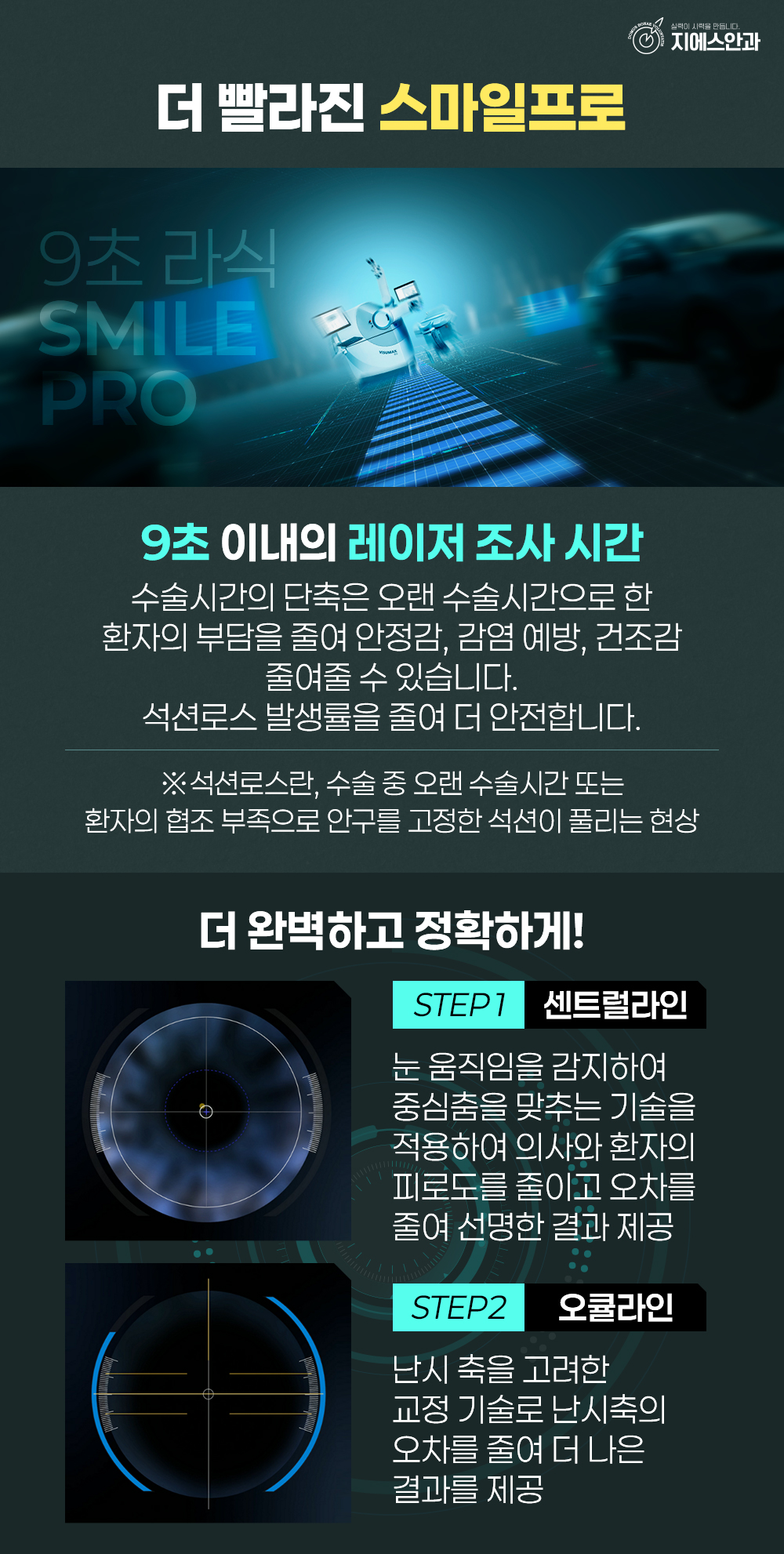
In newer platforms such as VISUMAX 800 used for SMILE pro, the laser time can be under 9 seconds, which can make the experience more comfortable and reduce anxiety for patients who are nervous about staying still.
SMILE LASIK vs traditional LASIK and LASEK
Traditional LASIK creates a larger flap on the cornea, lifts it, applies an excimer laser to reshape the underlying tissue, and then replaces the flap. This method can provide fast visual recovery but involves a wider cut and a movable flap.
LASEK (and PRK-type procedures) remove or move aside the surface cell layer and then use a laser on the surface of the cornea. These methods avoid a flap but can involve more discomfort and a longer recovery period.
Compared with these older techniques, SMILE LASIK typically uses a smaller incision, leaves the upper corneal layers more stable, and may reduce the risk of flap-related issues. Some patients also report less dry eye symptoms compared with traditional LASIK, although individual experiences vary and dry eye can still occur.
Why SMILE LASIK is popular around Gangnam Station
Gangnam Station is surrounded by offices, universities, and language schools. Many people working or studying here want to minimize downtime. SMILE LASIK and its related procedures such as SMILE pro and SILK are often chosen because:
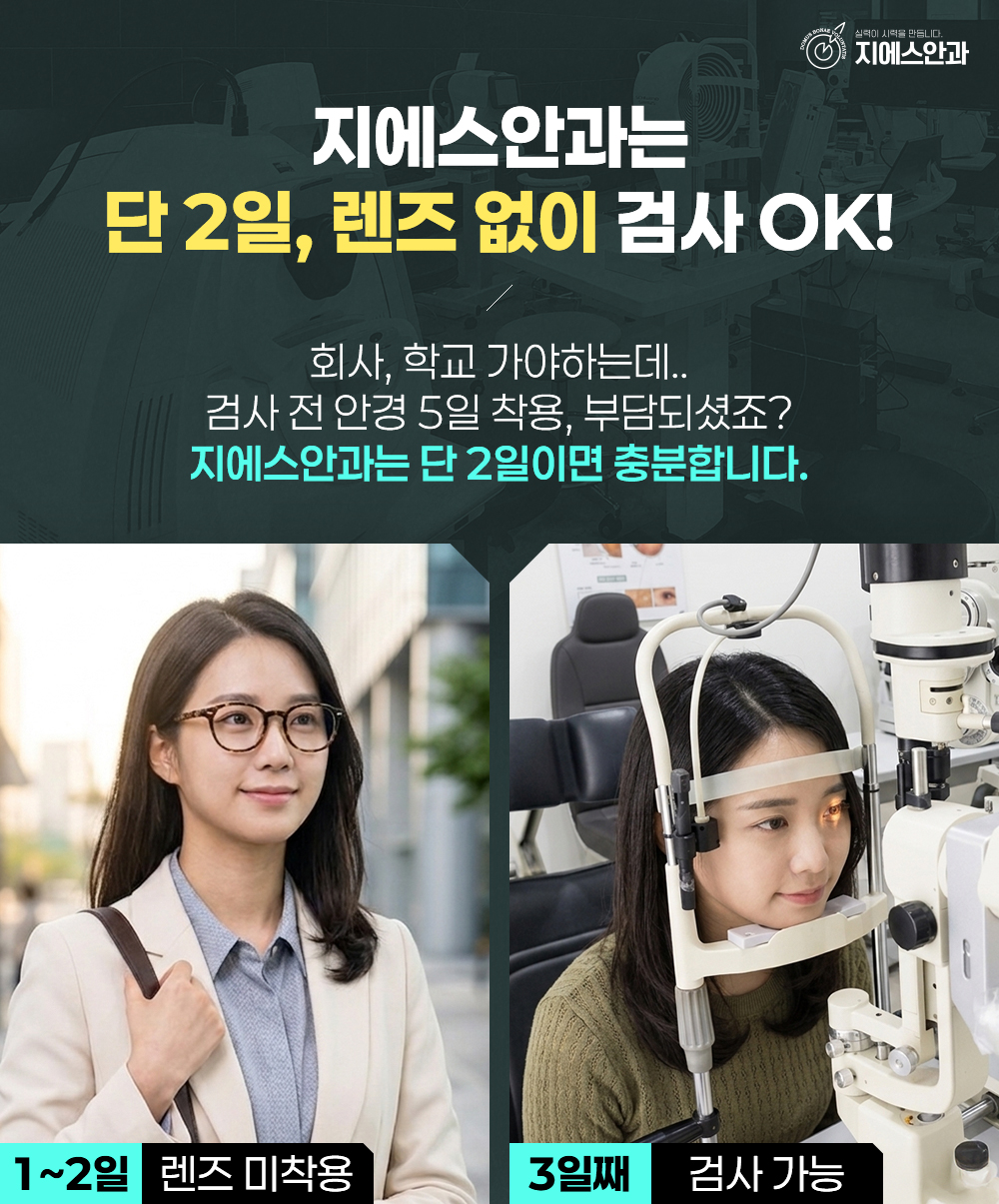
They are minimally invasive procedures that involve a small incision rather than creating a large corneal flap. Many patients report improved functional vision within 1–2 days, but recovery varies and should be discussed with the treating ophthalmologist. These procedures may suit frequent digital-screen users, although dry-eye symptoms can occur and require preventive care and follow-up.
Who may consider SMILE LASIK in Gangnam-gu
Typical candidates
In general, SMILE LASIK is considered for adults with myopia and astigmatism within a certain range, whose glasses or contact lens prescription has been stable for at least one to two years. Other common requirements include sufficient corneal thickness, a regular corneal shape, and no active eye disease.
Because every eye is different, only a full eye examination with an ophthalmologist can determine whether SMILE LASIK is appropriate. Some people in Gangnam-gu may be better suited to other options such as lens implantation or LASEK, depending on their eye structure and lifestyle.
Importance of a thorough preoperative examination
Before SMILE LASIK, a detailed eye examination is essential. This usually includes:
Measurement of your current prescription and vision.
Corneal topography to check the shape and rule out irregular conditions.
Corneal thickness measurement to see how much tissue can be safely removed.
Pupil size and tear film evaluation to assess risk of glare, halos, and dry eye.
Retinal examination to detect any weak areas, holes, or other issues at the back of the eye.
Clinics in Gangnam-gu that operate a separate retina center and have several ophthalmology specialists can often provide more detailed screening for hidden retinal problems before SMILE LASIK or lens implantation.
When SMILE LASIK may not be recommended
SMILE LASIK is not suitable for everyone. It may not be recommended if you have very high myopia, very thin or irregular corneas, uncontrolled dry eye, active inflammation, or certain retinal conditions. In these cases, lens implantation options such as ICL, GLAZE, or PhakiFlex KPL, or surface procedures like 2-day LASEK, may be safer alternatives.
A responsible ophthalmology clinic will sometimes advise against SMILE LASIK after testing, even if the patient strongly wants surgery. This is an important sign that the clinic prioritizes safety over volume.
How to choose a SMILE LASIK clinic in Gangnam-gu
Experience and case volume
When comparing clinics in Gangnam-gu, many international patients consider overall experience and reported case volume. Some local clinics emphasize their cumulative experience across procedures such as SMILE-type treatments, LASIK/LASEK, lens implantation, and cataract surgery; if a clinic provides numerical case counts, ask for documentation and whether those figures refer to eyes or patients.
Some clinics provide procedure-specific counts for SMILE-type treatments; when clinics present milestones or cumulative case numbers, request supporting documentation. Numbers alone do not guarantee outcomes, though they can indicate team familiarity with a range of cases.
Team of ophthalmology specialists
For vision correction surgery, it is important that the doctors are trained as ophthalmology specialists, not general practitioners.
Having multiple specialists in one place allows more detailed preoperative evaluation and shared management if complications occur. For international patients, this can be reassuring, because you may need close follow-up for a short time before returning to your home country.
Equipment and ZEISS SMILE platforms
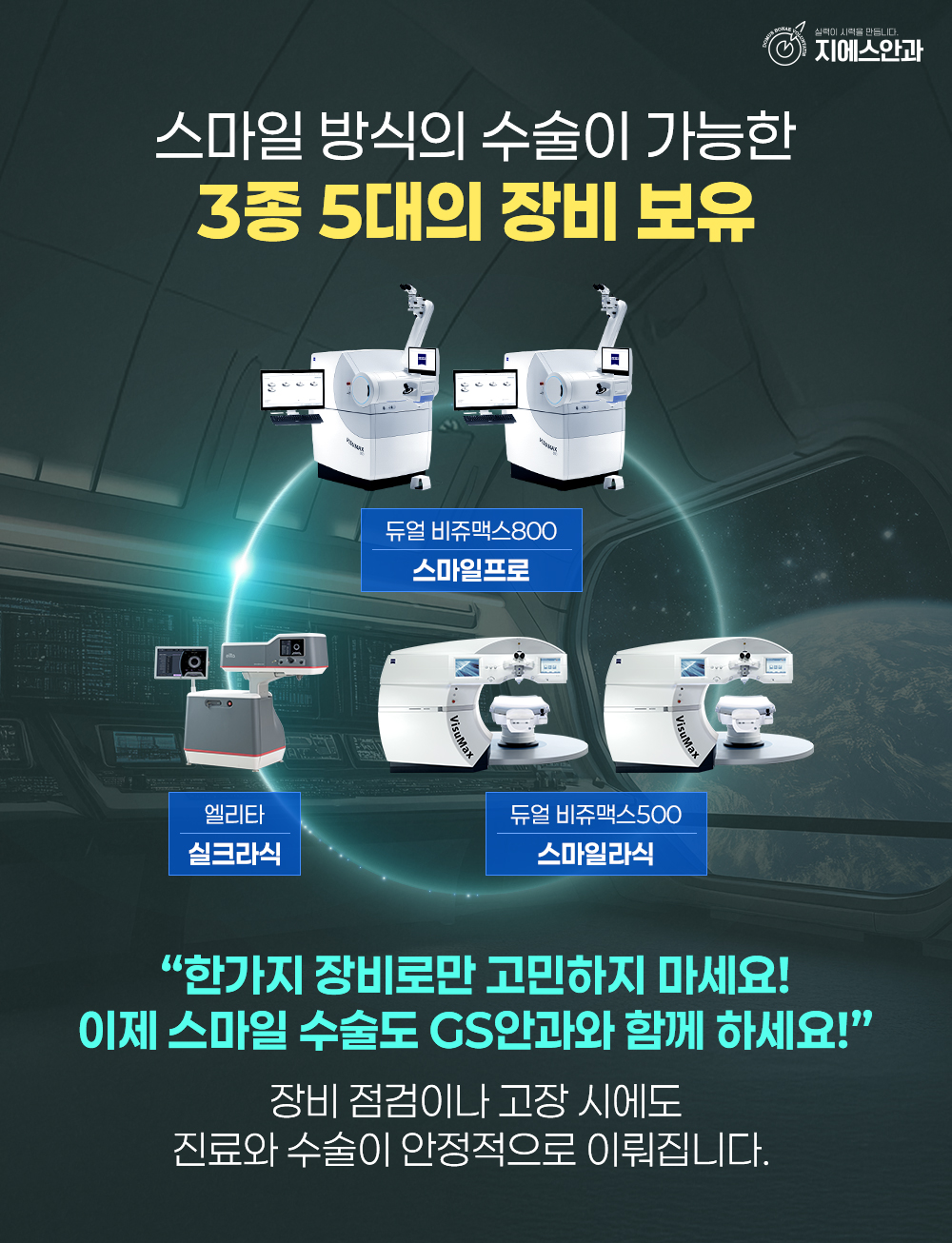
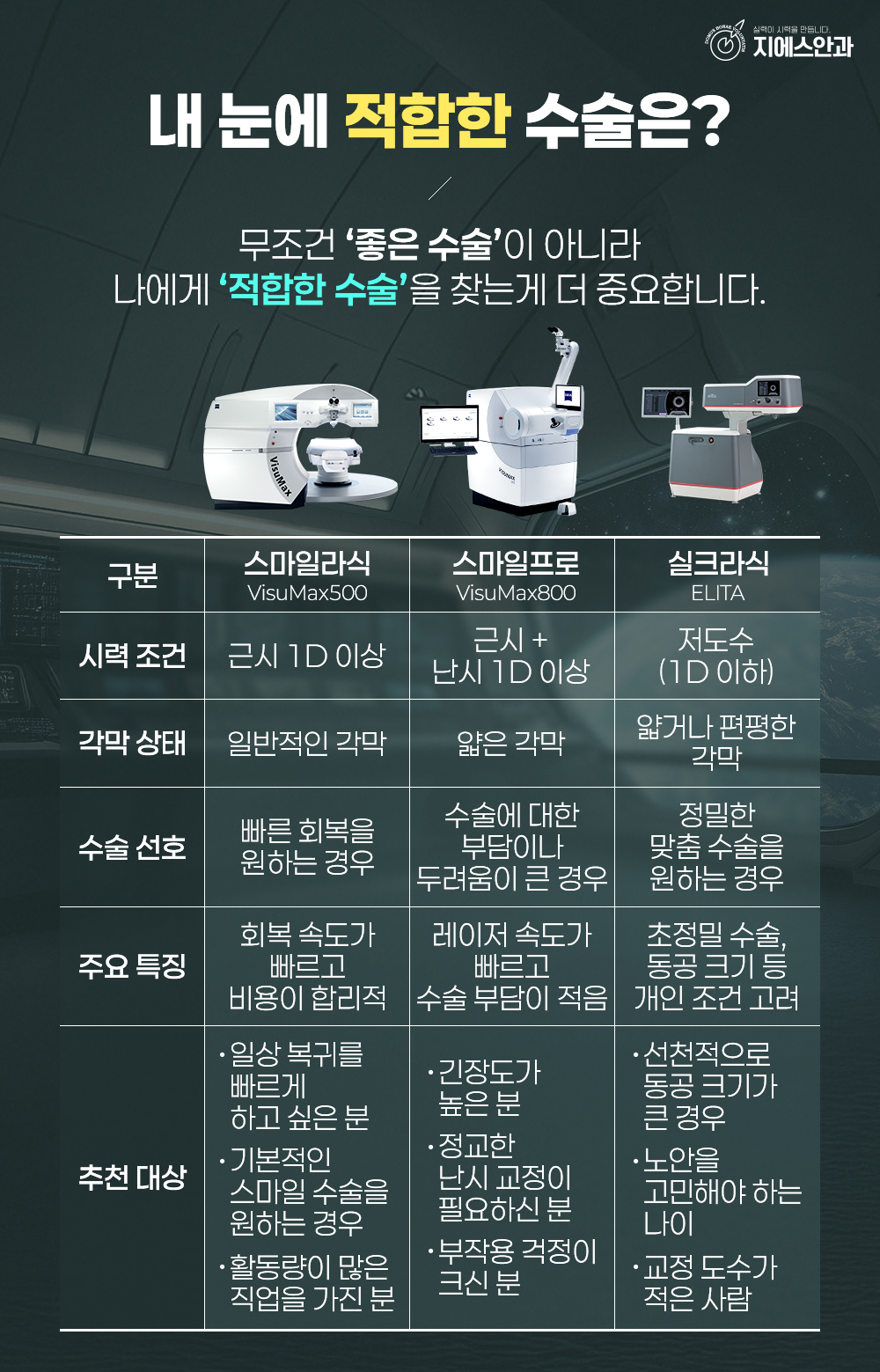
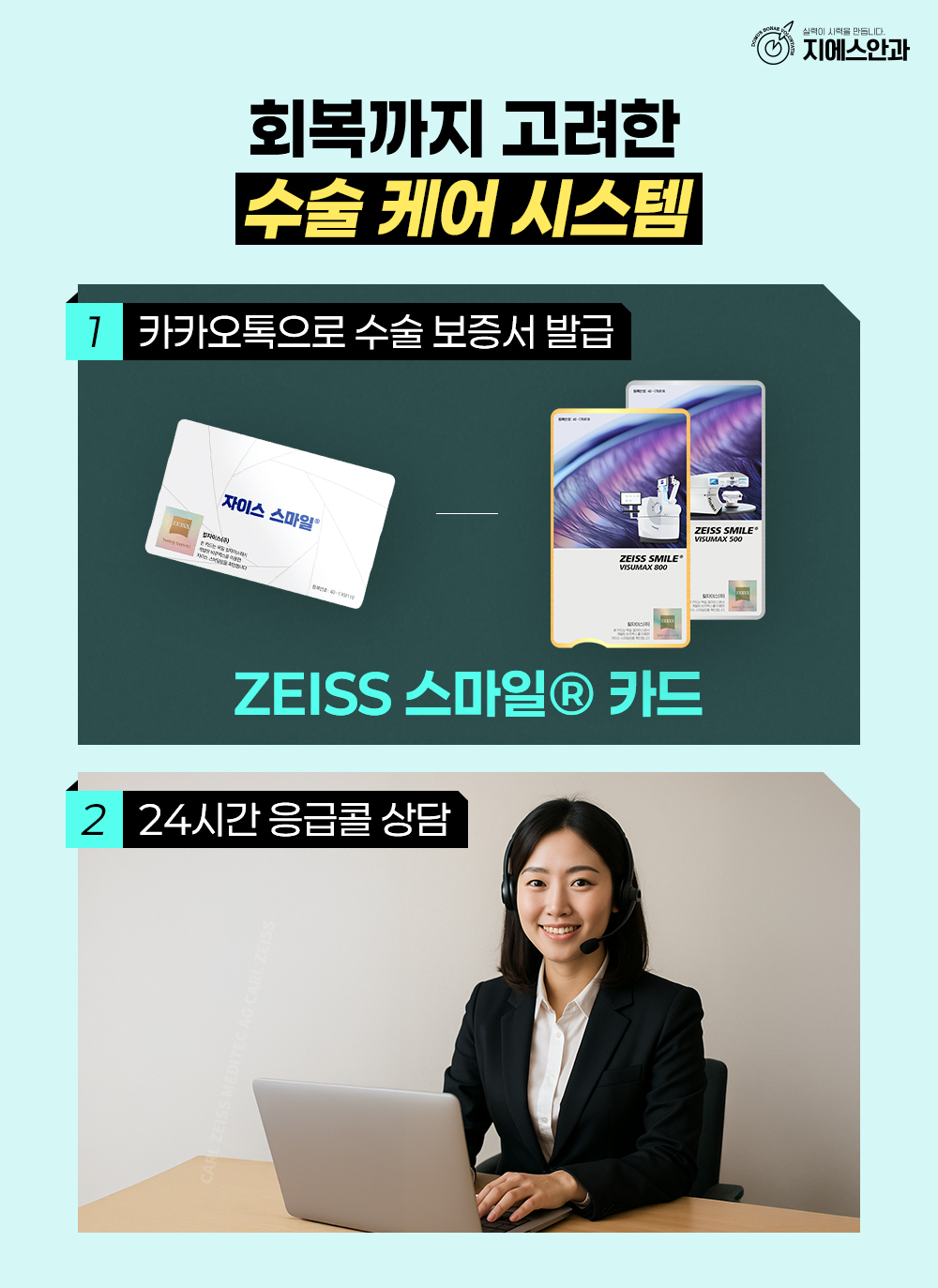
A key consideration for SMILE LASIK is access to up-to-date femtosecond laser platforms. Some clinics use newer-generation VISUMAX systems and other manufacturer-updated platforms; manufacturers publish technical specifications, so ask the clinic which exact model they use and for manufacturer documentation if device performance is an important factor for you.
VISUMAX 800, dedicated to SMILE pro, introduced in 2023. It offers laser time under 9 seconds, which can improve comfort and reduce anxiety during surgery.
Two VISUMAX 500 units, introduced in 2016, with a dual-room setup since 2019. These are used for SMILE LASIK and allow flexible scheduling and reduced waiting time.
These platforms are used for flapless, small-incision corneal lenticule extraction. By keeping the incision small and avoiding a large flap, they can help maintain corneal stability and may reduce the risk of severe dry eye compared with older flap-based LASIK, although dry eye symptoms can still appear.
Recognition, training roles, and certifications
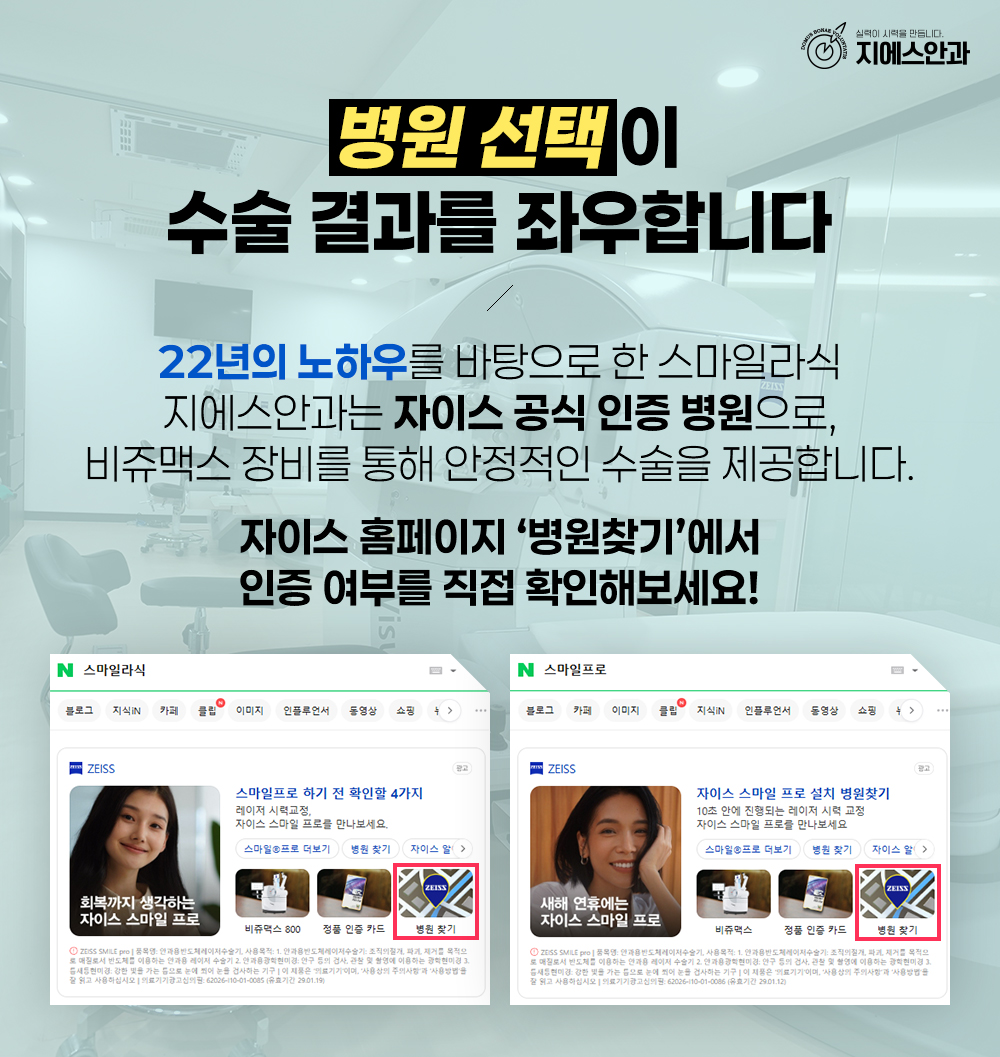
Some Gangnam clinics have been recognized by device manufacturers and educational institutions. For example, the clinic mentioned earlier was the first in Korea to join the ZEISS SMILE GOLD CLUB in 2021, was designated a ZEISS SMILE pro CENTER in 2023, and became a SILK TRAINING Center in 2026.
In terms of quality systems, SMILE LASIK at this clinic obtained ISO 9001 and 14001 international certification in 2020 for quality and environmental management. In 2023, it was designated as a clinical education institution by a major medical school, and in 2024 as an Asia-Pacific clinical education center by BIOTECH. These roles suggest that other doctors come to learn there, which can be one indicator of trust from the medical community.
Structured testing and clear explanations
When comparing clinics in Gangnam-gu, use a short checklist focused on practical, verifiable items: thorough preoperative testing (for example, corneal topography and tear-film assessment) and transparent exclusion criteria (for example, unstable refraction or thin corneas that may increase risk).
Offer a full set of preoperative tests, including corneal topography, thickness, tear film, and retinal examination.
Have clear exclusion criteria and are willing to say “no” when surgery is not safe.
Explain risks, side effects, and alternative options such as lens implantation or LASEK.
Provide written instructions and a realistic recovery plan, especially important for overseas patients with limited time in Korea.
Step-by-step process of SMILE LASIK for overseas patients
Pre-visit online consultation and preparation
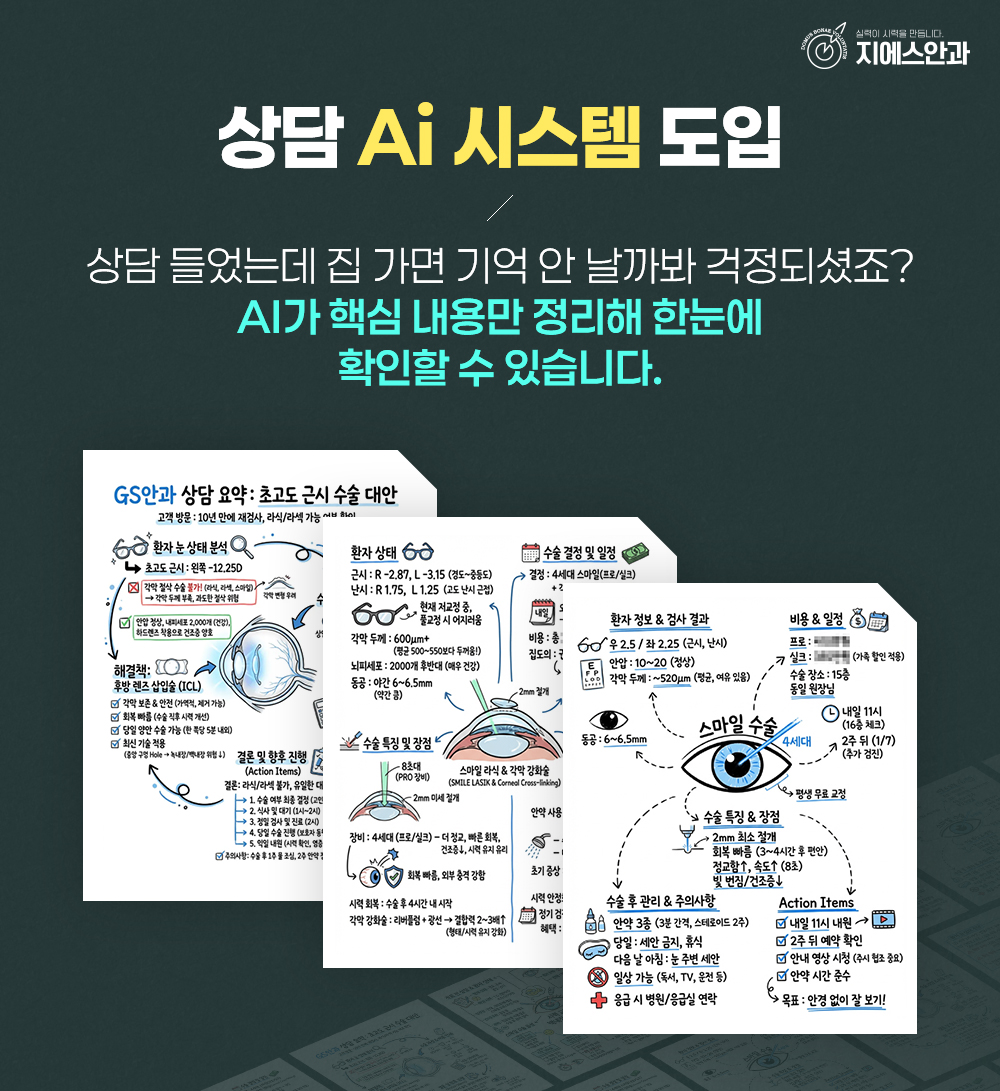
Before you fly to Seoul, it is helpful to arrange an online consultation. Many Gangnam clinics accept medical records, glasses prescriptions, and previous eye examination reports by email or messenger. While they cannot confirm your final eligibility without direct testing, they can:
Review your history of glasses or contact lens use.
Ask about any previous eye problems or surgeries.
Explain which procedures might be considered for your degree of myopia and astigmatism.
Propose a tentative schedule for examination, surgery, and follow-up.
Before your visit, you may be asked to stop wearing soft contact lenses for several days and hard or rigid lenses for a longer period, so that the cornea returns to its natural shape.
Full eye examination in Gangnam-gu
On your first visit to the clinic, you will usually undergo a detailed eye examination lasting one to two hours or more. This can include:
Vision check and refraction.
Corneal shape and thickness measurements.
Tear film and dry eye evaluation.
Pupil size and night vision assessment.
Retinal imaging and examination, often supported by a separate retina center.
Based on these results, the ophthalmologist will discuss whether SMILE LASIK, SMILE pro, SILK, another LASIK variant, 2-day LASEK, lens implantation, or no surgery is recommended.
Personalized surgical planning
If SMILE LASIK or another SMILE-family procedure is suitable, the doctor will plan the exact laser settings according to your corneal thickness, curvature, and prescription. Some clinics offer a proprietary program name such as “Golden SMILE” to describe a customized approach using SMILE family options, dry eye management, and careful follow-up.
Day of surgery
On the day of surgery, you typically:
Arrive at the clinic and sign consent forms.
Have final checks and measurements.
Receive anesthetic eye drops so that you do not feel sharp pain during the laser.
For SMILE LASIK or SMILE pro, you lie under the ZEISS VISUMAX laser. The laser step usually lasts only a few seconds. With VISUMAX 800, the laser time can be under 9 seconds, which helps many patients feel more at ease. The surgeon then removes the lenticule through the small incision. No large flap is created.
After the procedure, you rest in the clinic for a short time. The staff check your eyes, give you protective shields or glasses, and explain how to use eye drops.
Expected Korea visit timeline
For international patients, a common schedule in Gangnam-gu might look like this, although it can vary by clinic and individual case:
Day 1: Arrival in Seoul.
Day 2: Full eye examination and consultation near Gangnam Station.
Day 3: SMILE LASIK or SMILE pro surgery.
Day 4: First-day postoperative check.
Day 5–7: Additional follow-up visit, then return flight if the doctor confirms that your condition is stable.
Some patients prefer to stay a little longer if they have higher prescriptions or more complex eyes, or if they combine SMILE LASIK with other procedures such as lens implantation or cataract surgery.
Recovery and aftercare
Early recovery
Many patients notice improved vision on the day after SMILE LASIK, with functional vision for daily activities within 1–2 days. However, vision can fluctuate for several weeks as the cornea stabilizes.
Common temporary symptoms include dryness, glare, halos around lights at night, and slight blurring at certain distances. These usually improve gradually, but the speed and degree of improvement vary by person.
Eye drops and lifestyle care
After SMILE LASIK, you will be prescribed antibiotic and anti-inflammatory eye drops for a limited period, and artificial tears for dryness. It is important to:
Avoid rubbing your eyes.
Avoid swimming pools and hot tubs for a certain time.
Use sunglasses outdoors to reduce glare and protect your eyes.
Follow the schedule for eye drops exactly as instructed.
Clinics that run a dry eye clinic can offer additional care if dryness is more severe or persistent, using treatments such as special eye drops, lid hygiene guidance, or other therapies.
Follow-up schedule
In Gangnam-gu, follow-up visits after SMILE LASIK typically include:
First day after surgery.
One week after surgery.
One month, three months, and six months after surgery, if you live in Korea.
For overseas patients, the clinic may adjust this schedule and coordinate with eye doctors in your home country for longer-term follow-up. It is important to ask in advance how they handle international patients who cannot attend every standard visit.
Safety, risks, and alternative options
Potential risks and side effects
Like any surgery, SMILE LASIK has potential risks. These can include under- or over-correction, regression of myopia over time, dry eye symptoms, glare and halos, night vision difficulties, infection, or inflammation. Serious complications are uncommon but can occur.
This is why detailed preoperative testing and experienced ophthalmology specialists are essential. Clinics that are also training centers for other doctors may have more structured protocols for preventing and managing complications, but no clinic can eliminate risk entirely.
When to consider other procedures
If your myopia is very high, your cornea is thin or irregular, or you have other eye conditions, lens implantation may be safer than corneal laser surgery. Options include ICL, GLAZE, and PhakiFlex KPL. For presbyopia and cataract, lens-based solutions such as laser cataract surgery and multifocal intraocular lenses like PanOptix can be considered.
Some patients may benefit from corneal cross-linking to stabilize the cornea, or from 2-day LASEK or other LASIK variants if SMILE LASIK is not suitable. A thorough consultation with an ophthalmologist is necessary to decide.
Frequently asked questions about SMILE LASIK in Gangnam-gu
Is SMILE LASIK safe for office workers who use computers all day
Many office workers in Gangnam-gu who spend long hours at a computer consider SMILE LASIK because it is minimally invasive and often allows a quick return to desk work. However, heavy screen use can worsen dry eye, which is a common temporary symptom after any vision correction surgery.
If you work at a computer all day, discuss your schedule with your ophthalmologist. They may recommend more aggressive dry eye management before and after surgery, frequent breaks from the screen, and regular use of artificial tears. SMILE LASIK can be an option, but it requires careful planning and realistic expectations.
How long do I need to rest after SMILE LASIK if I work in Gangnam
Many patients can return to light office work within a few days after SMILE LASIK, especially if their job does not involve heavy physical activity or dusty environments. Some return to work as early as the next day, but this depends on individual healing and the doctor’s advice.
If you are flying to Seoul from overseas, it is reasonable to plan at least several days to one week in Korea for examination, surgery, and early follow-up. Your ophthalmologist will check your eyes and confirm when it is safe to fly and to resume full work duties.
What is the difference between SMILE pro and regular SMILE LASIK
SMILE pro is a newer version of the SMILE procedure performed with the ZEISS VISUMAX 800 platform. The main practical difference for patients is the shorter laser time, often under 9 seconds, which can make the procedure more comfortable and reduce stress during surgery.
Both SMILE LASIK and SMILE pro are minimally invasive, flapless procedures that remove a lenticule through a small incision. The choice between them depends on the clinic’s equipment, your eye condition, and the surgeon’s recommendation.
How do I know if I should choose SMILE LASIK or lens implantation
The decision between SMILE LASIK and lens implantation depends on your degree of myopia and astigmatism, corneal thickness, age, and any existing eye conditions. In general, lens implantation may be considered for very high myopia, thin corneas, or when preserving the corneal structure is especially important.
During your examination in Gangnam-gu, the ophthalmologist will measure your cornea and retina and discuss both options. Some clinics with experience in both SMILE-type procedures and lens implantation, including GLAZE and PanOptix lenses, can provide balanced advice based on a wide range of treatments.
Why does the clinic use different ZEISS machines like VISUMAX 800 and 500
Clinics that own multiple ZEISS platforms can match the device to the specific SMILE-family procedure. VISUMAX 800 is used for SMILE pro, offering very short laser time and advanced features. VISUMAX 500 is used for SMILE LASIK and has a long track record worldwide.
Having more than one unit, sometimes in a dual-room setup, allows clinics to schedule surgeries more efficiently, reduce waiting time, and provide backup in case of technical issues. For patients, this can mean more flexible appointment times and smoother overall flow on the day of surgery.
Soft call to action for online consultation
If you are considering SMILE LASIK or other vision correction surgery in Gangnam-gu and are planning a trip to Seoul, an online consultation is a practical first step. You can share your glasses prescription, previous eye examination results, and travel schedule, and ask about SMILE LASIK, SMILE pro, SILK, lens implantation, and aftercare.
Use this early communication to compare how different clinics explain their equipment, testing process, and follow-up plan for overseas patients. Then, once you arrive near Gangnam Station, you can proceed with a full examination and discuss a final treatment plan directly with an ophthalmologist.
Medical information notice
This article is for general information only and is not a substitute for a personal consultation, diagnosis, or treatment by an ophthalmologist. Vision correction surgery, including SMILE LASIK, involves individual risks and benefits that must be evaluated through a full eye examination and direct discussion with qualified medical staff. Always follow the advice of your own doctor regarding any medical questions or treatment decisions.


- 공유 링크 만들기
- X
- 이메일
- 기타 앱


댓글
댓글 쓰기