Sinsa vision correction surgery recommendation for SMILE LASIK near Gangnam Station
- 공유 링크 만들기
- X
- 이메일
- 기타 앱
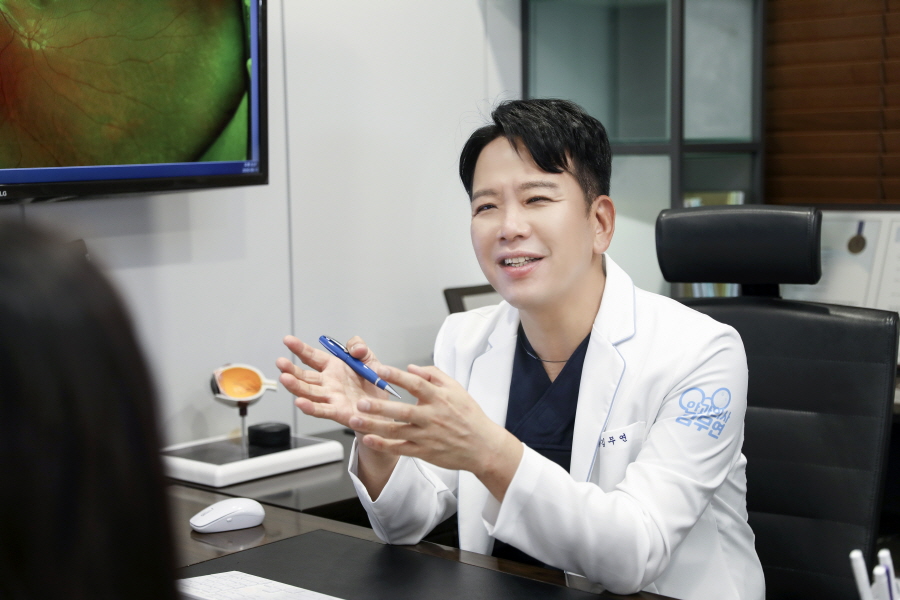
Quick summary
a short medical trip to Korea, and how to choose a clinic around Sinsa and Gangnam with advanced ZEISS laser platforms and structured safety systems.
Treatment overview: SMILE LASIK near Sinsa and Gangnam
Around Sinsa and Gangnam in Seoul, many office workers and students look for vision correction that fits a busy schedule. SMILE LASIK is a modern laser procedure designed to reduce dependence on glasses and contact lenses with a small corneal incision rather than a large flap.
At a well-established ophthalmology clinic near Gangnam Station, vision correction and cataract surgery have long been primary services. The clinic serves a high volume of refractive and cataract patients and is experienced with SMILE-type procedures.
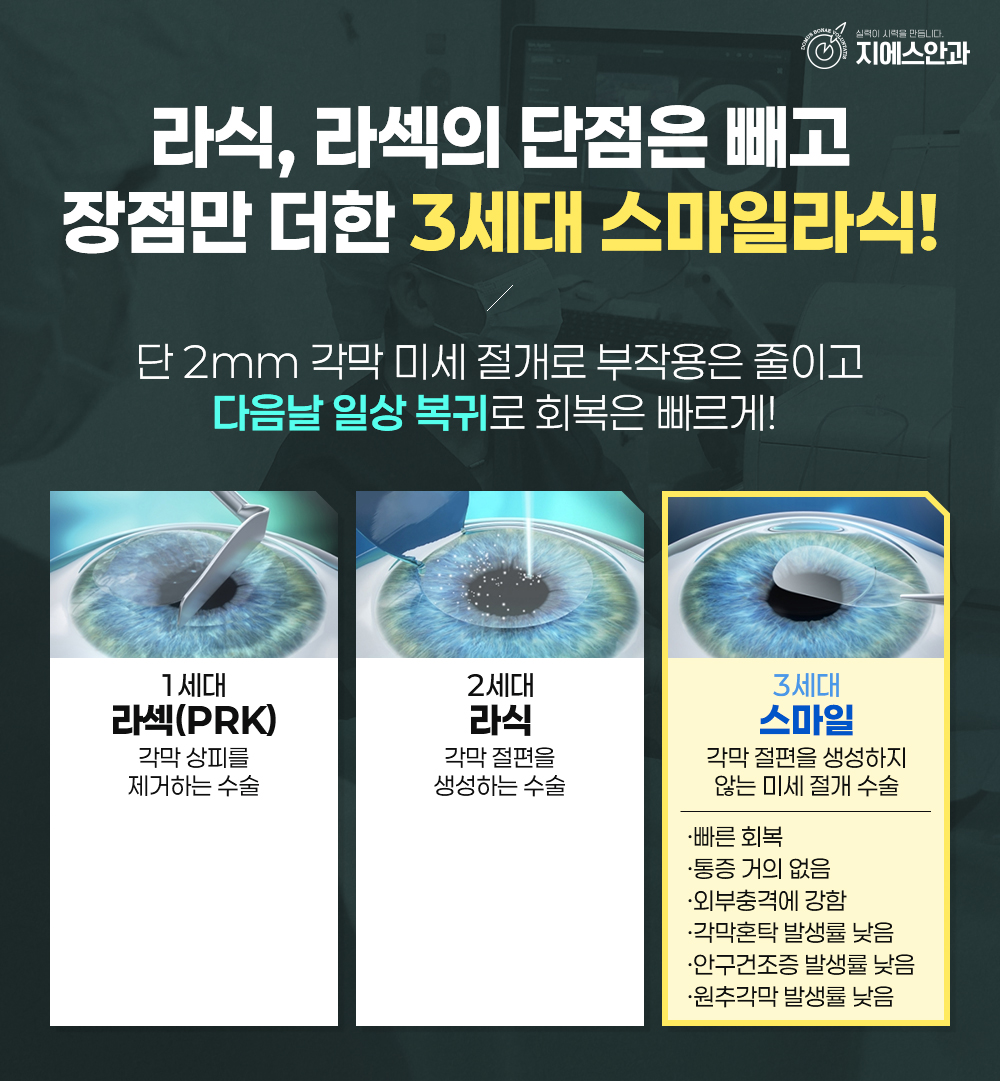
What SMILE LASIK is and how it differs from LASIK and LASEK
SMILE LASIK in simple terms
SMILE LASIK is a minimally invasive laser vision correction method. A femtosecond laser reshapes the cornea by creating a thin lens‑shaped piece of tissue inside the cornea, which is then removed through a very small incision. There is no large surface flap as in classic LASIK.
Because SMILE uses a small incision, it preserves more corneal tissue than some flap-based techniques, which may help maintain corneal biomechanics. Some studies suggest this could be associated with a lower risk of postoperative dry eye, but evidence is mixed; discuss potential benefits and risks with your ophthalmologist.
Comparison with LASIK
Classic LASIK uses a flap. A thin layer of the cornea is cut and lifted like a hinged door, the underlying tissue is reshaped with an excimer laser, and then the flap is placed back.
Advantages of LASIK include fast visual recovery and relatively little discomfort for many patients. However, the flap is larger than the tiny opening used in SMILE LASIK, and flap‑related issues can be a concern for some people, especially those involved in contact sports or jobs with a risk of eye trauma.
Comparison with LASEK
LASEK is a surface procedure. The surface layer of the cornea (epithelium) is loosened, the laser reshapes the surface, and then the epithelium is repositioned or allowed to regrow.
LASEK can be an option for thinner corneas, but it typically involves more discomfort after surgery and a slower visual recovery. Patients may need several days to a couple of weeks before vision stabilizes enough for normal activities.
Where SMILE LASIK fits
SMILE LASIK sits between these methods. It aims to combine quick recovery with a small incision. Potential benefits include:
- Fast return to daily life for many patients
- Less disturbance to corneal biomechanics compared with a large flap
- Potentially lower risk of dry eye symptoms for some patients
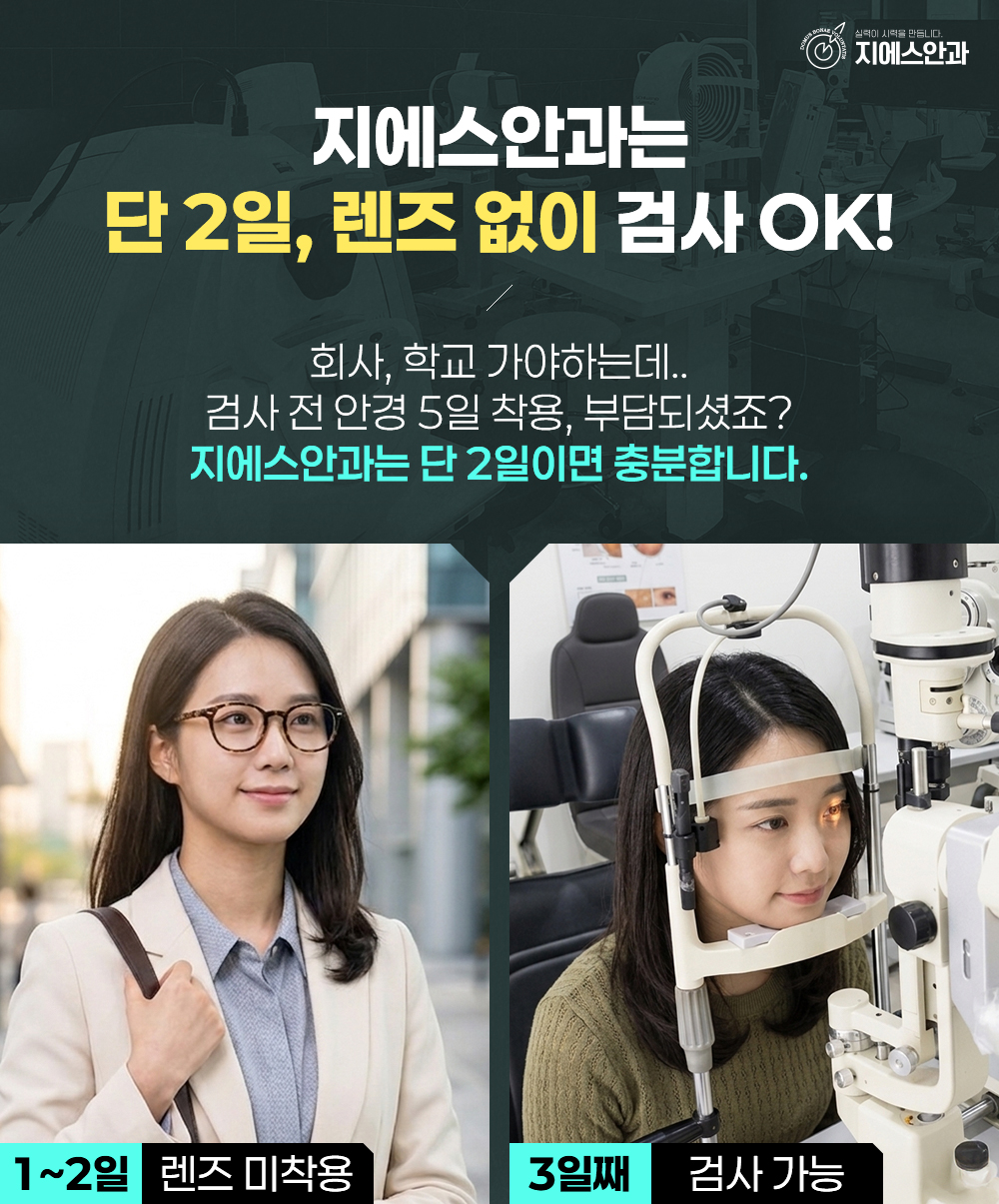
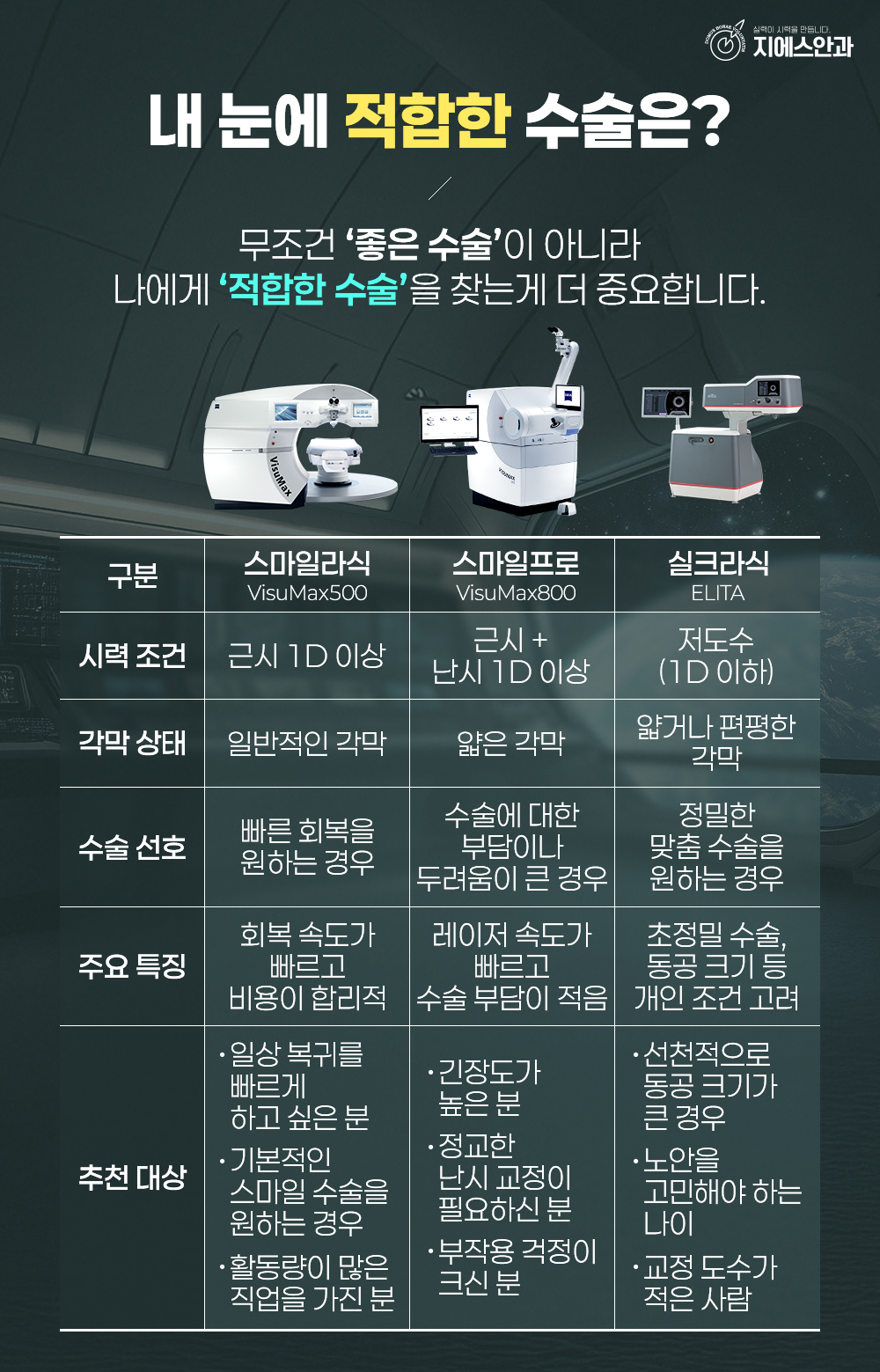
At the Gangnam Station clinic, SMILE‑type options include SMILE pro, SMILE LASIK, SILK, and a proprietary Golden SMILE program. The exact method is chosen after detailed examination rather than only by patient preference.
Who may consider SMILE LASIK
Typical candidates
People who often consider SMILE LASIK include:
Office workers in their 20s to 40s who use digital screens all day and feel limited by glasses
Students commuting through Sinsa or Gangnam who want clearer vision for study, sports, or travel
Frequent contact lens users experiencing dryness, irritation, or allergies
General requirements often include:
Stable prescription for at least one to two years
Sufficient corneal thickness and regular shape
No active eye disease such as uncontrolled dry eye, severe keratoconus, or untreated retinal problems
Why detailed pre‑operative testing matters
For any vision correction, the most important step is the pre‑operative examination. At the Gangnam Station ophthalmology clinic, the evaluation is structured and includes:
- Vision and refraction testing to measure your exact prescription
- Corneal thickness and shape analysis to check safety margins
- Pupil size assessment, especially relevant for night driving and glare
- Tear film and dry eye evaluation, supported by a dedicated dry eye clinic
- Retina and optic nerve examination, supported by a separate retina center
- Screening for keratoconus or irregular cornea, which may rule out SMILE LASIK
- Assessment of age, prescription stability, and lifestyle (night shifts, sports, long‑haul flights, digital work)
Not everyone is a candidate for SMILE LASIK. Some people may be better suited for LASEK, lens implantation, or in some cases no surgery at all.
SMILE LASIK technology and why equipment matters
ZEISS platforms at a glance
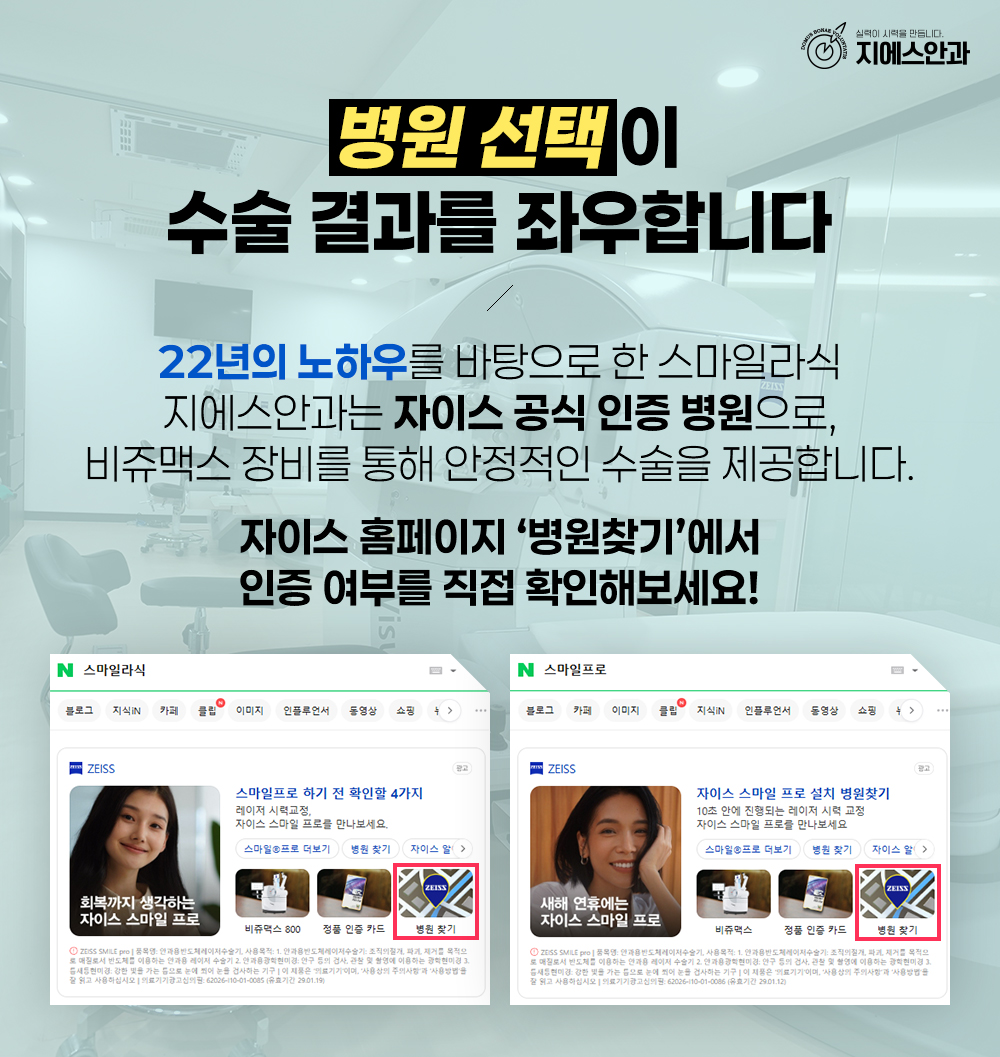
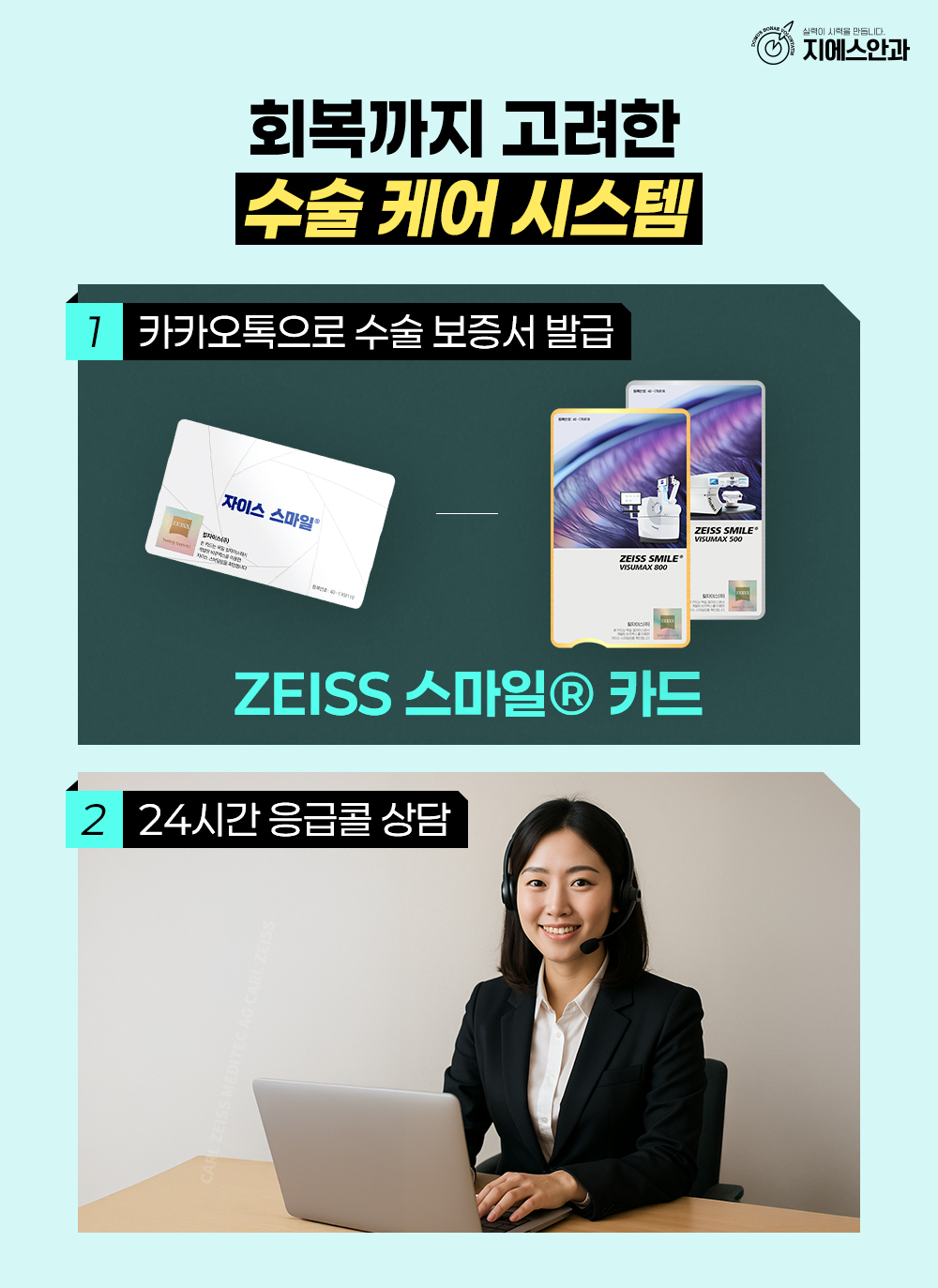
For SMILE‑type procedures, the laser platform is central. The Gangnam Station clinic owns all three major ZEISS platforms for SMILE‑type surgery, which is a key differentiator in the Sinsa and Gangnam area.
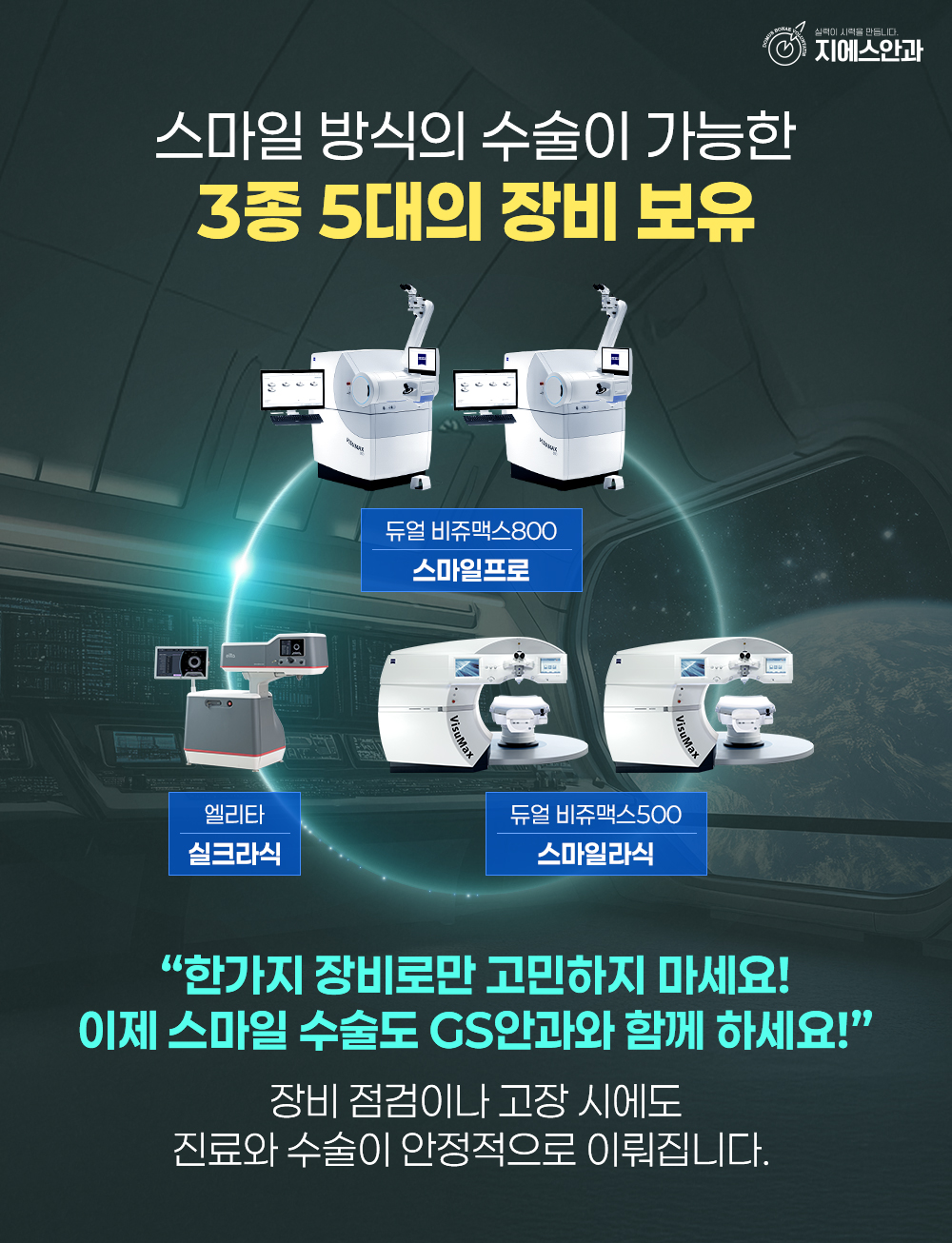
ZEISS VISUMAX
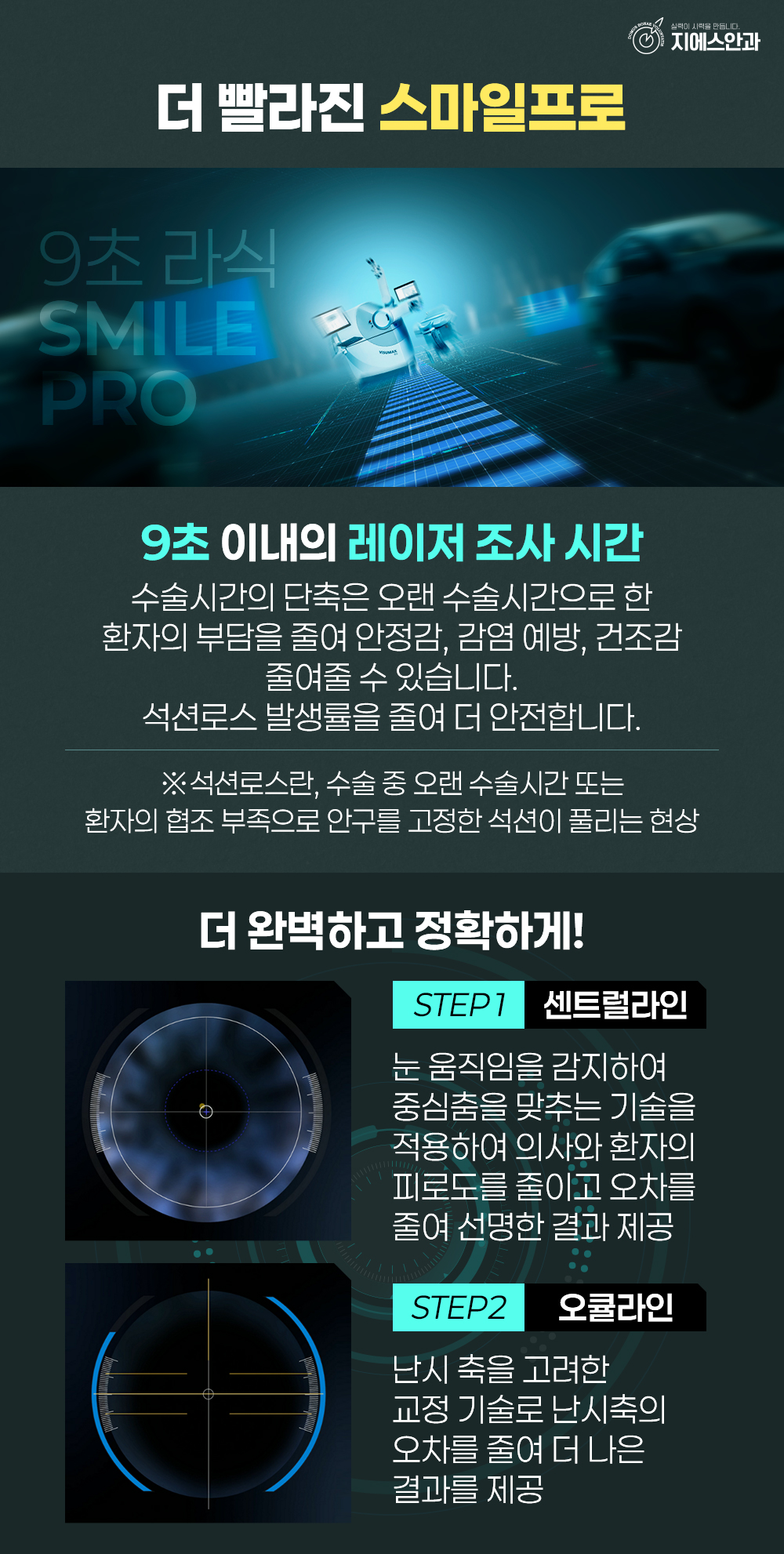
The VISUMAX 800 is the latest‑generation ZEISS laser used for SMILE pro. It was introduced at the clinic in 2023. Its main benefits include:
- Laser time under 9 seconds in many cases, reducing the time you need to fixate
- Shorter suction time, which can improve comfort
- High‑speed scanning and advanced tracking, designed to support precise outcomes
For patients, this often translates to a shorter, more comfortable laser step and potentially smoother early recovery.
VISUMAX 500 units
The clinic also operates two VISUMAX 500 units dedicated to SMILE LASIK. Having two units allows:
High daily case volume without rushing individual procedures
Flexibility in scheduling, which can be important for international patients with limited time
Backup capacity if one unit is down for maintenance
Tailored planning using multiple platforms
Because the clinic has VISUMAX 800, VISUMAX 500 units, and additional platforms for SILK, the medical team can choose the system and protocol that best match your corneal thickness, curvature, and lifestyle. For example, someone with a very active sports lifestyle may be guided toward a certain SMILE‑type protocol, while a patient with borderline corneal thickness might be advised to consider a different approach or even lens implantation.
Recognition and training roles
The clinic reports receiving recognitions and participating in training programs related to SMILE from industry partners. For confirmation of specific awards, certifications, or training affiliations, ask the clinic to provide documentation or official references.
- First in Korea to join the SMILE GOLD CLUB in 2021
- Designated as a SMILE pro Center in 2023
- Designated as a SILK Training Center in 2026
Beyond industry recognition, the clinic was designated as a clinical education site for a major medical school in 2023 and for an Asia‑Pacific ophthalmic biotech company in 2024. This means the center participates in training other ophthalmologists, developing protocols, and following standardized safety and quality systems, including ISO certifications related to SMILE LASIK.
For patients, this teaching and reference role suggests that the clinic uses structured criteria for who is eligible, how surgery is performed, and how follow‑up is managed, rather than relying only on volume.
Step‑by‑step SMILE LASIK process and recovery
Before your trip
For overseas patients, an online consultation is usually the first step. You can send:
- Your age and current glasses or contact lens prescription
- Any previous eye examination reports, if available
- Information about eye symptoms such as dryness, glare, or floaters
- Your preferred travel dates and how many days you can stay in Seoul
The medical team can then give a preliminary opinion on whether SMILE‑type surgery seems possible, and which additional tests will be needed on site.
Pre‑operative examination in Korea
Once you arrive in Seoul, you typically undergo a full eye examination on day one. This can take two to three hours and may include:
- Vision and refraction tests
- Corneal topography and tomography to map the shape and thickness of the cornea
- Tear film analysis and dry eye testing
- Pupil size measurement in bright and dark conditions
- Retinal imaging and optic nerve evaluation
After the tests, the ophthalmologist explains whether SMILE LASIK, SMILE pro, SILK, another laser method, or lens implantation is more appropriate, or whether surgery is not recommended at all.
Day of SMILE LASIK surgery
On the surgery day, most patients follow this general flow:
- Final brief check and consent discussion
- Anesthetic eye drops to numb the surface of the eye
- Positioning under the ZEISS VISUMAX laser platform
- Laser step, usually lasting only a few seconds per eye
- Removal of the small corneal tissue through a tiny incision
- Short rest in the recovery area before going back to accommodation
Immediate post‑operative period
In the first few hours after surgery, it is common to experience:
- Foreign body sensation, like a grain of sand in the eye
- Tearing and light sensitivity
- Mild blurred vision and haziness
Most clinics recommend resting with your eyes closed in your hotel or guesthouse on the day of surgery. Protective shields or goggles are often provided to prevent accidental rubbing during sleep.
First week of recovery
Vision usually improves rapidly over the first few days. Many patients can:
Walk around safely the next day
Use a smartphone or laptop in moderation within one to two days
Return to office work or study after three to five days, depending on individual recovery and job demands
During this period, you should avoid rubbing your eyes, heavy exercise, swimming pools, and sauna or spa facilities. Prescribed eye drops, such as antibiotics and anti‑inflammatory drops, must be used according to schedule.
Realistic expectations and long‑term course
Vision can fluctuate for several weeks, especially in low light. Some patients notice night glare or halos around lights early on, which often improve over time. Dry eye symptoms may appear or temporarily worsen, even with SMILE LASIK, but the risk may be lower than with some flap‑based methods.
Follow‑up visits are important to monitor healing, adjust eye drops, and check for rare complications. For overseas patients, the clinic usually arranges an early follow‑up schedule while you are still in Korea and then coordinates with your local eye doctor for longer‑term checks.
Expected Korea visit timeline for overseas patients
A typical schedule for international patients coming to Sinsa or Gangnam for SMILE LASIK might look like this:
Day 1: Arrival in Seoul and rest, or pre‑operative examination if arrival is early
Day 2: Complete pre‑operative tests and final consultation; surgery can be scheduled the same day or the next day depending on your eyes and clinic protocol
Day 3: Early post‑operative check and rest; light sightseeing in nearby Sinsa or Gangnam streets may be possible if your eyes feel comfortable
Day 4–5: Additional follow‑up visit; possible return to work online or light tasks
Day 5–7: Final check before departure; discussion of long‑term care and recommended follow‑up in your home country
The exact schedule depends on your eye condition, travel plans, and the clinic’s medical judgment. Some patients may be advised to stay longer if there are pre‑existing eye issues such as significant dry eye or retinal changes.
Aftercare and long‑term follow‑up
Aftercare in Seoul
During your stay, the clinic’s dry eye and retina services can be used if needed. For example, if you have pre‑existing dry eye, additional treatment such as tear film support or meibomian gland care might be recommended before or after surgery.
Long‑term follow‑up at home
Once you return home, it is important to:
Continue using artificial tears if recommended
Avoid eye trauma and protect your eyes during sports
Visit a local ophthalmology clinic for periodic check‑ups, especially in the first year
The Gangnam Station clinic can usually share your examination data and surgical details with your local doctor, which helps ensure consistent care.
Safety, track record, and structured systems
As of 2023, the clinic’s cumulative 300,000 operated eyes for refractive and cataract surgery reflect extensive experience. However, high volume alone is not enough. Safety depends on:
- Strict pre‑operative criteria for who can undergo SMILE LASIK
- Standardized surgical protocols using ZEISS VISUMAX 800 and 500 platforms
- ISO‑based quality systems for SMILE LASIK
- Dedicated subspecialty support from dry eye and retina teams
The clinic’s role as a SMILE GOLD CLUB member, SMILE pro Center, SILK Training Center, and education site for a medical school and an Asia‑Pacific biotech company indicates ongoing involvement in training and protocol development rather than only routine practice.
How to choose a SMILE LASIK clinic near Sinsa and Gangnam
Key points to check
If you are comparing clinics around Sinsa and Gangnam for SMILE LASIK, consider the following:
Confirm that it is an ophthalmology clinic with board‑certified ophthalmologists, not a general clinic
Ask whether they routinely perform SMILE‑type procedures and which ZEISS platforms they use (for example, VISUMAX 800 and VISUMAX 500)
Check how long they have been performing SMILE‑type surgery and approximate total case numbers
Observe how detailed the pre‑operative testing is and whether they clearly explain why you are or are not a candidate
Look for subspecialty support such as a dry eye clinic and retina center for comprehensive safety
Experience‑based checklist before consultation
Before you book, it can help to prepare a short checklist and questions:
Write down your glasses or contact lens prescription and how long it has been stable
List any eye symptoms you have had, such as dryness, redness, floaters, or night glare
Note your work style: long hours at a computer, frequent night driving, or outdoor sports
Prepare questions such as:
Which SMILE‑type method do you recommend for my eyes and why?
What are the main risks in my specific case?
What is the expected recovery timeline for my job and lifestyle?
How will follow‑up be handled after I return to my country?
By focusing on safety, equipment, and explanation quality rather than only price or marketing, you can make a more informed decision.

Online consultation and pre‑visit preparation
For overseas patients, starting with an online consultation is practical. You can usually contact the Gangnam Station clinic via email or messaging to:
Share your prescription and previous eye examination results
Explain your travel window and how many days you can stay
Ask whether SMILE LASIK, SMILE pro, SILK, or lens implantation might be considered based on your information
You may also be asked to avoid contact lenses for a certain period before your in‑person examination in Seoul, as lenses can temporarily change corneal shape.
Soft call to action
If you are commuting through Sinsa or Gangnam and considering SMILE LASIK during a visit to Korea, an online consultation with the ophthalmology clinic near Gangnam Station can help you understand whether you are a likely candidate and what schedule would suit your travel plans. Sharing your prescription, eye history, and lifestyle in advance allows the medical team to prepare a tailored examination plan and explain realistic expectations before you book your flight.
FAQ
Is SMILE LASIK painful?
During SMILE LASIK, anesthetic eye drops are used, so most patients feel pressure rather than sharp pain. You may notice a feeling of fullness or slight discomfort while the laser is working, but it usually lasts only a few seconds per eye. After surgery, mild soreness, foreign body sensation, and light sensitivity are common for several hours, then gradually improve with rest and prescribed eye drops.
How soon can I return to work or study after SMILE LASIK?
Many people can return to office work or study within three to five days after SMILE LASIK, depending on their individual healing and job demands. Light computer use or reading is often possible earlier, but frequent breaks are recommended in the first week. If your work involves heavy physical activity or dusty environments, you may need a longer recovery period, which should be discussed with your ophthalmologist.
What about sports, swimming, and exercise after SMILE LASIK?
Walking and light daily activities are usually fine within a day or two. However, intense exercise, contact sports, swimming pools, and sauna or spa facilities are generally restricted for several weeks to reduce infection risk and protect the healing cornea. Your doctor will give specific timelines based on your procedure and healing progress.
Does SMILE LASIK reduce the risk of dry eye compared with other methods?
SMILE LASIK uses a small incision and preserves more of the corneal surface nerves than some flap‑based methods, so the risk of dry eye symptoms may be lower for certain patients. However, dry eye can still occur or temporarily worsen after any laser vision correction. This is why pre‑operative dry eye evaluation and management at a dedicated dry eye clinic are important, and why artificial tears and follow‑up checks are usually recommended.
Is SMILE LASIK suitable for very high prescriptions?
SMILE LASIK can correct a wide range of myopia, but there are limits based on corneal thickness, shape, and overall eye health. For very high prescriptions or thin corneas, lens implantation, such as GLAZE lens implantation, may be safer than corneal laser surgery. Detailed measurements during your pre‑operative examination will determine which option, if any, is appropriate.
Is there an age limit for SMILE LASIK?
Most candidates are adults with stable prescriptions, often in their 20s to 40s. Younger patients need to show stable vision over time, and older patients must be evaluated for early cataract or presbyopia, which can influence the choice between laser vision correction and lens‑based procedures. There is no single fixed age limit, but suitability is judged individually after a full eye examination.
Medical information notice
This article is intended for general information for international patients considering SMILE LASIK and other vision correction options near Sinsa and Gangnam in Seoul. It does not replace a personal consultation, diagnosis, or treatment plan from a qualified ophthalmologist. Individual suitability, risks, and outcomes vary, and any decision about surgery should be made after a thorough face‑to‑face examination and discussion with an eye specialist.



- 공유 링크 만들기
- X
- 이메일
- 기타 앱


댓글
댓글 쓰기