Finding SMILE LASIK Near Gyodae Station: How to Choose and What to Expect in Seoul
- 공유 링크 만들기
- X
- 이메일
- 기타 앱

Quick guidance for patients searching near Gyodae Station
If you are looking for SMILE LASIK or SMILE Pro near Gyodae Station, it helps to look slightly beyond walking distance. One subway stop away at Gangnam Station on Gangnam-daero, you will find high‑volume ophthalmology centers with advanced ZEISS SMILE platforms and teaching‑level surgeons. For international patients, choosing such a center is usually more important than being exactly next to Gyodae Station, because safety, equipment, and experience matter more than a few minutes of travel.
This guide explains how SMILE LASIK and SMILE Pro work, how to choose a trustworthy clinic in the Gyodae–Gangnam area, what a typical treatment journey in Korea looks like, and how a center such as GS Eye Center near Gangnam Station fits these criteria.
Overview of SMILE LASIK and SMILE Pro
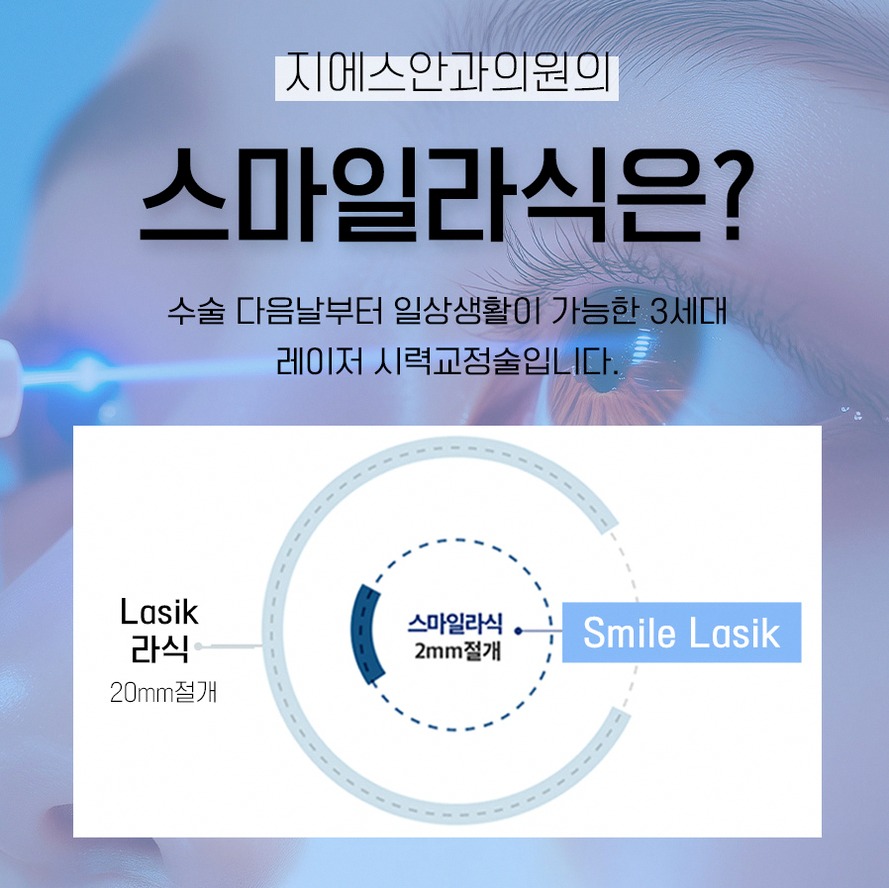
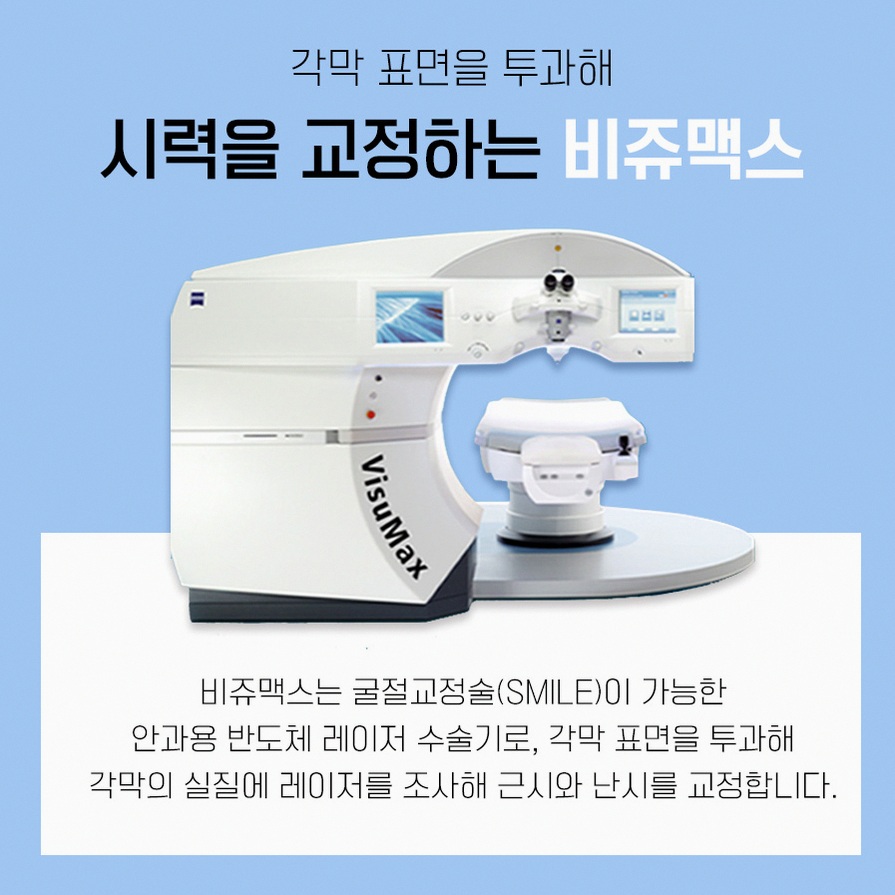
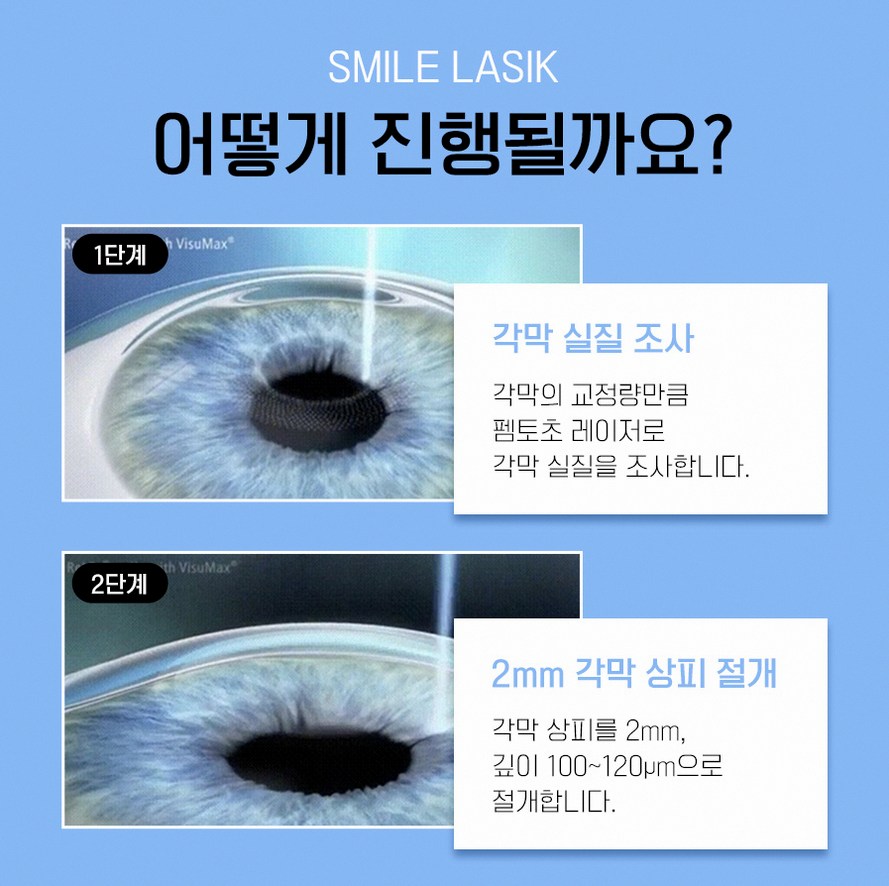
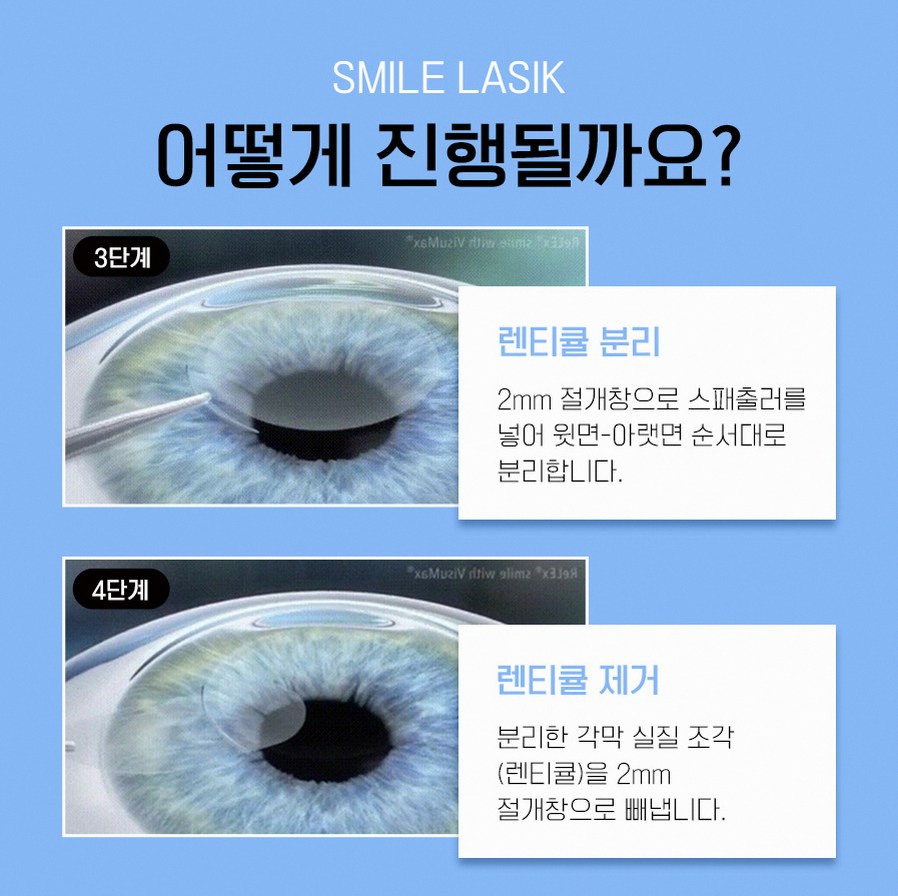
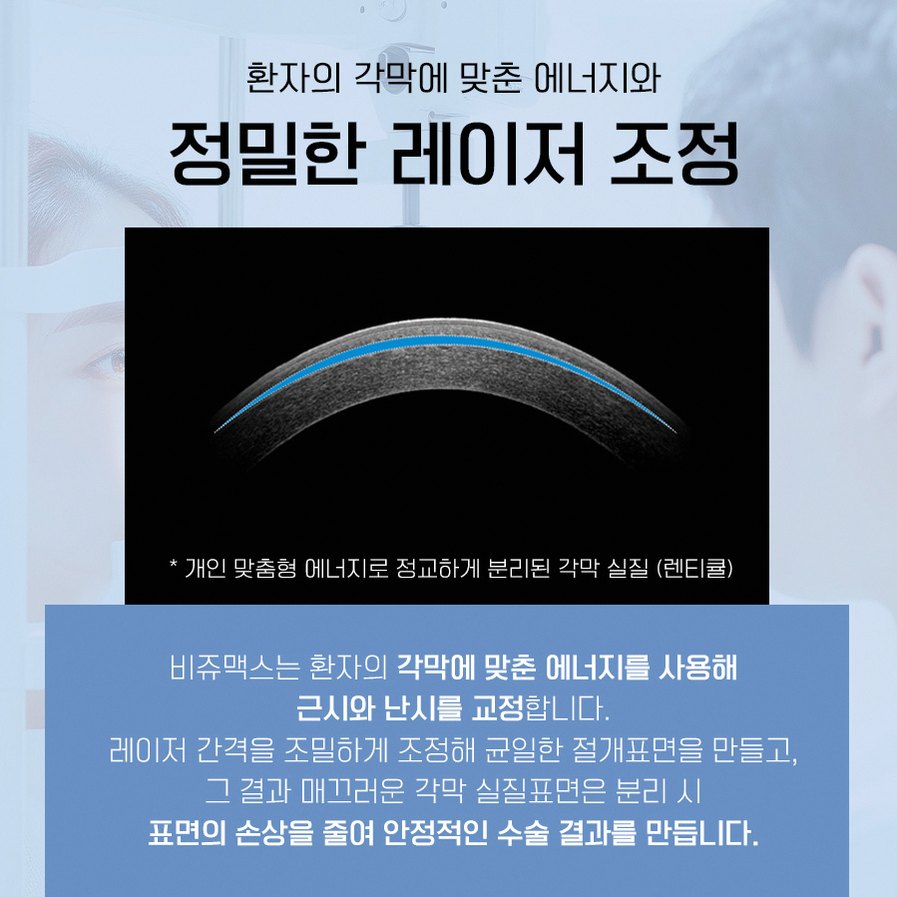
SMILE LASIK is a form of laser vision correction that uses a femtosecond laser to create a tiny lens‑shaped piece of tissue (called a lenticule) inside the cornea. The surgeon then removes this lenticule through a very small incision, without creating a large flap on the surface of the cornea.
Because there is no wide flap, more of the corneal structure is preserved compared with traditional flap‑based LASIK. This small‑incision approach is designed to maintain more biomechanical stability of the cornea and may reduce certain flap‑related issues.
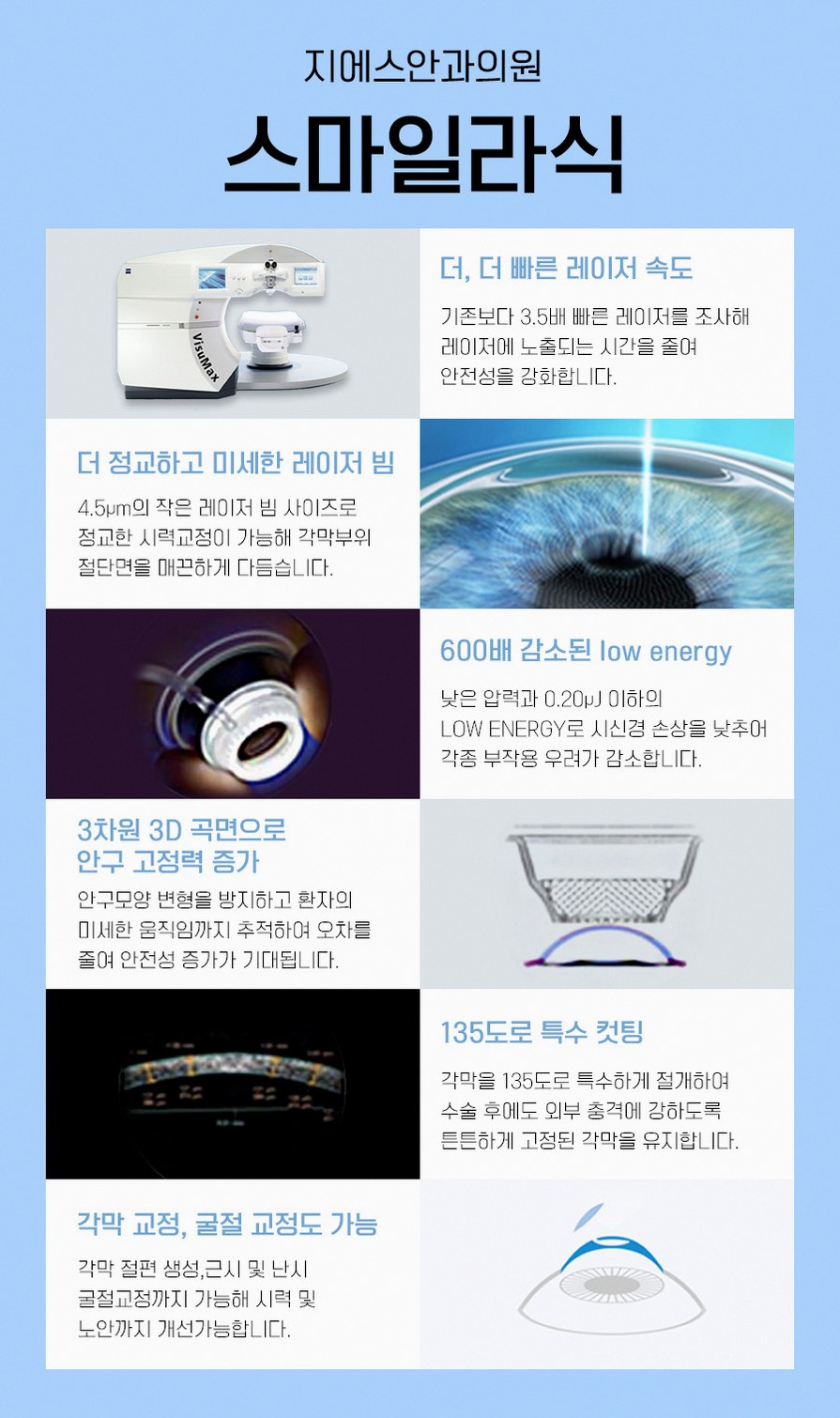
SMILE Pro is a newer-generation SMILE procedure using the ZEISS VISUMAX 800 platform. The VISUMAX 800 performs laser delivery in about nine seconds. Some surgeons suggest that a shorter laser and suction time may reduce discomfort for some patients, though individual experiences vary; patients should discuss comfort expectations and procedural details with their surgeon. Shorter application time is one technical feature of the platform and may also be helpful for clinic scheduling, but outcomes depend on many factors including preoperative assessment and surgical technique.
How SMILE compares with other laser options
Compared with traditional LASIK, SMILE uses a smaller incision and does not require lifting a broad flap. Many patients report less dryness and less foreign‑body sensation after surgery, although individual experiences vary.
Compared with LASEK or surface procedures, SMILE usually offers faster visual recovery and less discomfort in the first days after surgery, because the surface layer of the cornea is mostly preserved. However, LASEK or similar procedures may still be recommended in certain cases, such as very thin corneas.
Newer procedures like SILK (sometimes called Silk LASIK) and other advanced LASIK variants are also available in some centers. These can be suitable alternatives when SMILE is not ideal. Lens implantation (such as ICL or other phakic lenses) is another option for very high myopia or thin corneas where laser removal of tissue is not advisable.
Who may consider SMILE LASIK or SMILE Pro
SMILE LASIK and SMILE Pro are generally considered for adults with stable myopia and astigmatism who want to reduce dependence on glasses or contact lenses. Typical candidates are people whose prescription has not changed significantly for at least one to two years.
You may consider SMILE if you:
Have healthy eyes without active disease
Have a corneal thickness and shape suitable for small‑incision laser correction
Are comfortable with the idea of permanent surgical change to your cornea after detailed counseling
Can follow pre‑ and post‑operative instructions and attend follow‑up visits
You may be guided toward other options if you have very thin or irregular corneas, signs of keratoconus, severe dry eye, significant cataract, or certain retinal conditions. In such cases, surface laser, lens implantation, or cataract‑related procedures may be safer.
How to choose a good SMILE LASIK clinic near Gyodae Station
When you search for the best SMILE LASIK near Gyodae Station, distance and price are only the starting points. For international patients, it is more practical to focus on medical quality, equipment, and systems.
Location and accessibility
Gyodae Station and Gangnam Station are on a major north–south road called Gangnam-daero. This area is a central hub with many medical facilities and convenient access from airports and other parts of Seoul.
For SMILE LASIK, you will usually need several visits: pre‑operative examination, surgery day, and follow‑up appointments. Being close to a main subway line like the Gyodae–Gangnam area makes it easier to manage these visits, especially if you are staying in a hotel nearby.
Key selection criteria for SMILE LASIK clinics
When comparing clinics near Gyodae Station and Gangnam Station, consider the following points.
Medical team and background
Look for a dedicated ophthalmology clinic where the surgeons focus on vision correction and related procedures. It is helpful if the doctors have training or faculty experience at large university hospitals, because this often means they are familiar with complex cases and standardized protocols.
A team structure with multiple ophthalmologists can also be reassuring. It allows for internal discussion of difficult cases, shared experience, and continuity of care if one doctor is unavailable.
Equipment and SMILE platforms
For SMILE LASIK, the laser platform is central. Clinics that offer both VISUMAX 800 and VISUMAX 500 can provide a full range of SMILE options.
VISUMAX 500 is used for standard SMILE LASIK. A clinic with more than one VISUMAX 500 unit can operate two rooms in parallel, which supports high case numbers and offers redundancy if one unit needs maintenance.
When a clinic owns multiple SMILE platforms, it suggests a long‑term commitment to small‑incision laser correction rather than a temporary investment.
Experience and case volume
Ask about cumulative case numbers and the reference year. For example, some centers in the Gangnam area report hundreds of thousands of eyes operated for vision correction and cataract surgery as of recent years.
For SMILE Pro in particular, it is useful to know how many eyes have been treated and how quickly the numbers have grown. This gives you a sense of how familiar the surgeons and staff are with the specific workflow of the VISUMAX 800 platform.
Pre‑operative examination standards
A good SMILE LASIK clinic will not rush you into surgery. Instead, it will perform a detailed pre‑operative examination, which usually includes:
Precise measurement of your glasses or contact lens prescription
Corneal thickness and topography to check shape and stability
Pupil size and other optical measurements
Tear film and dry eye evaluation
Retinal examination, especially in high myopia or older patients
These tests help determine whether SMILE LASIK is appropriate or whether another option, such as SILK, LASEK, or lens implantation, would be safer.
Retina support for high‑myopia and older patients
People with high myopia have a higher risk of retinal problems. For them, having a retina specialist or a dedicated retina center within the same clinic is a practical safety advantage.
Before SMILE LASIK, a retina specialist can check for weak areas, tears, or other conditions that might need treatment or closer monitoring. After surgery, if you notice floaters or flashes of light, immediate access to retina care is important.
Education, training, and certifications
Clinics that serve as clinical education sites for medical schools or as training centers for industry partners are usually required to maintain standardized protocols and documented outcomes.
International certifications, such as ISO 9001 and 14001 for SMILE LASIK, indicate that the clinic has formal systems for quality management and environmental management around its SMILE processes.
When a clinic is recognized by device manufacturers, such as being part of a ZEISS SMILE GOLD CLUB, a SMILE pro CENTER, or a SILK training center, it suggests that the clinic is involved in early adoption, data sharing, and training of other surgeons.
GS Eye Center as an example near Gangnam Station
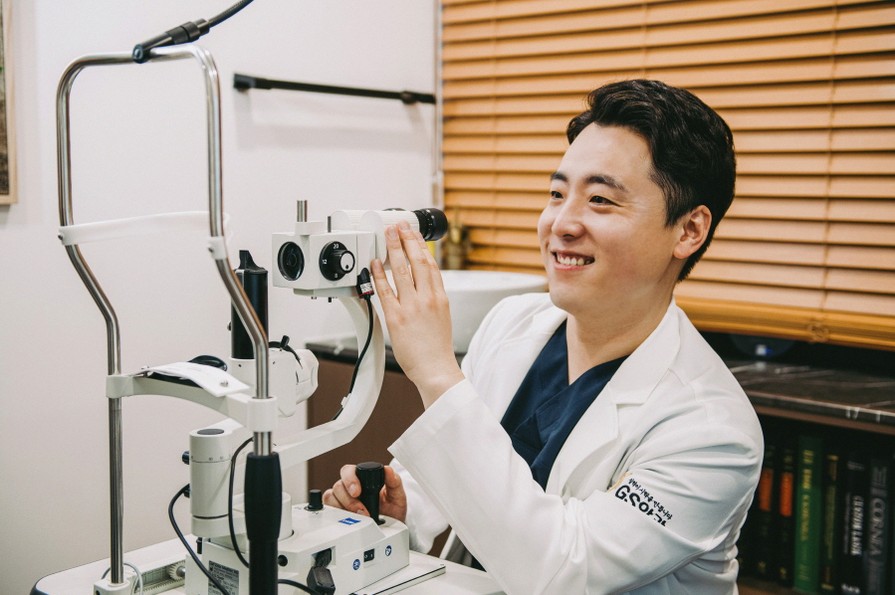
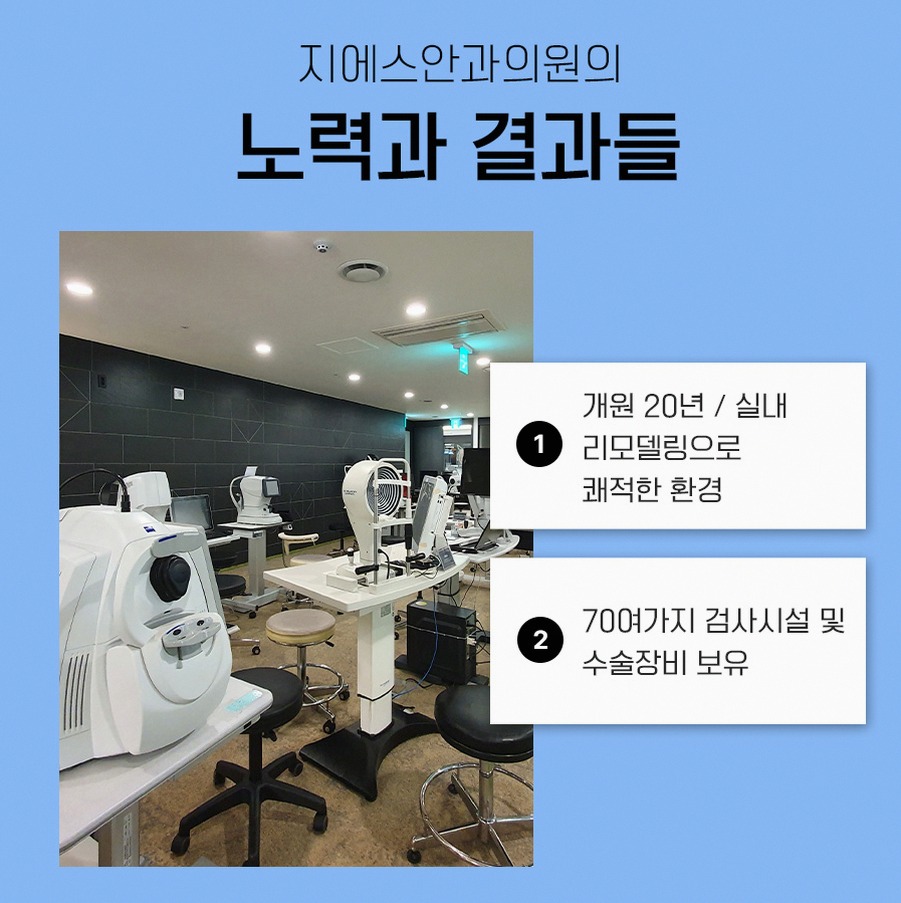
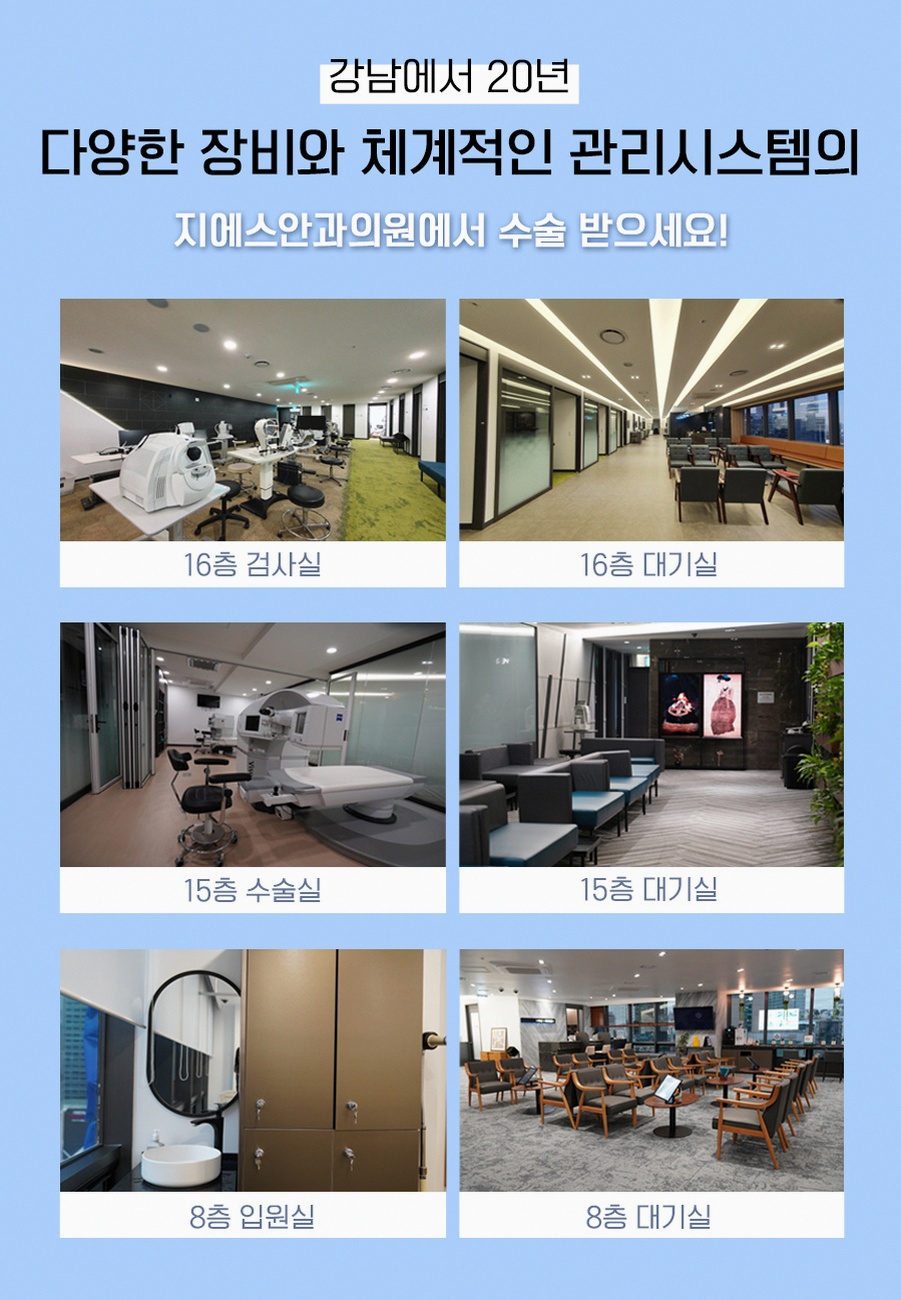
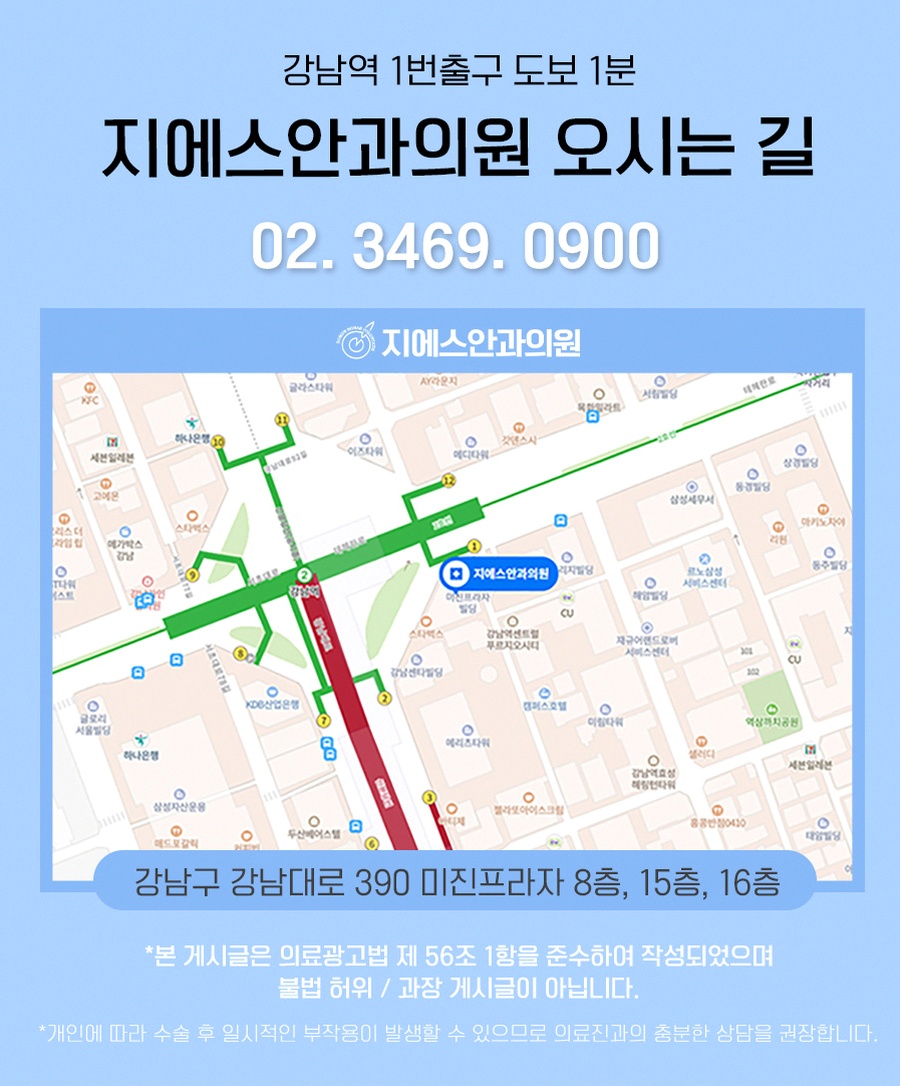
GS Eye Center is an ophthalmology clinic located on Gangnam-daero in Gangnam-gu, Seoul, in the Mijin Plaza building on the 8th, 15th, and 16th floors, near Gangnam Station, which is one subway stop from Gyodae Station. It has been operating at the same location since 2005 as a dedicated eye clinic focused on vision correction and cataract surgery.
The clinic emphasizes medical skill and careful clinical judgment as the core of its vision correction outcomes. The team is structured around the idea that good intent, detailed examination, and conservative decision‑making are more important than quick promises.
Medical staff and structure
There are seven ophthalmologists at the clinic. The representative director, Dr. Moo Yeon Kim, is an ophthalmologist with a medical doctorate and previously served as an ophthalmology professor at a major Catholic university medical center. As of 2024, he also holds an adjunct faculty appointment in ophthalmology.
Several other surgeons have backgrounds as clinical instructors or assistant professors at large university hospitals and retinal centers, including Seoul National University Hospital, Catholic University hospitals, and Inje University hospitals. The clinic also operates a separate retina center run by fellowship‑trained retina specialists, which is relevant for high‑myopia and older patients undergoing vision correction.
Experience and performance
As of 2023, the clinic reports a cumulative total of about 300,000 eyes operated for vision correction and cataract surgery. This includes a wide range of procedures such as SMILE LASIK, SMILE Pro, SILK, LASIK variants, LASEK, lens implantation, presbyopia correction, and cataract surgery.
For SMILE Pro specifically, the clinic reached 5,000 eyes by October 2024, 10,000 eyes by August 2025, and 15,000 eyes by April 2026. These stepwise milestones indicate a steadily growing SMILE Pro program.
The clinic was the first in Korea to join the ZEISS SMILE GOLD CLUB in 2021 and was designated a ZEISS SMILE pro CENTER in 2023. It later became a SILK training center in 2026. It achieved ISO 9001 and 14001 certification for SMILE LASIK in 2020.
The clinic was also the first in Korea to perform GLAZE lens implantation in 2019, with 1,000 eyes by 2022 and 3,000 Optiflex GLAZE cases by 2025, and has performed 3,000 eyes with Alcon PanOptix multifocal intraocular lenses as of 2024. These numbers are not directly about SMILE but show broader refractive and lens surgery experience, which can be important for patients who are not ideal SMILE candidates.
Education and training roles
In 2023, the clinic was designated as a clinical education institution for a Catholic university medical school, and in 2024 it became an Asia‑Pacific clinical education center for BIOTECH. This means that medical students and visiting doctors observe and learn within its systems, which encourages standardized protocols and peer oversight.
For patients, these roles translate into practical benefits such as refined surgical techniques, structured safety checklists, and access to the latest technology and methods.
Equipment and SMILE platforms at the clinic
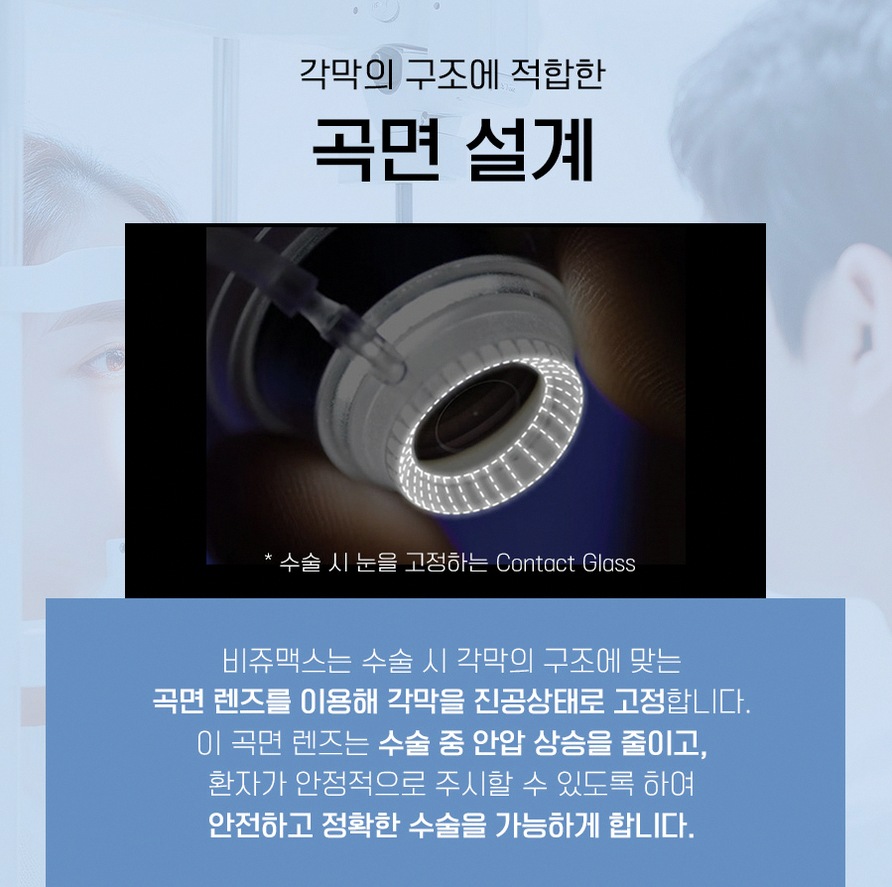
The clinic owns all three major SMILE‑related laser platforms from ZEISS. It uses VISUMAX 800 for SMILE Pro, with laser time within about nine seconds, and two VISUMAX 500 units for standard SMILE LASIK.
For patients, this means:
Shorter suction time and potentially more comfort during SMILE Pro
Flexibility to choose between SMILE Pro and standard SMILE depending on your eye condition and surgeon’s judgment
Redundancy and scheduling flexibility due to multiple VISUMAX 500 units, which can reduce delays and support high‑volume experience
The clinic also offers SILK and other advanced corneal procedures, but these are mainly used as alternatives when SMILE is not the best choice.
Typical SMILE LASIK journey for overseas patients
For international patients visiting Korea, it is helpful to understand the usual steps from online inquiry to follow‑up.
Online consultation and pre‑visit preparation
Before you travel, most clinics in the Gangnam area, including GS Eye Center, can provide online or email consultation. To make this efficient, prepare the following information:
Your age and country of residence
Your current glasses or contact lens prescription (sphere, cylinder, axis if available)
How long your prescription has been stable
Any known eye conditions or previous eye surgeries
Any systemic diseases such as diabetes or autoimmune disease
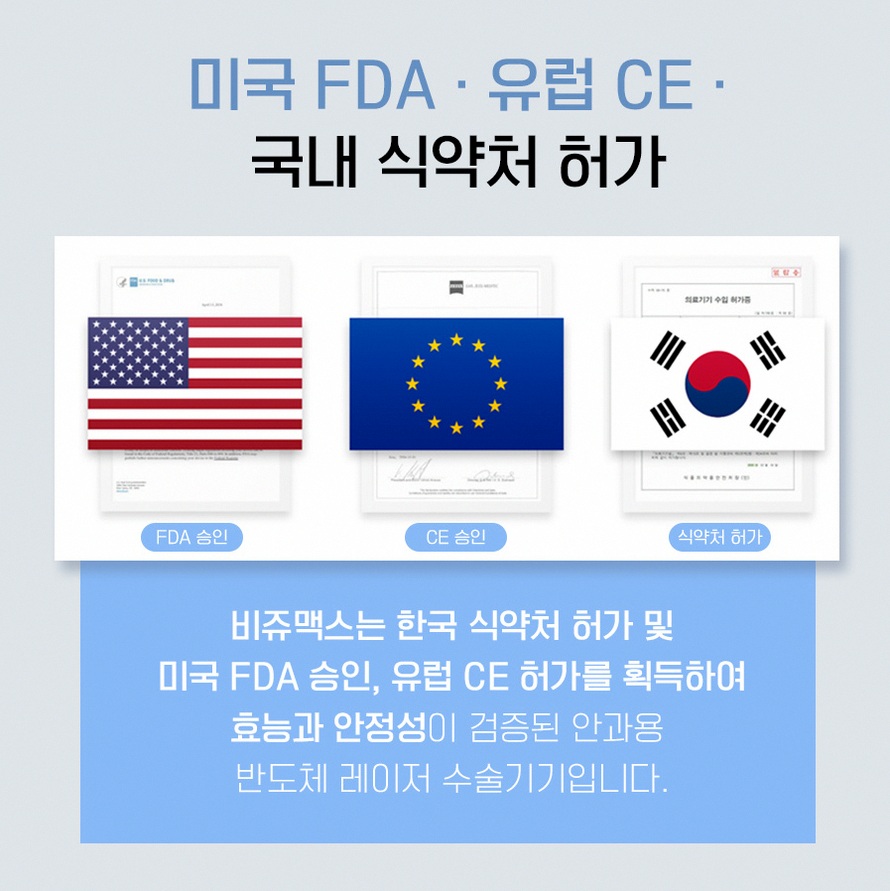
If you have recent eye examination reports, corneal topography, or retinal scans, you can send them in advance. They cannot replace a full examination in Korea, but they help the medical team anticipate possible issues.
You can also prepare a list of questions, such as:
Which SMILE platforms are available (VISUMAX 800 for SMILE Pro, VISUMAX 500 for standard SMILE)
How many SMILE and SMILE Pro cases the clinic performs per year
How the clinic handles complications or unexpected findings
What follow‑up schedule is recommended for overseas patients
Expected timeline for a Korea visit
While exact schedules vary by clinic and individual case, a common structure for an overseas SMILE LASIK visit is as follows.
Day 1: Comprehensive examination and consultation
On your first visit, you will undergo a detailed eye examination. This usually includes refraction, corneal thickness measurement, topography, pupil size, tear film evaluation, and retinal examination. You may be asked to stop wearing soft contact lenses for several days before this visit to allow your cornea to return to its natural shape.
After the tests, you meet the surgeon to discuss whether SMILE LASIK or SMILE Pro is suitable, or whether another option such as SILK, LASEK, or lens implantation is safer. The doctor should explain the expected range of outcomes, potential risks, and recovery process.
Day 2 or 3: Surgery day
If you are a suitable candidate and decide to proceed, surgery is usually scheduled within a few days, depending on the clinic’s policy and your travel plan.
On the day of SMILE LASIK or SMILE Pro:
You will receive anesthetic eye drops; general anesthesia is not used.
The eye is gently positioned under the VISUMAX 800 or 500 laser.
The laser creates the lenticule and small incision, which takes only seconds.
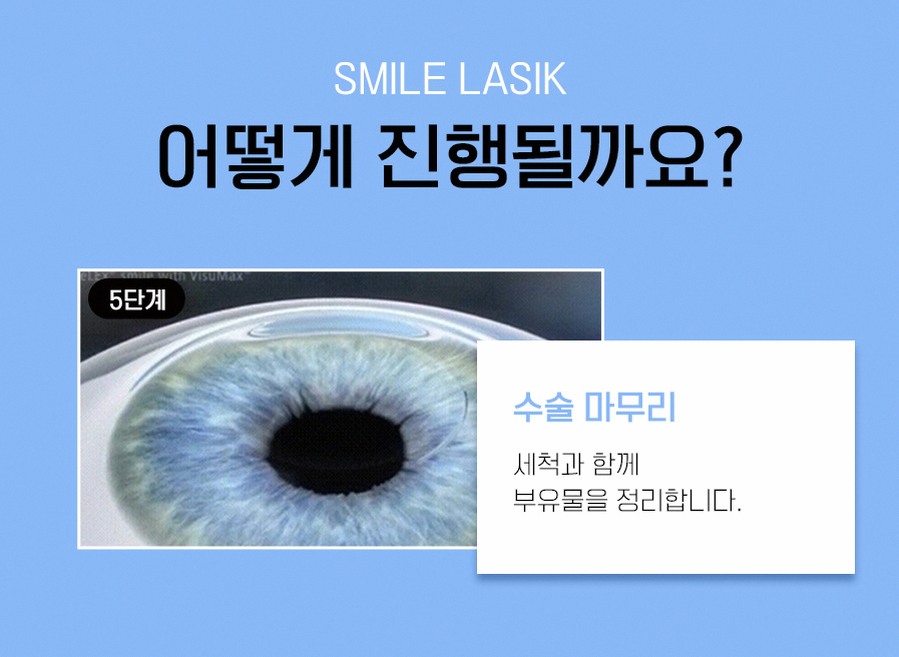
The surgeon removes the lenticule through the tiny opening.
The same process is repeated for the other eye.
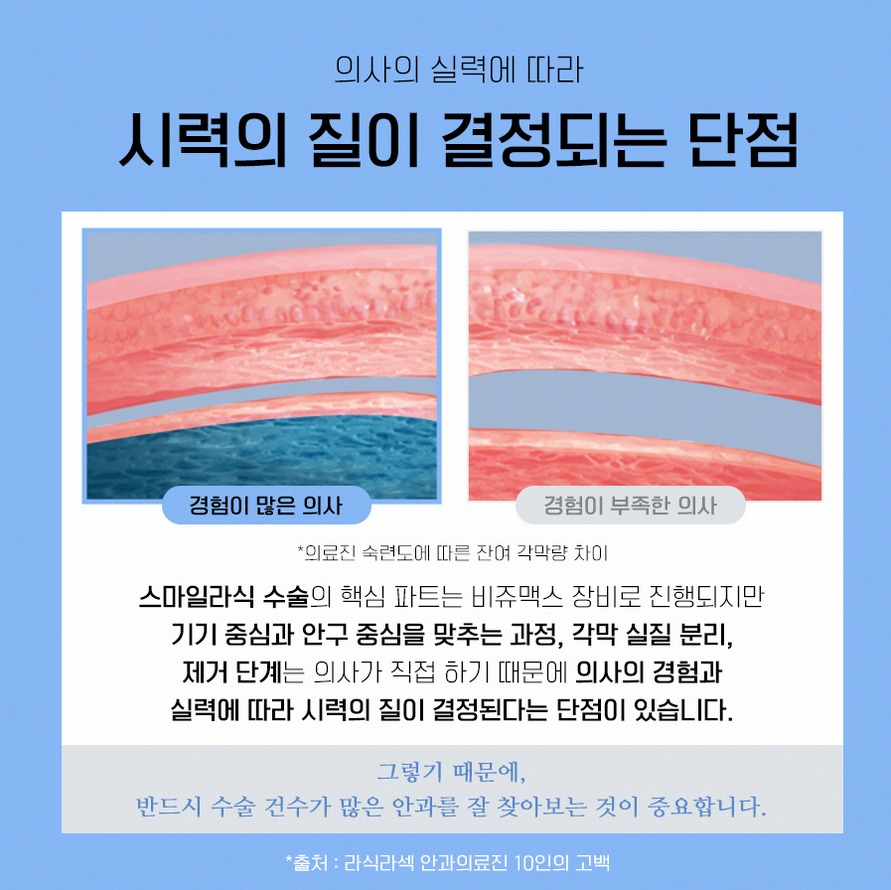
The entire time in the laser room is usually short, and you go home or back to your accommodation the same day. You should arrange for someone to accompany you or plan for a short taxi ride, as your vision may be hazy immediately after surgery.
Early follow‑up and return home
Most clinics will see you the next day to check the corneal surface, early healing, and vision. Additional visits are typically scheduled over the following days or weeks, for example at one week and one month, but the exact schedule depends on the clinic and your travel plans.
If you are staying in Korea for a short time, discuss in advance how to combine necessary follow‑ups within your stay and how to continue care in your home country. The clinic may provide written summaries or recommendations for your local eye doctor.
Aftercare and long‑term care
After SMILE LASIK or SMILE Pro, you will use prescribed eye drops for a period determined by the clinic. These often include antibiotic and anti‑inflammatory drops, as well as lubricating drops for dryness.
In the first days and weeks, you should:
Avoid rubbing your eyes
Avoid swimming pools and hot tubs for a period recommended by the clinic
Use protective eyewear if there is a risk of impact or dust
Follow the schedule for eye drops exactly
Some patients experience dryness, glare, or halos, especially at night, in the early period. These symptoms often improve over time but can vary between individuals. If you have a history of dry eye, mention it during your initial consultation so that preventive measures can be planned.
For long‑term care, regular eye examinations are still important, especially if you have high myopia, systemic diseases, or a family history of eye disease. Even after successful SMILE, age‑related changes such as presbyopia and cataract can appear later in life.
Who may not be suitable for SMILE LASIK
Not everyone is a candidate for SMILE LASIK or SMILE Pro. You may be advised against SMILE if you have:
Very thin corneas or irregular corneal shape
Suspicion or diagnosis of keratoconus
Severe dry eye disease that does not respond to treatment
Certain retinal conditions that require monitoring or treatment
Uncontrolled systemic diseases such as poorly controlled diabetes or autoimmune conditions
In such cases, a responsible clinic will recommend alternatives. These may include LASEK or surface laser, SILK, lens implantation such as ICL or other phakic lenses, or cataract‑related procedures for older patients with lens opacity.
Practical tips when searching “best SMILE LASIK near Gyodae Station”
When you compare clinics in the Gyodae–Gangnam area, consider making a simple checklist.
Questions to ask during consultation
Which SMILE platforms do you use? Do you have VISUMAX 800 for SMILE Pro and VISUMAX 500 for standard SMILE?
How many SMILE or SMILE Pro cases have your surgeons performed, and what is your cumulative experience as of the current year?
What is your pre‑operative examination protocol? Do you routinely check corneal topography, dry eye, and retina?
Is there a retina specialist or retina center available for high‑myopia patients?
What are the main reasons you would recommend against SMILE and suggest another procedure instead?
How do you handle complications or unexpected findings before or after surgery?
Comparing clinics beyond price
It is natural to compare costs, but for eye surgery, it is important to weigh price against:
The experience and training of the surgeons
The availability of the latest SMILE platforms and multiple units
The thoroughness of examination and counseling
The presence of a structured aftercare system
Recognized designations such as training center roles and international certifications
A slightly longer subway ride from Gyodae Station to Gangnam Station may give you access to a center with higher case volume, more advanced equipment, and stronger support systems.
Frequently asked questions about SMILE LASIK near Gyodae Station
Is SMILE Pro very different from standard SMILE LASIK?
SMILE Pro is based on the same small‑incision concept as standard SMILE but uses the newer VISUMAX 800 platform. The main difference is the faster laser time, around nine seconds, which shortens suction time and can improve comfort. The surgeon’s planning and your eye condition still determine the overall outcome, so the choice between SMILE and SMILE Pro should be made after detailed examination and discussion.
How long should I stay in Korea for SMILE LASIK?
Many overseas patients plan to stay in Korea for about one to two weeks, allowing time for examination, surgery, and early follow‑up visits. The exact length depends on the clinic’s policy and your individual healing. It is important to discuss your travel schedule in advance so that essential follow‑ups can be arranged before you return home.
Can high‑myopia patients safely undergo SMILE LASIK?
High‑myopia patients can sometimes be good candidates for SMILE LASIK, but they require very careful evaluation of corneal thickness, corneal shape, and the retina. A clinic with a dedicated retina center can check for retinal weak points or tears before surgery. In some high‑myopia cases, lens implantation or a combination of treatments may be safer than removing more corneal tissue.
What if I am not suitable for SMILE LASIK after the examination?
A thorough clinic will not push you into SMILE if it is not appropriate. Instead, the doctor may suggest alternatives such as LASEK, SILK, ICL or other lens implantation, or cataract‑related procedures for older patients. The goal is to match the method to your eye condition and long‑term safety, even if that means not having laser surgery at all.
Soft call to action for online consultation
If you are considering SMILE LASIK or SMILE Pro near Gyodae Station and are open to visiting the nearby Gangnam Station area, you can contact GS Eye Center for an online consultation before you travel. By sharing your prescription and basic medical information in advance, you can receive preliminary guidance on whether SMILE may be suitable and how to plan your visit to Seoul.
This article is for general information only and does not replace a personal consultation with a qualified ophthalmologist. Individual suitability for SMILE LASIK or any other procedure can only be determined after a full eye examination and discussion of your medical history and lifestyle.
- 공유 링크 만들기
- X
- 이메일
- 기타 앱


댓글
댓글 쓰기