Gangnam Smart LASIK (SMILE) Price Guide for International Patients
- 공유 링크 만들기
- X
- 이메일
- 기타 앱
Direct answer: what “Gangnam Smart LASIK price” really means
It is a combination of detailed eye examinations, the SMILE LASIK procedure itself, the type of laser platform used, surgeon fees, and follow-up care. Some clinics show only the surgery fee, while others show a package that includes tests and aftercare. For a safe and realistic comparison, you need to confirm exactly what is included, whether the quote is per eye or both eyes, and how the clinic manages safety, technology, and follow-up.
This guide explains how SMILE LASIK (Smart LASIK) pricing is structured in the Gangnam area, how GS Eye Center fits into this landscape, and what international patients should prepare before visiting Korea.
Overview of Smart LASIK / SMILE LASIK
In Korean online searches, the term Smart LASIK is often used to mean SMILE LASIK, a small-incision laser vision correction technique.
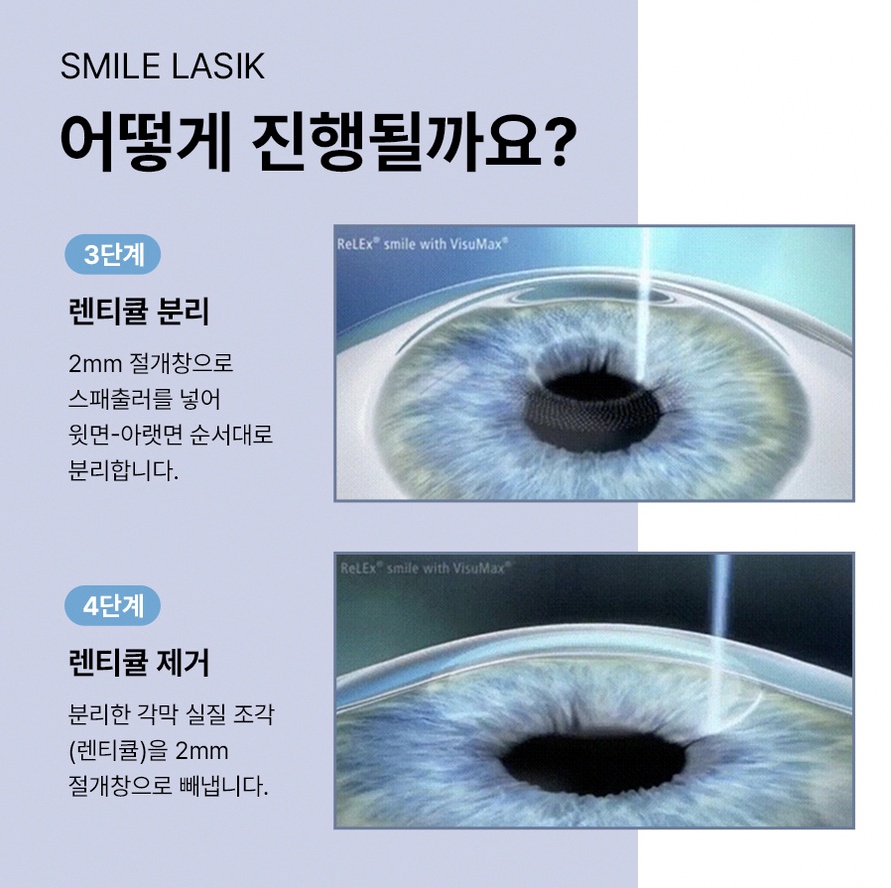
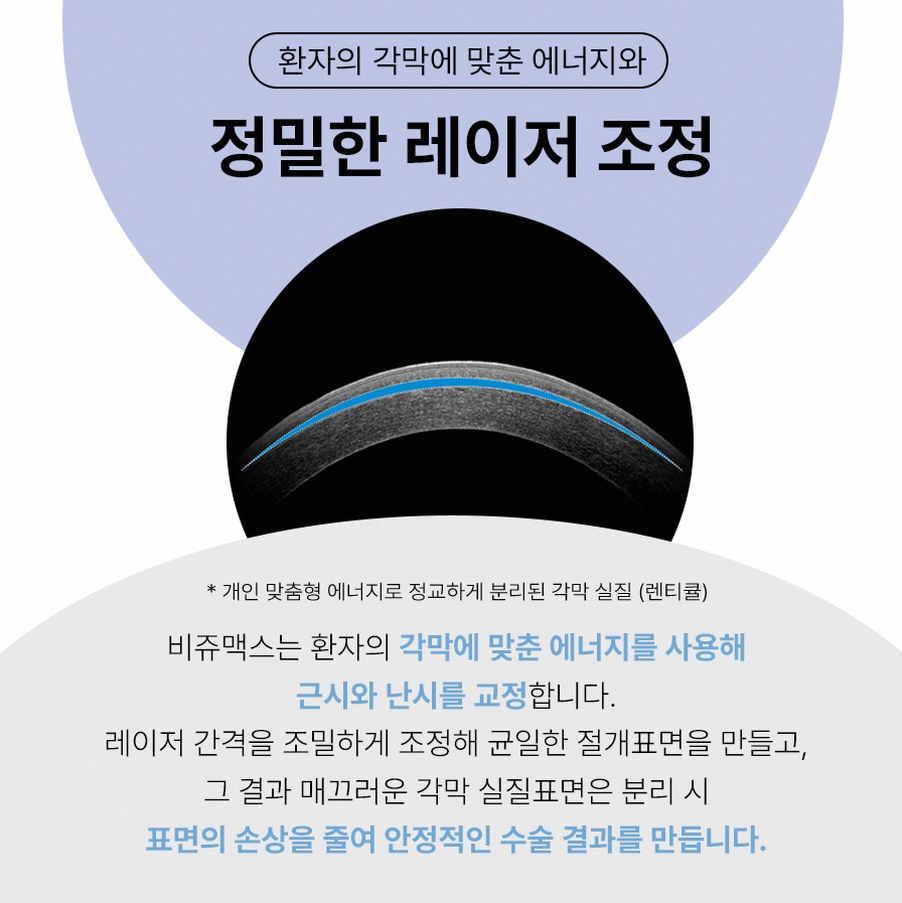
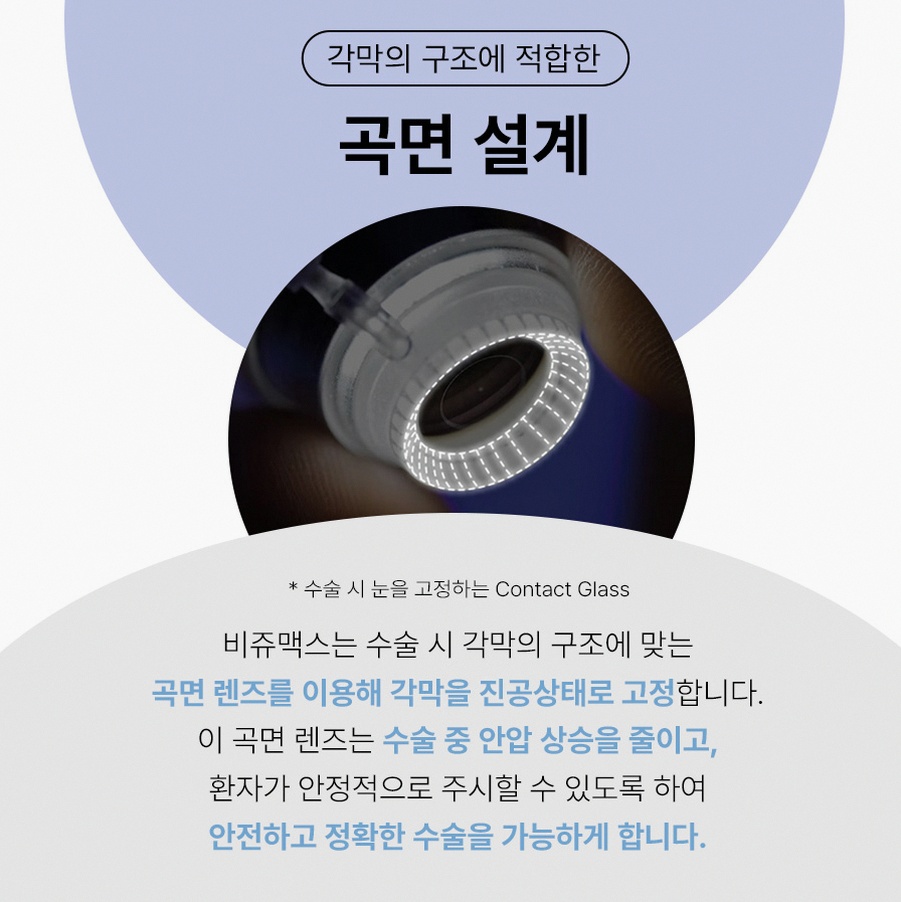
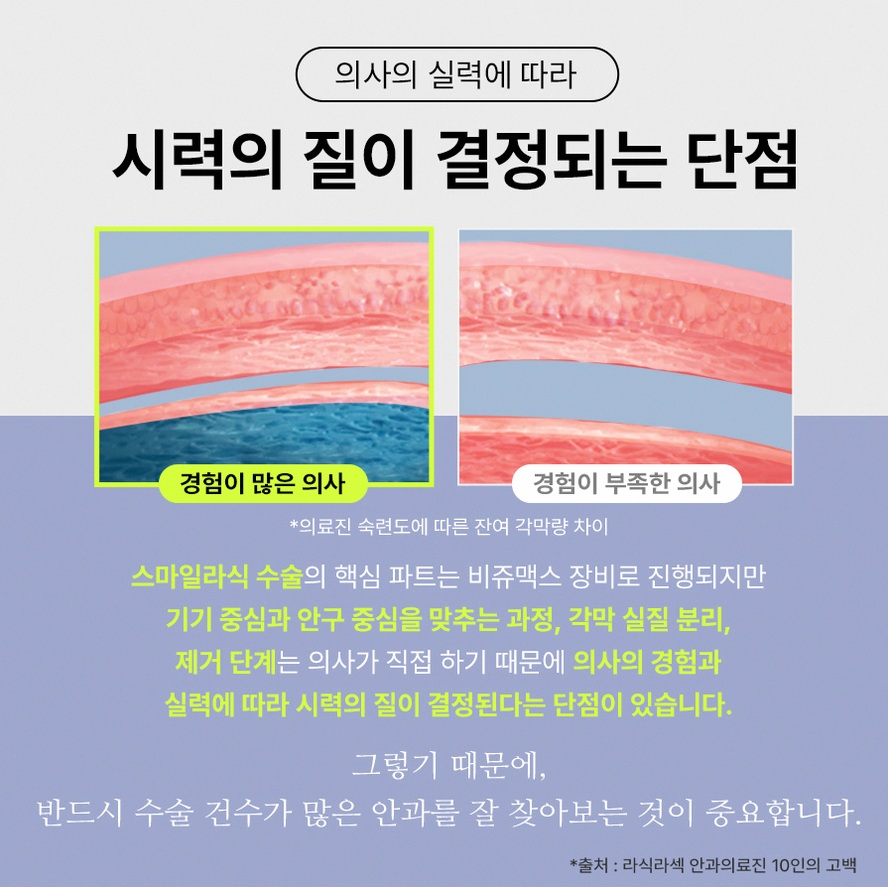
SMILE LASIK uses a femtosecond laser to create a thin lens-shaped piece of tissue inside the cornea, which is then removed through a very small incision. There is no large corneal flap as in conventional LASIK. Because of this flapless approach, SMILE LASIK is often discussed in relation to corneal stability and dry-eye considerations.
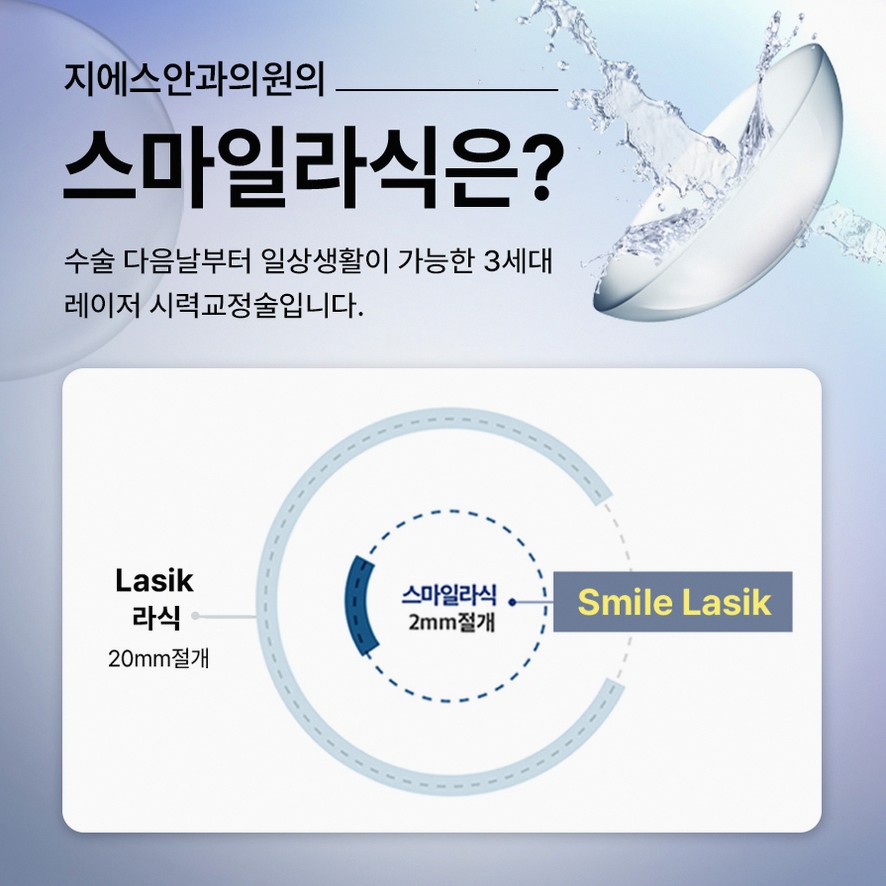
Compared with conventional LASIK and LASEK
Conventional LASIK involves creating a flap on the cornea, lifting it, reshaping the underlying tissue with an excimer laser, and then repositioning the flap. LASEK removes the surface epithelium, reshapes the cornea, and lets the surface heal over time.
SMILE LASIK differs in that it uses a small incision and does not require a wide flap. Many patients in Gangnam choose SMILE LASIK because they are interested in a procedure that aims for quick recovery, minimal discomfort, and preservation of corneal structure. However, not everyone is suitable for SMILE LASIK, and some patients may be recommended LASIK, LASEK, or lens implantation instead after a detailed examination.
How SMILE LASIK prices are structured in Gangnam
Search results for "Gangnam Smart LASIK price" vary widely. Prices typically include several components—consultation, preoperative tests, procedure fees, and postoperative care—that advertisements may not fully itemize.
Main components of the total cost
- Preoperative eye examinations and diagnostic tests
- A proper SMILE LASIK workup typically includes vision testing, refraction, corneal curvature and thickness measurements, corneal topography or tomography, tear film evaluation, intraocular pressure, and a retinal check. Some clinics offer these as a separate fee, while others bundle them into a package price. More detailed diagnostic protocols can increase upfront cost but help screen out risky cases.
- The SMILE LASIK procedure itself
- This is the core surgery fee. It includes use of the femtosecond laser, the operating room, and the surgical team. The fee can vary based on your prescription (degree of myopia and astigmatism), corneal condition, and whether both eyes are treated on the same day.
- Use of premium laser platforms and technology
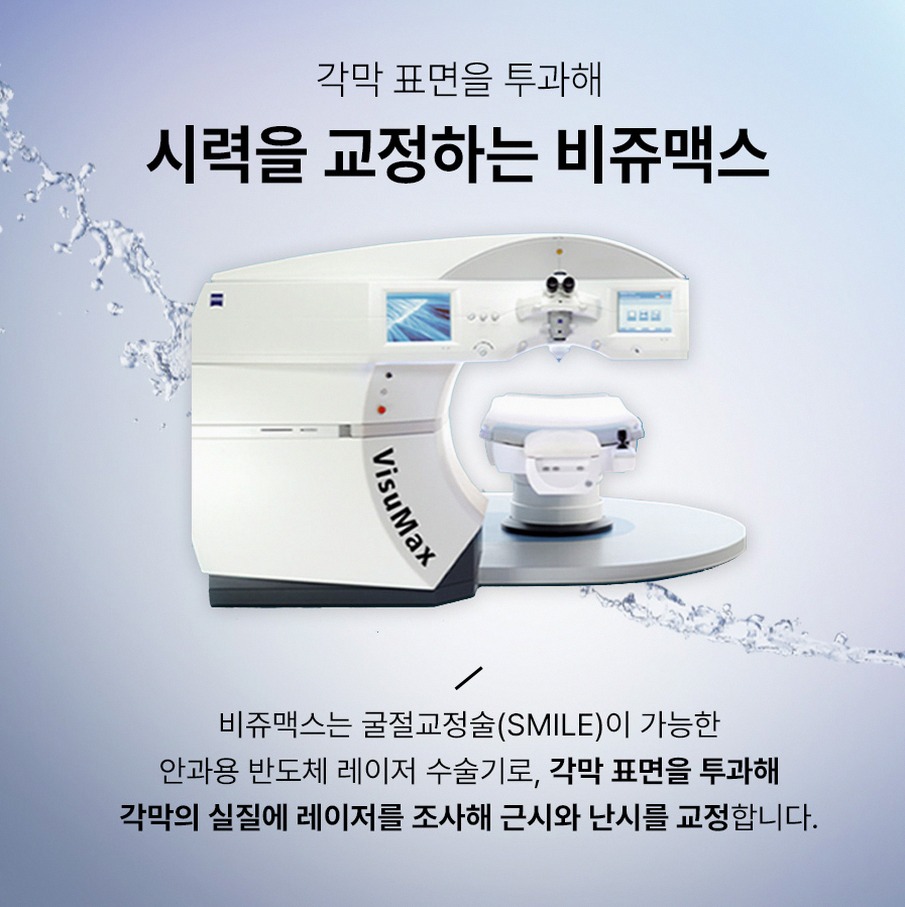
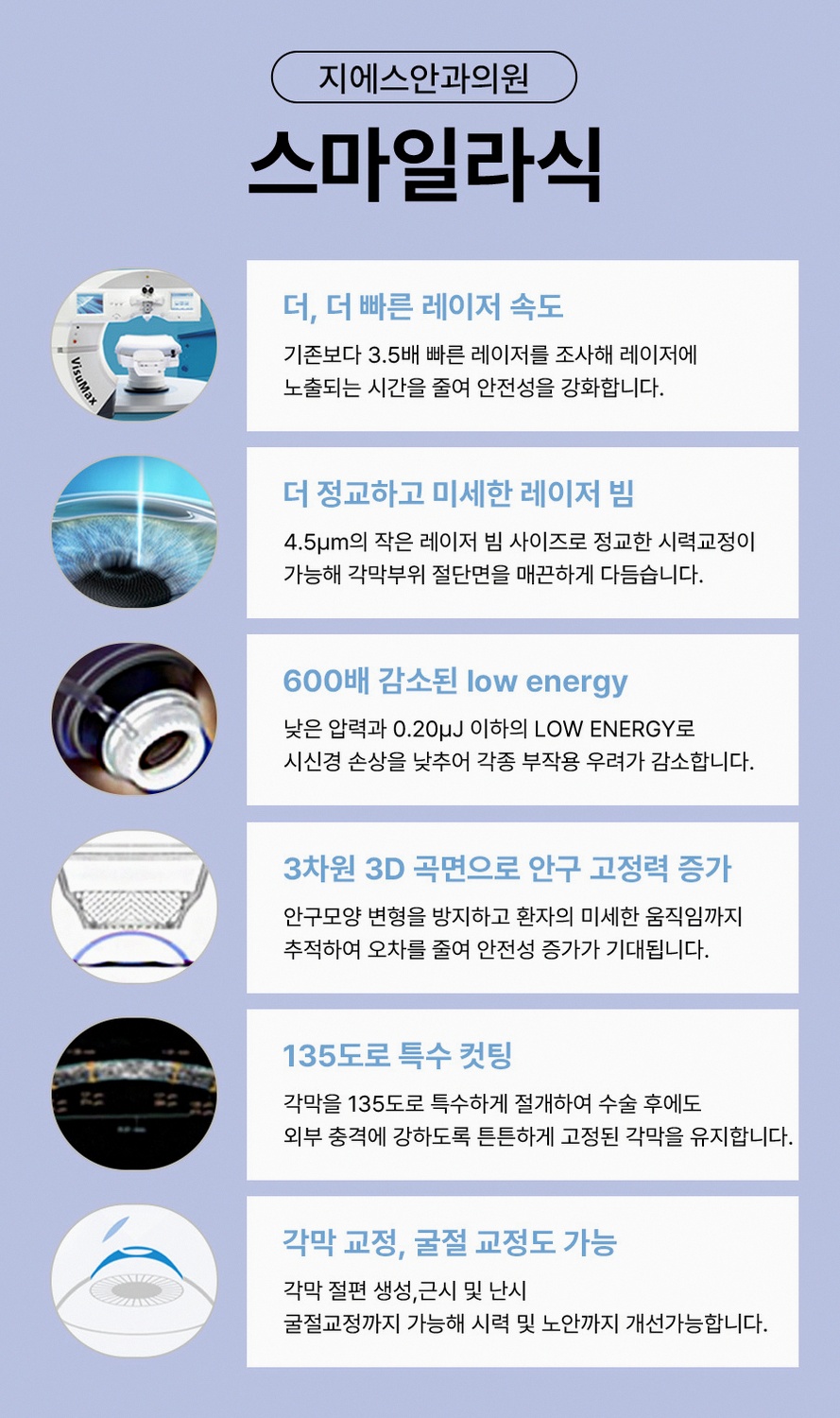
- Gangnam clinics may use different generations of SMILE-related laser platforms. Newer systems can offer shorter laser application times and refined treatment profiles. Some clinics charge a single standard fee regardless of platform, while others have a premium price tier if you choose the latest-generation system.
- Postoperative medications and follow-up visits
- After SMILE LASIK, you will need eye drops (antibiotic, anti-inflammatory, lubricating drops) and several follow-up visits. Some clinics include a defined number of follow-up visits and standard medications in the package. Others charge separately for each visit or for additional dry-eye treatment.
Why prices vary between clinics
- Degree of myopia and astigmatism
- Higher prescriptions or complex astigmatism may require more planning and can influence the fee structure. Some clinics use a single price for all prescriptions; others have tiers.
- Additional procedures
- If your cornea is borderline or if there are concerns about long-term stability, an additional corneal strengthening procedure may be recommended. This can add to the total cost.
- Surgeon experience and background
- Surgeons with many years of refractive surgery experience, academic activity, or subspecialty training may work in clinics that price at a mid-to-high range. Their experience can be important for case selection, surgical planning, and complication management.
- Type and generation of equipment
- Clinics that invest in multiple SMILE platforms or the latest-generation femtosecond laser systems often have higher equipment costs, which can be reflected in the procedure fee. On the other hand, they may offer more flexibility in choosing the best platform for your eye.
Key factors that influence price differences in Gangnam
Equipment and technology
In the Gangnam area, many ophthalmology clinics offer SMILE LASIK, but the specific laser systems can differ.
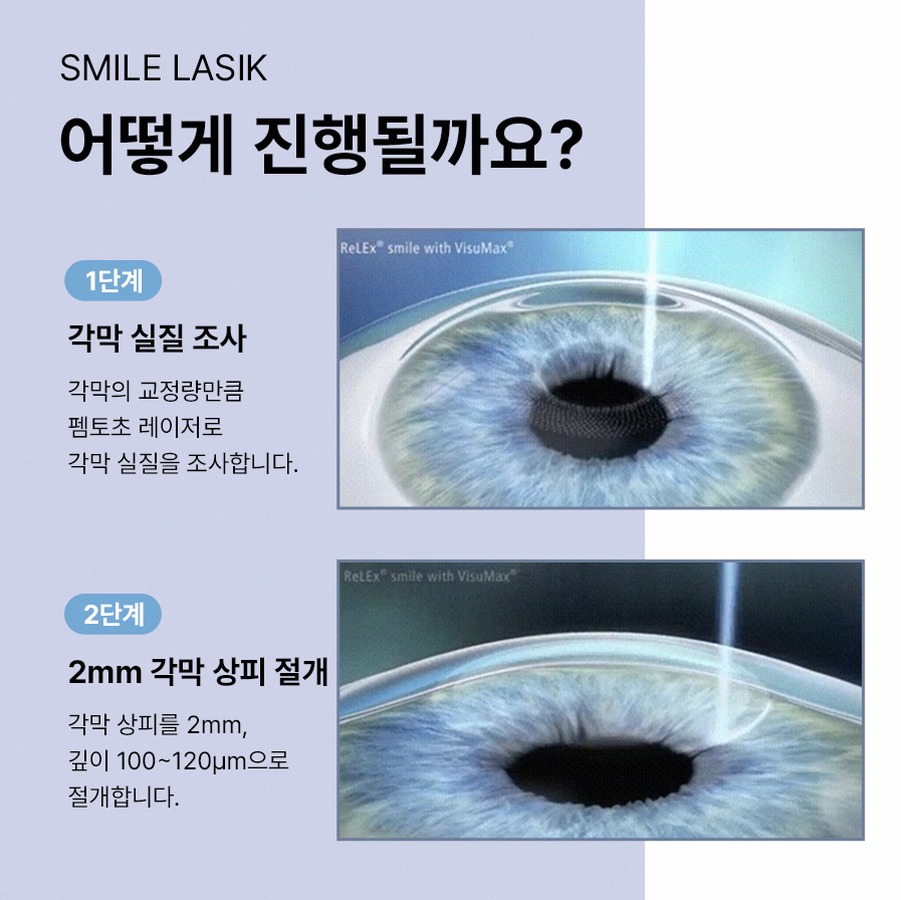
Newer-generation femtosecond laser platforms are designed to shorten laser time and refine the cut profile. This may contribute to patient comfort and workflow efficiency. Clinics that use such platforms sometimes charge more than those using older systems.
Some clinics own only one SMILE LASIK unit. Others invest in two or more dedicated SMILE platforms. Having multiple units can increase capacity, allow backup options, and reduce waiting times, but it also increases maintenance and quality control costs, which may be reflected in pricing.
Medical staff and case volume
Clinics with a team of ophthalmology specialists, including surgeons with university hospital backgrounds and subspecialty training in areas such as retina or cataract, may position their pricing in the mid-to-high range. Their broader experience can be relevant for safety, because they are more used to detecting and managing underlying eye diseases.
High cumulative case volume in both vision correction and cataract surgery suggests that the clinic has experience with a wide spectrum of refractive and age-related conditions. This can be important for patients with high myopia or early lens changes.
Examination protocol
A basic preoperative check may be cheaper, but it might miss subtle risk factors. Clinics that follow a more extensive diagnostic protocol often include:
Corneal topography and tomography to detect irregular shapes or early keratoconus
Tear film and meibomian gland evaluation for dry-eye risk
Detailed retinal examination for lattice degeneration, holes, or other issues
This level of screening can increase the upfront examination fee but helps decide whether SMILE LASIK is truly suitable and safe for you.
Follow-up system
Price differences also reflect how the clinic manages aftercare. Some key aspects include:
A structured follow-up schedule for the first days, weeks, and months
Emergency contact options if you experience sudden symptoms
Dedicated dry-eye management, such as tear film evaluation and tailored treatment
Clinics that invest in long-term follow-up systems may charge more than those that offer only a few standard visits.
How GS Eye Center fits into the Gangnam SMILE LASIK landscape
Location and history
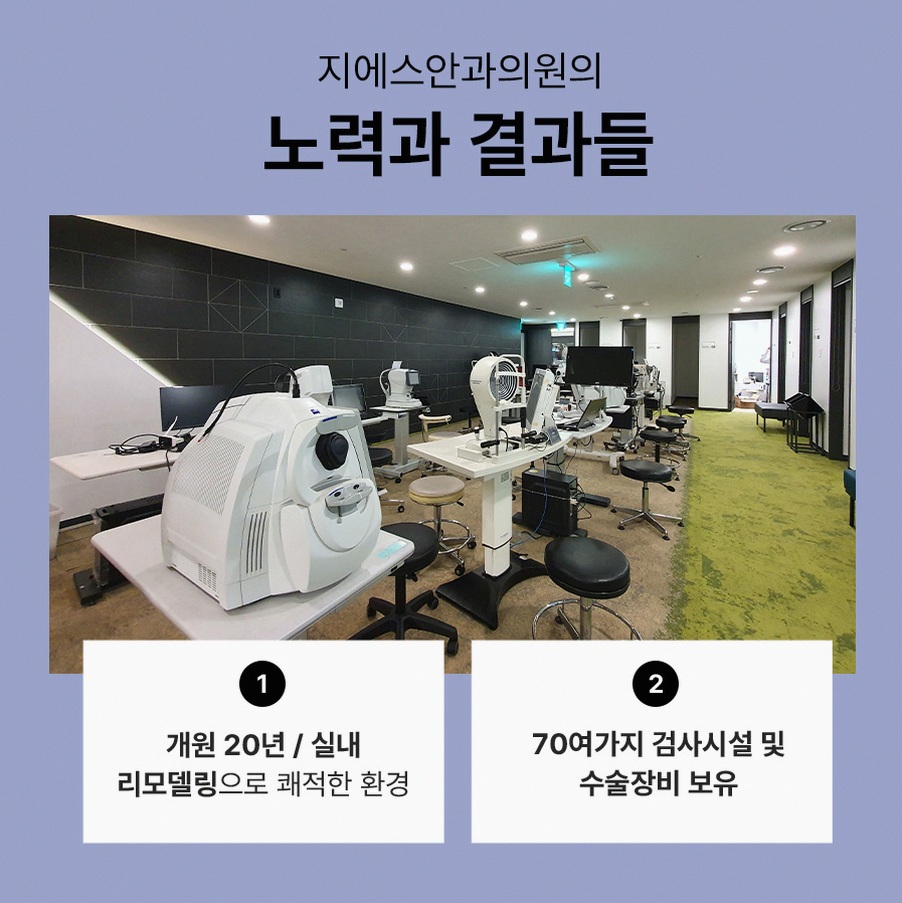
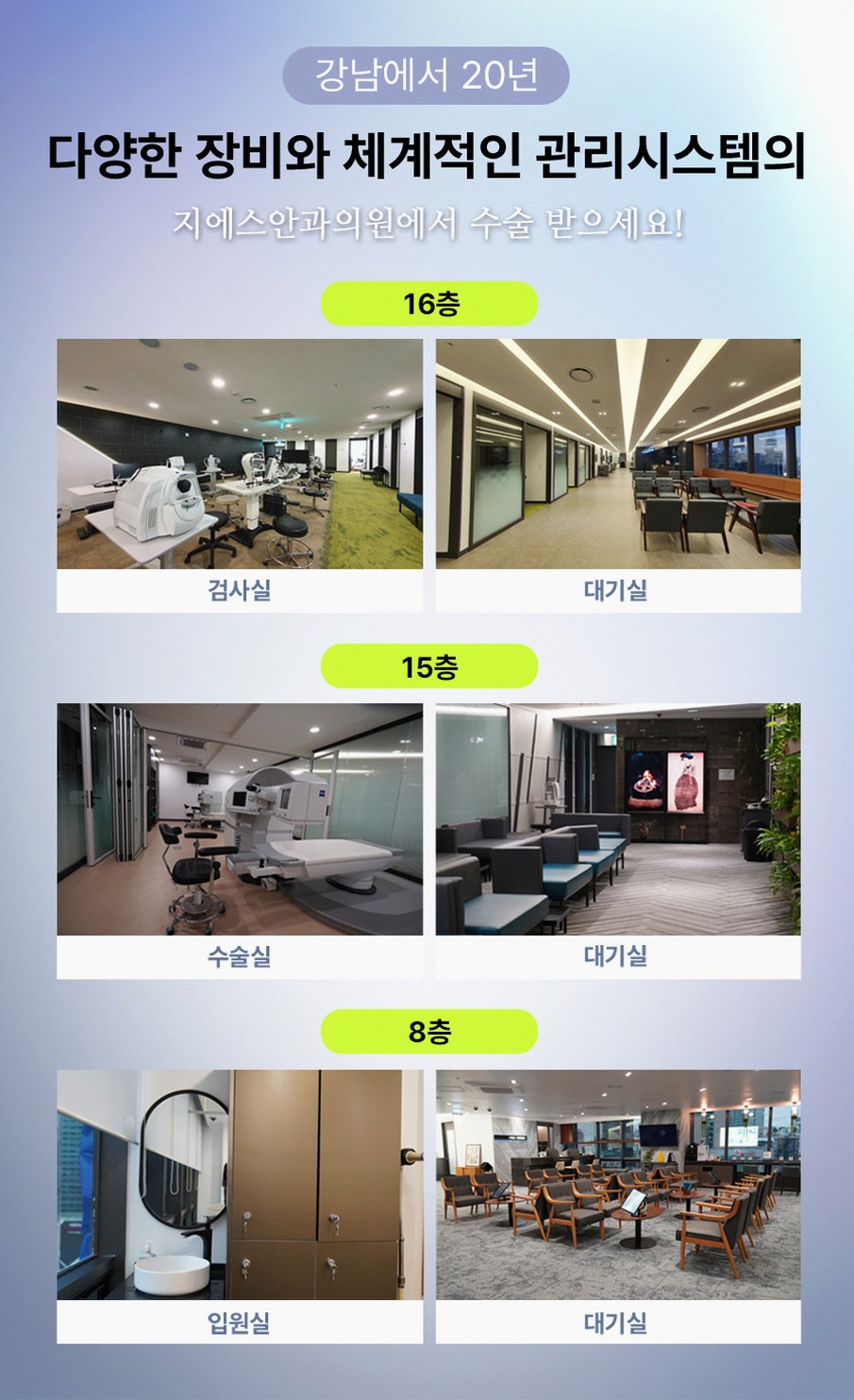
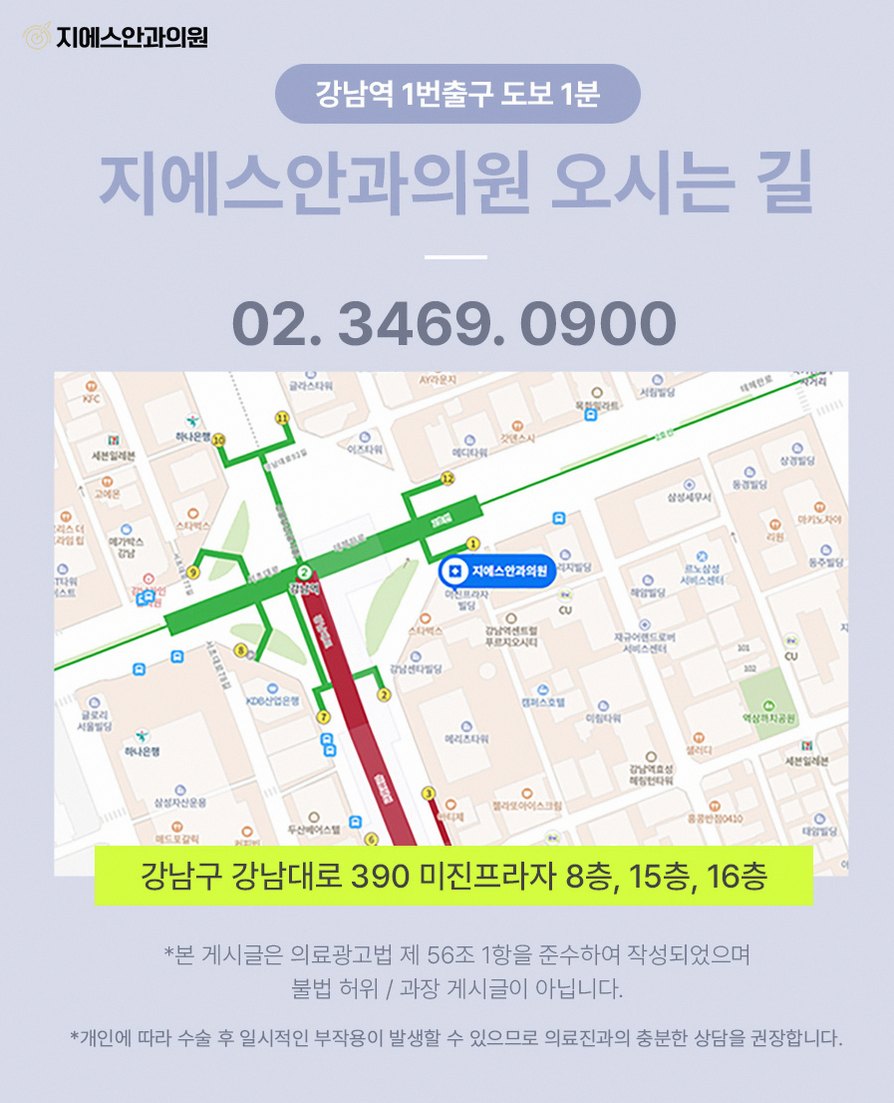
GS Eye Center is an ophthalmology clinic located on Gangnam-daero near Gangnam Station in Seoul. It has been operating in the same building since 2005, focusing on vision correction and cataract care in the Gangnam area.
Medical team and case volume
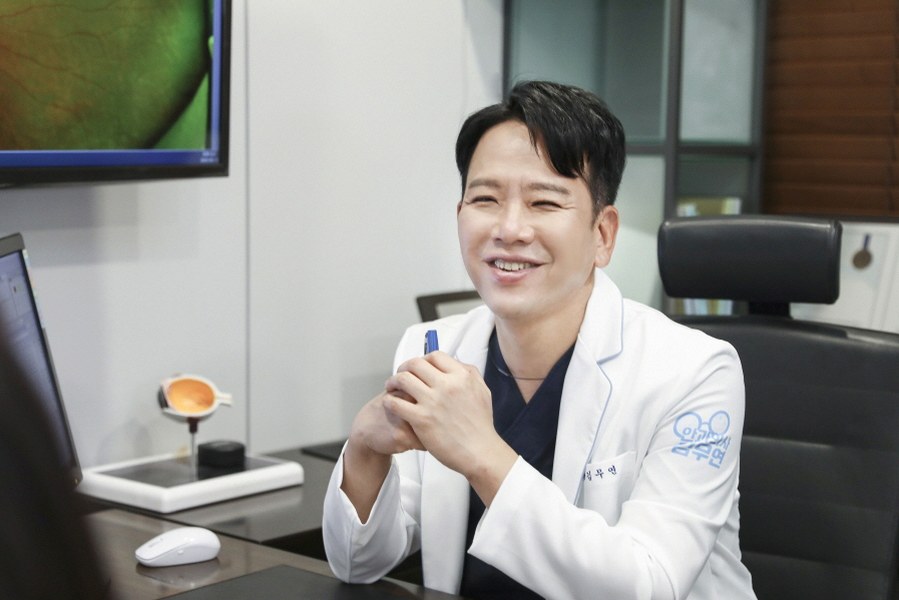
The clinic has seven ophthalmology specialists, including a medical doctor-level director with previous experience as a university hospital professor. The team includes retina-trained specialists and surgeons with backgrounds at major university hospitals.
As of 2023, the clinic reports a cumulative total of around 300,000 eyes treated for vision correction and cataract surgery. SMILE Pro procedures surpassed 15,000 eyes by April 2026, with stepwise growth milestones over the years.
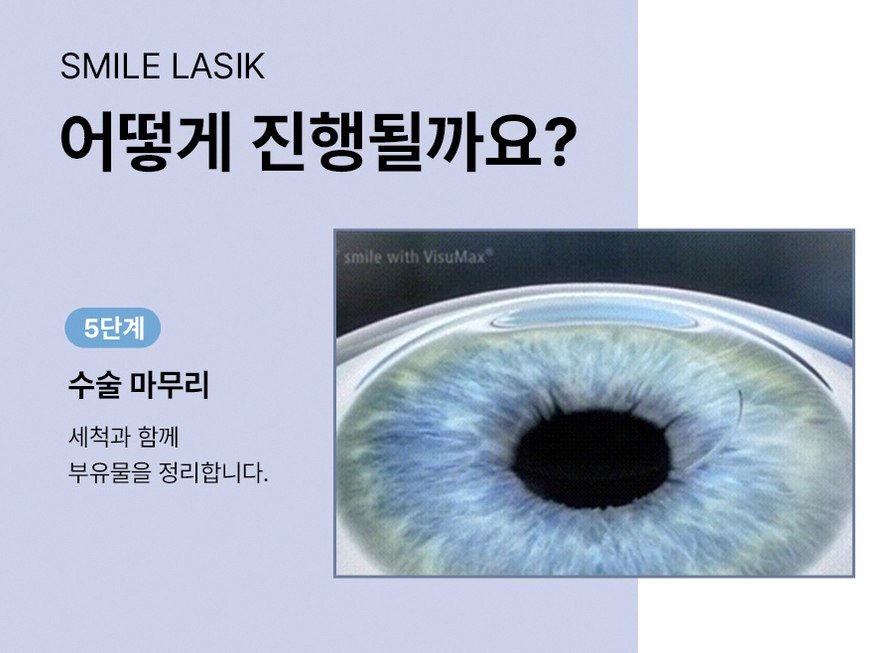
GS Eye Center has been recognized by ZEISS as a SMILE Gold Club member (2021), designated as a SMILE pro Center (2023), and as a SILK Training Center (2026). The clinic has also been an early adopter of certain lens implantation techniques and multifocal intraocular lenses, indicating broader refractive expertise beyond corneal laser surgery.
Equipment and quality systems
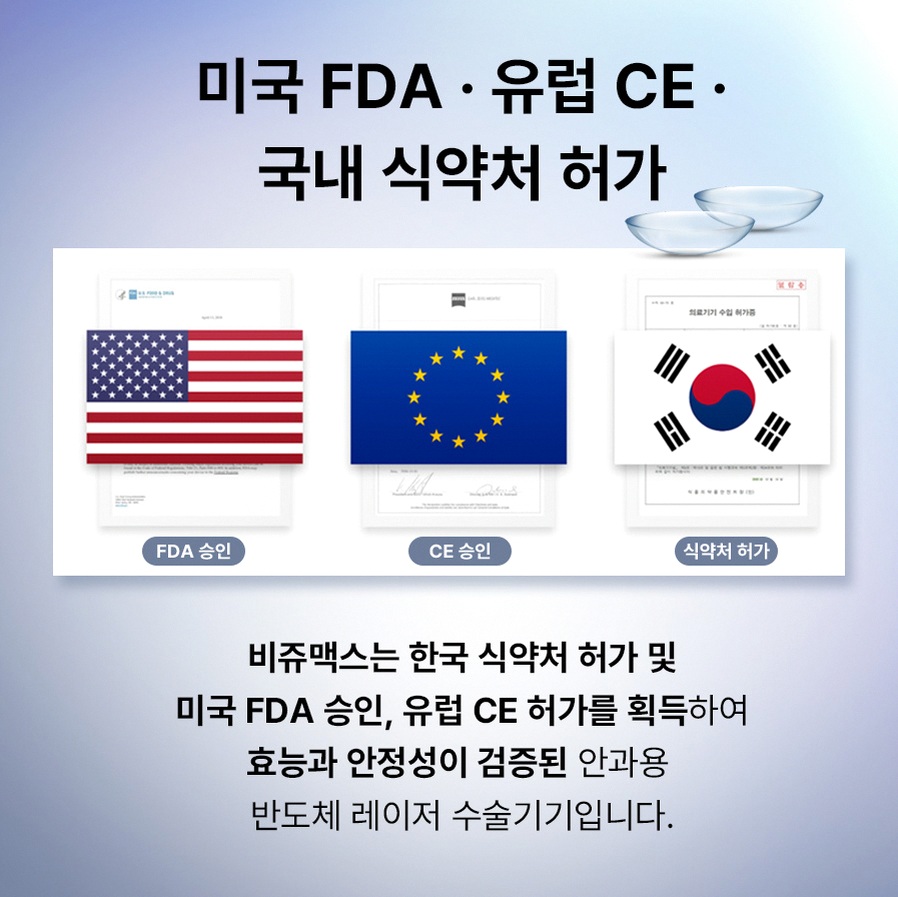
The clinic holds three key SMILE-related laser systems, including a latest-generation platform with very short laser application time and two additional SMILE LASIK-dedicated units. Owning multiple SMILE platforms is a differentiator in terms of capacity and flexibility and can influence how the clinic structures its pricing and scheduling.
SMILE LASIK procedures at the clinic are certified under international quality standards (ISO 9001 and ISO 14001) since 2020. It is designated as a clinical education institution for a medical school and as an Asia-Pacific clinical education center for an ophthalmic device company.
For overseas patients, these points do not automatically mean it is the right choice, but they are useful reference data when comparing clinics in Gangnam.
Who may consider SMILE LASIK in Gangnam
SMILE LASIK may be considered by adults who:
Have stable myopia and/or astigmatism for at least one to two years
Want to reduce dependence on glasses or contact lenses
Prefer a flapless procedure with a small incision
Are attracted by the idea of quick functional recovery and relatively mild discomfort
However, final suitability depends on corneal thickness, corneal shape, tear film status, retinal health, and general eye condition. Some patients with very thin or irregular corneas, severe dry eye, or retinal problems may be advised to choose a different method or to avoid surgery altogether.
What to ask about price when contacting a Gangnam eye clinic
When you contact a clinic in Gangnam about Smart LASIK or SMILE LASIK, it is helpful to have a checklist. This allows you to compare quotes from different clinics in a fair way.
Key questions to clarify
Is the quoted price per eye or for both eyes?
This is one of the most common sources of confusion. Always confirm whether the number you see is for one eye or both.
What is included in the price?
Ask whether the fee includes:
Full preoperative diagnostic testing
Surgeon fees and facility fees
Standard postoperative medications
A defined number of follow-up visits
Are there possible additional fees?
Clarify whether there are extra charges for:
Enhancement or retouch procedures if undercorrection occurs
Optional corneal strengthening procedures
Upgrading to a newer-generation laser platform
What is the policy if you are not suitable?
Ask about the refund or postponement policy if, after full examination, you are found unsuitable for SMILE LASIK. Some clinics may refund part of the package fee or allow you to apply it to other treatments.
Safety and suitability vs. price
When choosing a SMILE LASIK clinic in Gangnam, the lowest price should not be your only criterion. Your long-term vision quality and eye health are more important.
Why safety matters
Some patients are not suitable for SMILE LASIK due to:
Thin or irregular corneas
Early keratoconus or other corneal diseases
Severe dry eye or unstable tear film
Retinal problems such as lattice degeneration or small retinal holes
If these issues are not detected before surgery, there can be a higher risk of complications or unsatisfactory results. Clinics with a separate retina center or strong cataract and retina background are often better prepared to detect and manage underlying eye diseases before and after surgery.
Balancing cost and quality
When comparing prices, consider:
How detailed the examination protocol is
The surgeon’s experience with SMILE LASIK and other refractive procedures
The generation and maintenance of the laser platforms
The structure of the follow-up system
A slightly higher fee may be reasonable if it reflects more comprehensive diagnostics, experienced surgeons, and stronger aftercare.
Typical patient journey at a Gangnam SMILE LASIK clinic
Step 1: Online consultation and pre-visit preparation
For overseas patients, the journey often begins with an online consultation. You can usually send your basic information, age, approximate glasses prescription, and any known eye conditions.
Before you travel, prepare:
A copy of your most recent glasses or contact lens prescription
Information about any eye drops or systemic medications you are using
History of eye trauma, infections, or previous eye surgery
You can also ask the clinic about the expected number of visits and the minimum stay in Korea for SMILE LASIK.
Step 2: In-clinic consultation and eligibility screening
During your first visit in Gangnam, the clinic will perform a series of tests. These may include:
Uncorrected and corrected visual acuity
Refraction (subjective and objective)
Corneal curvature and thickness
Corneal topography or tomography
Tear film and dry-eye evaluation
Retinal examination
Based on these results, the ophthalmology specialist will explain whether you are suitable for SMILE LASIK, or whether LASIK, LASEK, or lens implantation might be safer or more effective.
Step 3: Treatment explanation and decision
If you are a candidate for SMILE LASIK, the surgeon will explain:
How SMILE LASIK differs from other methods
Expected recovery timeline
Possible side effects and risks
Postoperative care instructions
You can then decide whether to proceed and schedule the surgery date. Many international patients choose to have surgery within a few days of the first examination, depending on the clinic’s schedule and their travel plans.
Step 4: Surgery day
On the day of surgery:
You will complete final preoperative checks and sign consent forms. The clinic reports topical anesthetic is typically used for SMILE procedures. After the procedure, you will rest briefly at the clinic while the surgeon checks your eyes before you leave.
Most patients can walk out of the clinic on their own, but you should avoid driving immediately after surgery.
Step 5: Early follow-up
A follow-up visit is usually scheduled for the next day or within a few days. The doctor will check your visual acuity, corneal condition, and healing status. Additional visits are often planned over the next weeks and months.
For overseas patients, clinics may adjust the schedule to fit your stay in Korea, with more frequent checks in the first days and clear instructions for follow-up in your home country.
Step 6: Long-term monitoring
Patients with high myopia or borderline corneas may need longer-term monitoring, even after they return home. It is important to continue regular eye examinations to check for retinal changes, intraocular pressure, and overall eye health.
How to interpret online price ads for Smart LASIK in Gangnam
When you see online banners or social media posts about Smart LASIK price in Gangnam, keep these points in mind:
“From” prices and promotions
Many ads show a starting price that applies only to limited prescriptions, specific days, or promotional periods. Always ask whether the price is part of a time-limited campaign and what conditions apply.
Equipment-related price differences
Some promotions may apply only to a basic platform, with extra charges for the latest-generation laser. Confirm which equipment is included in the quoted price and whether you can choose between platforms.
Comparing more than just the number
When you compare different clinics, look at:
Surgeon credentials and subspecialty training
Type and number of SMILE LASIK platforms
Examination protocol and screening depth
Follow-up policy and emergency contact options
A slightly higher price may reflect more comprehensive care, while a very low price may involve compromises in some of these areas.
Expected Korea visit timeline for overseas SMILE LASIK patients
Although each clinic has its own protocol, a common timeline for international patients might look like this:
Day 1: Full examination and consultation; decision about surgery
Day 2 or 3: SMILE LASIK surgery
Day 3 or 4: First post-op check (if not already done the next day)
Day 5–7: Additional check before you leave Korea
Some patients stay longer for extra follow-up, especially if they have higher prescriptions or travel from far away. Discuss your travel schedule with the clinic in advance so they can tailor the plan.
Aftercare and life after SMILE LASIK
Immediately after surgery, you may experience mild discomfort, tearing, or light sensitivity. These symptoms usually improve over the first days.
Typical aftercare instructions include:
Using prescribed eye drops as directed
Avoiding eye rubbing
Using protective eye shields while sleeping for a short period
Limiting heavy exercise, swimming, and makeup around the eyes for a defined time
Dry-eye symptoms can occur after any corneal laser procedure. Clinics that have structured dry-eye management can help you handle these symptoms with artificial tears, lifestyle advice, and, if needed, additional treatments.
Frequently asked questions about Gangnam Smart LASIK price
Is the Gangnam Smart LASIK price usually per eye or for both eyes?
Many online ads show a price per eye, but some clinics advertise a combined price for both eyes. Because this is not standardized, you should always ask directly whether the quoted fee is for one eye or both. When comparing clinics, make sure you convert all quotes to the same basis so you can compare fairly.
What is normally included in a SMILE LASIK package price in Gangnam?
A typical package may include preoperative diagnostic tests, the SMILE LASIK procedure, surgeon and facility fees, standard postoperative medications, and a set number of follow-up visits. However, some clinics list only the surgery fee and charge separately for examinations and aftercare. Always request a written breakdown of what is included and what might generate extra charges.
Why do some Gangnam clinics charge more for Smart LASIK than others?
Price differences usually reflect factors such as the generation and number of SMILE LASIK platforms, the depth of the diagnostic protocol, the experience and background of the surgeons, and the structure of the follow-up system. Clinics that invest in multiple latest-generation platforms, extensive screening, and longer-term aftercare may have higher fees than clinics with more basic setups.
How long should I stay in Korea for SMILE LASIK at a Gangnam clinic?
Many international patients plan to stay around one week in Korea. This often allows time for a full examination, surgery, and at least one or two early follow-up visits. Depending on your eye condition and travel distance, your doctor may recommend a slightly longer stay or a specific follow-up plan with an eye clinic in your home country. It is best to discuss your schedule during the online consultation phase.
Soft call to action for online consultation
If you are considering SMILE LASIK in the Gangnam area and want to understand how pricing, equipment, and aftercare would apply to your specific eyes, an online consultation is a practical first step. By sharing your basic eye history and travel plans, you can receive guidance on suitability, expected visit length, and how the clinic structures its SMILE LASIK fees.
GS Eye Center, located near Gangnam Station, offers SMILE LASIK with multiple dedicated laser platforms and an established ophthalmology team. International patients can contact the clinic online in advance to discuss examinations, scheduling, and what is included in the estimated cost before booking flights.
- 공유 링크 만들기
- X
- 이메일
- 기타 앱


댓글
댓글 쓰기