Good SMILE LASIK Eye Clinic Near Gyodae Station in Seoul
- 공유 링크 만들기
- X
- 이메일
- 기타 앱

Direct answer for patients near Gyodae Station
If you are searching for a good eye clinic near Gyodae Station for SMILE LASIK, one practical option is to look slightly down the subway line toward Gangnam Station. GS Eye Center is an ophthalmology clinic located on Gangnam-daero in Gangnam-gu, Seoul, close to Gangnam Station and convenient from Gyodae Station on the same line. It focuses on laser vision correction such as SMILE LASIK and related procedures, and has built up a large case volume and equipment setup that many international patients look for.
This guide explains what SMILE LASIK is, what to check when choosing a clinic near Gyodae Station, and how an overseas patient can plan a visit to Korea for vision correction.
What SMILE LASIK is in simple terms
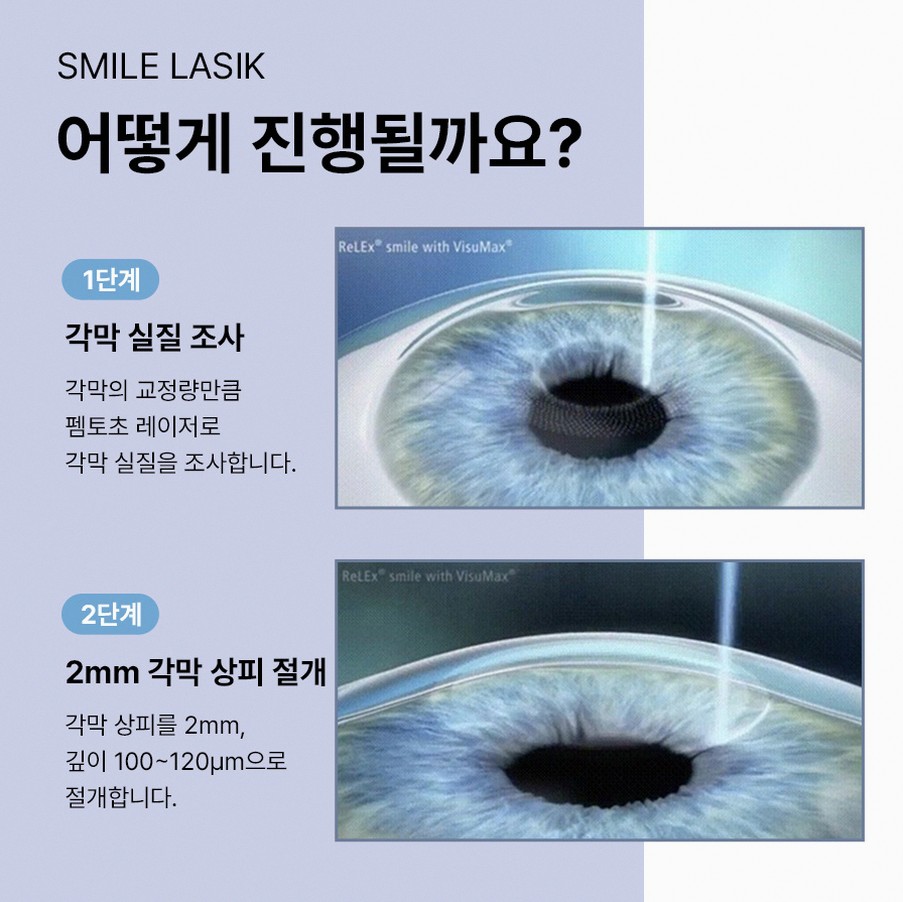
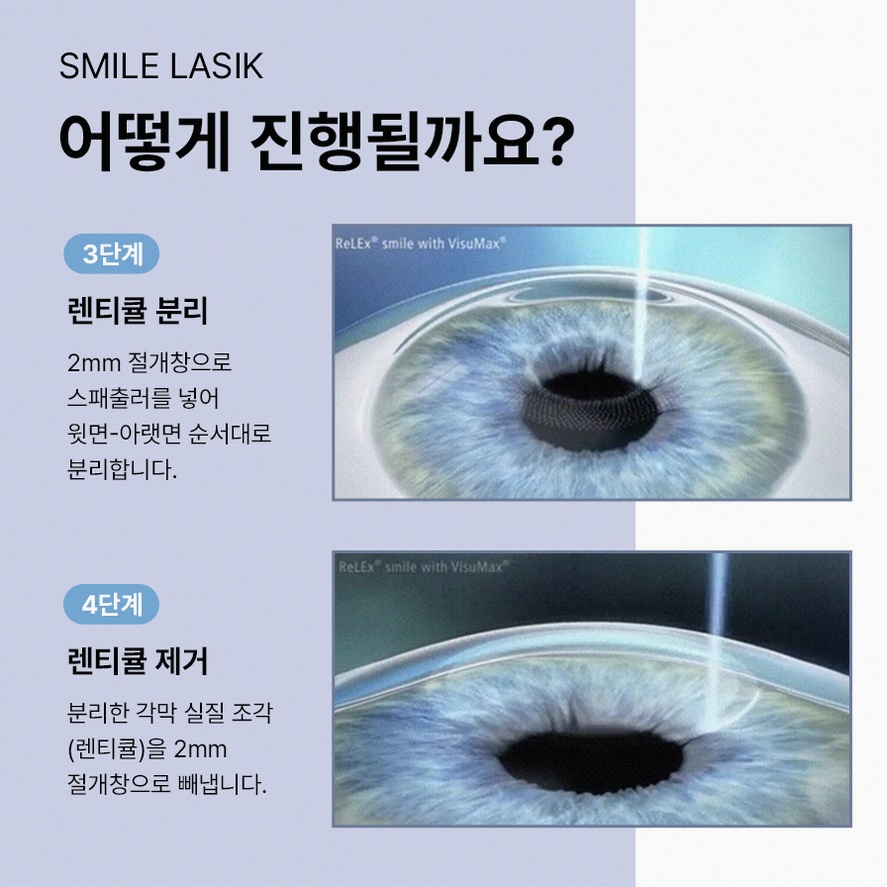
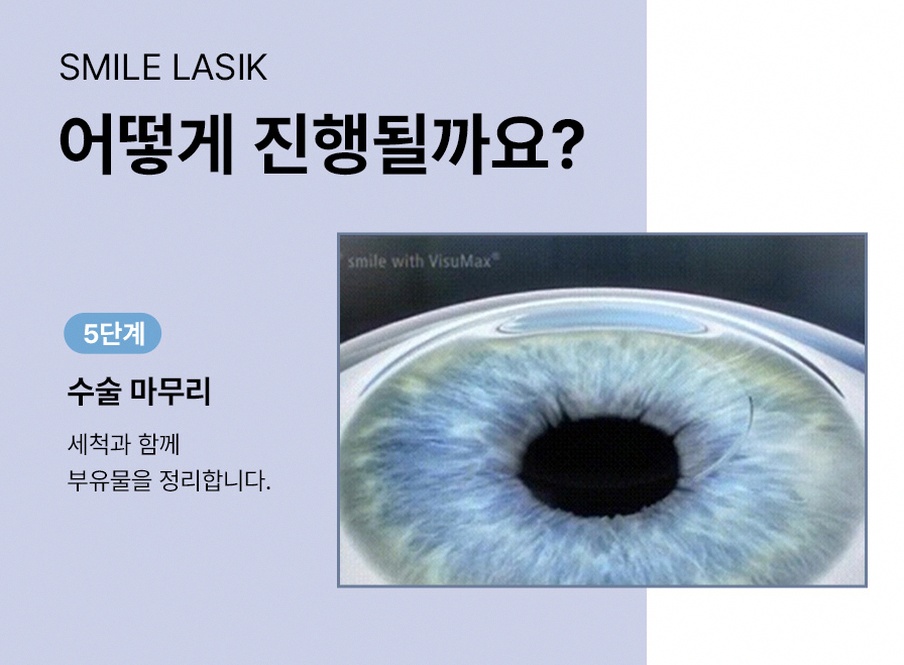
SMILE LASIK is a form of laser vision correction that uses a femtosecond laser to reshape the cornea through a very small opening. Instead of creating a wide flap on the surface of the cornea, the laser creates a tiny lens-shaped piece of tissue (called a lenticule) inside the cornea. The surgeon removes this lenticule through a small incision only a few millimeters wide.
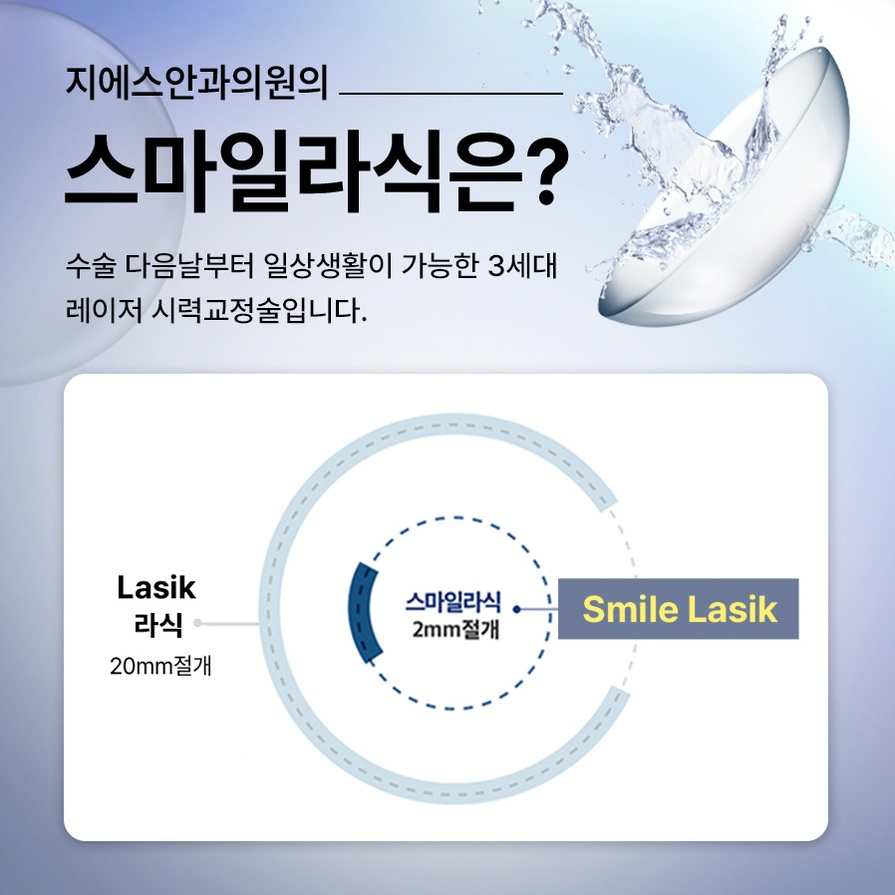
By removing this internal lenticule, the curvature of the cornea changes, which corrects nearsightedness and, in some cases, astigmatism. Because there is no large flap, the corneal surface structure is more preserved compared with older flap-based LASIK techniques.
Potential advantages often discussed for SMILE LASIK include:
A smaller incision and less disruption of the corneal surface
Less impact on corneal nerves, which may help reduce the risk of dry eye symptoms for some patients
A stable corneal structure, which may be helpful in certain corneal shapes
Relatively quick recovery, with many people returning to daily activities within a few days, depending on individual healing
However, the exact benefits and risks differ by person. Only a detailed eye examination with an ophthalmologist can determine whether SMILE LASIK is appropriate for your eyes.
Why location near Gyodae Station and Gangnam Station matters
Gyodae Station and Gangnam Station are on the same subway line in Seoul, which makes it easy for commuters and visitors to move between them. Many people who live, work, or study near Gyodae Station look for an eye clinic that is easy to reach without complicated transfers.
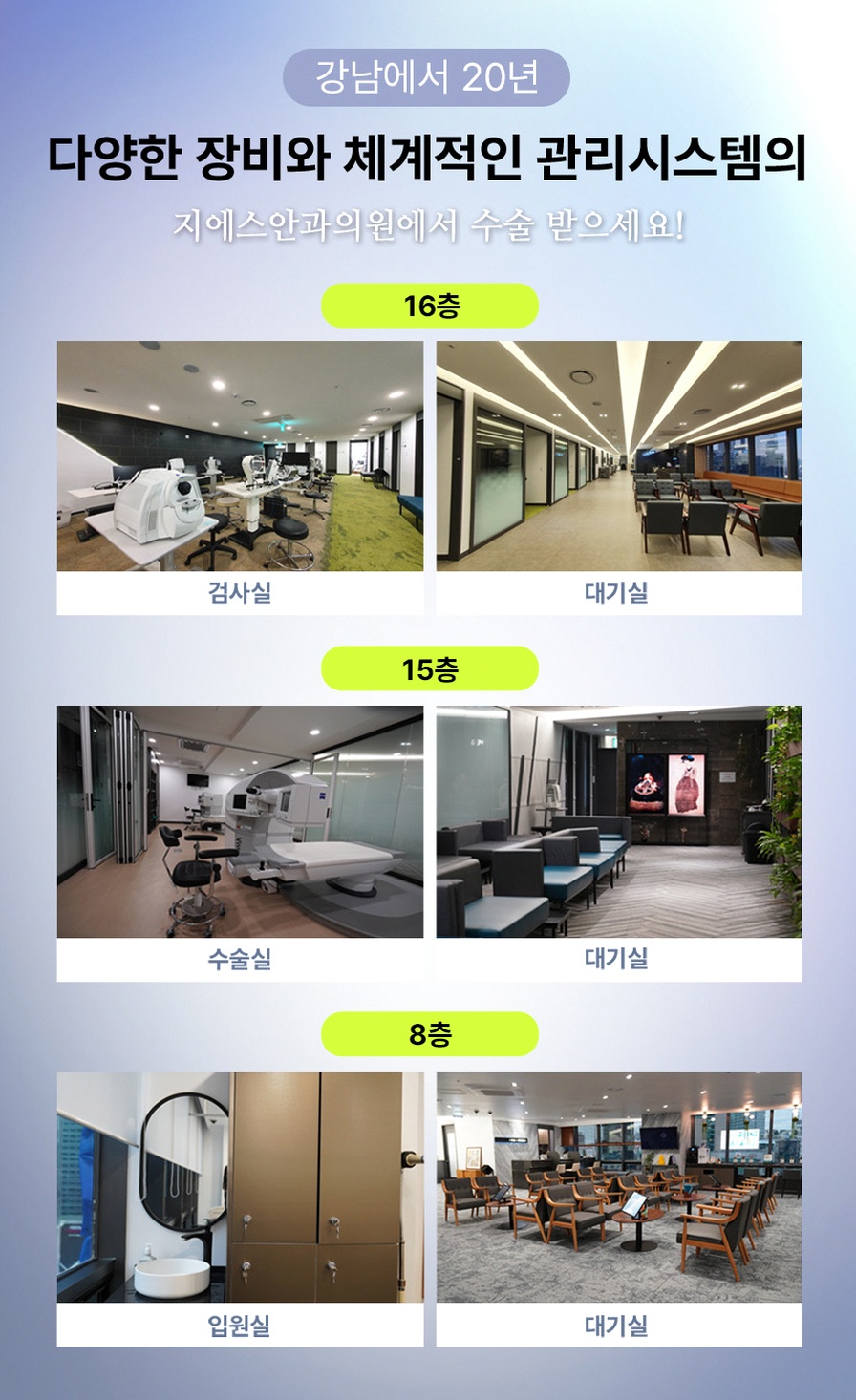
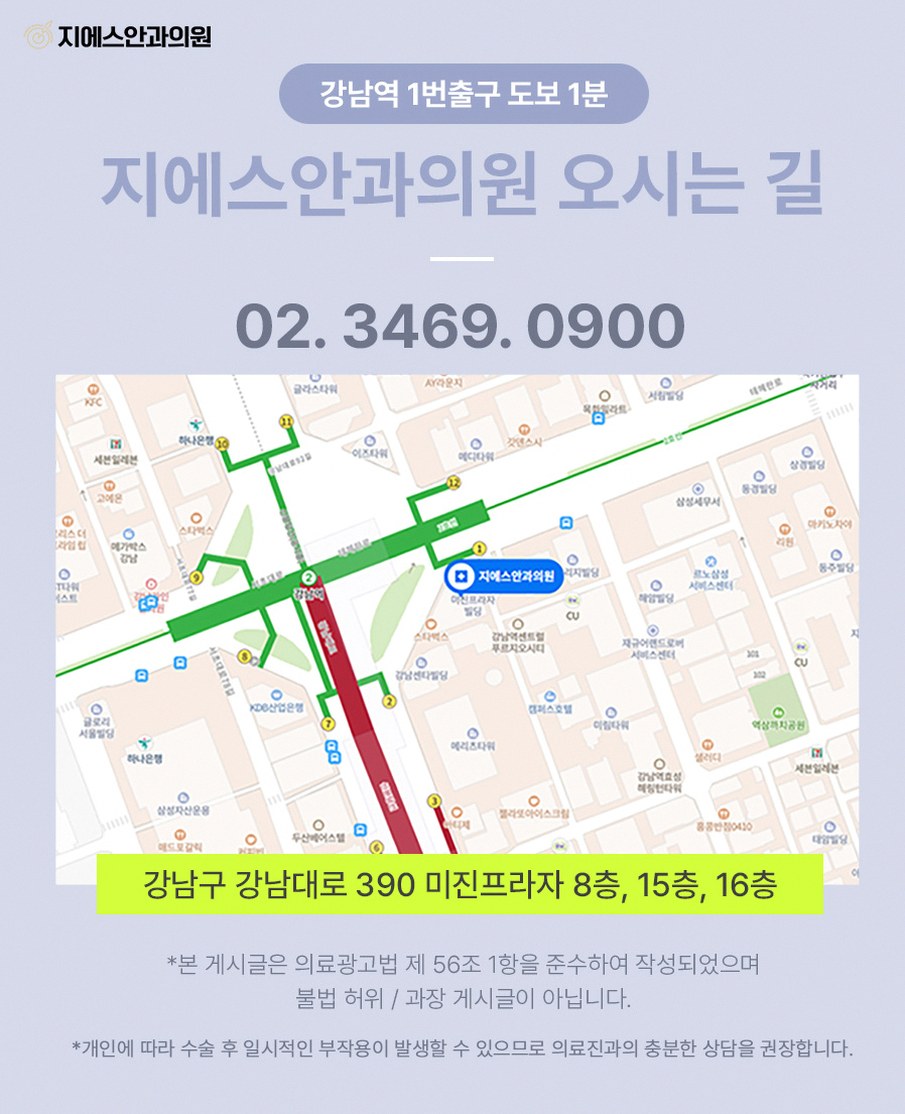
GS Eye Center is located in the Mijin Plaza building on Gangnam-daero, near Gangnam Station. From Gyodae Station, you can usually reach Gangnam Station within a few stops, then walk to the clinic. This is convenient if you plan to attend multiple appointments, which is common for vision correction: preoperative examination, surgery day, and several follow-up visits.
For overseas patients staying in central Seoul, the Gangnam area is also a common base, with many hotels, guesthouses, and airport bus routes. Being near Gangnam Station can simplify your daily schedule during your treatment period.
Key criteria for a good SMILE LASIK clinic near Gyodae Station
When you search for a good eye clinic near Gyodae Station, it helps to go beyond location and look at several medical and practical factors. Below are important points to consider, with GS Eye Center used as a concrete example.
Experience and case volume
For SMILE LASIK and other laser procedures, many patients prefer clinics with a long history and large case numbers. A higher cumulative volume suggests that the clinic has encountered a wide range of eye conditions and refractive errors.
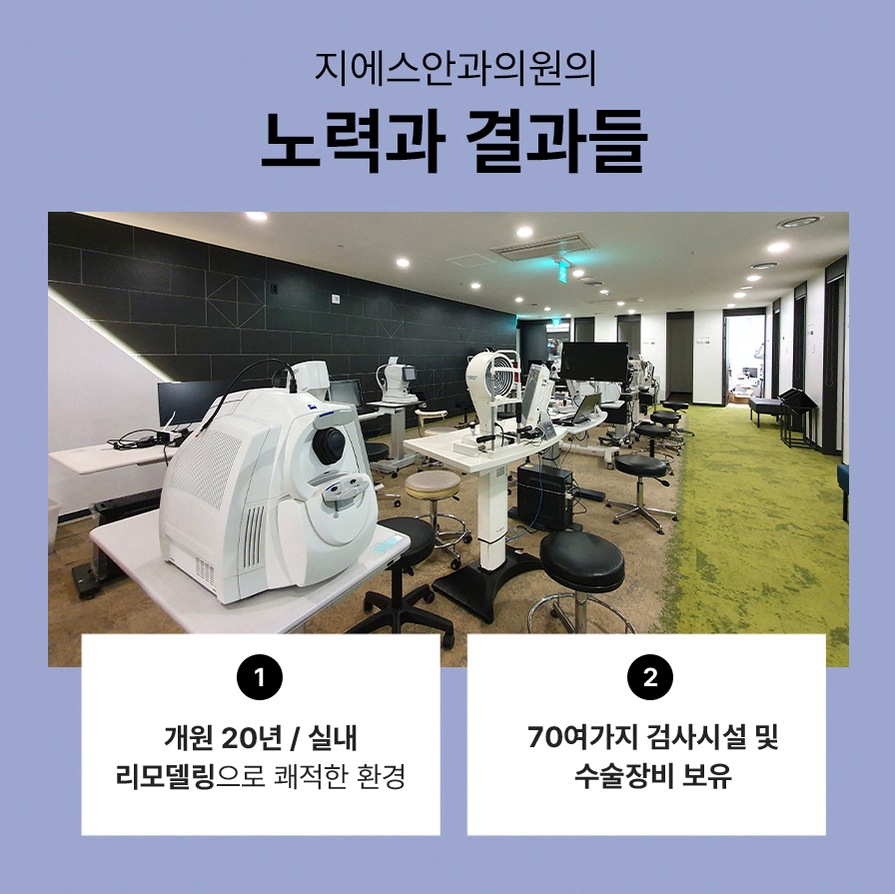
GS Eye Center has been operating in the same Gangnam location since 2005, originally under a different name and later renamed. As of 2023, the clinic reports a cumulative total of about 300,000 eyes treated with vision correction and cataract surgery. Within this, it has a strong focus on SMILE-type procedures.
For SMILE pro, an advanced form of SMILE, the clinic reports 15,000 eyes treated by April 2026, with milestones such as 5,000 eyes in October 2024 and 10,000 eyes in August 2025. In addition, it has experience with lens implantation techniques, including being the first in Korea to perform a specific GLAZE lens implantation in 2019 and reaching several thousand cases over the following years.
When you compare clinics near Gyodae Station, consider asking:
How many SMILE LASIK or SMILE pro procedures have you performed, and over what time period?
How many total vision correction and cataract surgeries has the clinic performed?
Are these numbers for eyes or for patients, and up to which year are they counted?
The goal is not to chase the highest number, but to confirm that the clinic has consistent, long-term experience in refractive surgery.
Specialized equipment and full SMILE platform lineup
SMILE LASIK requires specific femtosecond laser platforms. The type and number of machines can influence treatment options, laser time, and the clinic’s ability to handle high volume while maintaining backup capacity.
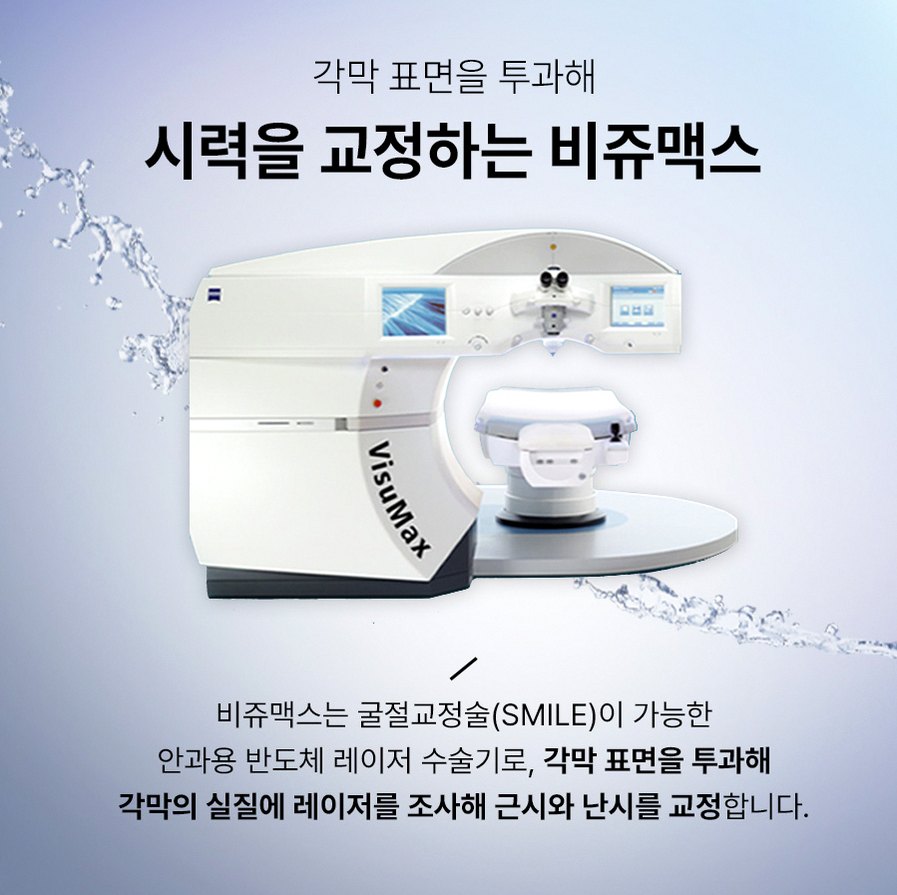
GS Eye Center holds all three major SMILE platforms from ZEISS, which is a central feature of its setup. These include:
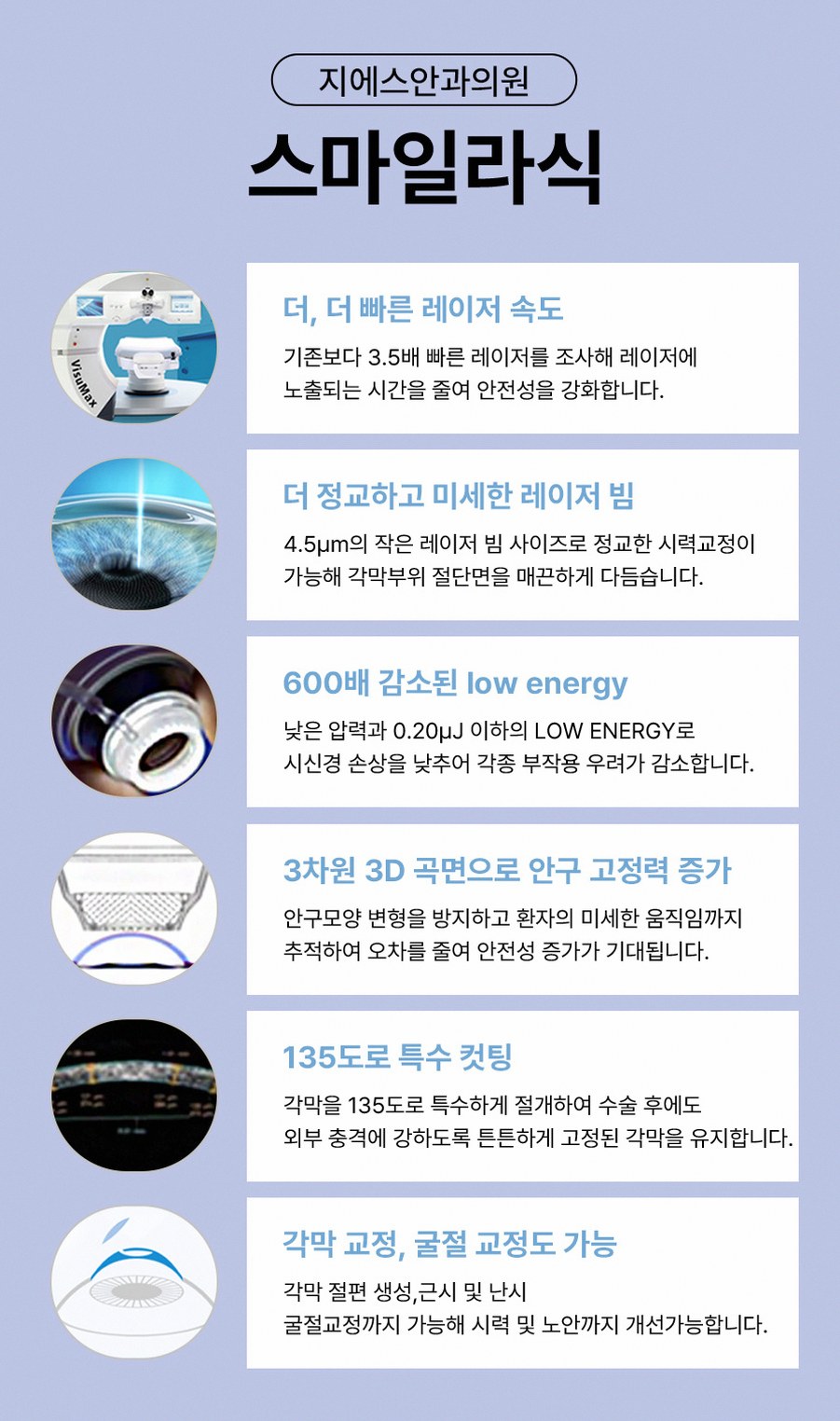
VISUMAX 800: a latest-generation ZEISS laser used for SMILE pro, introduced at the clinic in 2023. It is designed for very fast laser times, often under 9 seconds, which can help reduce the time your eye needs to fixate during the procedure.
Two VISUMAX 500 units: earlier-generation ZEISS lasers used for SMILE LASIK, introduced in 2016, with a dual-system configuration from 2019. Having two units allows the clinic to manage higher patient volume and provides redundancy if one machine is under maintenance.
The clinic has also been designated as a ZEISS SMILE pro CENTER in 2023 and as a SILK TRAINING Center in 2026, meaning it participates in training other doctors on these platforms. For patients, such designations can be one sign that the clinic is recognized by equipment manufacturers for its clinical use and teaching role.
When you evaluate clinics accessible from Gyodae Station, you may want to ask:
Which laser platforms do you use for SMILE LASIK and SMILE pro?
Do you have more than one laser system, and what happens if a machine is under maintenance?
How do you decide which platform is best for my eyes?
Ophthalmology specialists and subspecialists
Laser vision correction is performed by ophthalmologists, and their training background matters. A clinic that brings together surgeons with different subspecialties can better handle both routine and complex cases.
GS Eye Center has a team of seven ophthalmology specialists. The representative director, Dr. Kim Mu-yeon, is an ophthalmologist and medical doctor with previous university hospital professorship experience and an active educational presence, including an online video channel as an eye doctor. Other doctors in the team have backgrounds as faculty or fellows from major university hospitals such as Catholic University, Seoul National University, Inje University, and Samsung Medical Center.
The clinic also runs a separate retina center, staffed by retina fellowship-trained ophthalmologists. This is important because some patients considering SMILE LASIK may have underlying retinal issues, such as lattice degeneration or small retinal tears, which need to be detected and managed before or after surgery.
When contacting a clinic near Gyodae Station, consider asking:
Are all surgeons ophthalmology specialists?
Do you have retina subspecialists who can check my retina before and after surgery?
Has the clinic been designated as an education or training center by any medical school or company?
GS Eye Center, for example, was designated as a clinical education institution for a medical school in 2023 and as an Asia-Pacific clinical training center by an ophthalmic company in 2024.
Systematic preoperative examination and safety standards
Not everyone is a suitable candidate for SMILE LASIK. A careful preoperative examination is essential to protect long-term eye health.
A typical preoperative workup at a well-equipped ophthalmology clinic may include:
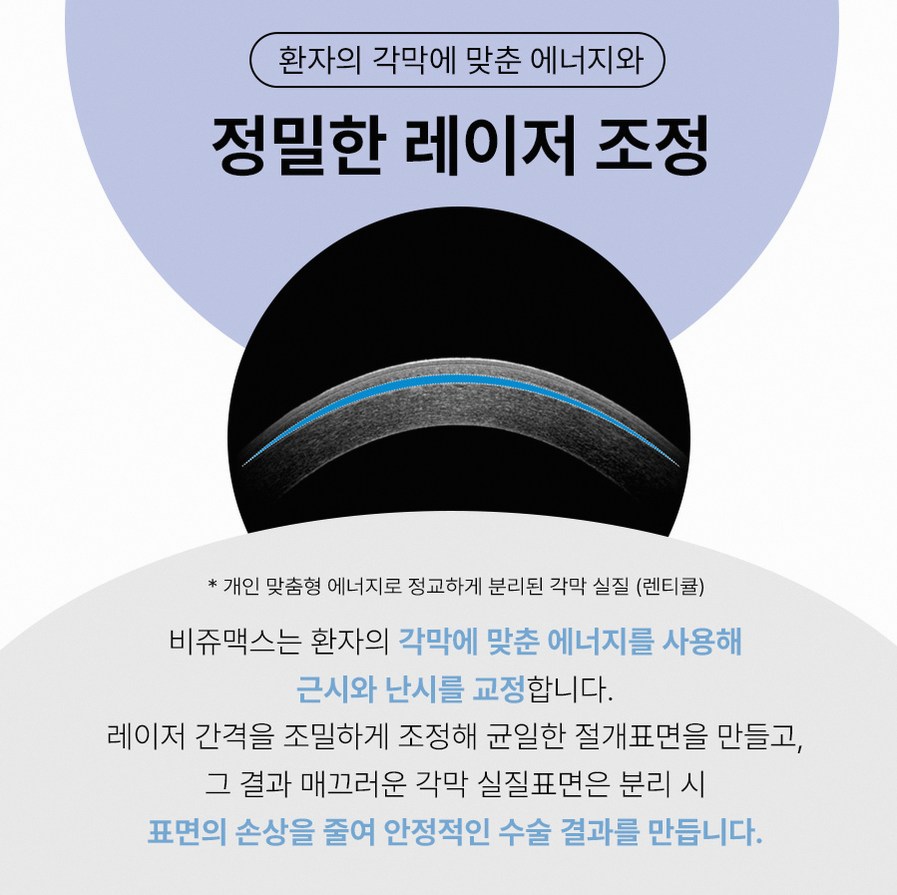
Measurement of corneal thickness to ensure there is enough tissue to safely reshape
Corneal topography and tomography to analyze corneal shape and detect irregularities or early keratoconus
Tear film evaluation to assess dry eye status, which can influence both candidacy and postoperative comfort
Pupil size measurement, especially in low light, to help predict night vision symptoms
Refraction tests to measure the exact degree of nearsightedness and astigmatism
Retinal examination, sometimes with wide-field imaging, to check for weak spots, holes, or other issues
General eye health evaluation, including intraocular pressure and lens status
GS Eye Center emphasizes that some patients are advised not to undergo SMILE LASIK if tests show that it would not be safe. In such cases, the clinic may recommend alternatives like implantable collamer lenses (ICL, GLAZE, PhakiFlex KPL), 2DAY LASEK, or other approaches.
The clinic also obtained ISO 9001 and ISO 14001 certifications in 2020 for quality and environmental management systems. While these are not medical outcome guarantees, they indicate that the clinic follows structured processes for its services and operations.
When preparing for consultation, you can ask:
What tests are included in the preoperative examination for SMILE LASIK?
What criteria do you use to decide if I am not a suitable candidate?
If SMILE LASIK is not recommended, what alternative options do you offer?
Range of options and personalized planning
A clinic that offers several vision correction methods can more easily tailor treatment to your eyes rather than fitting everyone into one procedure.
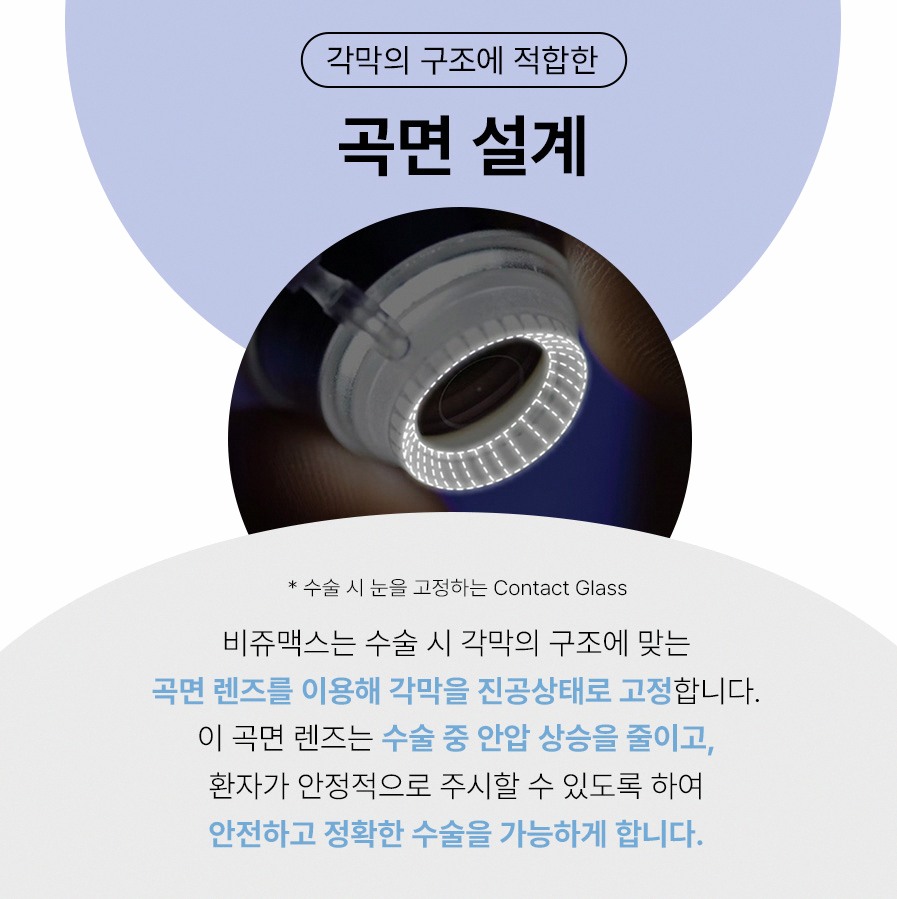
At GS Eye Center, the main focus is the SMILE family:
SMILE pro, using the VISUMAX 800
SMILE LASIK, using VISUMAX 500
SILK (also described as Silk LASIK), another laser vision correction option
A premium package concept sometimes referred to as Golden SMILE
Beyond SMILE, the clinic offers implantable lenses such as ICL, GLAZE, and PhakiFlex KPL, as well as 2DAY LASEK, other LASIK options, corneal strengthening procedures like KXL, and a dedicated dry eye clinic. For presbyopia and cataract, it provides laser cataract surgery, presbyopia-correcting lens implantation, and multifocal intraocular lenses, including about 3,000 PanOptix lenses implanted as of 2024.
When you consult a clinic near Gyodae Station, it is helpful to ask:
How do you decide between SMILE LASIK, SMILE pro, SILK, LASIK, LASEK, and lens implantation for a patient like me?
Do you offer both corneal-based and lens-based options?
How do you handle patients with dry eye or thinner corneas?
The goal is to confirm that the clinic is willing to recommend the method that fits your eyes, even if it is different from what you initially expected.
Postoperative care and long-term follow-up
Good postoperative care is as important as the surgery itself. After SMILE LASIK, you will typically have several scheduled visits to monitor healing and vision.
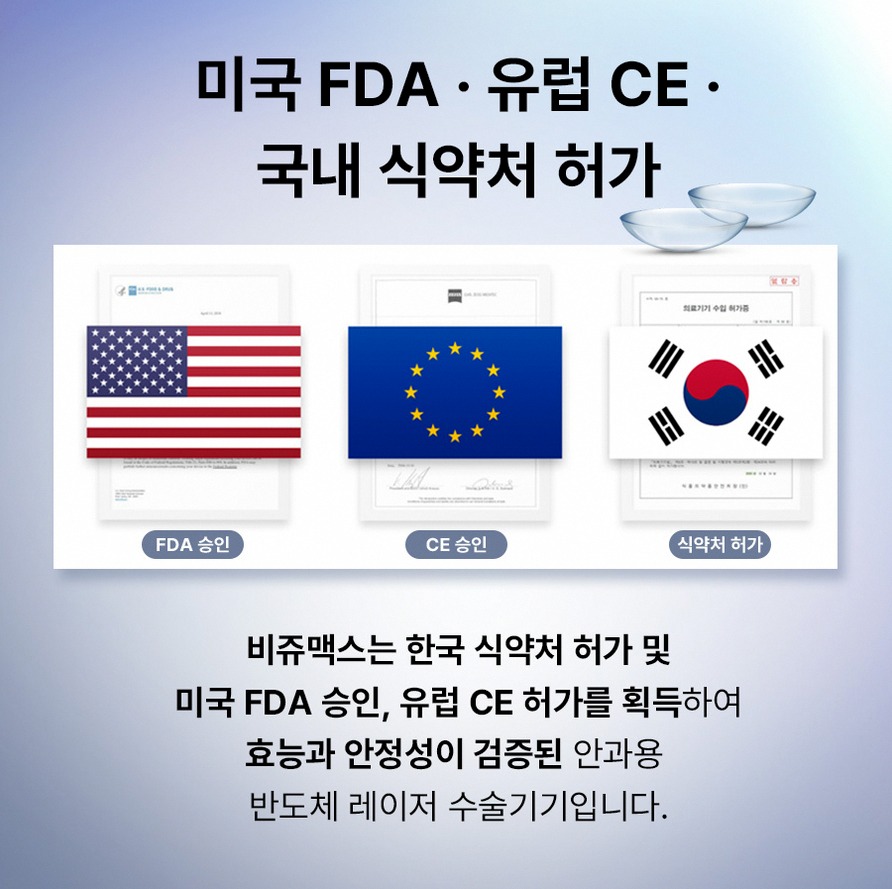
A comprehensive follow-up plan usually includes:
Early postoperative checks in the first few days to confirm corneal stability and rule out infection
Follow-up visits over the first few weeks and months to monitor vision clarity, night vision, and any halos or glare
Dry eye management, including artificial tears, eye drops, or other treatments if needed
Retina checks when indicated, especially in patients with high myopia or pre-existing retinal changes
Longer-term annual or periodic eye examinations to monitor general eye health, intraocular pressure, and lens status
GS Eye Center also operates a dry eye clinic and a retina center, which allows it to manage common post-surgery issues more comprehensively under one roof.
When comparing clinics accessible from Gyodae Station, ask:
How many follow-up visits are included after SMILE LASIK?
Who will see me at follow-up visits, and is there a retina specialist available if needed?
What should I do if I experience symptoms such as severe pain, sudden vision loss, or many new floaters?
Who may consider SMILE LASIK near Gyodae Station
SMILE LASIK may be considered by adults who:
Have stable nearsightedness and possibly astigmatism for at least one to two years
Do not have uncontrolled eye diseases such as active keratoconus, severe dry eye, or significant cataract
Have sufficient corneal thickness and a suitable corneal shape
Are not pregnant or breastfeeding at the time of surgery, as hormonal changes can affect vision stability
However, these are general guidelines. Final eligibility must always be determined through an in-person examination with an ophthalmologist who can review your eye condition, medical history, and lifestyle needs.
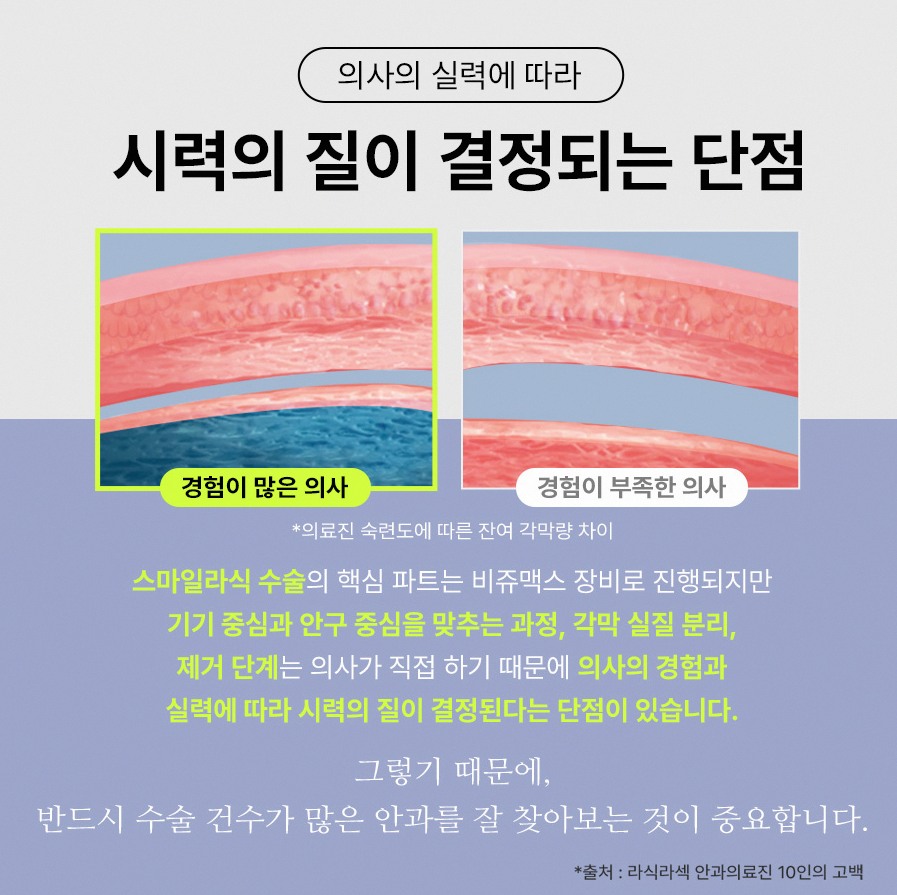
People who may not be ideal candidates for SMILE LASIK include those with very thin or irregular corneas, certain autoimmune diseases, or severe dry eye. Some of these patients may be better served by lens implantation or other techniques.
Online consultation and pre-visit preparation for overseas patients
If you are living abroad and planning to visit Korea for SMILE LASIK near Gyodae Station, an online or remote consultation can help you prepare.
Before contacting the clinic, it is useful to prepare:
Your glasses or contact lens prescription from the past one to two years, to show the stability of your refractive error
Any previous eye examination reports, especially if you have been told about thin corneas, retinal issues, or high eye pressure
A list of medications you are taking and any systemic diseases, such as diabetes or autoimmune conditions
Information about previous eye surgeries, trauma, or infections
During an online consultation, you can discuss:
Whether you are a likely candidate for SMILE LASIK, SMILE pro, or another procedure, based on your basic information
How many days you should stay in Korea for examination, surgery, and follow-up
What tests will be done at your first in-person visit
What to avoid before surgery, such as contact lens wear for a certain period
Keep in mind that an online consultation cannot replace a full in-person examination. Final decisions about your treatment can only be made after detailed testing at the clinic.
Expected Korea visit timeline for SMILE LASIK
Every clinic has its own schedule, but a typical visit plan for an overseas patient might look like this:
Day 1: Arrival in Seoul and rest, or light sightseeing if you feel comfortable.
Day 2: Full preoperative examination at the clinic near Gangnam Station. This may take several hours because of multiple tests and doctor consultations. If your eyes are suitable and you wish to proceed, surgery may be scheduled for the same day or the next day, depending on clinic policy and your condition.
Day 2 or 3: SMILE LASIK or SMILE pro procedure. The laser time itself is short, but you should plan extra time for preparation, explanation, and immediate post-op checks.
Day 3 or 4: First postoperative check, usually the next day after surgery. The doctor confirms corneal healing and early visual recovery.
Following days: Additional follow-up visits as advised. Many patients can fly home within several days after surgery, but this depends on your healing, travel distance, and doctor’s recommendation.
When planning your trip, leave some flexibility in your schedule in case the clinic recommends additional observation days or if your eyes need more time to stabilize.
Aftercare and daily life after SMILE LASIK
After SMILE LASIK, you will receive detailed instructions from the clinic. Common recommendations include:
Use prescribed eye drops exactly as directed to reduce inflammation and prevent infection.
Avoid rubbing your eyes, especially in the early healing period.
Protect your eyes from dust, smoke, and water splashes; be careful with showers to avoid water directly entering your eyes.
Wear protective glasses or sunglasses outdoors, both for comfort and UV protection.
Limit heavy exercise, swimming, and sauna use for a period recommended by your doctor.
Many people can return to light office work or study within a few days, but screen time may cause temporary dryness or fatigue. It is wise to schedule some rest time, use artificial tears if recommended, and follow the clinic’s advice about driving and night activities.
Frequently asked questions about SMILE LASIK near Gyodae Station
What is the difference between SMILE LASIK and traditional LASIK?
Traditional LASIK involves creating a thin flap on the corneal surface, lifting it, reshaping the underlying cornea with an excimer laser, and then repositioning the flap. SMILE LASIK, by contrast, uses a femtosecond laser to create a lenticule inside the cornea and remove it through a tiny incision, without a large flap. This smaller incision preserves more of the corneal surface and nerves, which may help reduce dry eye symptoms and maintain structural stability for some patients. However, both methods have their own advantages and limitations, and the best choice depends on your individual eye condition.
How long does SMILE pro take, and what is special about the VISUMAX 800?
SMILE pro is a newer generation of SMILE performed on the ZEISS VISUMAX 800 platform. The laser portion of the procedure is very fast, often under 9 seconds per eye, which can make it easier for patients to maintain steady fixation. The VISUMAX 800 is designed for high precision and efficient workflow, which can help the clinic manage more patients while maintaining careful control over each case. The overall time you spend in the surgery room will be longer than the laser time alone, because of preparation, positioning, and immediate post-op checks.
Is SMILE LASIK suitable for people with thin corneas or dry eyes?
SMILE LASIK can be an option for some people with relatively thinner corneas or mild dry eye, but it is not automatically suitable for everyone in these groups. The key factor is the residual corneal thickness and shape after planned tissue removal, as well as the overall health of the ocular surface. During the preoperative examination, the clinic will measure corneal thickness, analyze corneal maps, and evaluate tear film and dry eye status. If SMILE LASIK is not considered safe, alternatives such as lens implantation or surface procedures like LASEK may be recommended instead.
How do I choose a good SMILE LASIK clinic near Gyodae Station?
When choosing a clinic accessible from Gyodae Station, consider several points: the clinic’s experience and case volume in SMILE and other vision correction procedures; the range and generation of laser equipment, including whether they use platforms like VISUMAX 800 and have backup systems; the qualifications of the ophthalmology team, including subspecialists such as retina experts; the thoroughness of preoperative examinations and willingness to say no if you are not a suitable candidate; and the structure of postoperative follow-up and long-term care. GS Eye Center near Gangnam Station can be one example to compare when you make your decision.
Soft call to action for online consultation
If you are an overseas patient staying near Gyodae Station or Gangnam Station and are considering SMILE LASIK, arranging an online consultation with a clinic like GS Eye Center can help you understand your options before you travel. Prepare your recent prescriptions and medical history, ask detailed questions about equipment, examination protocols, and follow-up schedules, and compare explanations from more than one clinic if possible. With careful planning and professional guidance, you can choose a vision correction plan that fits both your eyes and your travel schedule.
- 공유 링크 만들기
- X
- 이메일
- 기타 앱


댓글
댓글 쓰기