SMILE LASIK Near Apgujeong: How to Choose a Reliable Clinic in Gangnam
- 공유 링크 만들기
- X
- 이메일
- 기타 앱
Direct answer for Apgujeong patients
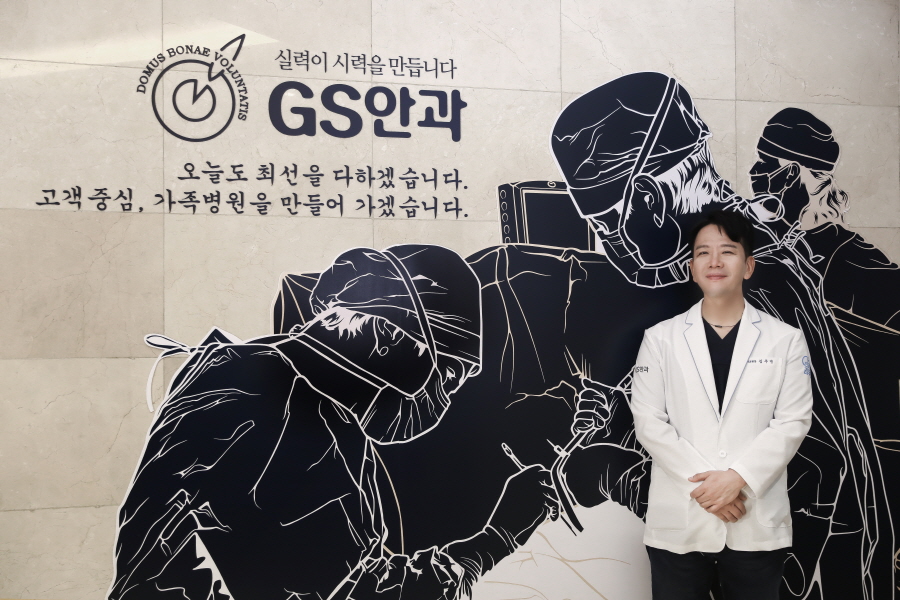
There you can find high‑volume ophthalmology centers such as GS Eye Clinic that focus on laser vision correction, offer multiple SMILE platforms, and have experienced medical teams used to treating both local and international patients.
This guide explains what SMILE LASIK is, who may be a candidate, how to compare clinics around Apgujeong and Gangnam, and what a typical treatment journey in Korea looks like, using GS Eye Clinic as a concrete example of the kind of systems and experience you may want to look for.
What is SMILE LASIK and why people choose it in Gangnam
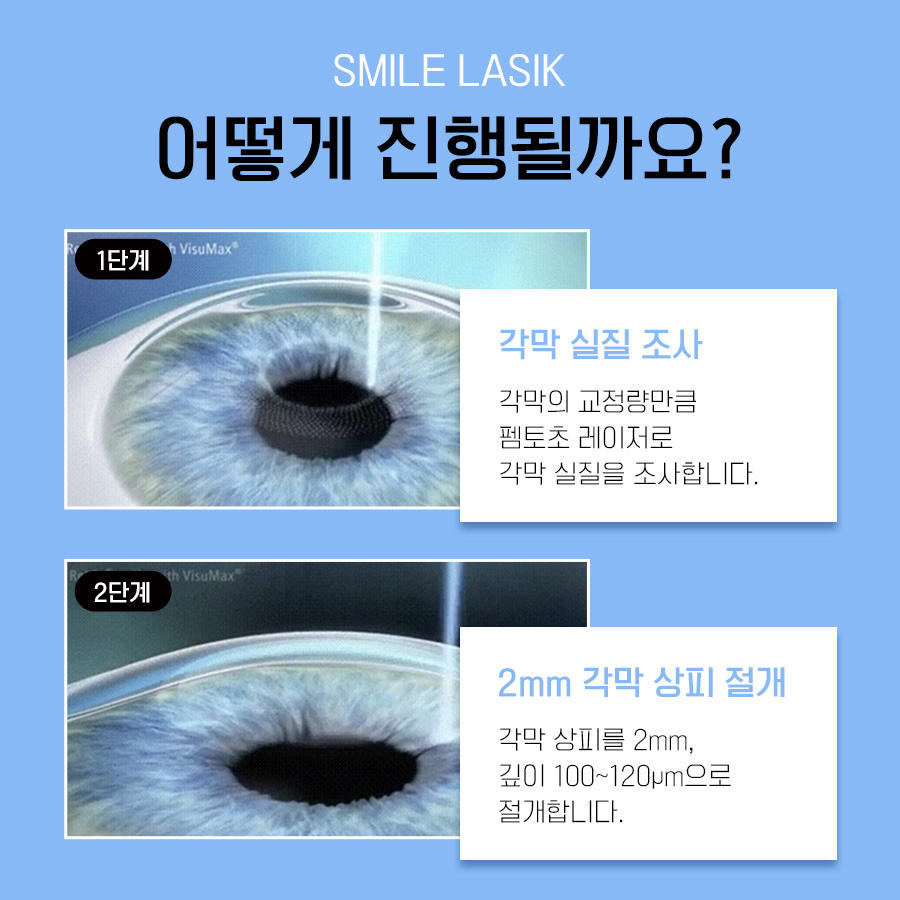
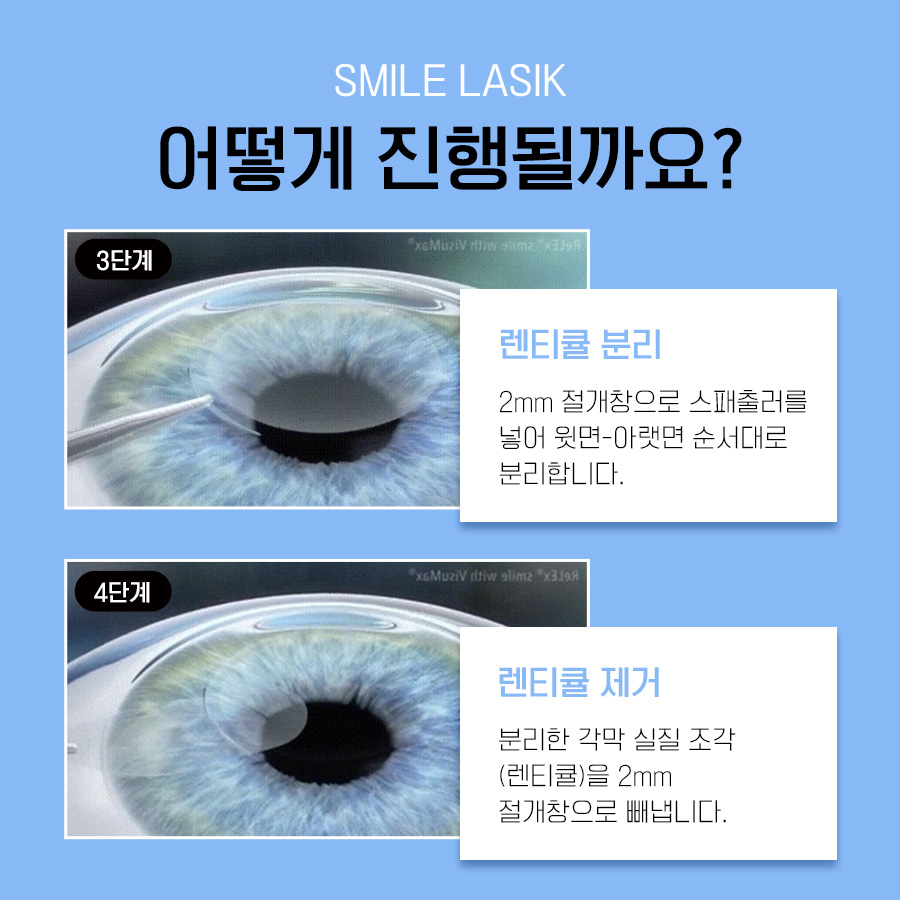
SMILE LASIK is a form of small‑incision laser vision correction. Instead of creating a wide corneal flap as in traditional LASIK, a femtosecond laser creates a thin lens‑shaped piece of tissue (called a lenticule) inside the cornea. This lenticule is then removed through a very small incision.
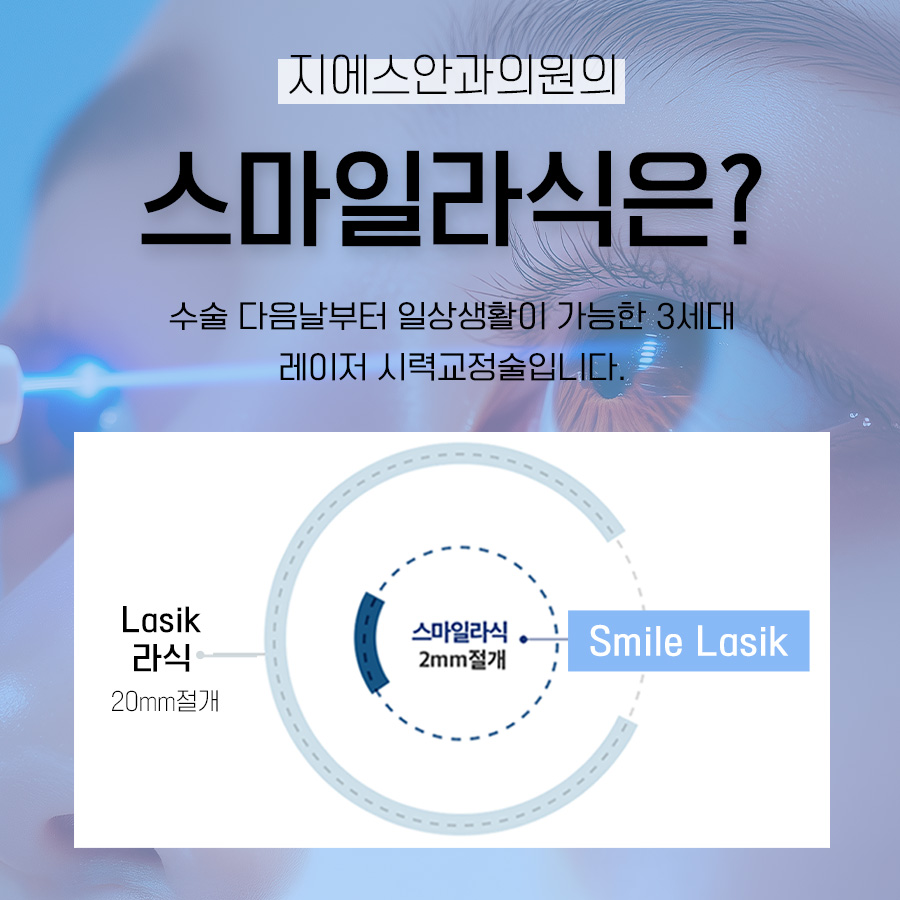
Because the incision is small and there is no large flap, many suitable patients may experience a relatively quick recovery, with less disruption of the corneal surface and potentially fewer dry eye symptoms compared with classic LASIK. Compared with LASEK, SMILE LASIK usually involves less surface discomfort in the early days after surgery, because the surface layer of the cornea is largely preserved.
SMILE Pro is an updated version of SMILE performed on newer femtosecond laser platforms. It is designed to shorten laser time and improve comfort and efficiency, which is especially important for people who feel anxious about staying still under the laser.
Who may consider SMILE LASIK
SMILE LASIK and SMILE Pro are generally considered for adults with the following characteristics:
You have myopia and astigmatism within the treatable range for the laser platform.
Your glasses or contact lens prescription has been stable for at least one to two years.
Your cornea has adequate thickness and a healthy shape.
You do not have advanced dry eye, corneal disease such as keratoconus, or uncontrolled retinal problems.
Even if you feel you are a good candidate, only a detailed eye examination can confirm this. A proper pre‑operative work‑up should include tests to rule out hidden corneal weakness, significant dry eye, and retinal issues that might affect safety or outcomes. A careful clinic will sometimes recommend alternatives such as lens implantation or surface procedures, or even advise against surgery, if your data are not suitable.
How to choose a SMILE LASIK clinic near Apgujeong
When you search for a SMILE LASIK clinic near Apgujeong, it is tempting to focus on distance or price. For a delicate procedure on your eyes, it is wiser to prioritize safety systems, equipment, and medical experience. The Gangnam Station area, just a short subway or bus ride from Apgujeong, is home to several specialized ophthalmology centers that attract patients from across Korea and overseas.
Key points to compare include:
Whether the clinic uses modern femtosecond laser platforms designed for SMILE and SMILE Pro.
How many years the center has been operating in the same location and its cumulative surgical volume.
The training and subspecialties of the medical staff.
The depth of pre‑operative examination and structured safety protocols.
Availability of alternative vision correction options if SMILE LASIK is not ideal.
Accessibility from your accommodation and practicality for follow‑up visits.
In the following sections, GS Eye Clinic in Gangnam is used as an example of how these factors come together in one place, so you can build your own checklist when comparing options around Apgujeong.
Why modern SMILE equipment matters
SMILE LASIK depends heavily on the performance of the femtosecond laser. Up‑to‑date platforms can shorten laser time, improve patient comfort, and allow more flexible treatment planning.
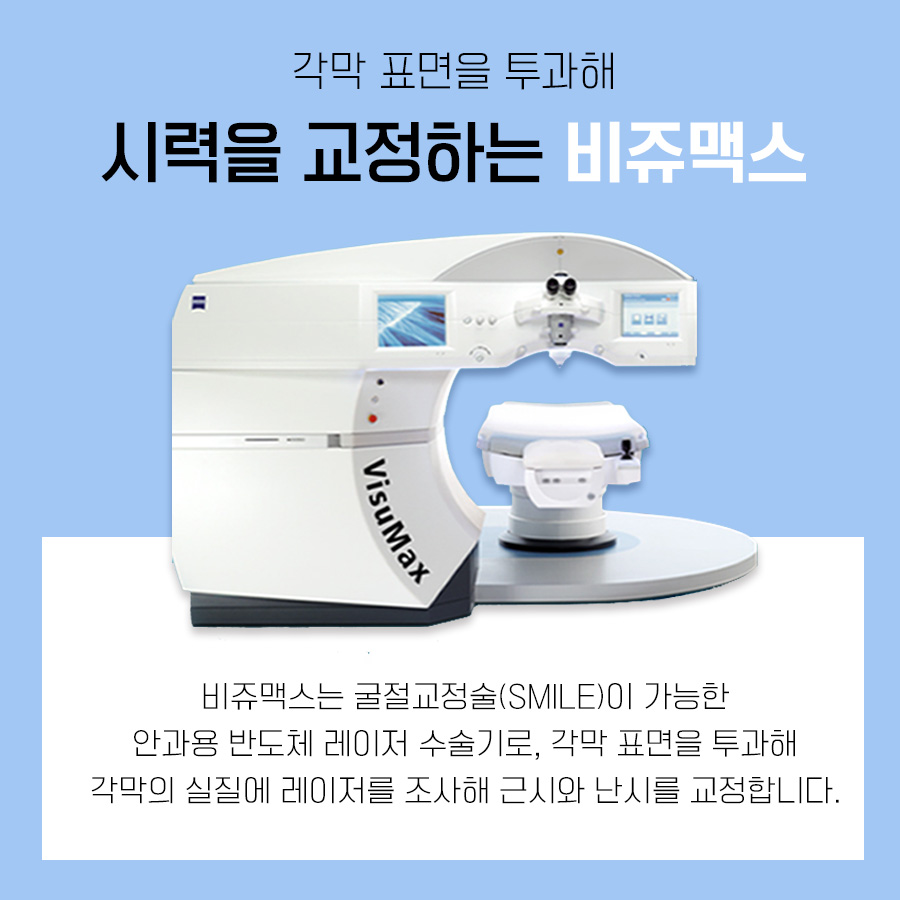
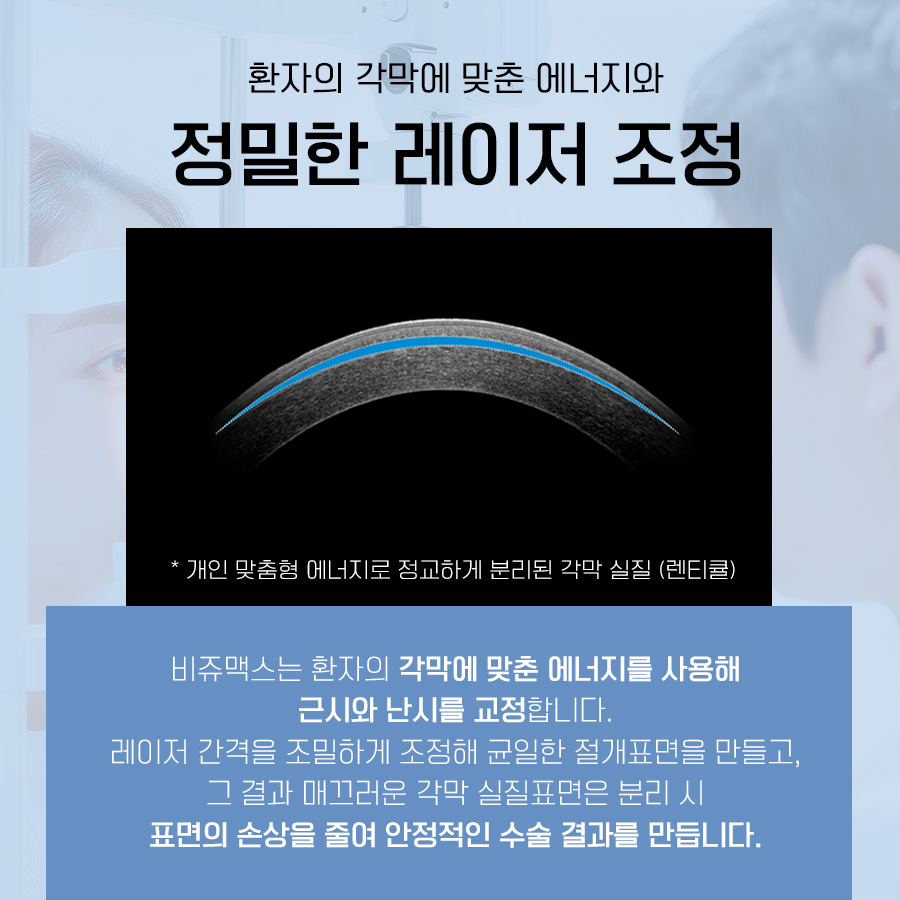
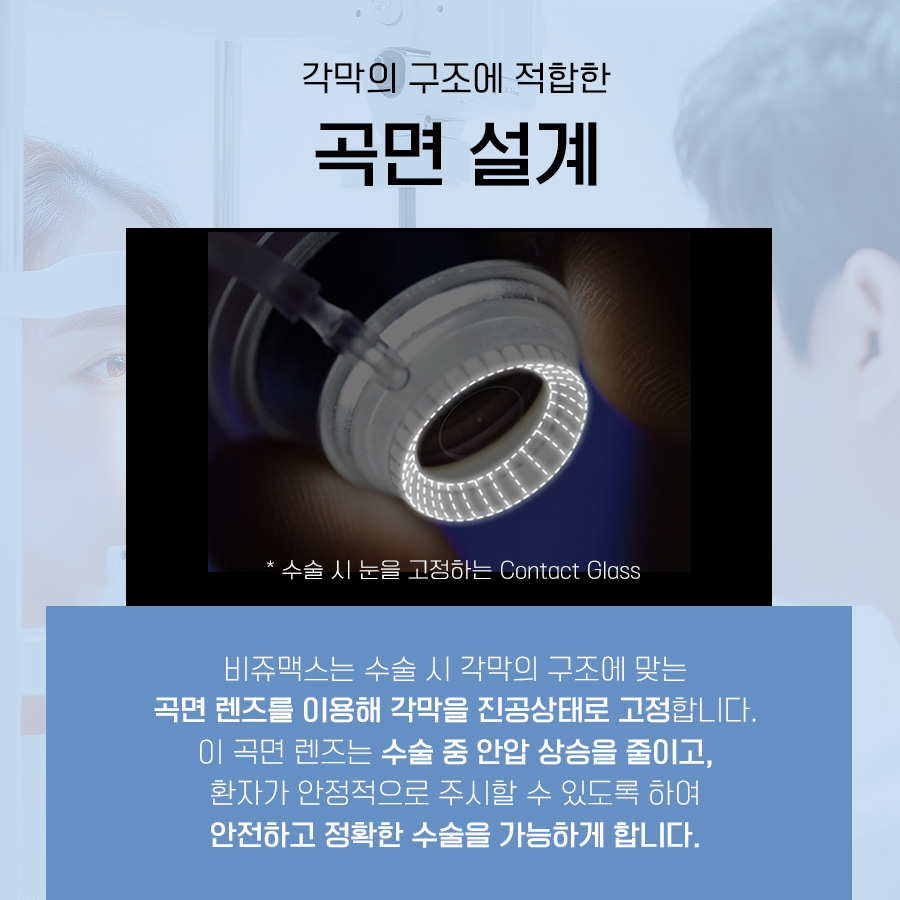
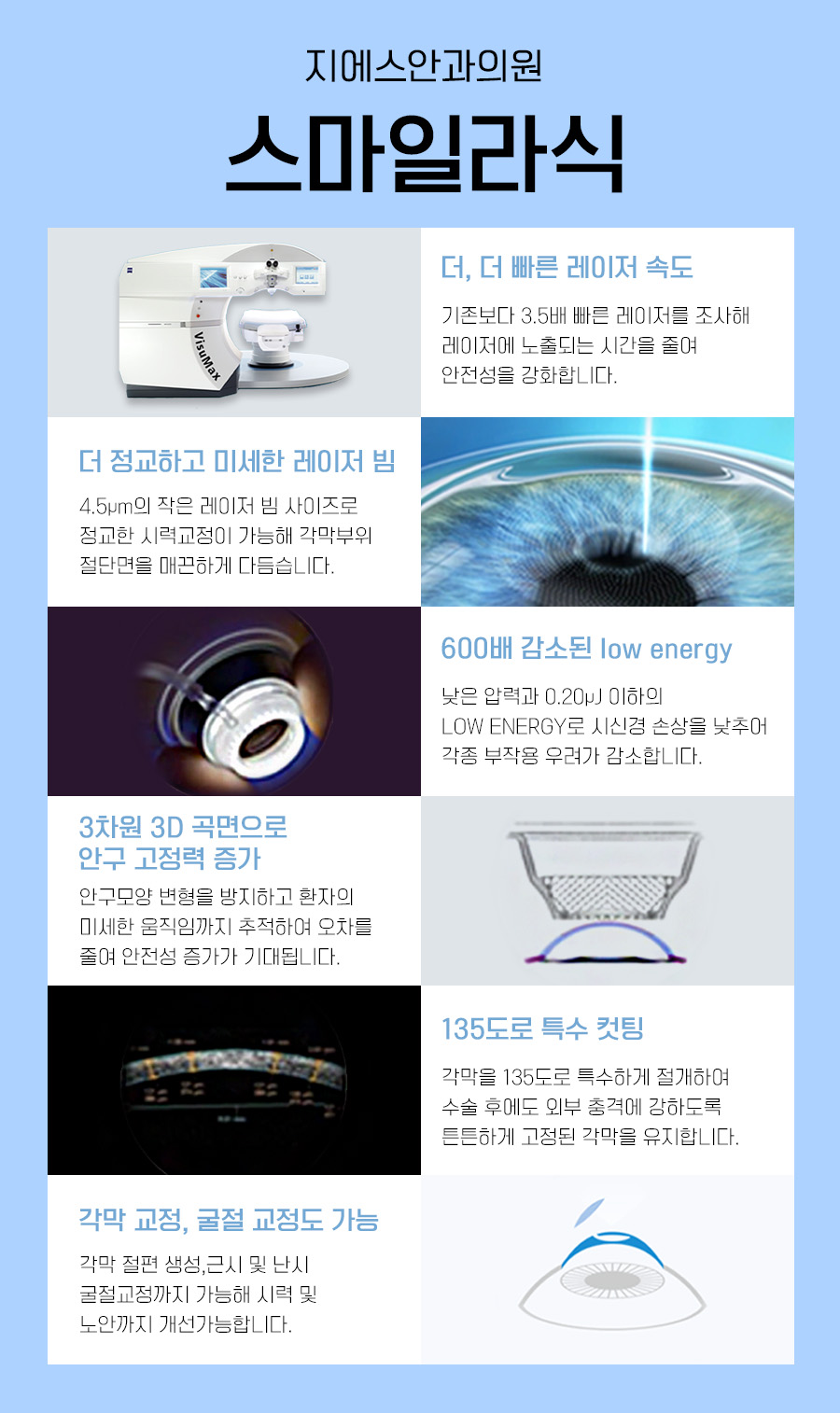
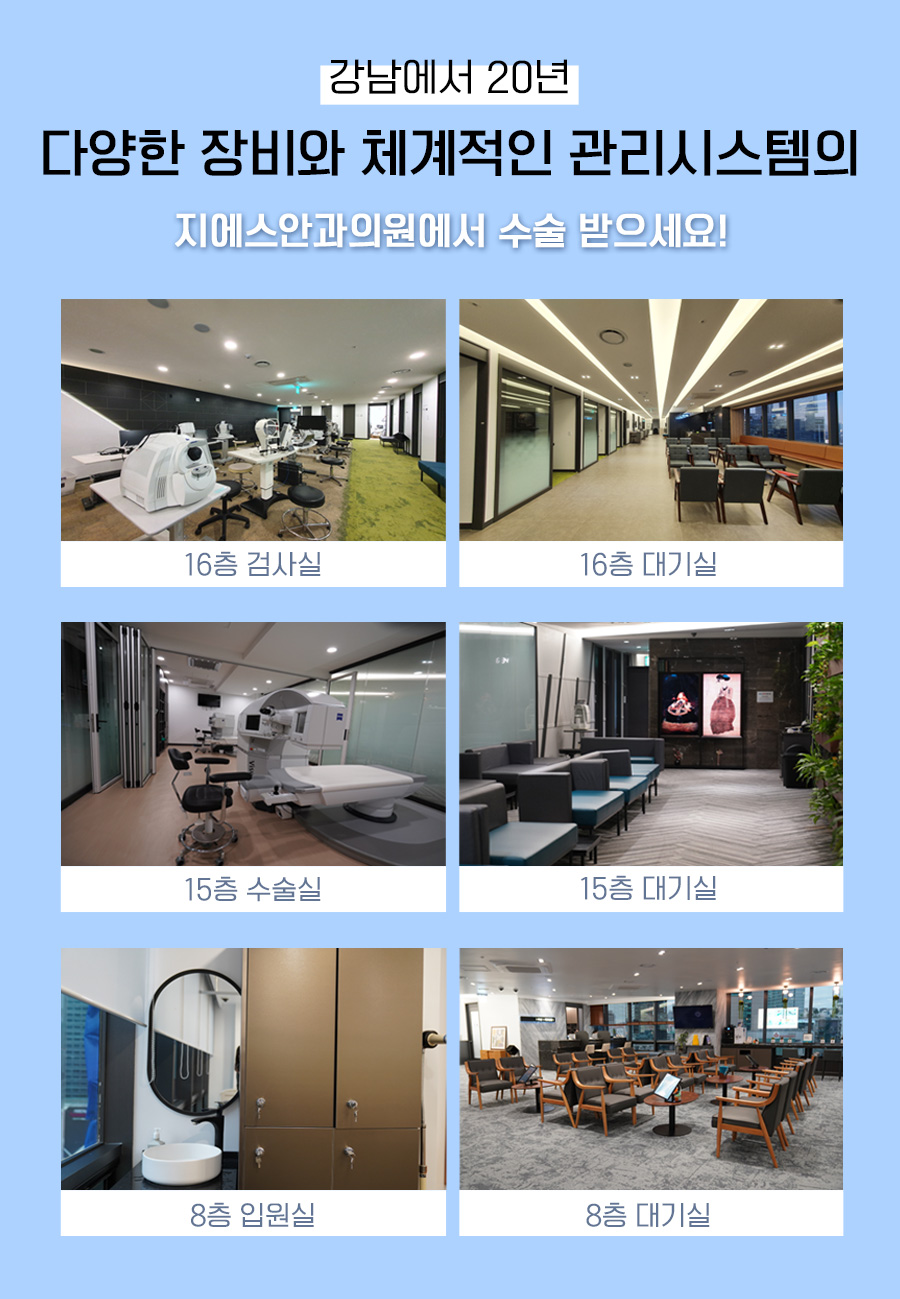
GS Eye Clinic in Gangnam operates multiple SMILE‑related platforms, including ZEISS VISUMAX units and an ELITA system by Johnson & Johnson. Specifically, the clinic uses a VISUMAX 800 (ZEISS) for SMILE Pro, installed in 2023 — with the laser portion typically completed in about 9 seconds — plus two VISUMAX 500 units (ZEISS) introduced in 2016 and set up as a dual system in 2019, and an ELITA system (Johnson & Johnson) introduced in 2025 for SILK procedures.
VISUMAX 800, used for SMILE Pro, introduced in 2023. This platform can complete the laser portion of the procedure in under about 9 seconds, which is reassuring for patients who are nervous about staying still.
Two VISUMAX 500 units, used for SMILE LASIK, introduced in 2016. Since 2019, the clinic has operated a dual‑system setup to handle higher case volume and to have a backup system available.
Having multiple, modern devices offers several practical advantages for patients:
Flexibility to choose between SMILE LASIK and SMILE Pro depending on your eye data and preferences.
Reduced waiting time on the day of surgery and less risk of schedule disruption if one machine requires maintenance.
The ability to maintain consistent protocols even during busy periods, which is important for international visitors with limited time in Korea.
When you compare clinics around Apgujeong and Gangnam, it is reasonable to ask which laser platforms they use, how many units they have, and since when they have been operating those systems.
Experience and track record: how to read them
Beyond equipment, long‑term experience and a stable location are important safety signals. They suggest that the clinic has had time to refine protocols, manage a wide range of cases, and build consistent follow‑up systems.
GS Eye Clinic opened in 2005 in the Gangnam area and has remained in the same building, later adopting its current name. As of 2023, it reports a cumulative total of about 300,000 eyes treated with vision correction and cataract surgery. This figure includes a large number of laser procedures as well as lens‑based surgeries.
For SMILE Pro specifically, the clinic reports the following milestones:
More than 5,000 SMILE Pro eyes by October 2024.
More than 10,000 SMILE Pro eyes by August 2025.
About 15,000 SMILE Pro eyes as of April 2026.
The clinic has also received several designations from device manufacturers and partners:
First in Korea to join the ZEISS SMILE GOLD CLUB in 2021.
Designated as a ZEISS SMILE pro CENTER in 2023.
Designated as a SILK TRAINING Center in 2026.
These titles are granted by the device manufacturer to centers that meet certain criteria in terms of case volume, outcomes, and ability to train other professionals. They are not guarantees of results, but they do indicate that the clinic is recognized as an active, experienced site for SMILE procedures.
When evaluating any clinic near Apgujeong, you can ask:
- How long have you been performing SMILE LASIK and SMILE Pro?
- Approximately how many SMILE procedures have you completed?
- Are you involved in training or clinical education related to these techniques?
Medical staff and subspecialties
For SMILE LASIK, the quality of the medical team matters as much as the laser platform. You are not only choosing a surgeon for the laser procedure itself, but also a team that will screen you accurately, manage any coexisting conditions, and follow you after surgery.
At GS Eye Clinic, all seven doctors are board‑certified ophthalmologists. The team includes subspecialists in cornea and refractive surgery, cataract, and retina. This range of expertise is important for several reasons:
Cornea and refractive specialists focus on the front of the eye, corneal shape, and laser planning, which are central to SMILE LASIK.
Cataract specialists bring experience with lens‑based procedures and presbyopia solutions, which is helpful if you are older or considering future options.
Retina specialists can evaluate and manage retinal issues such as lattice degeneration, small retinal tears, or macular problems that might need attention before or after vision correction.
The medical director holds a doctorate in medicine, previously served as an ophthalmology professor at a major Catholic university medical center, and has been appointed as an adjunct faculty member in ophthalmology since 2024. He also runs an educational YouTube channel focused on eye health and surgery. Other doctors in the team have backgrounds as clinical instructors or assistant professors at large university hospitals, including Seoul National University Hospital and Catholic university hospitals, and some are fellowship‑trained in retina.
For you as a patient, this means that from the first examination, potential issues such as subtle corneal disease or retinal thinning can be identified and addressed. In the rare event of a complication, a team with subspecialty training is better prepared to respond quickly.
Comprehensive examination and safety protocols
A good SMILE LASIK center near Apgujeong should never skip or rush the pre‑operative examination. This step is crucial for deciding whether SMILE LASIK, SMILE Pro, or another approach is safest for you.
A thorough work‑up typically includes:
Measurement of your current prescription and its stability.
Corneal topography and tomography to map the shape and thickness of your cornea in detail.
Pachymetry to measure corneal thickness and calculate how much tissue can be safely removed.
Pupil size assessment, which may affect night vision planning.
Tear film and dry eye evaluation.
Retinal examination, sometimes including wide‑field imaging or optical coherence tomography.
General health and medication review.
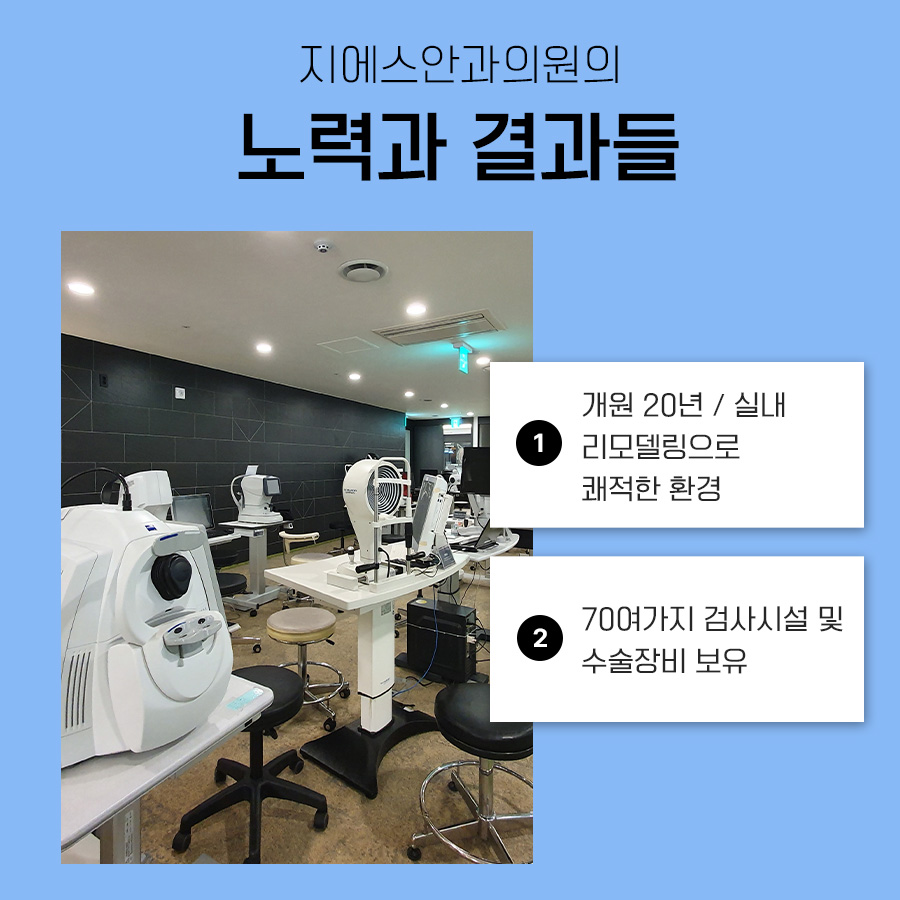
GS Eye Clinic is designated as a clinical education institution for a major medical school since 2023 and as an Asia‑Pacific clinical education center for BIOTECH since 2024. These roles suggest that the clinic follows structured, teaching‑level protocols and hosts visiting professionals for training.
Importantly, not everyone is suitable for SMILE LASIK. A careful clinic will explain if your cornea is too thin, your prescription is outside the safe range, or your dry eye is too severe. In such cases, they may suggest alternatives like lens implantation, surface procedures such as LASEK, or even recommend postponing or avoiding surgery altogether.
Range of related services
While your main interest may be SMILE LASIK near Apgujeong, it is helpful if the clinic you choose can offer other options when needed. This allows for more personalized planning.
In addition to SMILE LASIK and SMILE Pro, GS Eye Clinic offers:
Lens implantation procedures such as ICL, GLAZE, and PhakiFlex KPL for patients with high myopia or thinner corneas.
Two‑day LASEK and corneal strengthening procedures for selected cases.
Presbyopia and cataract care, including laser cataract surgery and multifocal intraocular lenses such as PanOptix, with 3,000 PanOptix lenses implanted as of 2024.
A dedicated retina center staffed by fellowship‑trained retina specialists.
For international patients, this breadth of services is useful if your examination reveals findings that make SMILE LASIK less suitable, or if you are older and want to consider long‑term options for both distance and near vision.
Typical SMILE LASIK journey for overseas patients
If you are visiting Korea from overseas and staying near Apgujeong or Gangnam, your SMILE LASIK journey at a high‑level clinic will usually follow several steps.
- Online consultation and eligibility screening
- Before you travel, you can usually arrange an online consultation.
You may be asked to share:
Your age and current glasses or contact lens prescription.
How long your prescription has been stable.
Any known eye conditions or previous eye surgery.
General health issues and medications.
This pre‑visit contact cannot replace a full examination, but it helps the clinic estimate whether SMILE LASIK or SMILE Pro is likely to be appropriate and to suggest a realistic schedule for your stay in Seoul.
- First visit and basic examination
- Once you arrive in Korea, your first in‑person visit will include a basic consultation and initial tests. This may take one to two hours depending on how busy the clinic is.
During this visit, you can expect:
Vision testing and refraction.
Preliminary corneal measurements.
Discussion of your lifestyle, occupation, and expectations.
Explanation of SMILE LASIK versus SMILE Pro and other options.
If time allows, some clinics combine the basic and detailed examinations on the same day; others may schedule the full diagnostic session separately.
- Detailed diagnostic testing and treatment planning
- A full diagnostic session is more extensive and may take several hours. You will undergo detailed corneal imaging, tear film evaluation, pupil measurement, and retinal checks. Sometimes your pupils will be dilated, which can blur your near vision for a few hours.
After collecting all data, the doctor will explain:
Whether you are a suitable candidate for SMILE LASIK or SMILE Pro.
If there are any risk factors, such as borderline corneal thickness or early dry eye.
Which procedure is recommended and why.
What level of vision improvement is realistic, and what limitations may remain.
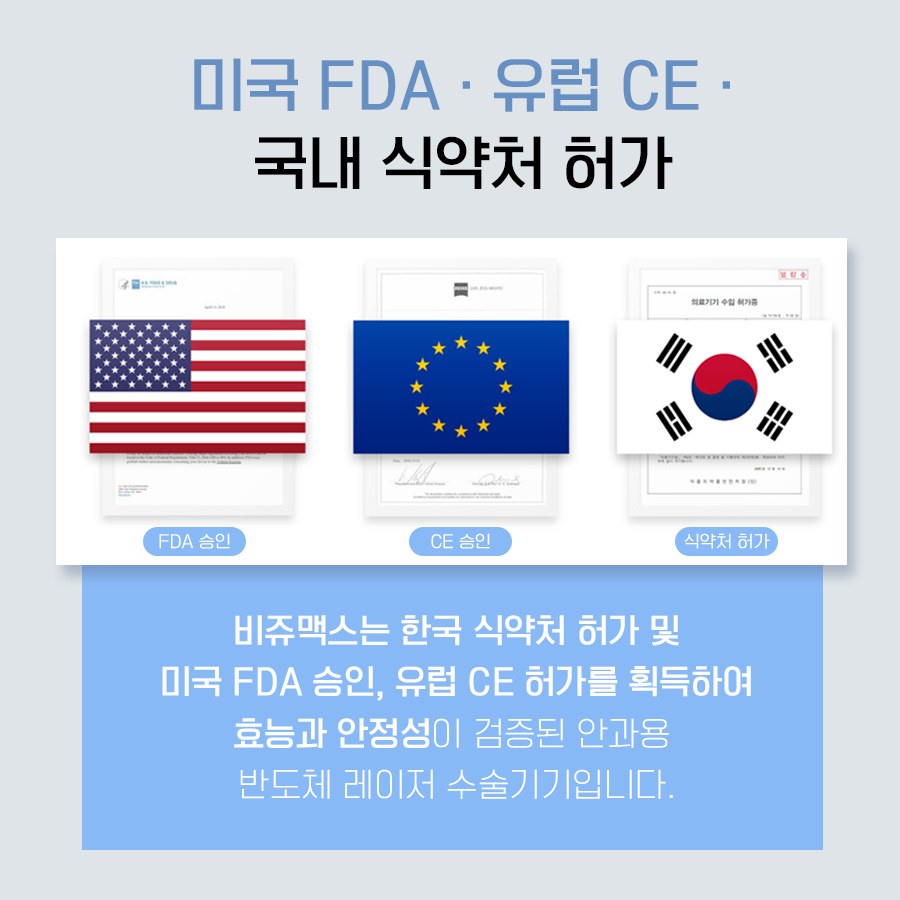
You will also receive instructions about stopping contact lens wear before surgery and about fasting or medication adjustments if needed.
- Surgery day
- On the day of SMILE LASIK or SMILE Pro, you should plan to stay at the clinic for several hours, although the actual laser time is very short.
The typical flow includes:
Final confirmation of your data and consent forms.
Application of numbing eye drops.
The SMILE LASIK or SMILE Pro procedure itself, which usually takes only a few minutes per eye, with laser time of just seconds on platforms such as VISUMAX 800.
A short rest period and post‑operative instructions.
Most patients feel pressure and mild discomfort during the procedure but not sharp pain, thanks to numbing drops. Vision is often hazy immediately afterward but improves over the next hours and days.
- Follow‑up and recovery
- You will be given eye drops to use for several weeks, including antibiotics and anti‑inflammatory drops, and sometimes artificial tears.
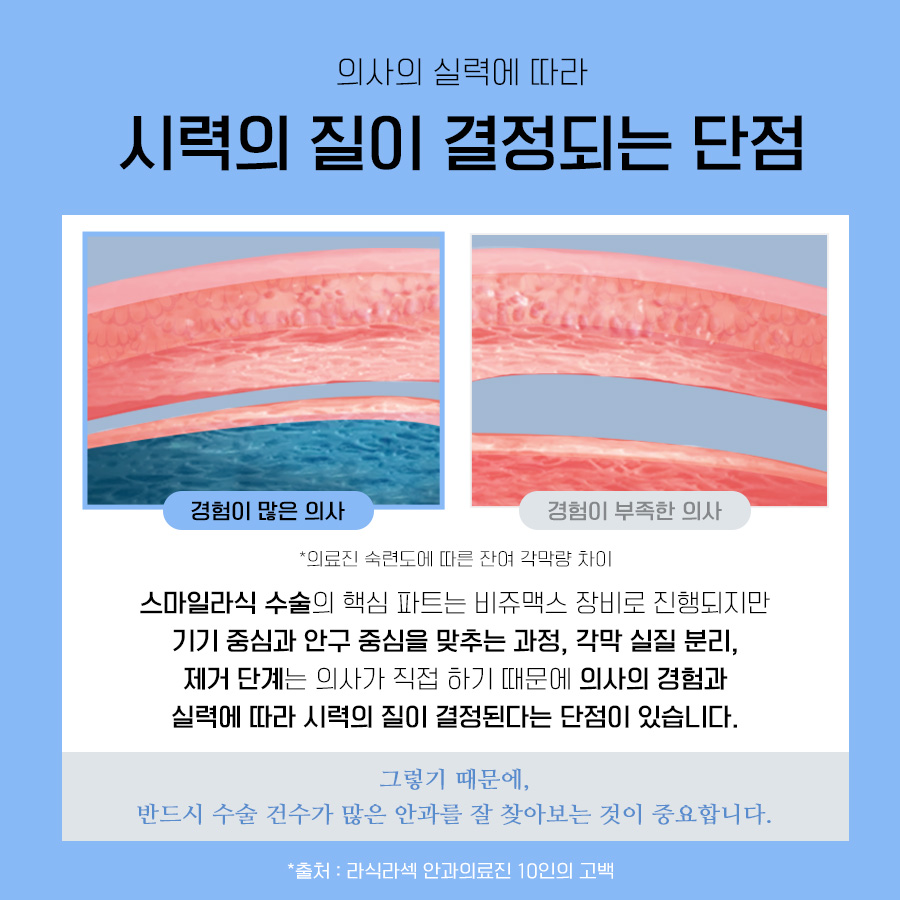
A typical follow‑up schedule may include:
A check‑up within the first 24 hours after surgery.
Another visit around one week later.
Further follow‑ups at one month and three months, which can sometimes be coordinated with your travel schedule.
Most people notice significant vision improvement within the first few days. However, full stabilization and recovery from dry eye symptoms can take several weeks to months. It is important to avoid rubbing your eyes, swimming, or using eye makeup for the period recommended by your doctor.
Expected Korea visit timeline for SMILE LASIK
For international patients staying near Apgujeong or Gangnam, a practical schedule might be:
Day 1 or 2: Arrival in Seoul.
Day 2 or 3: Full examination and consultation.
Day 3 or 4: SMILE LASIK or SMILE Pro surgery.
Day 4 or 5: First post‑operative check.
Day 7 to 10: Additional follow‑up before leaving Korea, if possible.
Some clinics can compress this further for short visits, but allowing at least one week in Seoul gives more flexibility if your eyes need extra rest or if the doctor prefers to repeat certain tests before surgery.
Aftercare once you return home After you fly back home, you should:
Continue using prescribed eye drops as directed.
Protect your eyes from dust, smoke, and strong wind.
Use sunglasses outdoors during the early recovery period.
Arrange follow‑up with a local ophthalmology clinic if you notice any unusual symptoms such as sudden vision loss, severe pain, or persistent redness.
Many Gangnam clinics maintain contact with overseas patients through email or messaging apps, so you can send updates or questions and share examination results from your local doctor if needed.
Location and access from Apgujeong
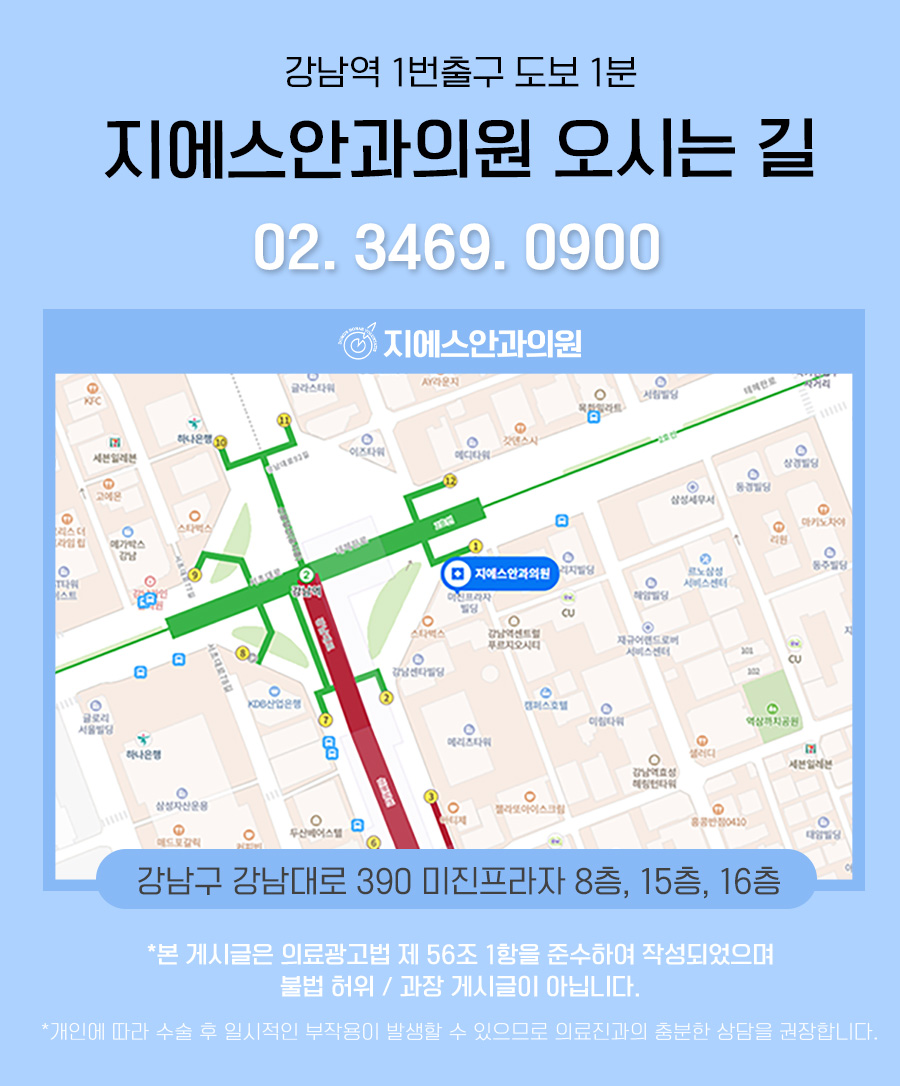
GS Eye Clinic is located on Gangnam‑daero in Gangnam District, in a building near Gangnam Station, occupying floors 8, 15, and 16. From Apgujeong, you can reach Gangnam Station easily by subway or bus, making it a practical option if you are staying in Apgujeong, Sinsa, or the broader Gangnam area.
Operating hours are:
- Weekdays: 10:00 to 18:30
- Saturday: 09:30 to 17:00
- Closed on Sundays and public holidays
- Lunch break: 13:00 to 14:00
The main phone number is 02‑3469‑0900. The clinic also provides information and updates through channels such as a Naver blog, Instagram, a YouTube channel run by the medical director, a KakaoTalk channel, and an in‑house video channel.
Checklist before you book a SMILE LASIK consultation near Apgujeong
Before you schedule your appointment, it can help to prepare a short checklist and questions. Consider noting:
Your latest glasses or contact lens prescription and how long it has been stable.
Any previous eye problems, infections, or injuries.
Family history of keratoconus or other eye diseases.
Your work and hobbies, especially if they involve night driving, frequent screen use, or contact sports.
Questions you may want to ask the clinic include:
Which SMILE platforms do you use, and how many SMILE LASIK or SMILE Pro procedures have you performed?
What is your protocol for pre‑operative screening and for ruling out keratoconus or other corneal diseases?
If I am not suitable for SMILE LASIK, what alternative treatments do you offer?
How many follow‑up visits do you recommend for overseas patients, and can some follow‑up be coordinated with my local doctor?
Preparing these points in advance can make your consultation more efficient and help the medical team give you tailored advice.
FAQ about SMILE LASIK near Apgujeong
Is SMILE LASIK painful?
During SMILE LASIK or SMILE Pro, numbing eye drops are used, so most patients feel pressure and mild discomfort rather than sharp pain. You may feel some scratchy or foreign‑body sensation for a day or two afterward. Pain levels and recovery experiences vary between individuals, so it is important to discuss your concerns with the doctor in advance.
How long does it take to recover after SMILE LASIK?
Many people notice improved vision within the first 24 hours, and functional vision for daily activities often returns within a few days. However, fine visual clarity and dry eye symptoms can continue to improve over several weeks to months. Your personal recovery timeline will depend on your eye condition, age, and how carefully you follow post‑operative instructions.
Is SMILE LASIK safe for high myopia?
SMILE LASIK can treat a wide range of myopia, but there are limits based on corneal thickness and shape. For very high myopia or thinner corneas, lens implantation procedures such as ICL or other options may be safer. A detailed examination at a clinic with experience in both laser and lens‑based procedures is essential to decide the safest strategy for your eyes.
Can overseas patients complete SMILE LASIK in one short trip to Korea?
Many international patients do complete SMILE LASIK or SMILE Pro during a single visit to Seoul, especially when staying near Apgujeong or Gangnam. You should still allow enough time for a full pre‑operative examination, the surgery itself, and at least one or two follow‑up visits. For most people, a stay of about one week is more comfortable than trying to compress everything into just a few days.
Soft call to action
If you are considering SMILE LASIK near Apgujeong and would like to understand whether SMILE LASIK, SMILE Pro, or another vision correction method suits your eyes, arranging an online consultation with a Gangnam‑based ophthalmology clinic can be a helpful first step. Clinics such as GS Eye Clinic can review your basic information in advance, explain possible options, and help you plan a realistic schedule for your visit to Korea.
Medical information notice
This article is intended for general information only and does not replace a personal consultation, diagnosis, or treatment from a qualified ophthalmologist. Suitability for SMILE LASIK, SMILE Pro, or any other procedure can only be determined after a full eye examination and discussion of your individual situation with a medical professional.

- 공유 링크 만들기
- X
- 이메일
- 기타 앱


댓글
댓글 쓰기