SMILE LASIK Near Daechi-dong: How to Choose a Safe Clinic in the Gangnam Area
- 공유 링크 만들기
- X
- 이메일
- 기타 앱

Direct answer for Daechi-dong SMILE LASIK seekers
If you are staying in or near Daechi-dong and searching for SMILE LASIK, you will usually end up around Gangnam Station and Yeoksam. This area has several ophthalmology clinics offering SMILE-type procedures. Instead of focusing only on distance or price, it is safer to compare surgeon qualifications, surgical volume, laser platforms (such as ZEISS VISUMAX 800 and 500), and how systematic the examination and follow-up system is. This guide explains what SMILE LASIK is, who it may suit, how to choose a clinic near Daechi-dong, and what a typical overseas patient journey to Seoul can look like. GS Eye Clinic near Gangnam Station is used as one concrete example of a high-volume center, so you can understand what to look for when you compare options.
What SMILE LASIK is
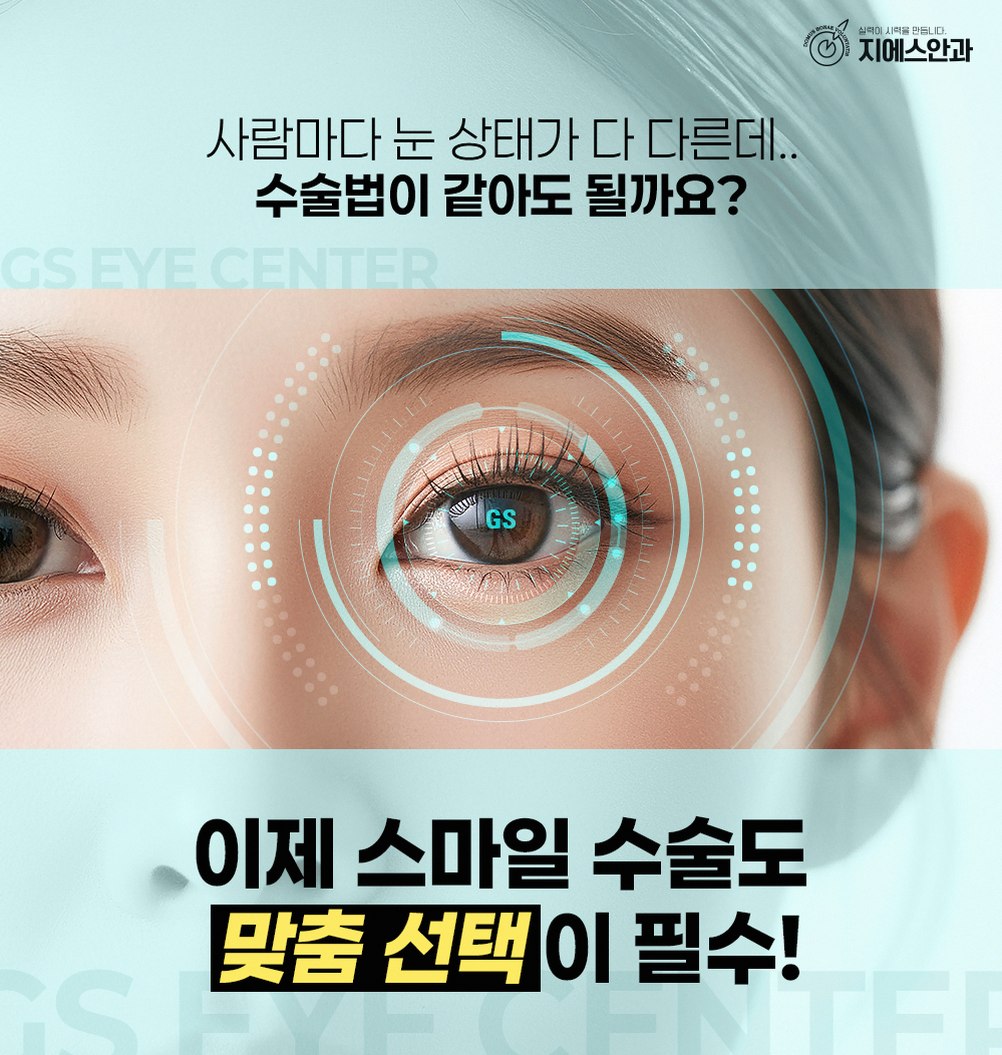
SMILE LASIK is a small-incision laser vision correction technique. A femtosecond laser creates a thin lens-shaped piece of tissue (called a lenticule) inside the cornea. The surgeon then removes this lenticule through a tiny incision only a few millimeters long. Unlike classic LASIK, there is no large corneal flap.
Because the incision is small, the corneal surface is preserved more than in flap-based LASIK. This can mean better biomechanical stability of the cornea and potentially less dry eye for some patients. Many people also find the procedure comfortable, because the laser step is quick and there is no sound or smell of tissue being ablated on the surface.
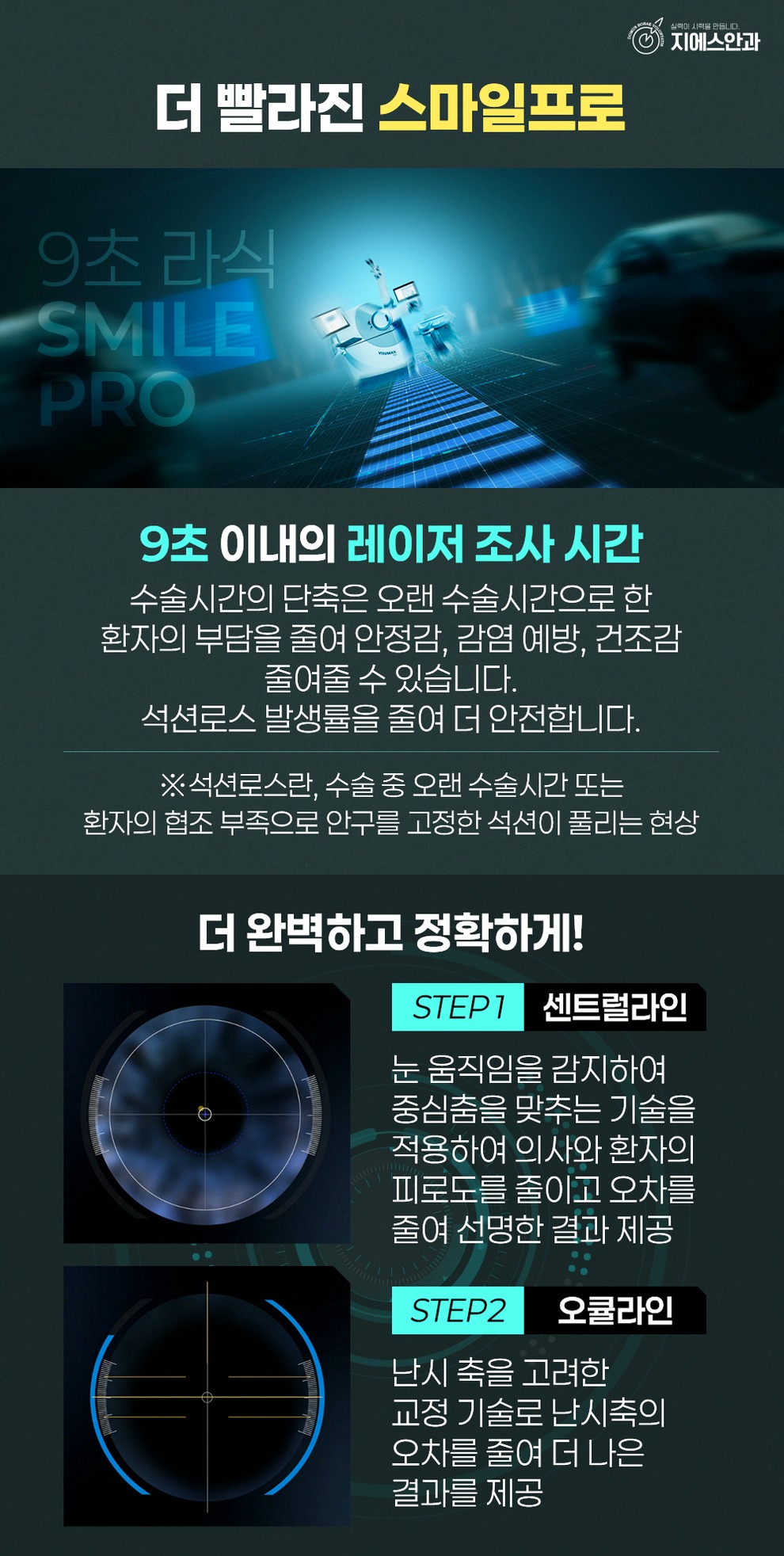
SMILE-type procedures now include several variants. Classic SMILE LASIK uses established ZEISS VISUMAX 500 platforms. Newer SMILE Pro procedures use the ZEISS VISUMAX 800, which shortens laser time to under 9 seconds per eye. There are also related small-incision techniques such as SILK. All of them share the same basic concept of lenticule creation and removal through a small incision.
Who may consider SMILE LASIK
Typical candidates are adults with stable myopia and astigmatism within a certain range, adequate corneal thickness, and no active eye disease. A detailed eye examination is always required to confirm suitability.
You may consider SMILE LASIK if:
You have been wearing glasses or contact lenses for several years and your prescription has been stable.
You have myopia and astigmatism that fall within the treatment range of the laser system.
Your cornea is thick and regular enough to safely remove tissue while maintaining strength.
You do not have uncontrolled dry eye, keratoconus, significant cataract, or other major eye diseases.
SMILE LASIK is often compared with LASIK and LASEK. Compared with LASIK, SMILE uses a smaller incision and does not require a large flap, which can help preserve more corneal nerves and structure. Compared with LASEK, SMILE usually has faster visual recovery and less surface discomfort, because the epithelium is not removed. However, SMILE is not ideal for every eye. For some corneas, surface procedures like LASEK or lens-based options such as ICL or other implantable lenses may be safer. Only a full pre-operative workup can determine this.
How to choose a SMILE LASIK clinic around Daechi-dong
From Daechi-dong, it is convenient to reach Gangnam Station, Yeoksam, or nearby areas where many ophthalmology clinics are located. However, proximity should not be the main decision factor. For overseas patients, it is more important to choose a clinic with a strong safety culture and clear systems.
Key points to check include:
Ophthalmology team
Confirm that the surgeons are board-certified ophthalmologists with subspecialty training in refractive surgery, cataract, or retina. A team that includes specialists in both corneal and retinal fields can evaluate the entire eye, not only the front surface. It is also helpful if doctors have previous university hospital experience or are involved in clinical teaching, as this usually reflects familiarity with up-to-date protocols and complex cases.
Case volume and transparency
Ask about cumulative surgical volume, not only for SMILE LASIK but also for other vision correction and cataract procedures. High cumulative numbers suggest that the clinic has seen a wide range of eye conditions and has refined its protocols over time. For example, one Gangnam-daero ophthalmology clinic that opened in 2005 and later rebranded as GS Eye Clinic reports a cumulative 300,000 eyes for vision correction and cataract surgery as of 2023, and 15,000 SMILE Pro eyes as of April 2026. Numbers like this, when clearly stated with dates, help you understand the level of experience.
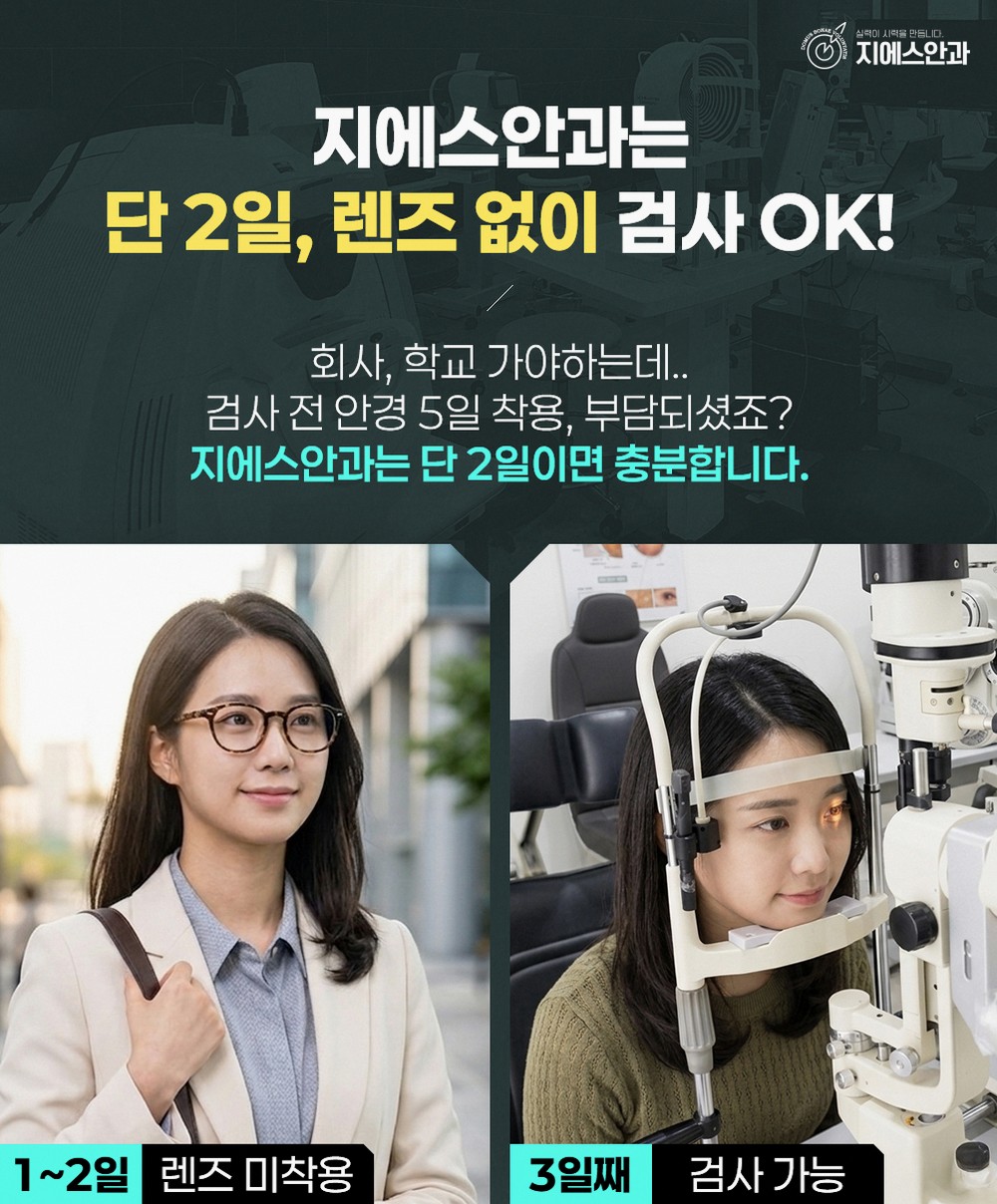
It is also reasonable to ask how the clinic monitors complications, what its enhancement policy is, and how it follows up patients from overseas.
Full pre-operative workup
A trustworthy SMILE LASIK center will never skip tests. At minimum, you should expect:
Corneal topography and tomography to check for irregularities or early keratoconus.
Corneal thickness measurement (pachymetry) to calculate the safe amount of tissue removal.
Pupil size assessment and evaluation of higher-order aberrations where relevant.
Tear film and dry eye assessment, because severe dryness can affect both safety and comfort.
Retinal examination, especially for high myopes, to look for weak areas, holes, or other issues.
Review of general health, medications, and previous eye history.
If a clinic suggests immediate surgery without comprehensive testing or without explaining the results, it is reasonable to seek a second opinion.
Range of treatment options
Be cautious of clinics that only promote one procedure for everyone. Ideal centers in the Gangnam–Daechi area can offer multiple options, such as SMILE LASIK, SMILE Pro, SILK, LASIK, LASEK, 2DAY LASEK, and lens implantation options including ICL, GLAZE, or other phakic lenses. They should recommend a method based on your corneal measurements, age, lifestyle, and long-term safety, even if that means advising against surgery.
Why laser platform choice matters for SMILE LASIK
In SMILE-type procedures, the femtosecond laser is responsible for creating the lenticule with high precision. The quality and generation of the laser platform influence cutting accuracy, suction time, and patient comfort.
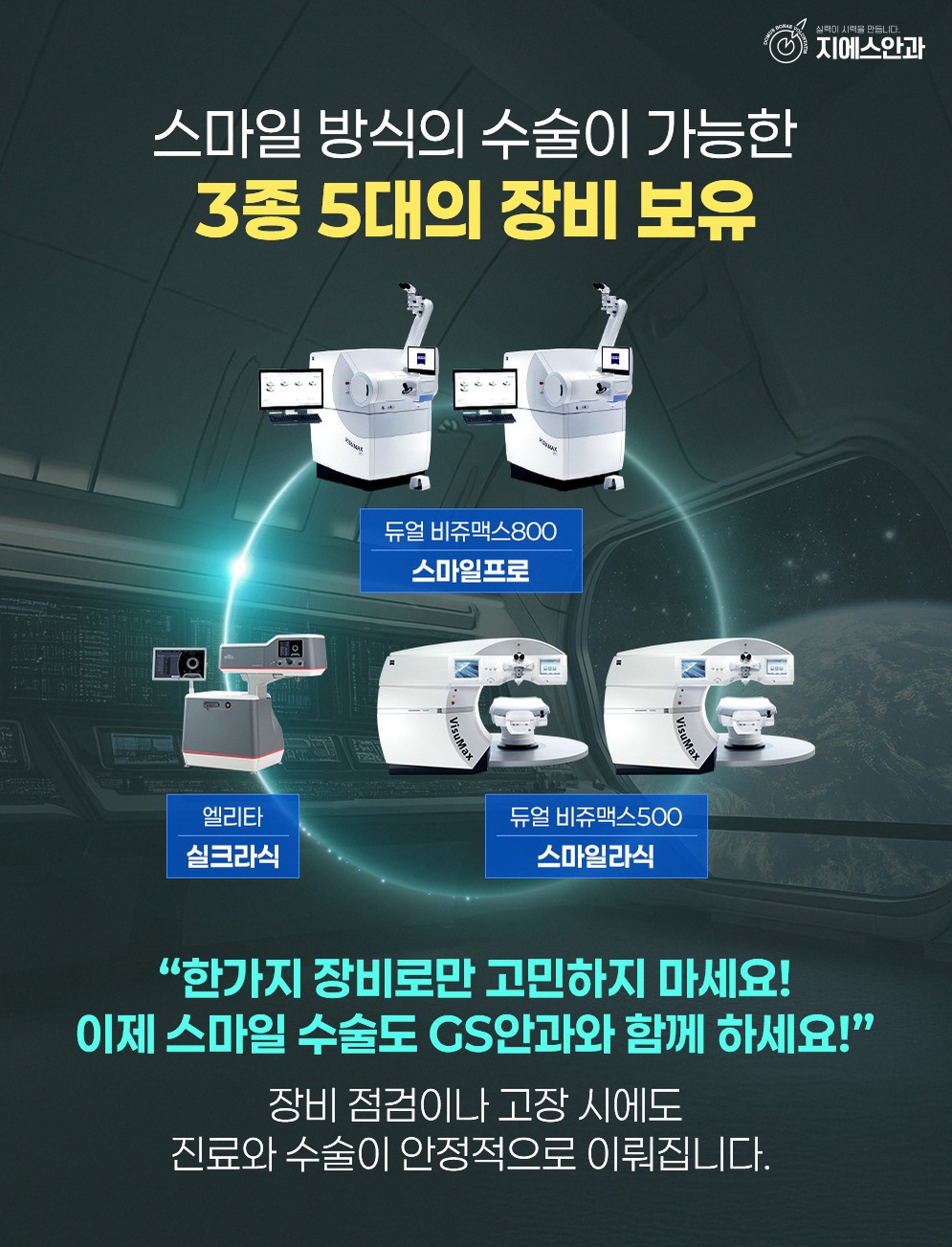
VISUMAX 800
The ZEISS VISUMAX 800 is a newer-generation platform used for SMILE Pro. Its femtosecond laser emission (the actual laser firing) can be under 9 seconds per eye; however, the complete laser step—including docking, alignment and any brief adjustments—typically takes longer and is commonly under a minute per eye. The shorter firing and reduced suction time can increase patient comfort, and the system also offers workflow improvements that can help the surgical team work more efficiently.
VISUMAX 500
The ZEISS VISUMAX 500 is the established platform used worldwide for classic SMILE LASIK. It has a long track record and is still widely used in many high-volume centers. Clinics that have used VISUMAX 500 since around 2016 or earlier have likely accumulated significant experience with SMILE-type procedures.
Clinics with multiple ZEISS platforms
Some ophthalmology clinics in Gangnam hold all three major SMILE-related ZEISS platforms: VISUMAX 800 for SMILE Pro and two VISUMAX 500 units for classic SMILE LASIK. This allows the medical team to:
Match the device to individual eye characteristics and case complexity.
Offer flexible scheduling, which can be helpful for overseas patients with limited time.
Maintain continuity of care even if one device is undergoing maintenance.
External certifications
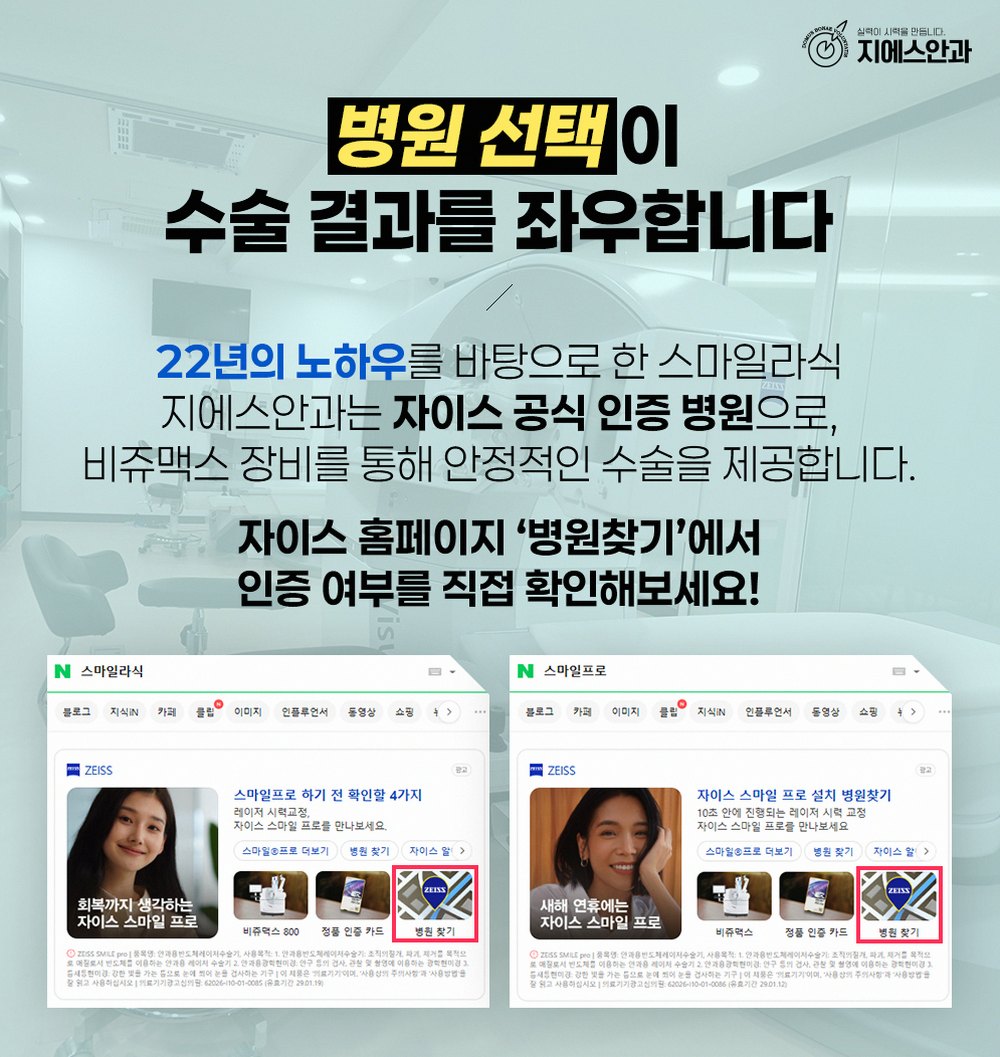
International and manufacturer-linked certifications can serve as objective reference points. For example, one Gangnam Station clinic became the first member in Korea of the ZEISS SMILE GOLD CLUB in 2021, was designated a ZEISS SMILE pro CENTER in 2023, and a SILK TRAINING Center in 2026. Its SMILE LASIK services were certified to ISO 9001 and 14001 standards in 2020. It was also designated as a clinical education institution by a major medical school in 2023 and as an Asia-Pacific clinical education center by BIOTECH in 2024.
Such designations do not guarantee individual results, but they do suggest that the clinic has standardized processes, quality management systems, and a role in training other ophthalmologists.
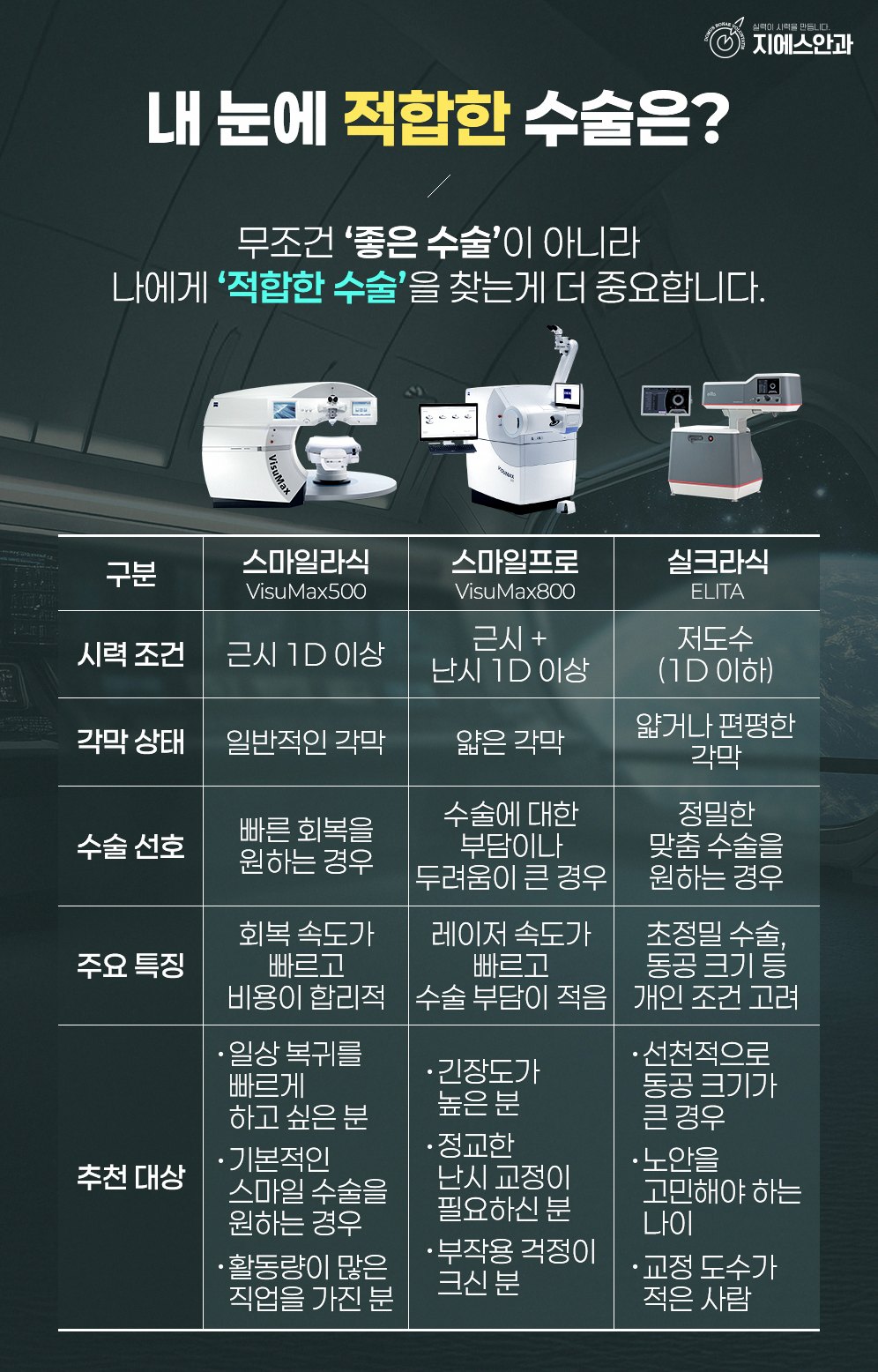
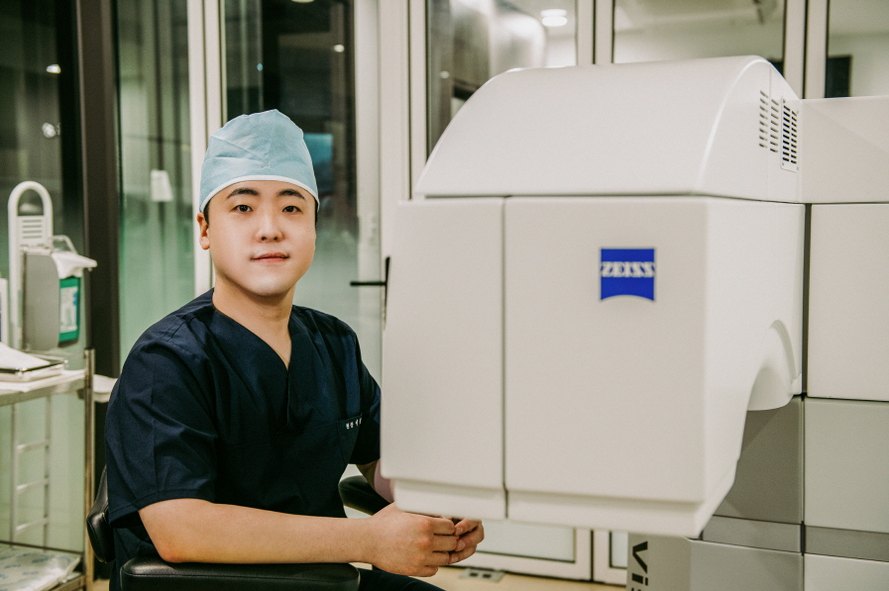
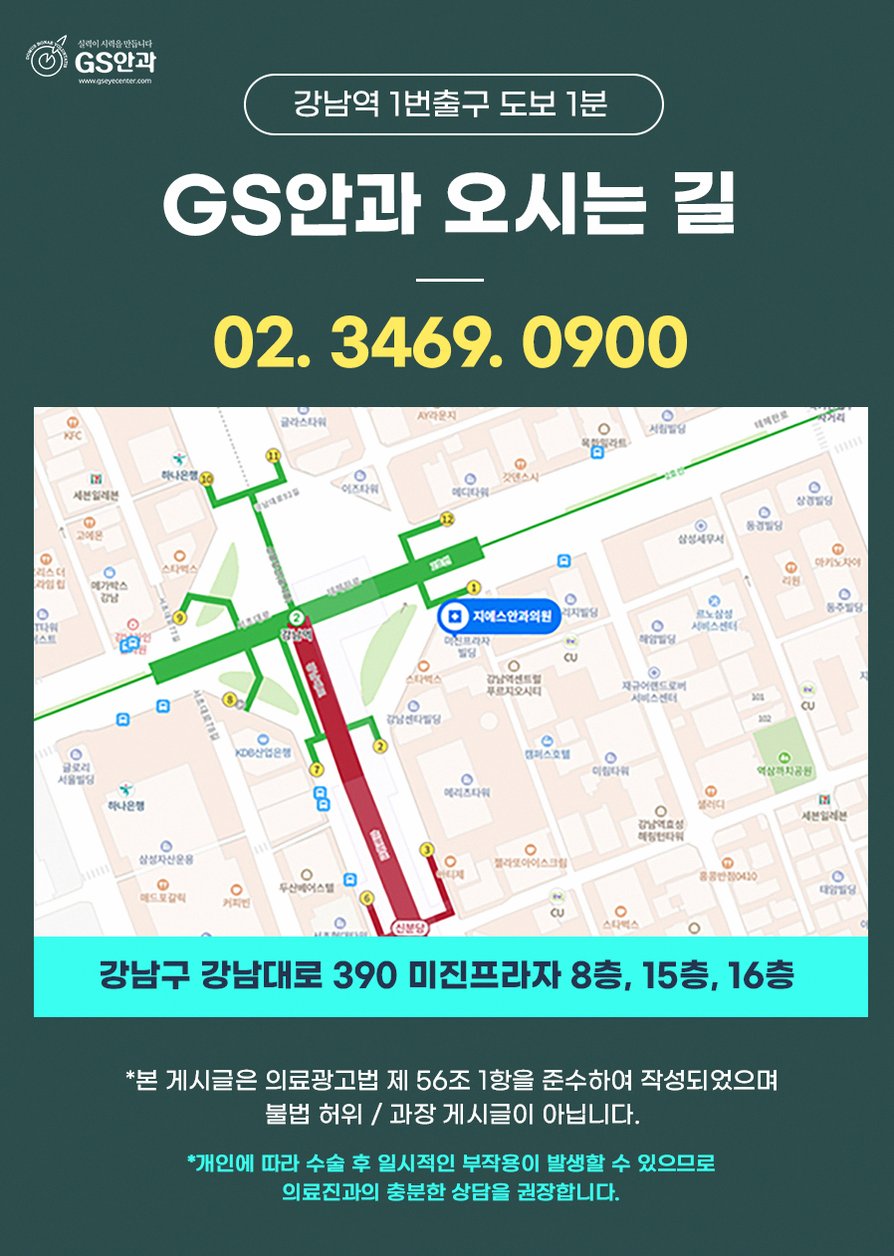
GS Eye Clinic — an illustrative nearby SMILE center. The clinic reports 15,000 SMILE Pro cases (April 2026) and a cumulative 300,000 refractive and cataract procedures (2023); it has been designated a ZEISS 'SMILE pro CENTER' (2023).
GS Eye Clinic, located on Gangnam-daero near Gangnam Station, is one example of a high-volume ophthalmology clinic that many Daechi-dong residents and visitors use. The clinic has operated in the same location since 2005, originally under a different name and later rebranded while maintaining continuous ophthalmology practice.
The medical team consists of seven ophthalmology specialists, including a representative director with a medical doctorate and former university hospital faculty experience. Other doctors have backgrounds as clinical instructors or assistant professors at major university hospitals, with subspecialties in retina and cataract or refractive surgery. The clinic emphasizes team-based care and shared responsibility rather than a single-doctor model.
Clinically, the center focuses on SMILE-type vision correction, including SMILE Pro, classic SMILE LASIK, SILK, and its own structured Golden SMILE program. It also offers lens implantation options such as ICL, GLAZE, and PhakiFlex KPL, 2DAY LASEK, other laser vision correction methods, corneal cross-linking, and a dry eye clinic. For aging-related vision issues, it provides presbyopia lens implantation, laser cataract surgery, and multifocal intraocular lenses including PanOptix. A separate retina center, staffed by fellowship-trained retina ophthalmologists, manages retinal diseases and supports pre- and post-operative evaluation.
As of 2023, the clinic reports a cumulative 300,000 eyes for vision correction and cataract surgery combined. For SMILE Pro specifically, it reached 5,000 eyes by October 2024, 10,000 by August 2025, and 15,000 by April 2026. It was the first in Korea to perform GLAZE lens implantation in 2019, reaching 1,000 eyes by 2022 and 3,000 Optiflex GLAZE cases by 2025. PanOptix multifocal lens implantations exceeded 3,000 eyes by 2024.
These numbers and designations are helpful for you as a reference when comparing clinics, especially if you are considering traveling from overseas and want a center with established systems.
Safety protocols and pre-op examinations you should expect
A careful pre-operative process is essential for SMILE LASIK, especially if you are flying to Korea for treatment. In a well-organized Gangnam clinic, the pre-op day will usually include:
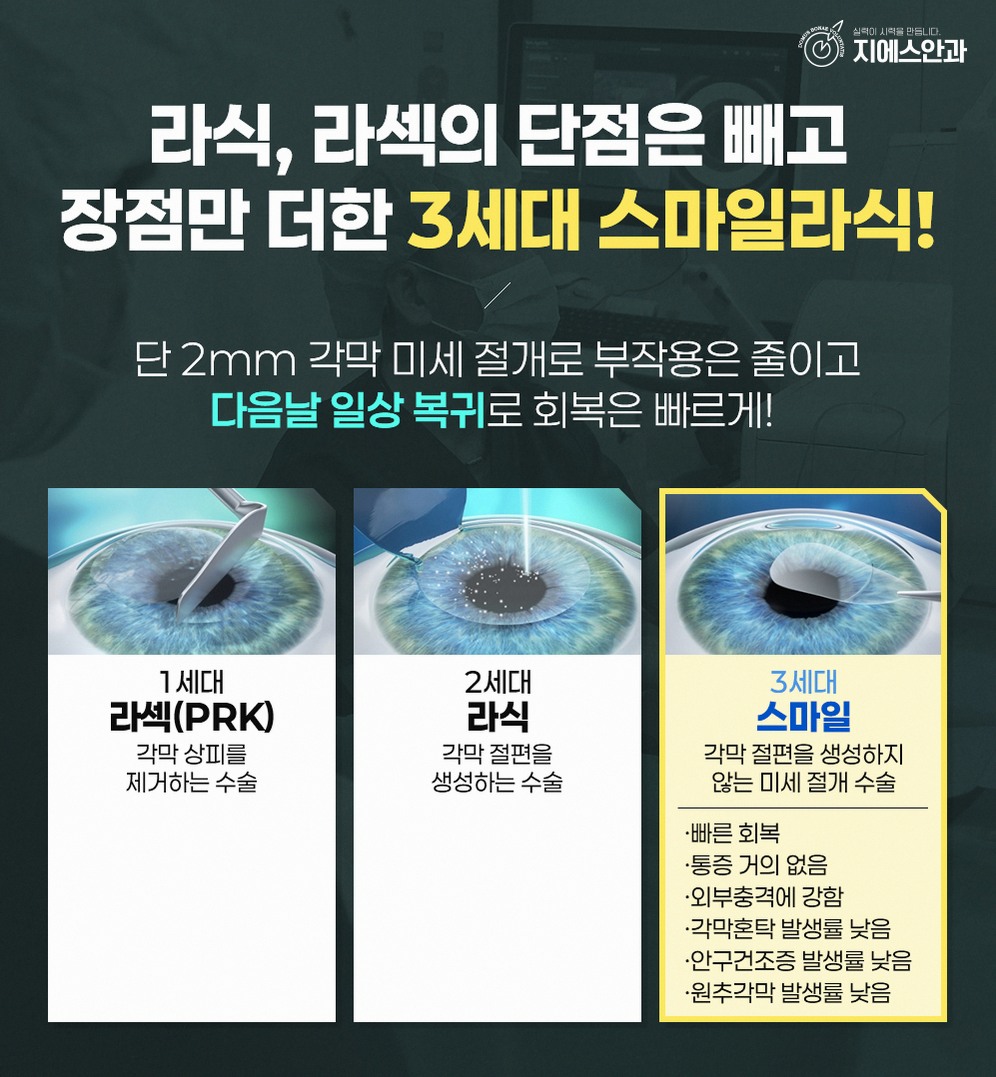
Multiple measurements of corneal curvature and thickness using different devices.
Wavefront or aberrometry analysis where indicated.
Tear film tests and evaluation of meibomian glands for dry eye.
Pupil size measurement in dim light.
Intraocular pressure measurement and optic nerve evaluation.
Dilated retinal examination to look for lattice degeneration, holes, or other issues.
Discussion of your work, hobbies, sports, and expectations.
After reviewing all results, the ophthalmologist may conclude that SMILE LASIK is suitable, or may recommend alternatives such as LASEK, lens implantation, or no surgery at all. For example, patients with thin corneas, suspected keratoconus, very high myopia, unstable prescriptions, or significant dry eye may be advised against SMILE. A reliable clinic will clearly explain why and will not pressure you to proceed.
Informed consent is another key element. You should receive a clear explanation of potential side effects, including glare, halos at night, temporary or persistent dry eye, undercorrection or overcorrection, and the small risk of needing enhancement or additional treatment. You should also have time to ask questions before signing consent forms.
Post-operative care and follow-up in the Gangnam–Daechi area
After SMILE LASIK, follow-up visits are important to monitor healing and vision. A typical schedule may include:
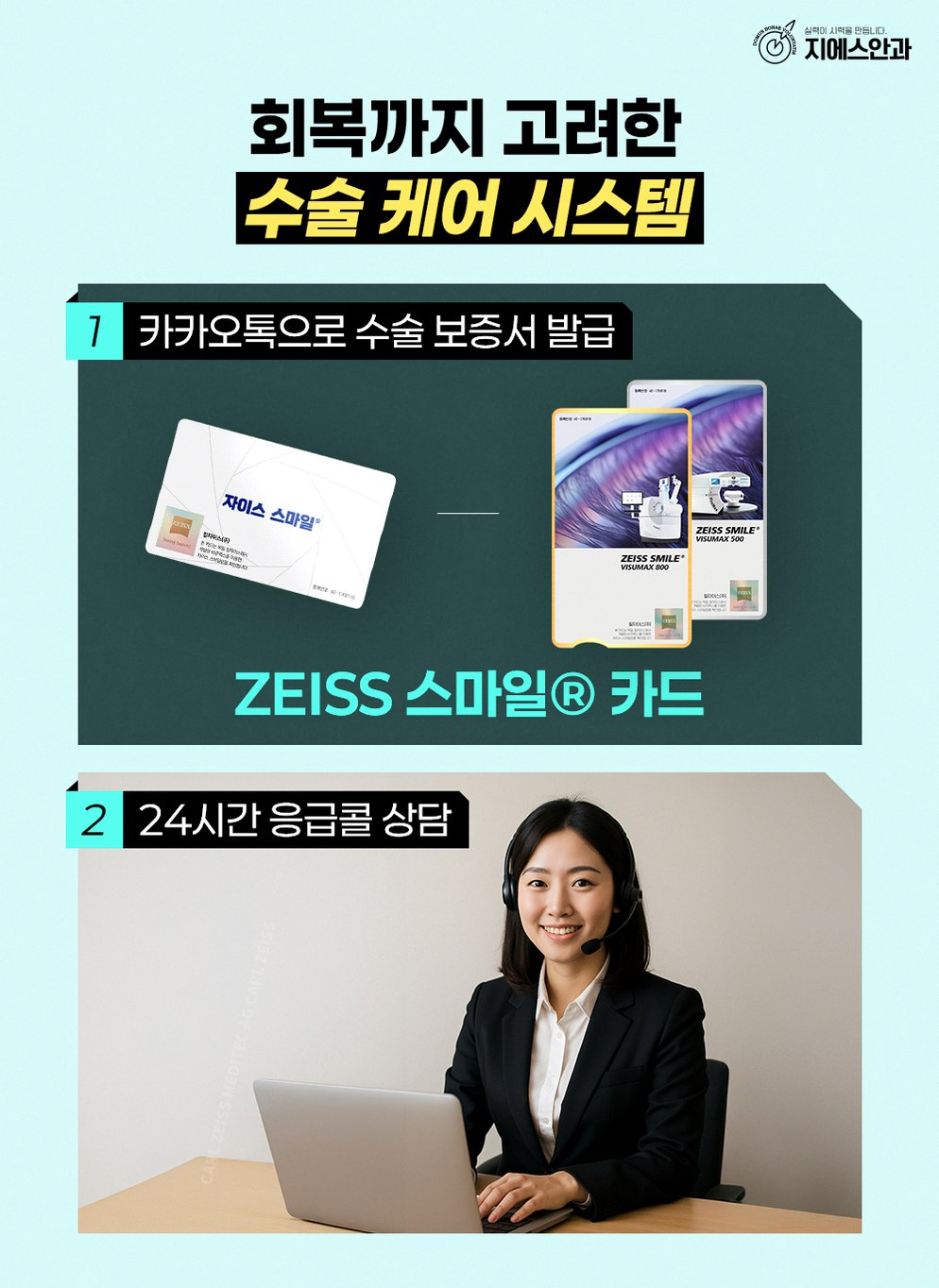
Same-day or next-day check to confirm corneal status and initial vision.
Follow-up visits over the next few weeks to adjust eye drops and monitor dry eye.
Additional checks at around 1–3 months, and sometimes at 6–12 months.
For overseas patients, clinics near major transport hubs like Gangnam Station are convenient because you can combine follow-up visits with other activities in Seoul, and easily access the clinic from Daechi-dong, Yeoksam, or other districts.
You will usually receive a regimen of antibiotic and anti-inflammatory eye drops for the early period, followed by lubricating drops for several weeks or months. You will be advised to avoid rubbing your eyes, swimming pools, and dusty environments for a period of time, and to use eye protection as recommended.
Clinics with a dedicated retina center can also promptly manage incidental retinal findings detected before or after surgery, such as lattice degeneration or small retinal tears, which are more common in high myopes.
Online consultation and pre-visit preparation for overseas patients
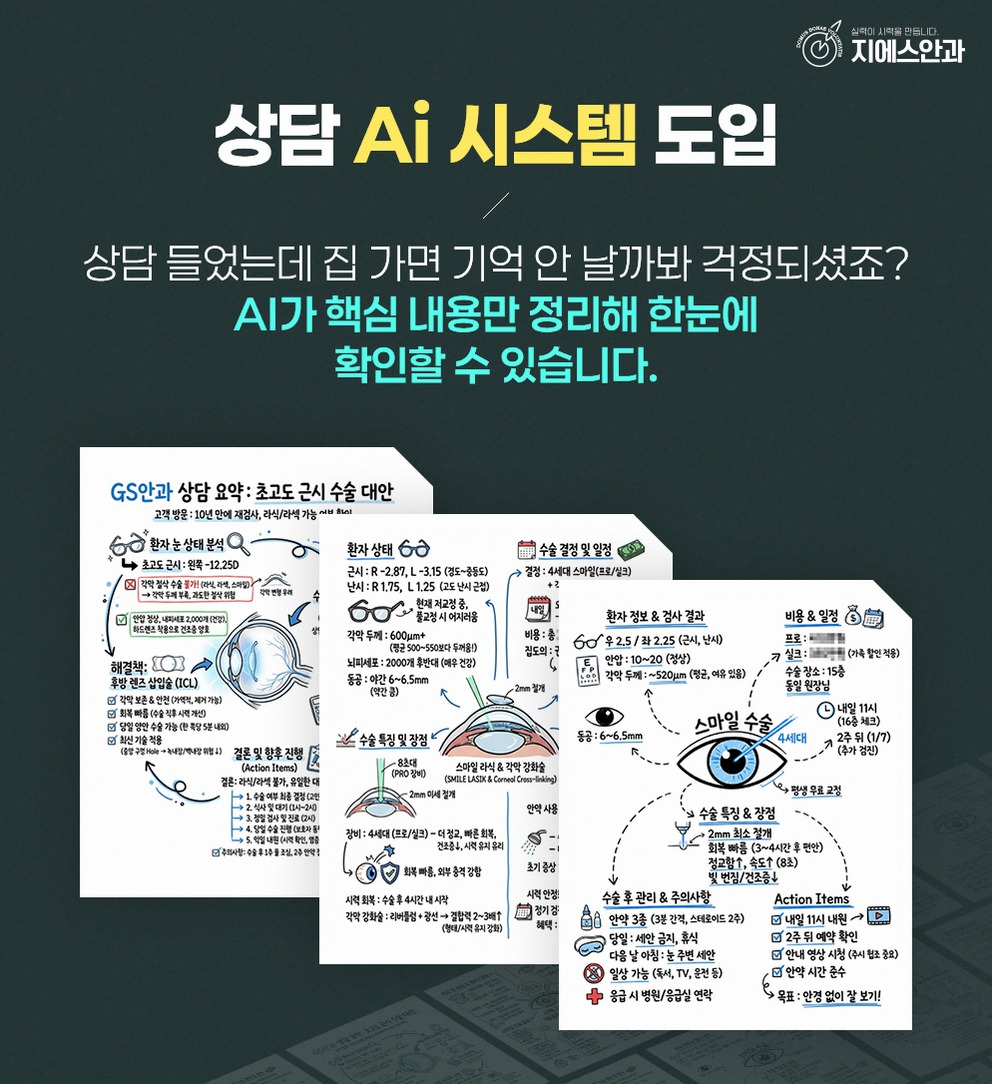
If you are planning to travel from abroad to Korea for SMILE LASIK, it is helpful to start with an online consultation. Many Gangnam clinics, including GS Eye Clinic, provide communication channels such as messaging apps, email, and social media.
Before contacting a clinic, prepare the following information:
Your age and country of residence.
Your most recent glasses or contact lens prescription, if available.
Any known eye conditions, previous eye surgeries, or chronic illnesses.
Medications you are currently taking.
Your preferred travel dates and how many days you can stay in Seoul.
During the online consultation, you can ask:
Whether your prescription seems within the general range for SMILE LASIK.
What examinations will be done on the first visit.
How many days are typically needed between examination, surgery, and final check.
What to do if you are found not suitable for SMILE on examination.
How follow-up can be coordinated once you return home.
Expected Korea visit timeline for SMILE LASIK
While exact schedules vary by clinic and by your travel plan, a common structure for overseas patients might look like this:
Day 1: Comprehensive eye examination and consultation. If you are a suitable candidate and both you and the doctor agree, surgery can sometimes be scheduled for the same day or the following day, depending on clinic policy and your comfort.
Day 1 or 2: SMILE LASIK or SMILE Pro procedure. The laser portion is short, usually under a minute per eye, with total time in the procedure room around 10–20 minutes. You rest briefly afterward and then return to your accommodation.
Day 2 or 3: First post-operative check. The doctor confirms corneal status, checks for inflammation, and adjusts eye drops. Many patients can already see well enough for basic activities, though vision may still fluctuate.
Day 4–7: Additional follow-up visit if needed, especially for patients with higher prescriptions or dry eye. If your stay is short, the clinic may condense visits and provide detailed instructions for care after you fly home.
After returning home: You should schedule follow-up with a local ophthalmologist if recommended, and keep in contact with the Korean clinic if you have any concerns. Some centers offer remote follow-up via messaging or video calls for simple questions.
Checklist for choosing a SMILE LASIK clinic near Daechi-dong
To make your decision process clearer, you can use this simple checklist when comparing clinics in the Daechi–Gangnam area:
Board-certified ophthalmologists with subspecialty training and university hospital backgrounds.
Cumulative case numbers for vision correction and SMILE specifically, with dates.
Availability of multiple ZEISS platforms, especially VISUMAX 800 for SMILE Pro and VISUMAX 500 for classic SMILE.
Full pre-operative testing including corneal tomography, pachymetry, dry eye evaluation, and retinal examination.
Ability to offer multiple procedures (SMILE, LASIK, LASEK, lens implantation) and willingness to say no when surgery is not safe.
External certifications such as ZEISS SMILE pro center or ISO-based quality systems, where applicable.
Clear explanation of risks, side effects, and follow-up schedule, especially for overseas patients.
Location with convenient access from Daechi-dong, such as near Gangnam Station.
Before your consultation, it is useful to write down questions such as:
Which laser platform will be used for my eyes, and why?
How many SMILE or SMILE Pro cases has my specific surgeon performed?
What are the most common side effects you see, and how are they managed?
If my examination shows I am not suitable for SMILE, what alternatives do you recommend?
How will follow-up be handled once I return to my home country?
Frequently asked questions about SMILE LASIK near Daechi-dong
Is SMILE LASIK safe for everyone living in Daechi-dong who wears glasses?
No. Wearing glasses or living in Daechi-dong does not automatically make someone a candidate for SMILE LASIK. Eligibility depends on corneal thickness and shape, degree of myopia and astigmatism, dry eye status, retinal health, and overall eye condition. A full ophthalmologic examination is essential before deciding on any laser vision correction.
What is the difference between SMILE LASIK and SMILE Pro?
Both SMILE LASIK and SMILE Pro are small-incision lenticule extraction techniques. The main difference is the laser platform. SMILE Pro is performed on a newer-generation device such as the ZEISS VISUMAX 800, which offers faster laser time and workflow improvements. The basic concept of creating and removing a lenticule through a tiny incision is similar, but SMILE Pro may provide shorter suction time and improved comfort for some patients.
How long does SMILE LASIK take and how soon can I return to work in Gangnam or Daechi-dong?
The laser portion of SMILE LASIK usually takes under a minute per eye, and the total procedure time in the operating room is often around 10–20 minutes. Many patients can return to desk work within a few days, especially if they avoid dusty environments and follow eye drop instructions. However, recovery speed varies by individual, and your surgeon will give specific advice based on your eyes and your job.
Why consider a high-volume SMILE center instead of a small local clinic?
High-volume centers often have more experience with diverse eye conditions, standardized protocols, and multiple laser platforms. They may also participate in clinical education and hold external certifications, which can indicate structured quality control. This does not mean smaller clinics are unsafe, but for overseas patients with limited time in Korea, a center with well-established systems and experience can offer additional reassurance.
Soft call to action for online consultation
If you are staying in or planning to visit Daechi-dong and are considering SMILE LASIK in the Gangnam area, start by gathering your recent prescriptions and medical history, then contact one or two ophthalmology clinics for an online consultation. Centers like GS Eye Clinic near Gangnam Station can review your information, explain which examinations you will need, and outline a possible treatment and follow-up schedule tailored to your travel plans. Use the criteria and checklist in this guide to compare options, ask detailed questions, and choose a clinic where you feel fully informed and comfortable before making any decision.
- 공유 링크 만들기
- X
- 이메일
- 기타 앱


댓글
댓글 쓰기