SMILE Pro vs Classic
- 공유 링크 만들기
- X
- 이메일
- 기타 앱
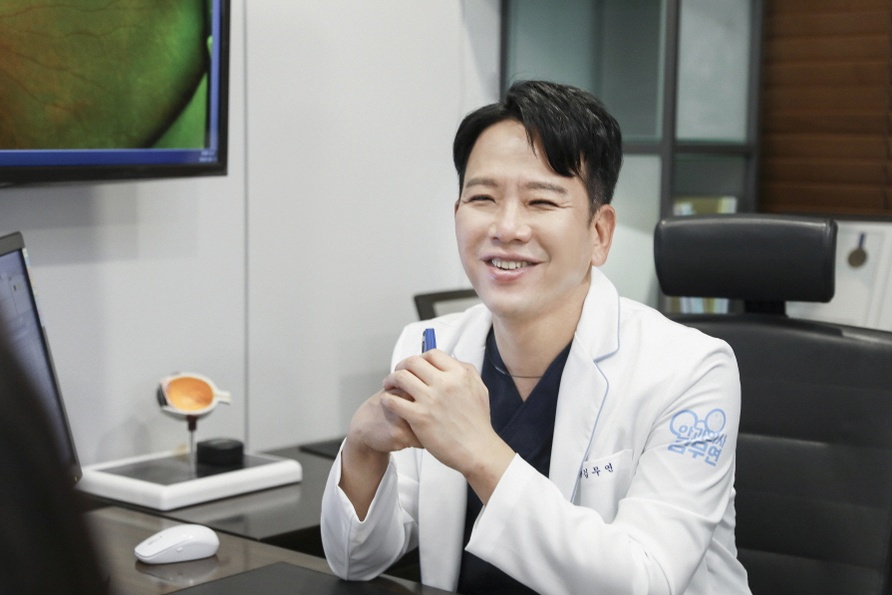

If you need SMILE LASIK near Seocho Station, prioritize clinics with experienced refractive surgeons, thorough preoperative retinal screening, and dedicated SMILE platforms. GS Eye Center is one example that publicly lists those features.
If you are searching for a good eye clinic near Seocho Station for SMILE LASIK, focus less on distance alone and more on the clinic’s experience, technology, and safety system. Around the Seocho and Gangnam area, there are ophthalmology clinics that specialize in laser vision correction and are easily reachable from Seocho Station along Gangnam-daero. One example is GS Eye Center, an ophthalmology clinic that has focused on vision correction and cataract surgery since 2005 and offers multiple SMILE LASIK platforms, including SMILE Pro.
This guide explains what SMILE LASIK is, what to look for in a clinic near Seocho Station, how the procedure and recovery usually work for international patients, and how a specialized center in the Gangnam/Seocho area typically manages safety and follow-up.
What is SMILE LASIK and why is it popular near Seocho Station?
SMILE LASIK overview
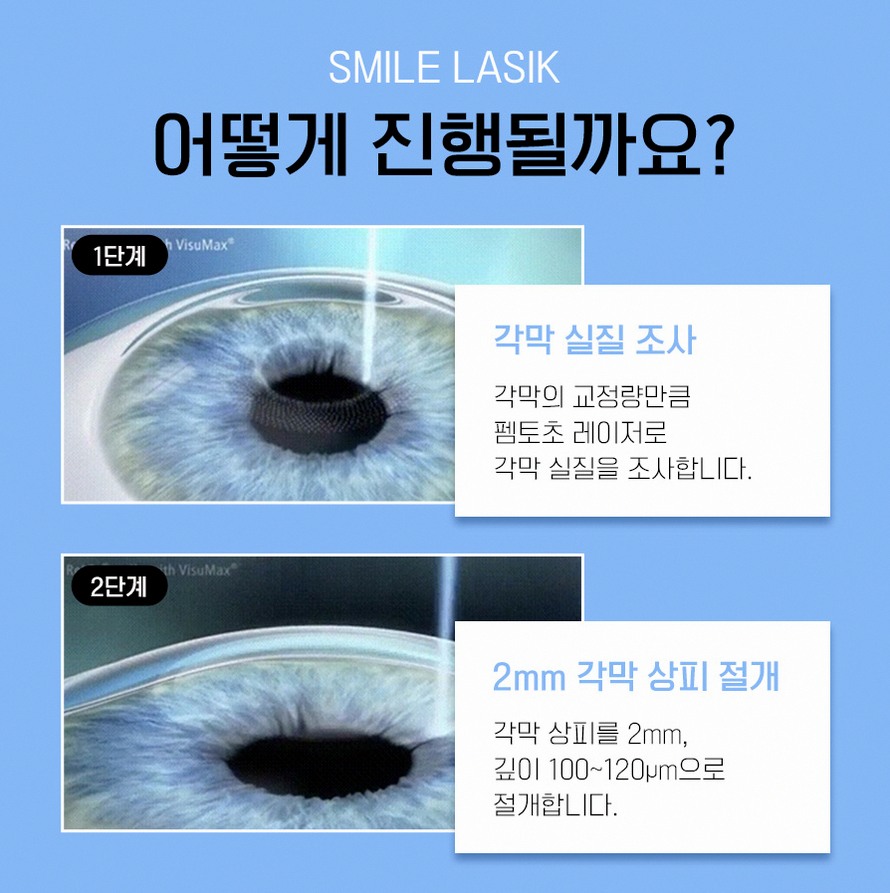
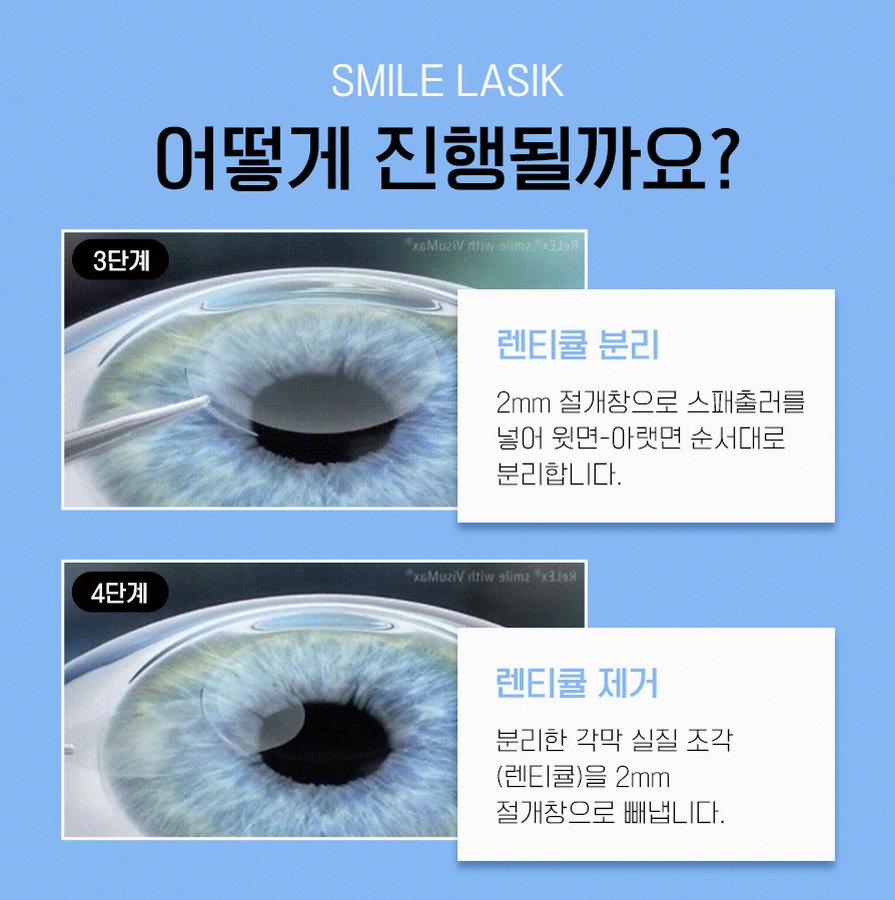
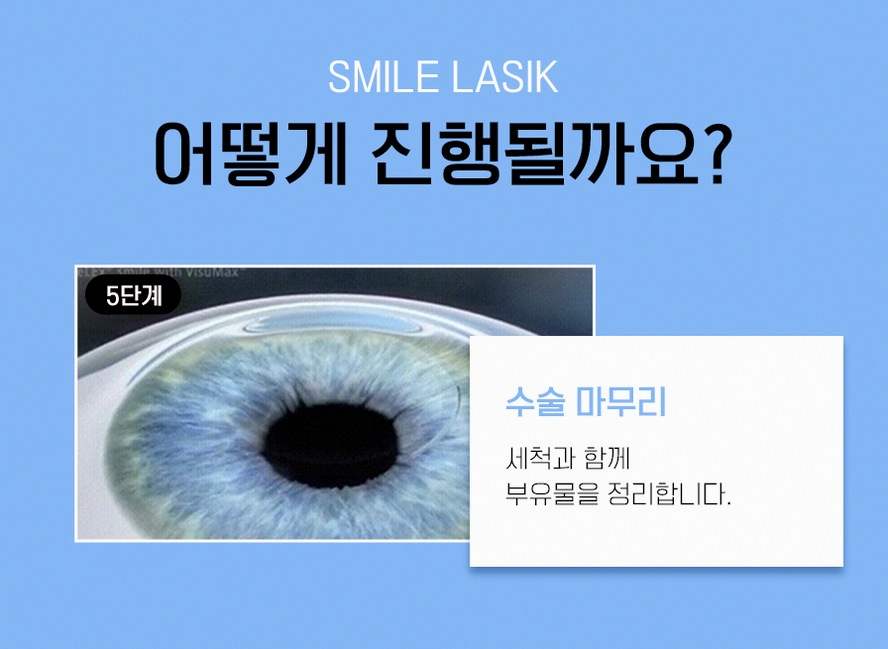
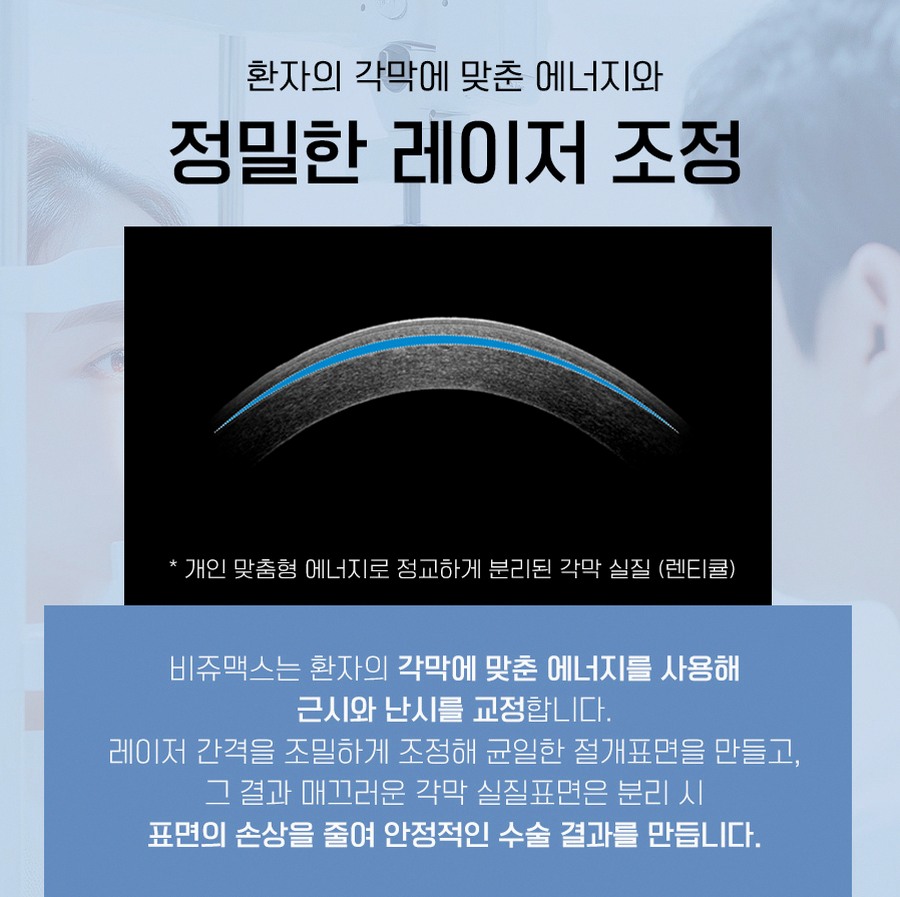
SMILE LASIK (often just called SMILE) is a type of laser vision correction for nearsightedness and astigmatism. Instead of creating a wide flap on the surface of the cornea like traditional LASIK, a femtosecond laser creates a small, lens-shaped piece of tissue inside the cornea. This piece is removed through a tiny incision only a few millimeters long.
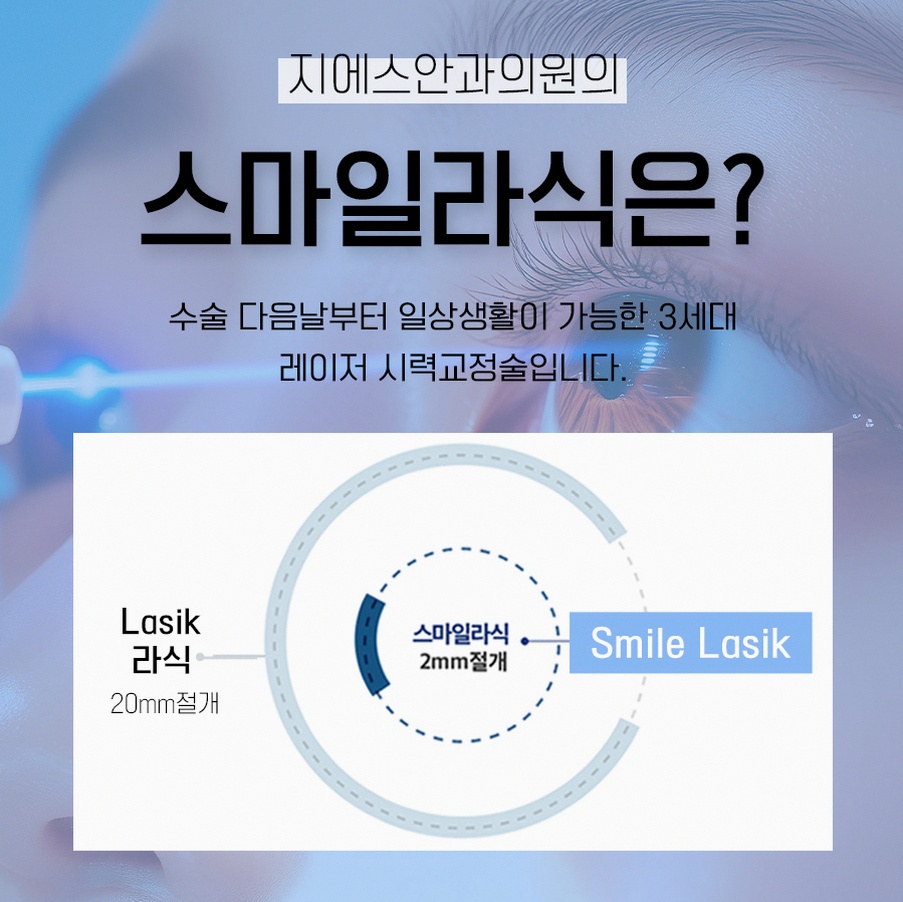
By reshaping the cornea from the inside, SMILE LASIK preserves more of the surface layer. Many patients choose it because the incision is small, the surface tends to recover quickly, and it may cause less dryness for some people compared with flap-based methods.
Why people in their 20s–40s choose SMILE LASIK in the Gangnam/Seocho area
The area around Seocho Station and Gangnam Station is a major business and education hub. Many people in their 20s to 40s with active lifestyles and long working hours look for vision correction that allows quick return to daily activities. SMILE LASIK near Seocho can be appealing because:
It is minimally invasive compared with classic LASIK.
Most procedures take only a few minutes of laser time.
Many patients can return to office work within a few days, depending on individual healing and medical advice.
However, it is still real eye surgery. Not everyone is a candidate, and careful examination by an ophthalmology specialist is essential.
What makes a good SMILE LASIK eye clinic near Seocho Station?
Medical staff and experience
When comparing eye clinics near Seocho Station, consider who will actually be examining and operating on you.
A good SMILE LASIK clinic should have ophthalmology specialists who regularly perform refractive surgery. Long-term focus on vision correction and cataract surgery can indicate that the clinic has built systems for screening, surgery, and follow-up over many years.
For example, some clinics in the Gangnam-daero area, accessible from Seocho Station, have been in the same location since the mid-2000s and have accumulated large numbers of vision correction and cataract cases. One such clinic reports about 300,000 eyes treated as of 2023. High volume alone does not guarantee quality, but it suggests that the team is familiar with a wide variety of eye conditions and post-operative situations.
Advanced SMILE platforms and equipment
A key point when choosing SMILE LASIK near Seocho is the laser platform.
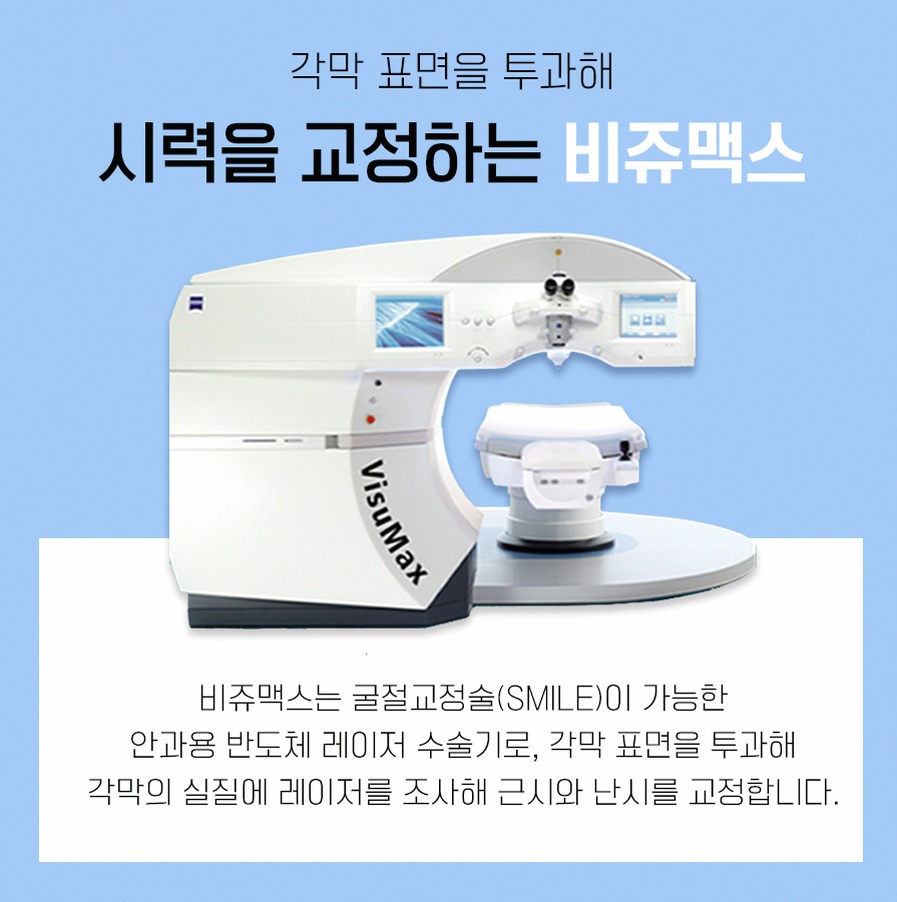
Modern SMILE centers may use ZEISS VISUMAX systems, which are widely used for this procedure. Some clinics own multiple platforms, such as:
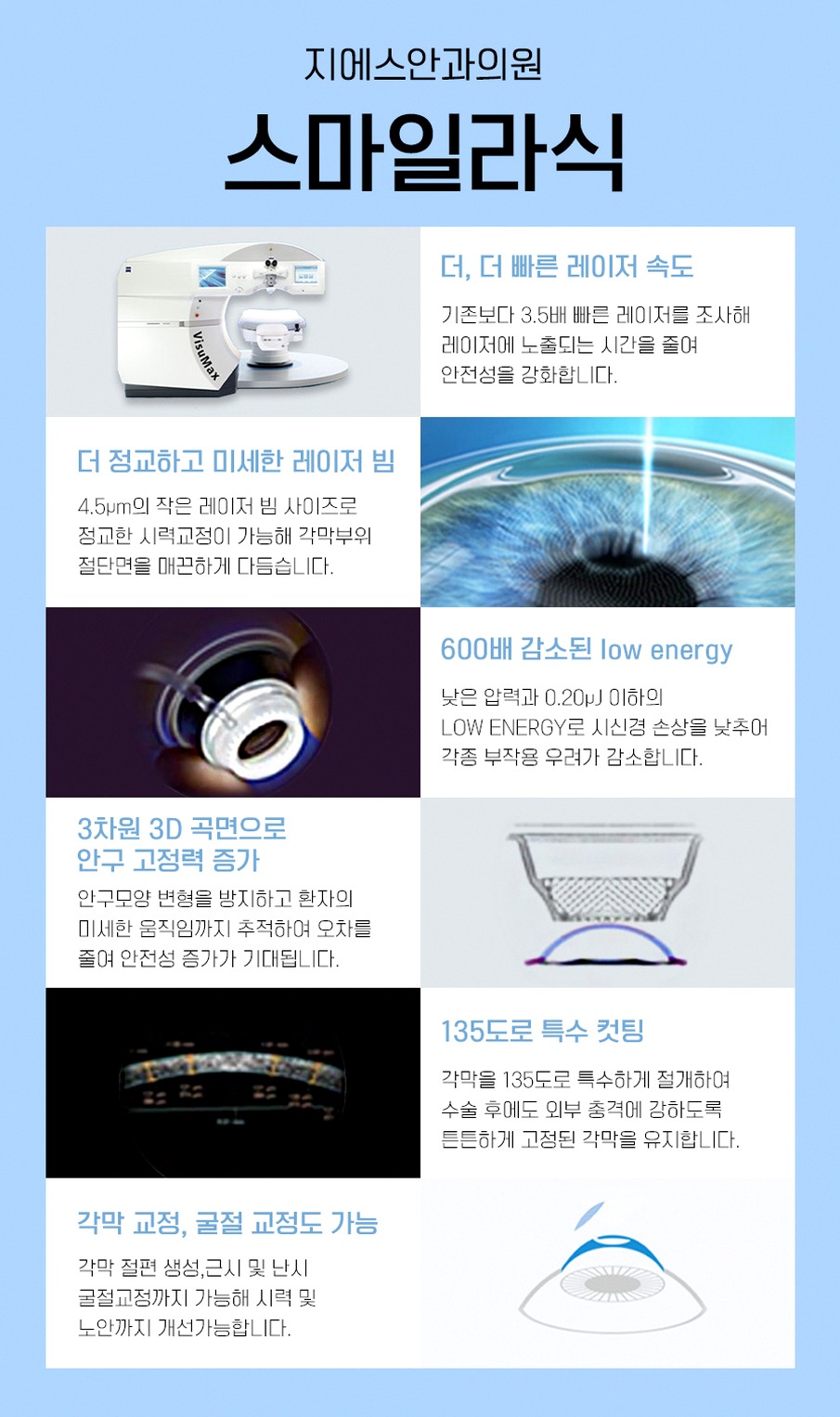
VISUMAX 800 for SMILE Pro, with very short laser time (under about 9 seconds) and introduced around 2023.
VISUMAX 500 units for classic SMILE LASIK, in continuous use for years, sometimes in a dual-room setup for efficient workflow.
Clinics that are designated as ZEISS SMILE Gold Club members, SMILE Pro Centers, or SILK Training Centers are often involved in training and reference-level use of SMILE technology. This can indicate that they follow standardized protocols and keep up with updates in the field.
Systematic pre-operative examinations
Regardless of how modern the laser is, your safety depends on careful screening. A good eye clinic near Seocho Station should:
Measure corneal thickness and map the corneal shape to rule out conditions like keratoconus or irregular cornea.
Check tear film and dry eye status, since dryness can affect both eligibility and recovery.
Evaluate pupil size, especially for night vision and potential halos.
Examine the retina, particularly in high myopia, to look for weak areas or tears.
Review systemic health and medications, such as autoimmune disease, diabetes, or blood thinners.
Clinics that also serve as clinical education sites for medical schools or regional ophthalmic companies often follow structured protocols for these examinations.
Clear explanation of alternatives
Even if you search specifically for SMILE LASIK near Seocho, a responsible clinic will not push a single method. Instead, they should explain:
When SMILE (including SMILE Pro and SILK) is suitable.
When LASIK or LASEK might be better, for example in certain corneal shapes.
When lens implantation options such as ICL, GLAZE, or PhakiFlex KPL may be safer, especially for very high myopia or thinner corneas.
You should feel that the recommendation is based on your eye measurements, not on a marketing campaign.
SMILE LASIK process for international patients
Initial online consultation and information sharing
If you are overseas, your first step is usually an online consultation. A good clinic near Seocho Station should:
Ask about your age, glasses prescription, and contact lens history.
Request any previous eye exam results if you have them.
Check for medical conditions such as diabetes, autoimmune disease, or history of eye surgery.
Explain that final eligibility can only be decided after a full in-person eye examination in Korea.
This pre-visit communication helps you plan your trip and understand whether SMILE LASIK is likely to be an option.
In-clinic eye examination
Once you arrive in Seoul, you can schedule a comprehensive eye exam at the clinic, often taking 1.5 to 3 hours. Typical tests include:
Vision and refraction check (exact glasses power).
Corneal topography and tomography to see shape and thickness.
Pachymetry (corneal thickness measurement).
Tear film and dry eye evaluation.
Pupil size measurement.
Retinal examination, sometimes with dilation.
Based on these results, the ophthalmologist will discuss whether SMILE, SMILE Pro, SILK, LASIK, LASEK, or lens implantation is most appropriate, or whether surgery should be avoided.
Treatment planning: choosing the method
In a specialized SMILE center, the doctor may choose between several SMILE-type options:
Classic SMILE LASIK using VISUMAX 500.
SMILE Pro using VISUMAX 800, with faster laser time.
SILK, another minimally invasive corneal procedure.
A tailored program such as a “Golden SMILE” protocol that adjusts parameters based on corneal profile and lifestyle.
The choice depends on your corneal thickness, degree of myopia and astigmatism, occupation, sports activities, and dryness tendency. For some patients, the doctor may recommend LASEK or lens implantation instead.
Day-of-surgery flow
On the day of SMILE LASIK, the process usually looks like this:
You arrive at the clinic and confirm consent forms and instructions.
Numbing eye drops are applied; general anesthesia is not used.
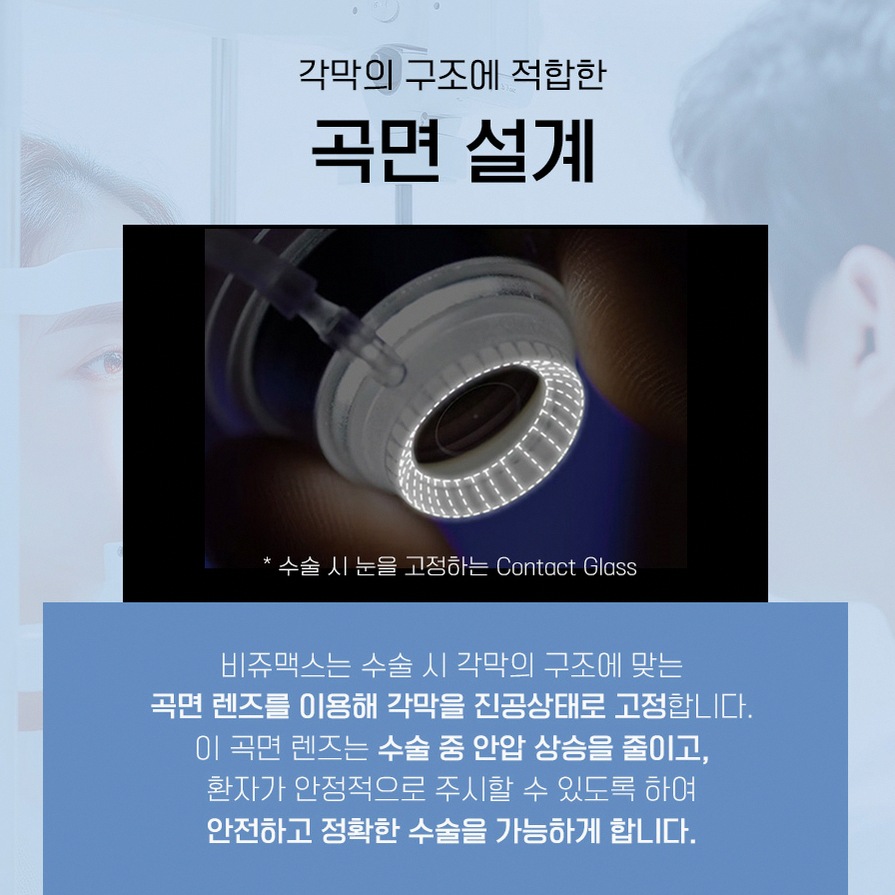
You lie down under the laser. The eye is gently held in place with a suction system.
The femtosecond laser creates the small internal lens-shaped tissue and a tiny incision. With devices like VISUMAX 800, the laser time can be under about 9 seconds per eye.
The surgeon removes the tissue through the micro-incision, reshaping the cornea.
You rest briefly, then the doctor checks your eyes at the slit lamp microscope.
Most patients are in the procedure room for only a short time, but you should expect to stay in the clinic for a couple of hours including preparation and post-op checks.
Early recovery period
After SMILE LASIK:
Vision is often improved immediately but may be hazy or fluctuate for days to weeks.
Mild discomfort, foreign-body sensation, or light sensitivity is common on the first day.
Artificial tears and prescribed eye drops are used regularly.
You are usually advised to avoid rubbing the eyes, swimming, heavy exercise, eye makeup, and dusty environments for a certain period.
Many people can return to light indoor work within a few days, but this depends on your healing and your doctor’s recommendation.
Follow-up schedule and long-term care
A typical follow-up schedule after SMILE LASIK includes:
First-day check: to confirm corneal condition and rule out early complications.
One-week visit: to check healing and adjust drop schedule.
One-month and three-month visits: to monitor vision stability and dryness.
Longer-term annual or biannual eye exams, especially for high myopia or if you have other eye conditions.
If you are an overseas patient, the clinic can help plan a compressed follow-up schedule during your stay, and advise you on what to check with your local eye doctor after you return home.
Example: how a specialized SMILE center near Seocho Station works
Location and background
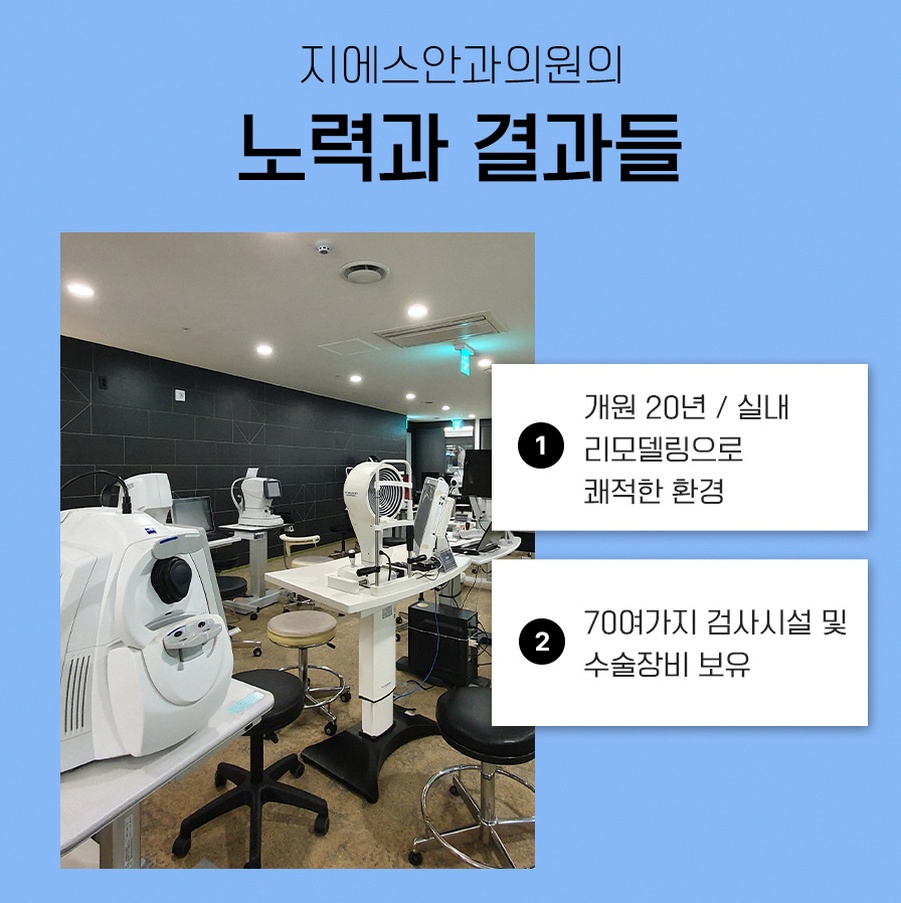
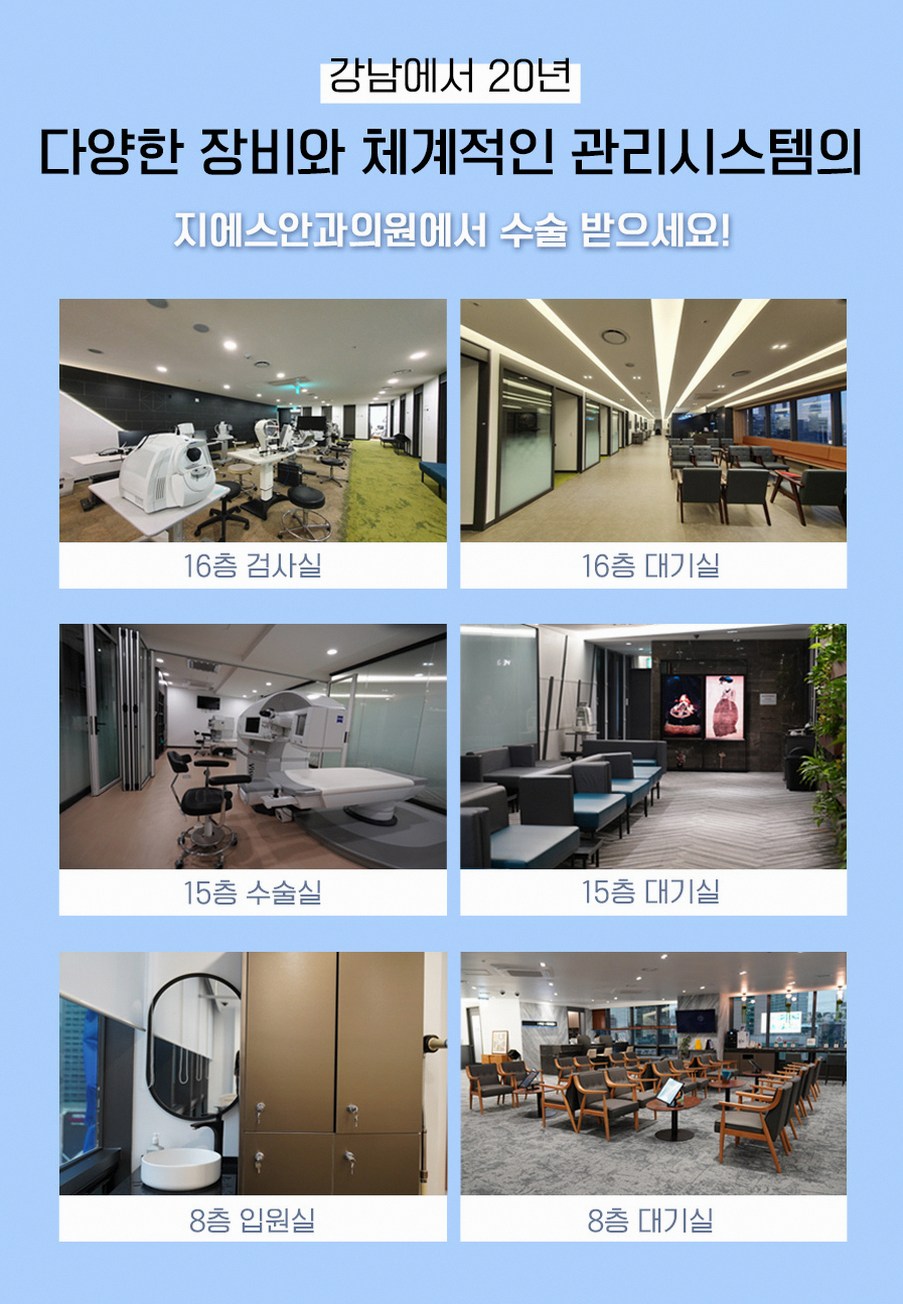
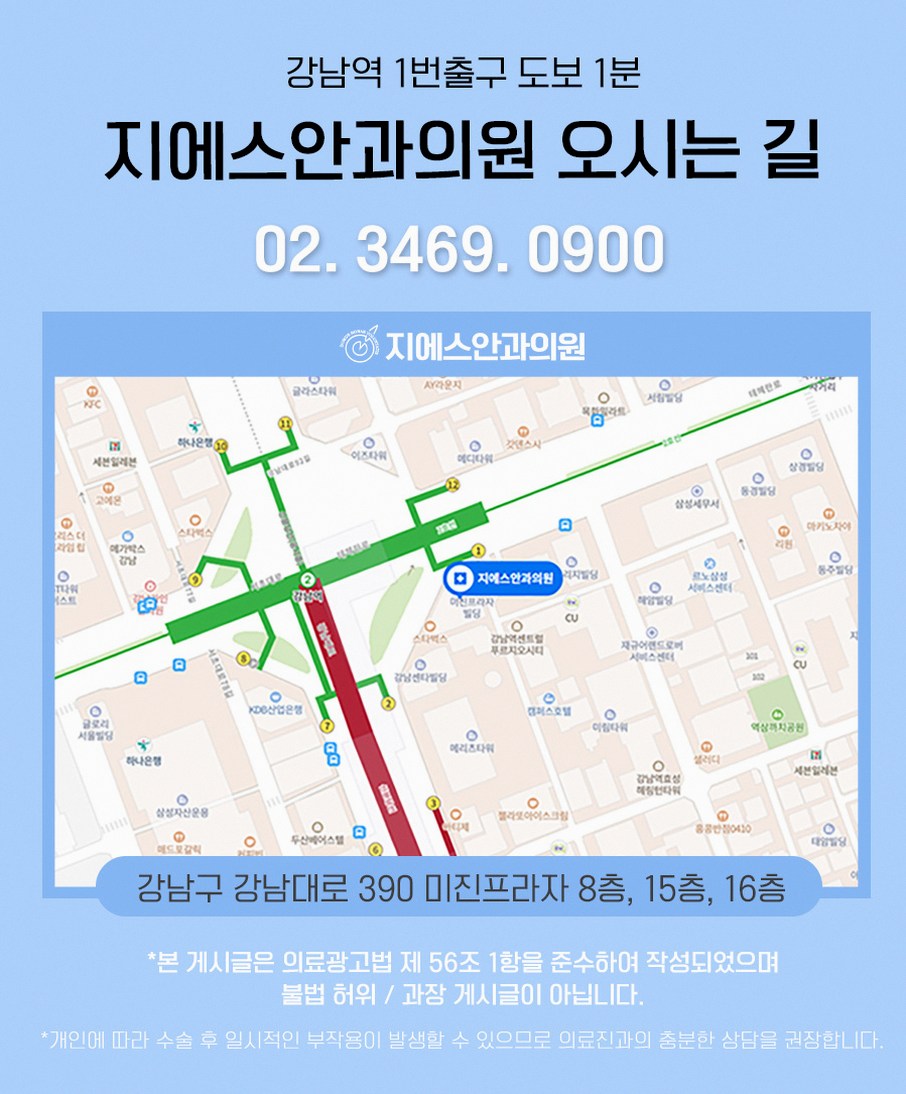
GS Eye Center is an ophthalmology clinic on Gangnam-daero in Gangnam-gu, Seoul, within easy reach of both Gangnam Station and the Seocho Station area. It has been in the same location since 2005, focusing on vision correction and cataract surgery.
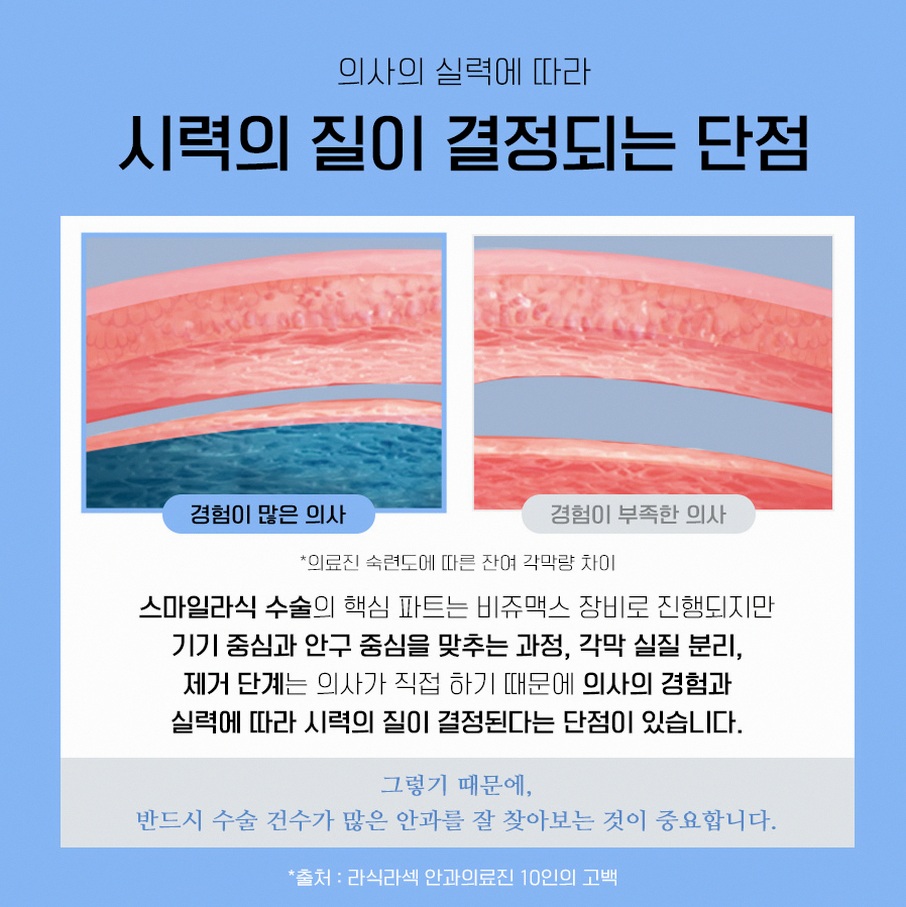
All seven doctors are ophthalmology specialists. The medical director, Dr. Kim Mu-yeon, previously served as an ophthalmology professor at a major university hospital and holds a medical doctorate. Several other doctors have subspecialty backgrounds in retina and refractive surgery from large teaching hospitals.
As of 2023, the clinic reports a cumulative total of about 300,000 eyes treated with vision correction and cataract surgery. This indicates extensive experience, but the clinic still emphasizes that individual suitability and safety checks are more important than numbers alone.
SMILE platforms and designations
The clinic’s main differentiator is its focus on SMILE-type procedures and its equipment:
It owns three major ZEISS SMILE platforms: one VISUMAX 800 for SMILE Pro and two VISUMAX 500 units for SMILE LASIK, with a dual-room setup in use since 2019.
It has been designated as a ZEISS SMILE Gold Club member (first in Korea, 2021), a ZEISS SMILE Pro Center (2023), and a SILK Training Center (2026).
It serves as a clinical education site for a medical school and for an Asia-Pacific ophthalmic company, participating in training other doctors.
These points suggest that the clinic not only performs SMILE but also contributes to education and protocol development in this area.
Case volume and quality systems
Regarding SMILE Pro, the clinic reports about 15,000 eyes treated as of April 2026, with milestones of 5,000 eyes in October 2024 and 10,000 eyes in August 2025. For overall vision correction and cataract surgery, the cumulative figure is around 300,000 eyes as of 2023.
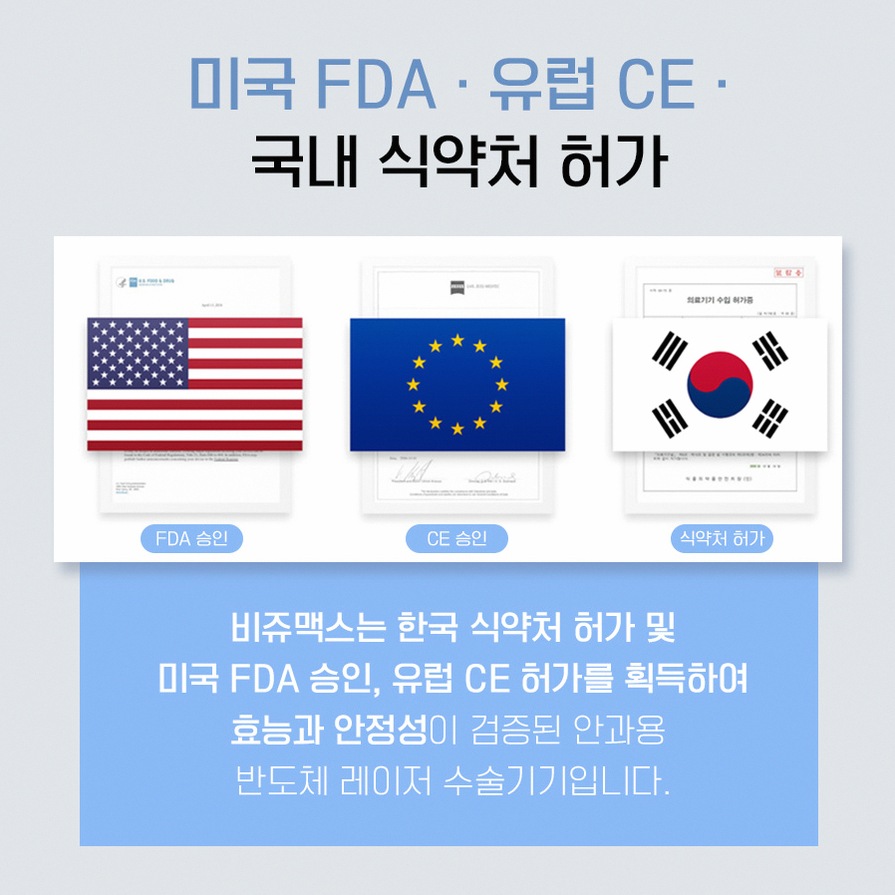
The clinic also holds ISO 9001 and ISO 14001 certification for SMILE LASIK since 2020, which relate to quality and environmental management systems. While certifications do not guarantee outcomes, they indicate that standard processes and documentation are in place.
Range of options beyond SMILE
For patients who are not ideal candidates for SMILE LASIK, the clinic offers:
LASEK (including 2DAY LASEK) and other LASIK variants.
Lens implantation procedures such as ICL, GLAZE, and PhakiFlex KPL.
Corneal cross-linking and a dry eye clinic.
Presbyopia lens implantation, laser cataract surgery, and multifocal intraocular lenses, including PanOptix, with several thousand cases.
A dedicated retina center with retina subspecialists.
This range allows the team to recommend alternatives when SMILE is not the safest choice.
Safety, side effects, and who is not a candidate
Common temporary symptoms after SMILE LASIK
Most patients experience some short-term effects, such as:
Dry eye symptoms, particularly in the first few months.
Glare or halos around lights at night.
Fluctuating vision, especially during the first weeks.
Mild discomfort, foreign-body sensation, or light sensitivity.
These usually improve over time, but the speed and degree of improvement vary between individuals.
Who may not be suitable for SMILE LASIK
You may not be a candidate for SMILE LASIK if you have:
Very thin corneas or abnormal corneal shape (such as keratoconus or suspected keratoconus).
Unstable prescription, for example rapidly changing myopia.
Certain retinal conditions, such as active retinal tears or severe degeneration.
Severe dry eye disease that could worsen after surgery.
Autoimmune disease or systemic conditions that affect healing.
In these situations, an ophthalmology specialist may recommend LASEK, lens implantation, or no surgery at all.
Importance of retina evaluation
High myopia is associated with a higher risk of retinal problems. A good SMILE LASIK clinic near Seocho Station should perform a careful retina check, often with dilated pupils. If weak areas or small tears are found, they may need treatment before or instead of vision correction surgery.
Having retina subspecialists in-house can be beneficial, as they can evaluate and treat retinal issues without referring you elsewhere.
How to choose among clinics near Seocho Station
Practical checklist for overseas patients
When comparing eye clinics in the Seocho and Gangnam area for SMILE LASIK, consider the following points:
Surgeon qualifications: Confirm that the doctors are ophthalmology specialists with refractive surgery experience.
SMILE platform details: Ask which SMILE system is used (for example, VISUMAX 800 or 500) and how long the clinic has been using it.
Case volume with time frame: Ask how many SMILE or SMILE Pro cases they have performed and over what period.
Range of options: Check that they also offer LASEK, LASIK variants, and lens implantation, so the recommendation is tailored.
Pre-op and follow-up system: Confirm that they perform full corneal, tear film, and retinal checks, and that they can provide a realistic follow-up schedule for international patients.
Communication: Make sure the clinic can communicate clearly in English or your preferred language, and that explanations include both benefits and risks.
Accessibility: Consider how easy it is to reach the clinic from your accommodation near Seocho Station and how many visits are required.
Questions to ask before booking
Before you fix your travel dates, it is useful to prepare a list of questions, such as:
If my eyes are not suitable for SMILE, what alternatives do you commonly recommend?
How many days should I stay in Korea for surgery and follow-up?
What are the most common side effects you see, and how do you manage them?
If I have a problem after returning home, how can I contact you and what information should I provide?
Clinics that answer these questions clearly and transparently are usually better prepared to support overseas patients.
Expected Korea visit timeline for SMILE LASIK
A typical schedule for an international patient might look like this:
Day 1: Arrival in Seoul.
Day 2: Full eye examination, consultation, and decision on procedure.
Day 3: SMILE LASIK surgery.
Day 4: First-day post-op check.
Day 7: One-week follow-up (if your stay allows).
Day 8–9: Return flight, with instructions for follow-up in your home country.
Some patients compress this further, but extending your stay for at least several days after surgery is safer in case additional checks are needed.
Aftercare and long-distance follow-up
During your stay in Korea, the clinic will usually:
Provide eye drops and instructions on how often to use them.
Explain what symptoms are normal and what requires urgent attention.
Schedule follow-up visits while you are still in Seoul.
After you return home, you should:
See a local eye doctor at the intervals recommended by the clinic.
Avoid rubbing your eyes and follow general eye health advice.
Contact the clinic by email or messaging if you notice sudden vision loss, severe pain, or other worrying symptoms.
Short FAQ about SMILE LASIK for overseas patients
How long is the recovery time after SMILE LASIK?
Many patients notice clearer vision within a day, but it can take several weeks to months for vision to fully stabilize. Most people return to office work after a few days, depending on their healing and the surgeon’s advice. Night vision and dryness can continue to improve over several months.
Is SMILE LASIK painful?
During the procedure, numbing drops are used, so most patients feel pressure rather than pain. After surgery, mild discomfort, burning, or foreign-body sensation is common for a short period, usually managed with artificial tears and prescribed drops. If you experience strong pain, you should contact the clinic immediately.
When can I drive after SMILE LASIK?
You should not drive on the day of surgery. Some patients can drive within a few days once their vision meets legal driving standards and they feel comfortable. Always follow your surgeon’s specific advice, as recovery speed varies from person to person.
How long do SMILE LASIK results last?
The corneal reshaping effect of SMILE LASIK is generally long-lasting. However, your eyes can still change naturally over time due to aging, near work, or other factors. In your 40s and beyond, presbyopia (difficulty focusing up close) will develop regardless of whether you had SMILE, so you may still need reading glasses later in life.
Soft call to action for online consultation
If you are considering SMILE LASIK near Seocho Station and would like to explore options in the Gangnam/Seocho area, you can start with an online consultation. Clinics such as GS Eye Center can review your basic information, explain likely options such as SMILE Pro, classic SMILE, LASEK, or lens implantation, and help you plan a realistic schedule for your visit to Seoul.
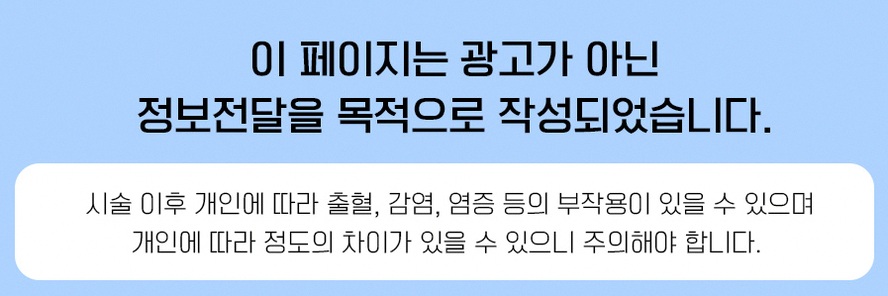
Always remember that this guide provides general information only. Final decisions about surgery should be made after a full eye examination and direct discussion with an ophthalmology specialist who can evaluate your individual situation.
- 공유 링크 만들기
- X
- 이메일
- 기타 앱


댓글
댓글 쓰기