Gangnam clinics offering ICL, GLAZE, PhakiFlex
- 공유 링크 만들기
- X
- 이메일
- 기타 앱



Direct answer summary
If you're considering lens implantation because of high myopia, thin corneas, dry eyes, or because you were told you aren't an ideal LASIK/LASEK candidate, phakic lens implantation can be a viable alternative. The procedure corrects vision by placing an intraocular lens while preserving the eye's natural crystalline lens. In Gangnam, Seoul, some clinics—including GS Eye Center near Gangnam Station—offer phakic options (ICL, GLAZE, PhakiFlex KPL) and also perform presbyopia and cataract lens procedures. When choosing a clinic, focus on the surgeon's training, the thoroughness of preoperative evaluation, the equipment and safety protocols used, and the quality of follow-up care rather than price alone. Discuss your individual eye health and lifestyle with a surgeon to determine the best option for you.
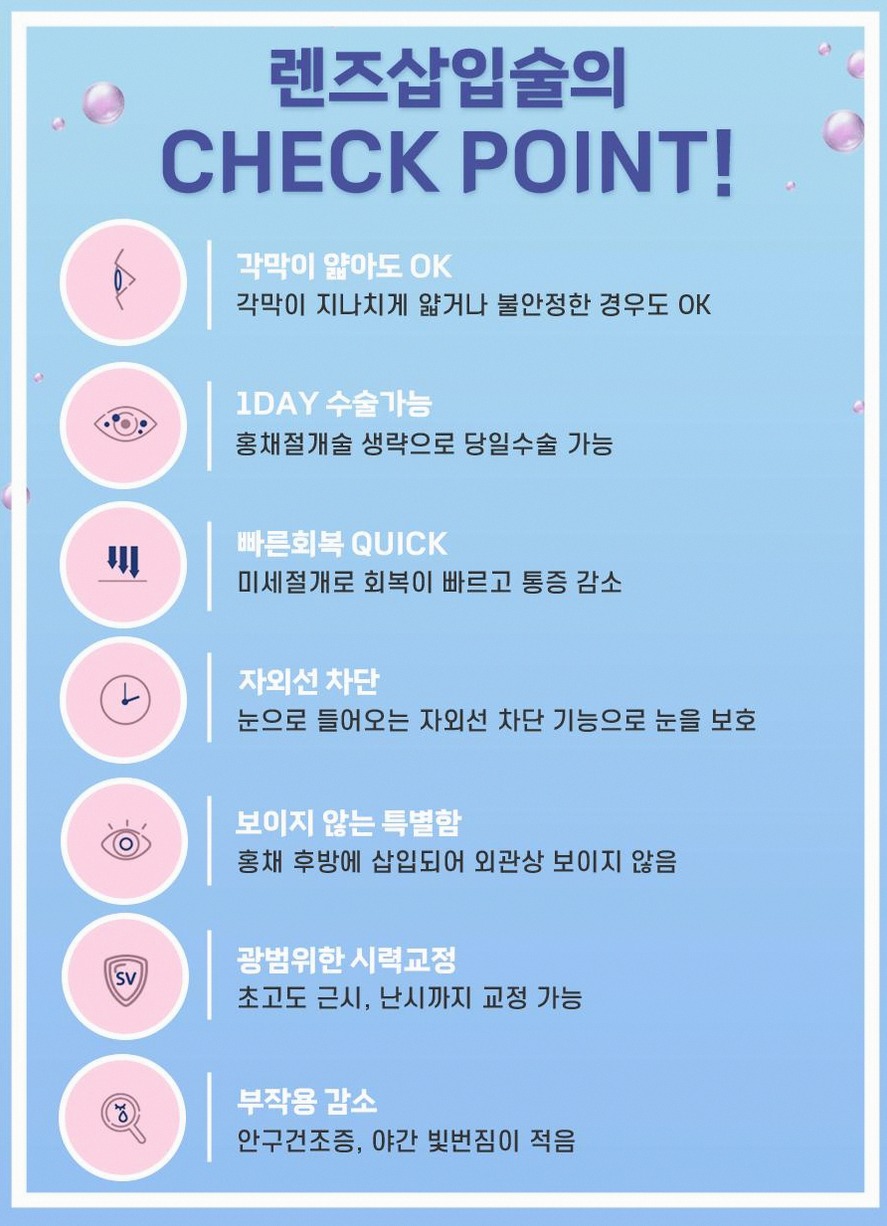
What is lens implantation surgery
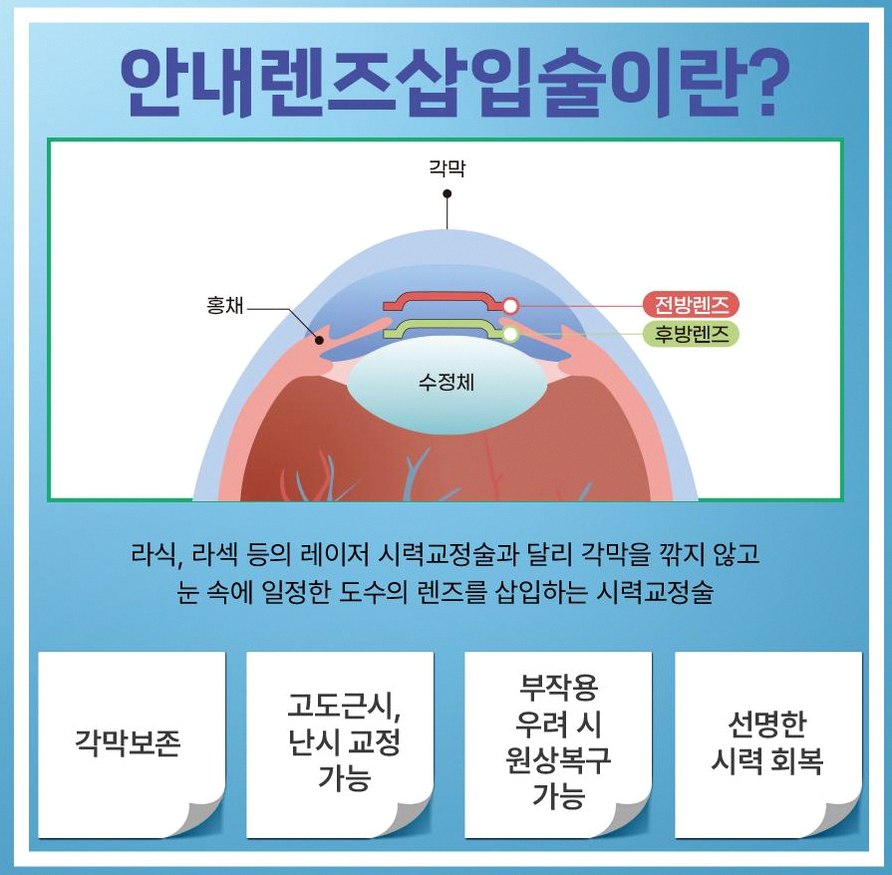
Lens implantation for vision correction usually refers to phakic intraocular lens (IOL) surgery. In this procedure, a thin artificial lens is placed inside the eye, either in front of or just behind the iris, while your own crystalline lens remains in place. The implanted lens helps focus light correctly on the retina, reducing or eliminating the need for glasses or contact lenses.
This is different from cataract surgery, where the natural lens is removed because it has become cloudy, and then replaced with an artificial intraocular lens. In phakic lens implantation, your natural lens is clear and is preserved.
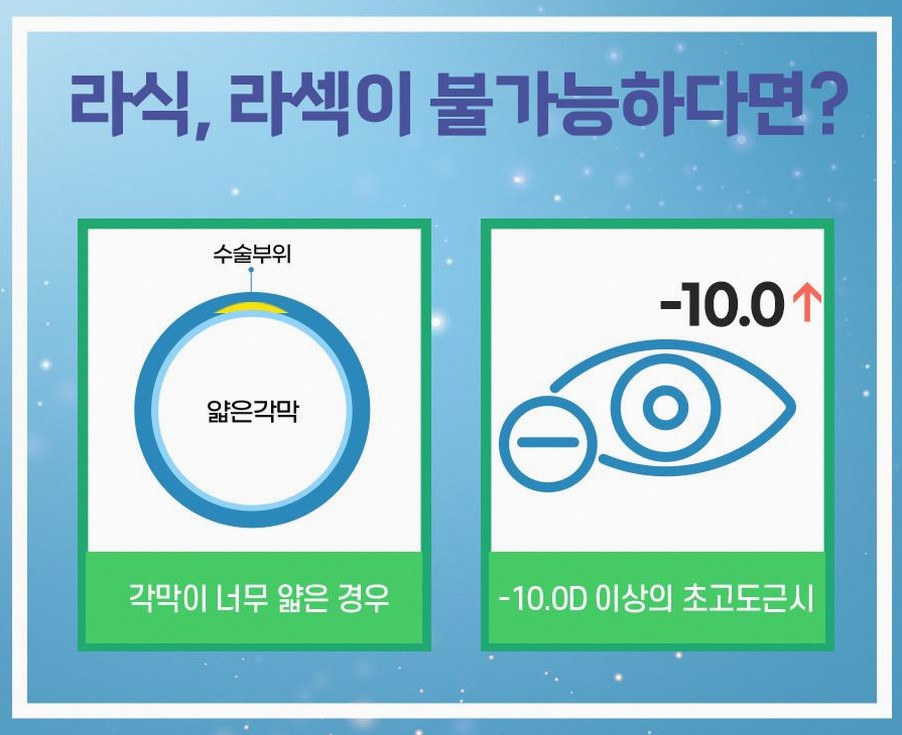
Lens implantation is also different from corneal laser procedures such as LASIK, LASEK, or SMILE. Laser procedures reshape the surface of the cornea, whereas phakic IOL surgery works inside the eye without removing corneal tissue.
How phakic lens implantation differs from LASIK and cataract surgery
Compared with LASIK, LASEK, or SMILE, phakic lens implantation does not require cutting a corneal flap or removing corneal tissue. This can be helpful for people with thin or irregular corneas, or those who are worried about corneal stability.
Unlike cataract surgery, lens implantation for vision correction is performed while the natural lens is still clear. The goal is not to treat a cloudy lens, but to correct high degrees of myopia or astigmatism that may not be safely treated with laser procedures.
Another important difference is reversibility. In many cases, a phakic lens can be removed or exchanged if medically necessary, for example if your prescription changes significantly or if a complication occurs. Corneal laser reshaping is permanent.
Who may consider lens implantation
Lens implantation is usually considered for adults who:
Have high myopia or significant astigmatism that falls outside the safe range for LASIK or LASEK.
Have thin or irregular corneas where removing tissue with a laser could be risky.
Have dry eye symptoms that might worsen with corneal laser surgery.
Prefer a reversible or adjustable option rather than permanent corneal reshaping.
Suitability is never decided by prescription alone. A thorough eye examination is essential. Important measurements typically include:
Corneal thickness and shape (topography or tomography).
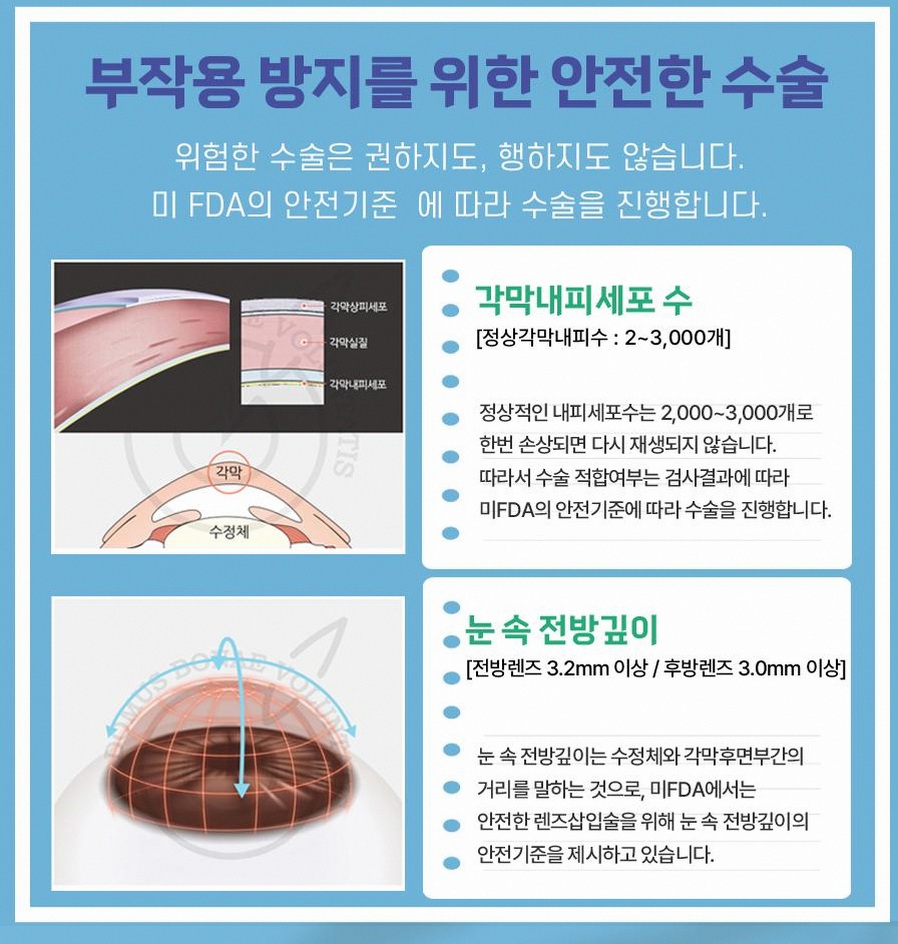
Anterior chamber depth (the space inside the front of the eye where the lens would sit).
Endothelial cell count (the health of the inner corneal cell layer that keeps the cornea clear).
Intraocular pressure.
Retinal examination, especially in high myopia where the retina can be more fragile.
Types of lens implantation available in Gangnam
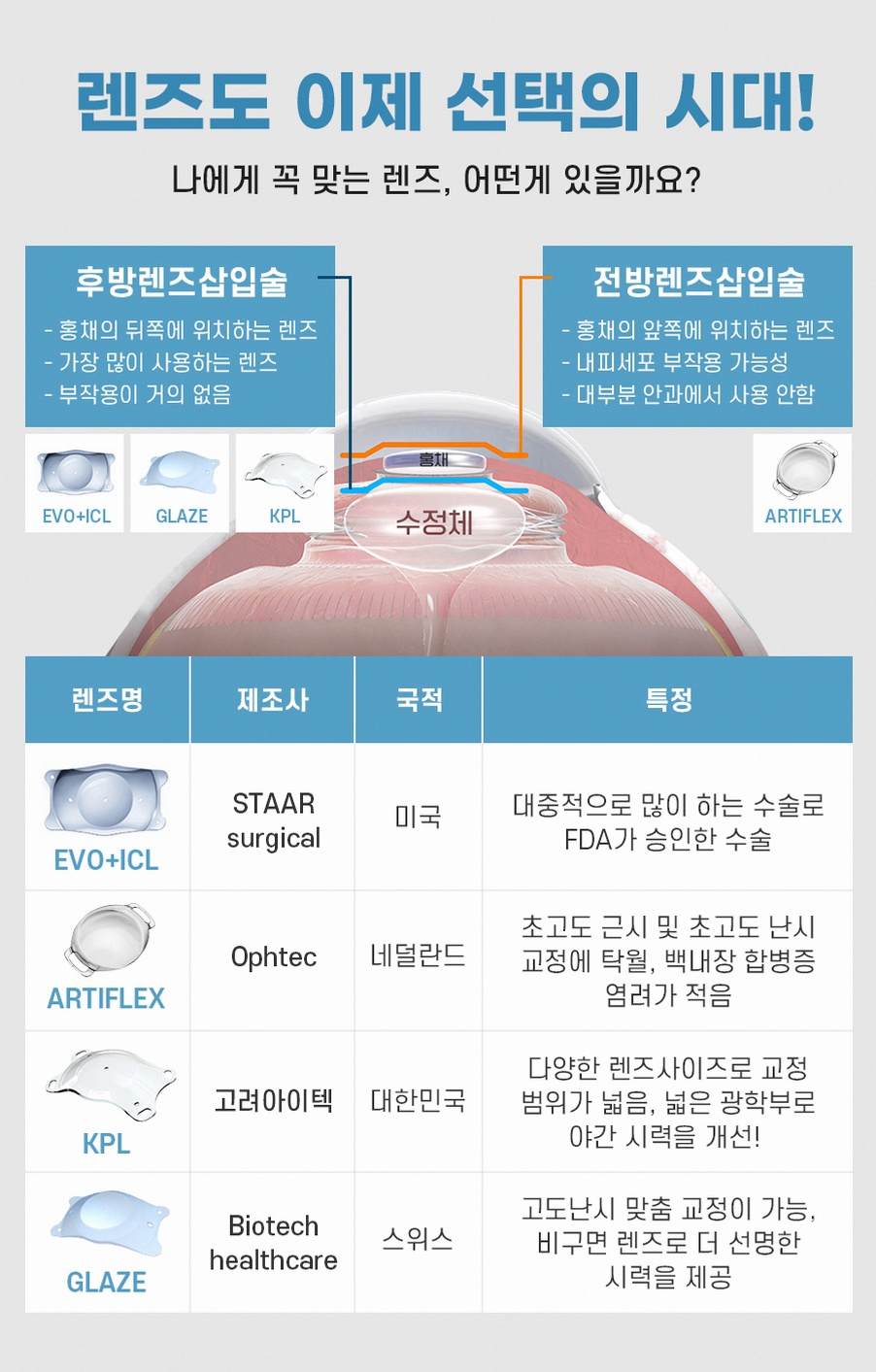
In the Gangnam area of Seoul, some centers provide several types of phakic lenses, including:
ICL (Implantable Collamer Lens), widely used for high myopia and astigmatism.
PhakiFlex KPL, another phakic lens option used depending on eye structure and refractive error.
In addition, presbyopia lens implantation and multifocal intraocular lenses may be offered for patients in their 40s and above who have difficulty with near vision, or for those who have both refractive error and cataract. In such cases, the natural lens is removed and replaced, similar to cataract surgery, but with a lens designed to address both distance and near vision.
How to choose a lens implantation surgery clinic
Surgeon qualifications and team structure
For lens implantation, it is important that the surgeons are ophthalmology specialists with experience in refractive and cataract surgery. A multi-doctor team can be beneficial, especially when it includes different subspecialties.
At some Gangnam centers, the team includes several ophthalmology specialists (for example, seven doctors) who have backgrounds such as:
Experience as professors or clinical instructors at major university hospitals.
Retinal fellowship training, which is particularly relevant for high myopia patients.
High myopia is associated with a higher risk of retinal thinning, tears, and detachment. When a clinic has both refractive surgeons and retina-trained specialists working together, this can support:
More detailed pre-operative retinal evaluation.
Early detection of retinal issues that might need treatment before or after lens implantation.
Safer long-term follow-up for patients whose retinas require monitoring.
When you research clinics, consider asking:
How many ophthalmology specialists are on the team?
Do any of them have subspecialty training in retina or other relevant fields?
Have they worked at university or teaching hospitals in the past?
Surgical volume and track record
Cumulative case numbers are one indicator of experience, though they are not the only factor. A clinic that has treated many different eye types is more likely to have encountered and managed a wide range of situations.
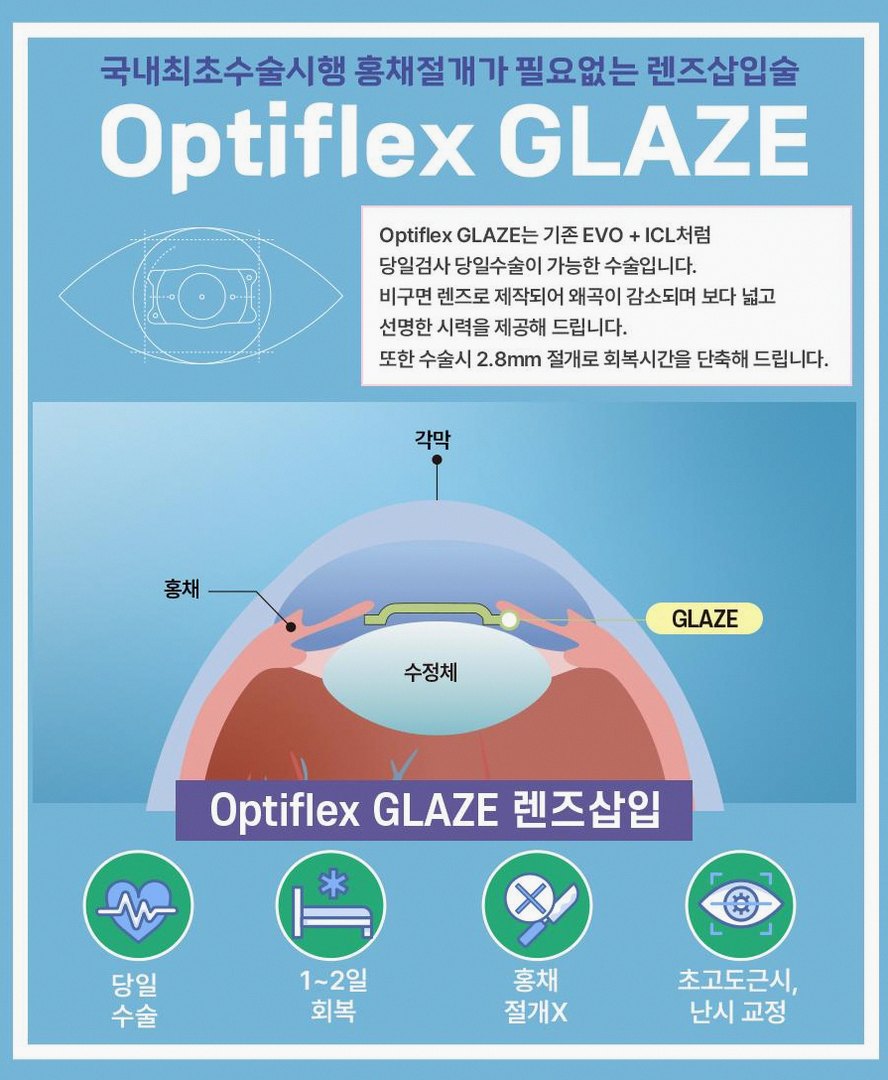
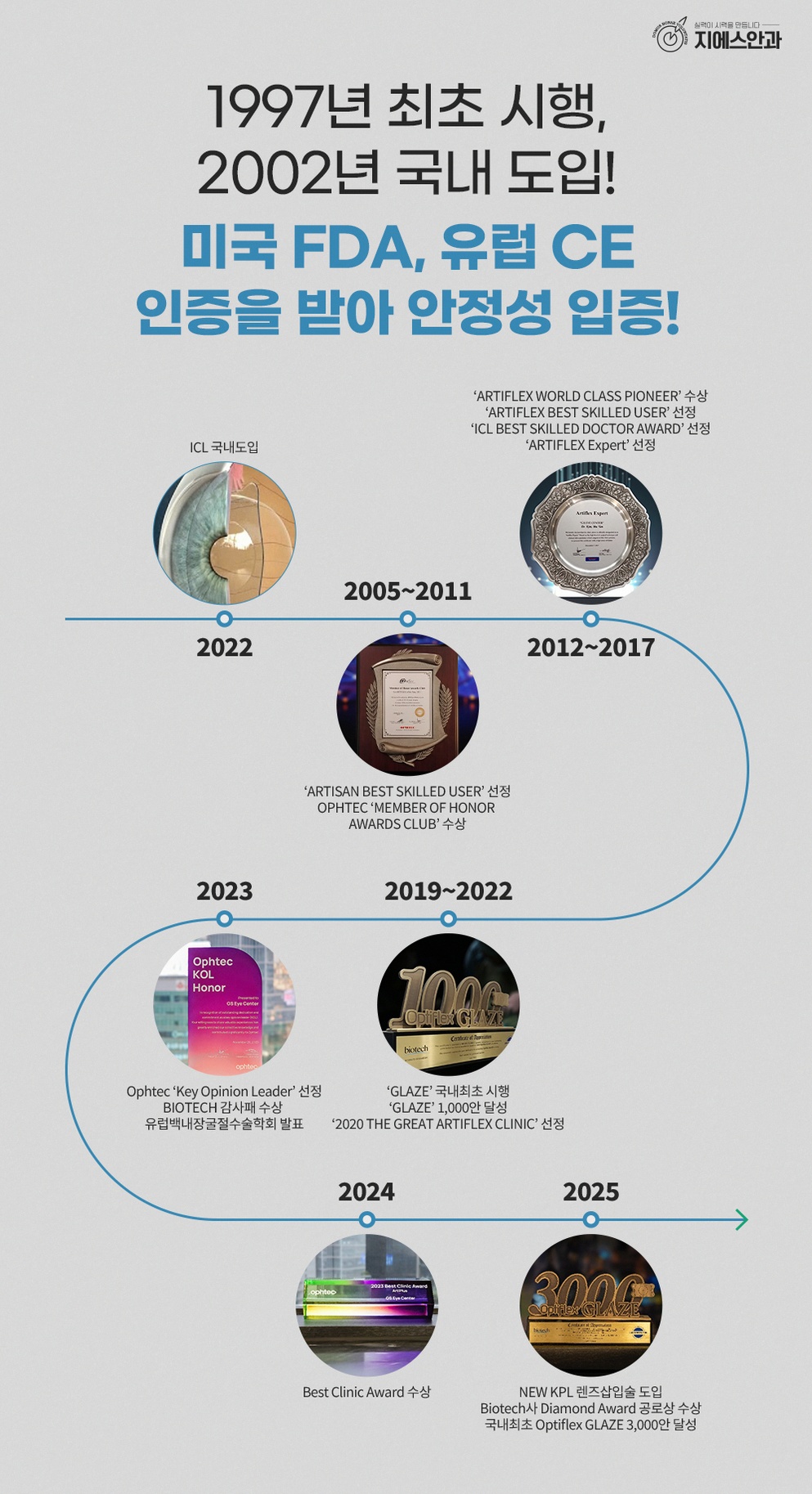
For example, one Gangnam center has reported a cumulative 300,000 eye surgeries combining vision correction and cataract surgery as of 2023. The same center was the first in the country to perform GLAZE lens implantation in 2019, reached 1,000 GLAZE eyes by 2022, and 3,000 Optiflex GLAZE eyes by 2025.

High volume can suggest that the team is familiar with:
Different anatomical variations in the anterior chamber.
Various degrees of high myopia and astigmatism.
Short- and long-term management of side effects and complications.
However, volume alone is not enough. It should be combined with careful screening, individualized planning, and clear communication about risks and benefits.
When comparing clinics, you may want to ask:
How many phakic lens implantation procedures do you perform per year?
Since when have you been performing ICL, GLAZE, or PhakiFlex KPL?
Do you track and review your outcomes and complication rates over time?
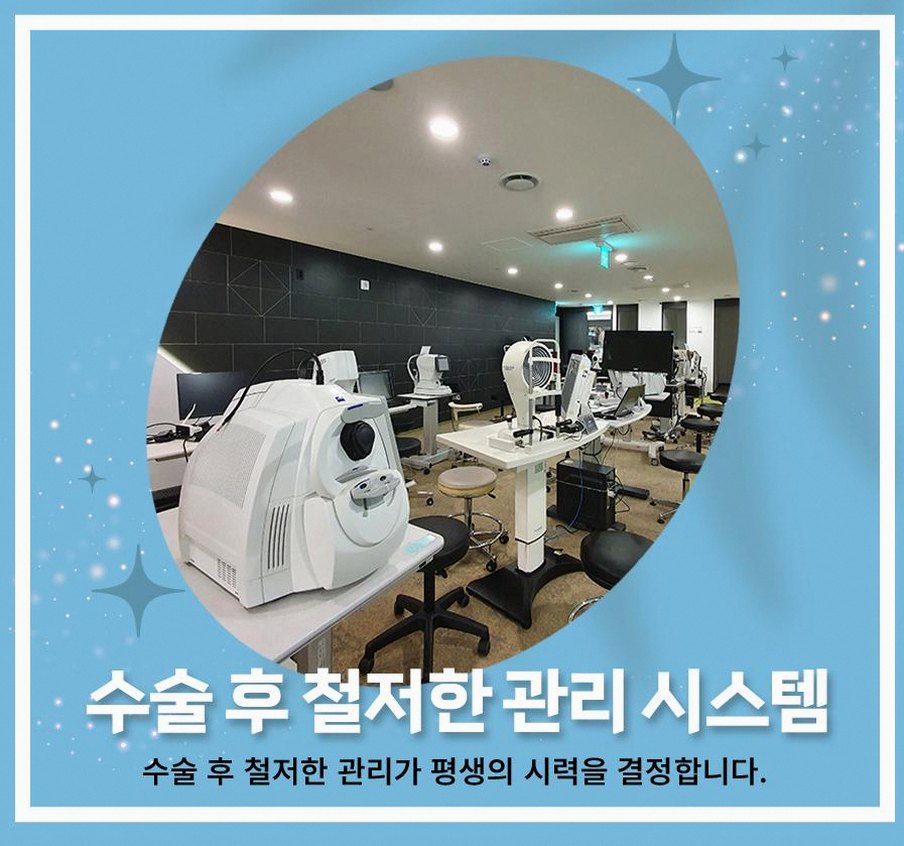
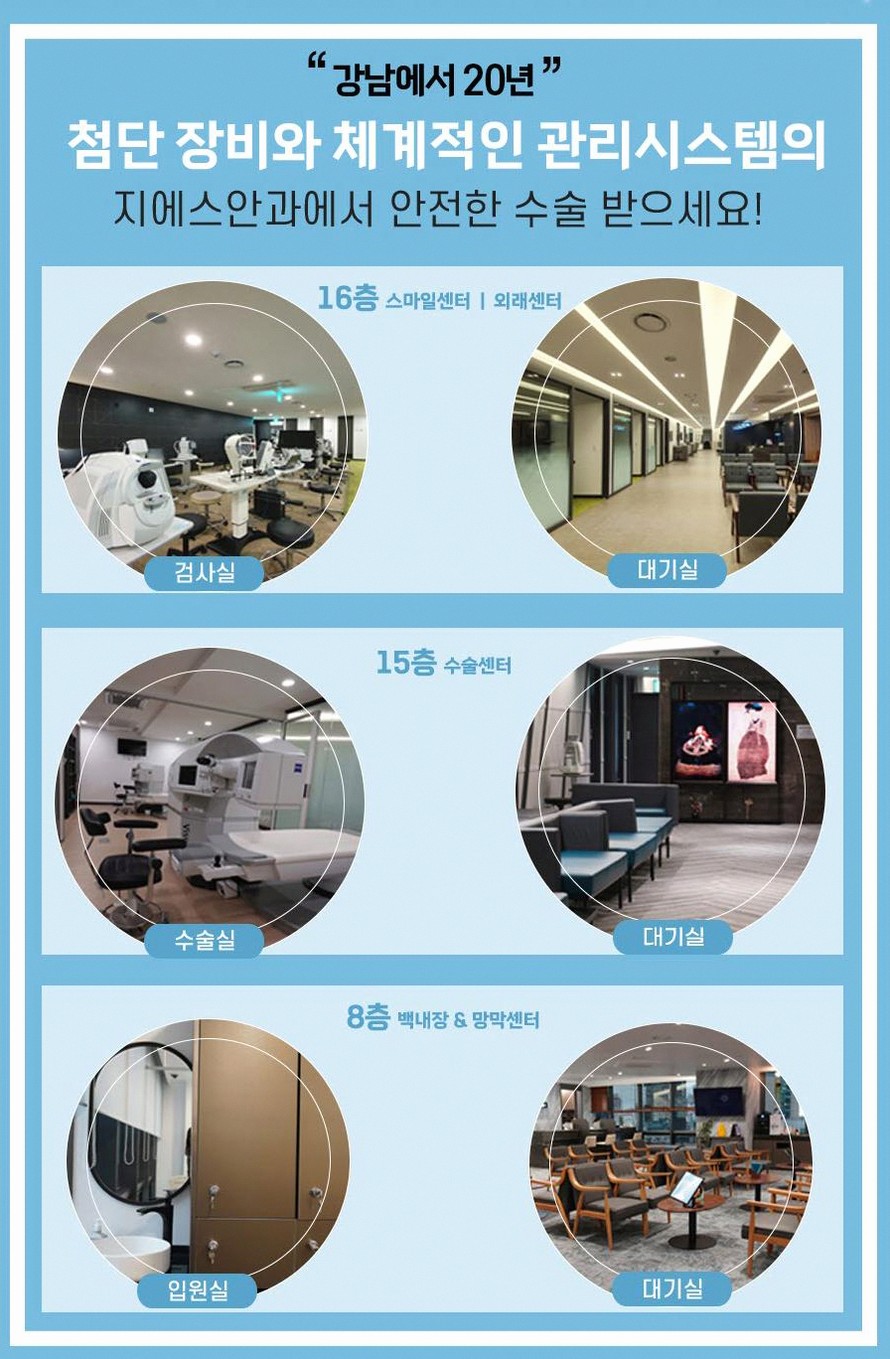
Examination system and safety standards
A thorough pre-operative examination is one of the most important safety steps in lens implantation. A well-organized clinic will typically provide a structured workup that may include:
Detailed refraction and visual acuity testing to confirm your prescription.
Corneal topography or tomography to assess corneal thickness and shape.
Anterior chamber depth measurement to ensure there is enough space for the lens.
Endothelial cell count to check if the inner corneal cell layer is healthy enough.
Intraocular pressure measurement.
Retinal examination, especially for high myopia, sometimes with wide-field imaging.
A careful center will not hesitate to advise against surgery if safety criteria are not met. For example, if the anterior chamber is too shallow, if endothelial cell counts are too low, or if there is a serious retinal condition that must be treated first, surgery may be postponed or not recommended.
Some clinics in Gangnam have additional designations that reflect structured protocols. For instance, one center has been designated as a clinical education institution by a medical school since 2023 and as a clinical education site for an ophthalmic device company in the Asia-Pacific region since 2024. Such roles usually require systematic data collection, standardized procedures, and ongoing training.
When you prepare for an online consultation, consider asking:
What tests are included in the pre-operative examination for lens implantation?
How long does the full examination take, and do I need to stop wearing contact lenses beforehand?
In what situations would you recommend not having surgery?

Equipment and technology
Accurate lens sizing and positioning are crucial for both vision quality and long-term safety. Up-to-date diagnostic and surgical equipment helps with this.
Important technologies for lens implantation planning include:
High-resolution anterior segment imaging to measure anterior chamber depth and angle.
Precise corneal topography and tomography for corneal assessment.
Reliable endothelial cell counters.
Modern operating microscopes and intraocular lens insertion systems.
ived ISO 9001 and 14001 certification for SMILE LASIK in 2020, and was selected as a SILK training center in 2026. While these achievements relate mainly to laser surgery, they also suggest a broader refractive surgery infrastructure and quality management system that can support lens implantation.
When comparing clinics, you might ask:
What diagnostic devices do you use to plan phakic lens implantation?
How do you determine the size and power of the lens?
Do you have protocols for regular equipment calibration and quality control?
Counseling, informed consent, and follow-up care
Good counseling before surgery is essential. During consultation, you should receive clear explanations about:

Expected visual outcomes based on your current prescription and eye condition.
Possible side effects such as glare, halos, night vision issues, increased intraocular pressure, endothelial cell loss, or risk of cataract formation over time.
The reversibility of phakic lens implantation, including in what situations the lens might need to be removed or exchanged.
Alternative options, such as continued glasses or contacts, or other surgical methods if appropriate.
A responsible clinic will also provide a structured follow-up schedule. While exact schedules vary, a typical pattern may include:
First day or next-day check to confirm lens position, intraocular pressure, and early healing.
Follow-up visits at around 1 week, 1 month, 3 to 6 months, and then annually.
Additional visits if you notice symptoms such as sudden floaters, flashes of light, strong eye pain, or a sudden drop in vision.
You should feel comfortable asking questions and taking time to decide. If you feel rushed, or if risks are minimized or dismissed, it may be a sign to seek a second opinion.
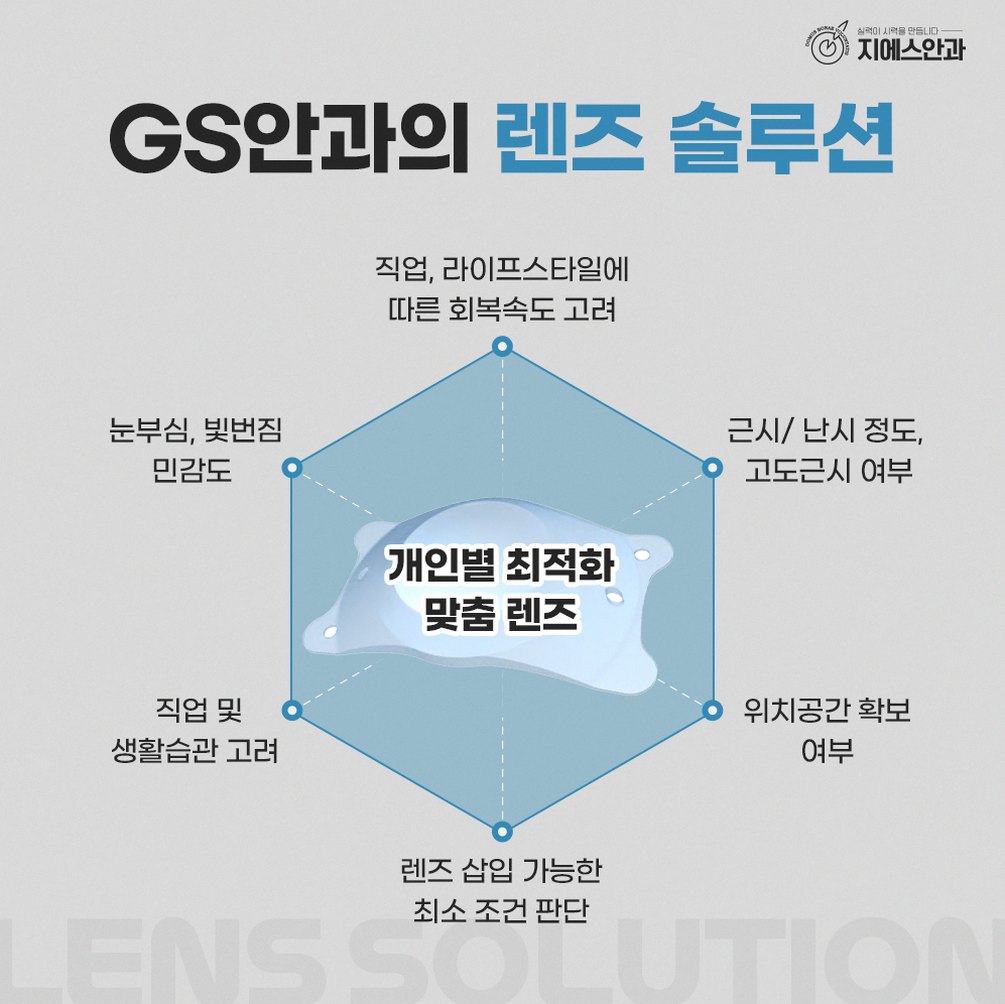
Lens implantation options at a Gangnam center
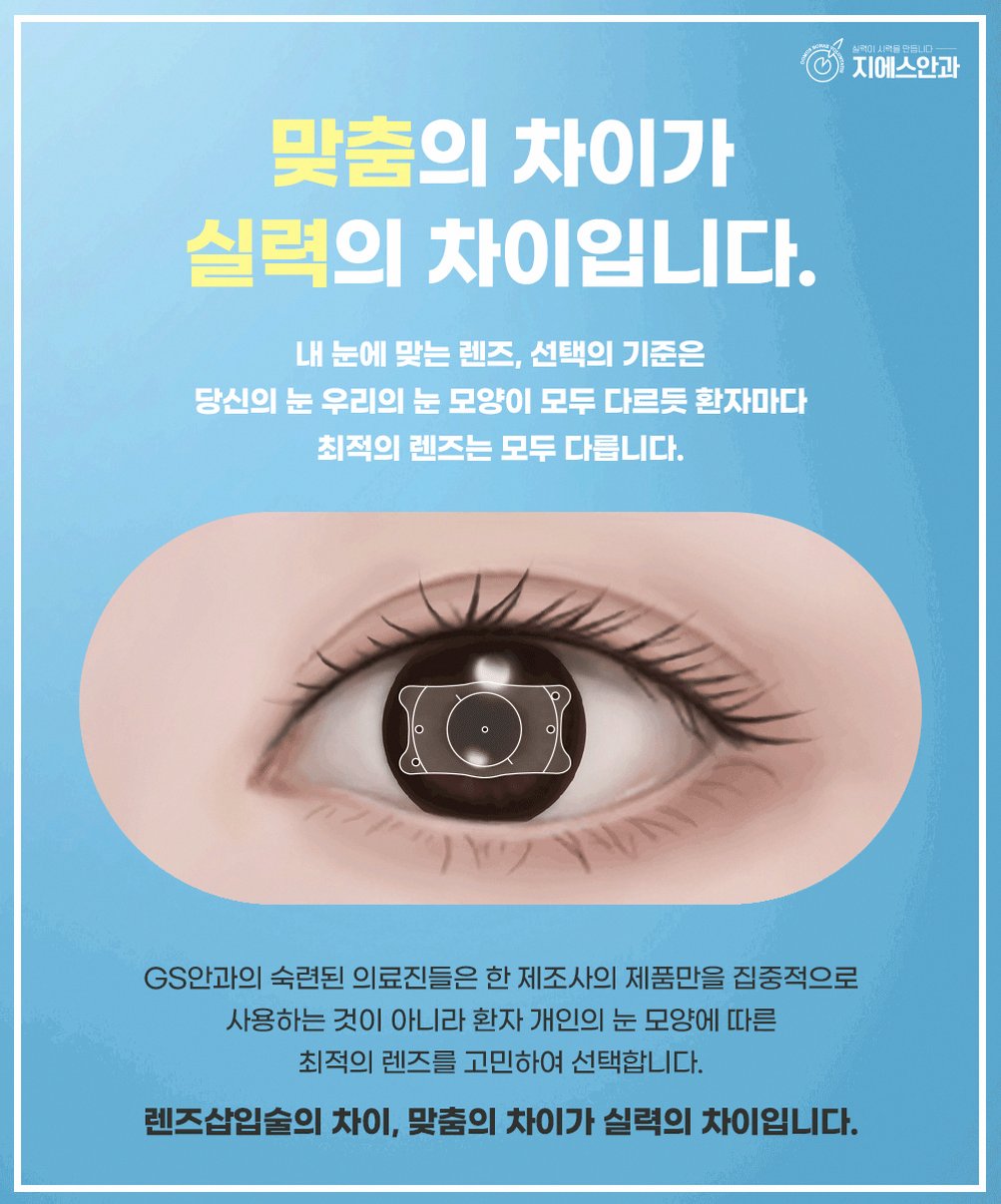
In the Gangnam area, some centers provide a range of lens options under one roof.
ICL is widely used for high myopia and astigmatism, especially when corneas are thin or when patients prefer to avoid corneal laser surgery.
GLAZE lens implantation represents a newer generation of phakic lenses. At one center, GLAZE was first performed domestically in 2019, with a steadily increasing number of cases through 2022 and 2025, indicating growing experience.
PhakiFlex KPL is another phakic lens that may be selected depending on eye anatomy and prescription.
For patients in their mid-40s or older who also struggle with near vision, presbyopia lens implantation or multifocal intraocular lenses may be discussed. In such cases, the natural lens is removed, similar to cataract surgery, and replaced with a lens designed to improve both distance and near vision. This approach may be considered when cataract is present or expected to progress. Important caution: presbyopia or lens-exchange procedures involve distinct risks and potential complications compared with phakic lens implantation. Patients should receive detailed counseling about possible adverse effects and realistic visual outcomes before deciding on surgery.
Step-by-step: from first consultation to recovery for overseas patients
If you are traveling from overseas to Seoul for lens implantation, planning your visit can make the process smoother.
Online consultation and pre-visit preparation
Before booking flights, many international patients start with an online consultation. You can usually send:
Your age and general health conditions.
Current glasses or contact lens prescription.
Previous eye surgery history.
Any known eye diseases such as glaucoma, retinal problems, or keratoconus.
Based on this basic information, the clinic can tell you whether lens implantation is likely to be considered and what additional tests you will need on arrival.
To prepare, you may be advised to:
Stop wearing soft contact lenses for several days before your full examination (often about a week, but follow the clinic’s instructions).
Arrange enough time in Seoul for examination, surgery, and early follow-up.
Prepare a list of questions about risks, recovery, and long-term care.
Expected Korea visit timeline
While schedules vary, a typical visit for phakic lens implantation might look like this:
Day 1: Comprehensive eye examination. This may take several hours and include all necessary measurements. After the examination, you meet the doctor to discuss whether you are a suitable candidate, which lens type is recommended, and what results and risks to expect.
Day 2 or 3: Surgery. Some centers perform surgery the next day if all tests are acceptable and you are ready to proceed. The procedure itself is usually short, but you will stay at the clinic for a while afterward for immediate checks.
Day 3 or 4: First post-operative check (if surgery was on Day 2). The doctor confirms lens position, intraocular pressure, and early healing.
Following days: Additional follow-up visits within the first week and at about one month are often recommended. International patients sometimes combine these into a shorter schedule, but it is important to discuss this in advance and understand what will be required once you return home.
Overall, many overseas patients plan to stay in Seoul for about 7 to 10 days, but the exact duration should be confirmed with the clinic based on your case and travel plans.
Aftercare and long-term monitoring
After lens implantation, you will usually use eye drops for several weeks, including antibiotics and anti-inflammatory drops. You may also receive instructions such as:
Avoid rubbing your eyes.
Avoid swimming pools, hot baths, or saunas for a certain period.
Avoid heavy exercise or activities that increase eye pressure until your doctor approves.

Long-term, regular eye examinations are important to monitor:
Intraocular pressure.
Endothelial cell counts.
Lens position and clarity of the natural lens.
Retinal health, especially in high myopia.
If you live abroad, you can arrange annual check-ups with a local ophthalmology specialist and share reports with the clinic in Seoul if needed.
Example clinic profile in Gangnam
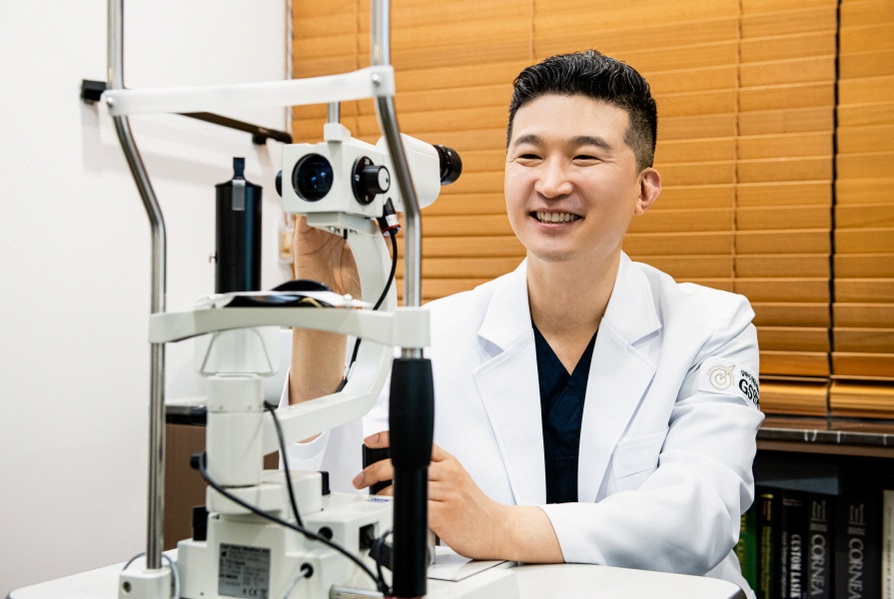
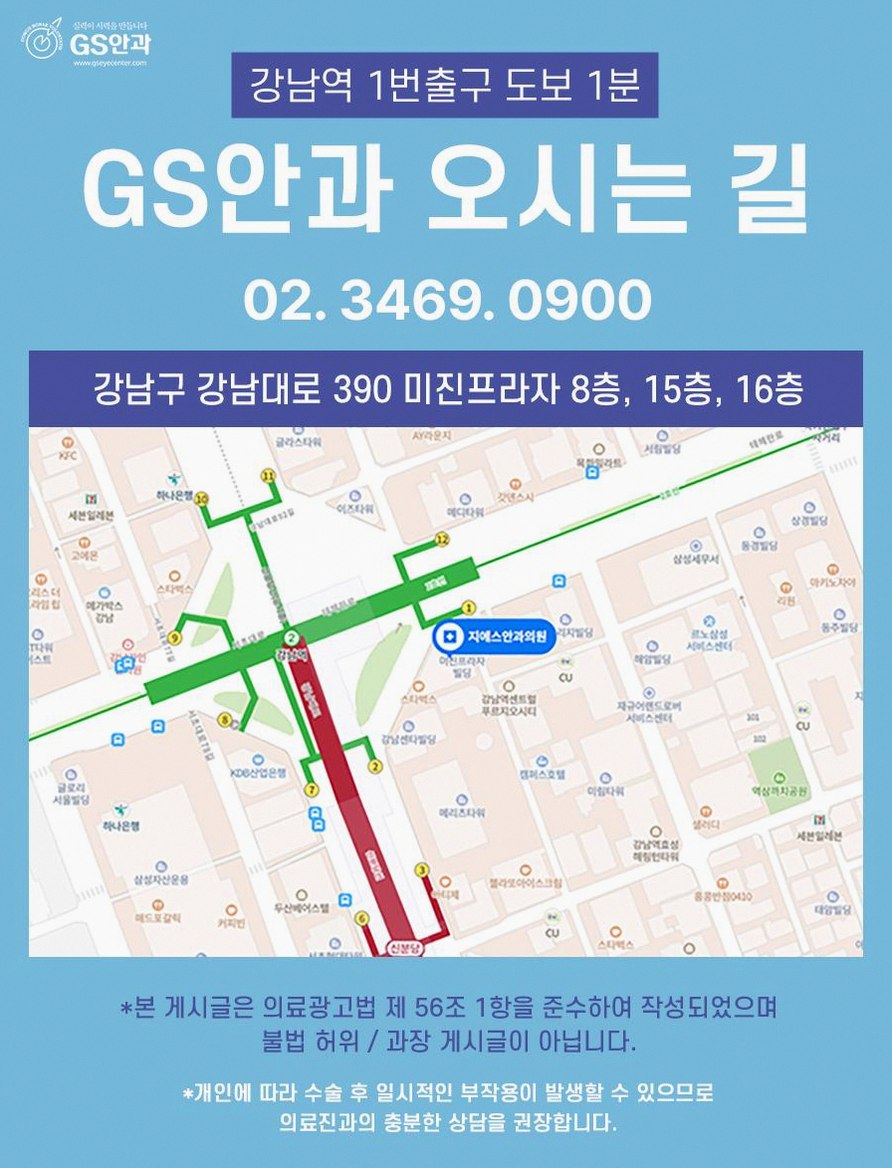
GS Eye Center is located on Gangnam-daero near Gangnam Station in Seoul and has been operating at the same site since 2005, later renamed but continuously run as an ophthalmology clinic. It is led by a representative director who is an ophthalmology specialist and medical doctor with previous university hospital faculty experience and active educational content through online channels.
The center operates a separate retina center with retina-trained specialists, which is relevant for high myopia and lens implantation candidates who require careful retinal evaluation. As of 2023, it has been designated as a clinical education site for a medical school, and since 2024, it has also served as a clinical education site for BIOTECH in the Asia-Pacific region. In the refractive field, it joined the ZEISS SMILE GOLD CLUB in 2021, was designated a ZEISS SMILE pro CENTER in 2023, received ISO 9001 and 14001 certification for SMILE LASIK in 2020, and became a SILK training center in 2026.
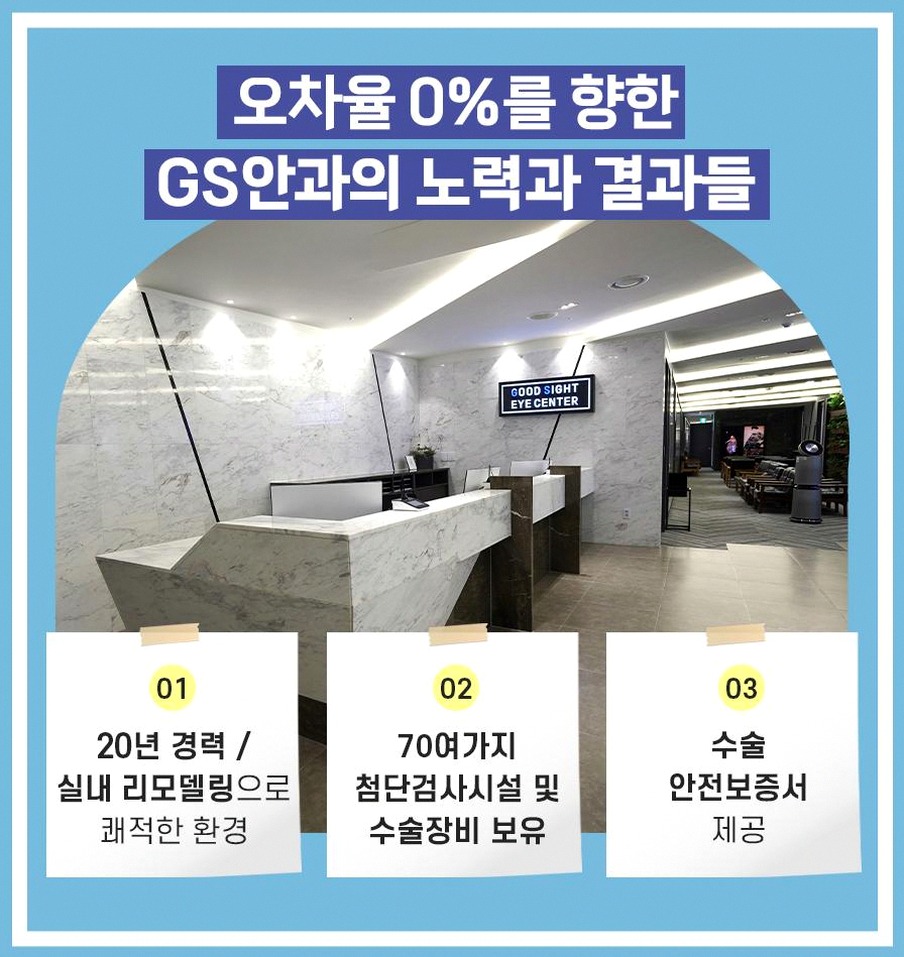
These time-stamped facts indicate a structured approach to training, quality management, and data-based practice, which can be reassuring for international patients considering lens implantation.
FAQ about lens implantation surgery clinics
Is lens implantation safer than LASIK for high myopia?
Safety depends on your individual eye condition. For very high myopia or thin corneas, phakic lens implantation is often considered because it does not remove corneal tissue, which can help maintain corneal strength. However, it introduces an artificial lens inside the eye, which carries its own risks such as intraocular pressure changes, endothelial cell loss, or cataract formation over time. A thorough examination and discussion with an ophthalmology specialist is essential to decide which option is safer in your case.
Can the implanted lens be removed later?
In many cases, phakic lenses such as ICL, GLAZE, or PhakiFlex KPL can be removed or exchanged if medically necessary. Reasons might include a significant change in your prescription, development of cataract, or a complication that affects eye health. However, removal is still an intraocular procedure and carries risks, so the decision must be made carefully. It is important to clarify with your surgeon under what circumstances they would recommend lens removal and how often this has been required in their practice.
How do I compare prices between clinics without compromising safety?
When comparing prices, first confirm that you are comparing the same type and brand of lens, as well as what is included in the package. Ask whether the price covers the full pre-operative examination, surgery, post-operative medications, and follow-up visits. It is also important to consider the experience of the surgeons, the thoroughness of the examination system, the quality of equipment, and the availability of retina specialists for high myopia. A slightly higher fee may reflect more comprehensive care and safety measures.

How long do I need to stay in Korea for lens implantation?
The recommended stay varies, but many international patients plan for about 7 to 10 days in Seoul. This usually allows time for full pre-operative testing, surgery, and at least one or two early follow-up visits. For some patients, the schedule can be adjusted, but shortening the stay too much may reduce the opportunity to monitor early healing. During online consultation, discuss your travel plans so the clinic can advise a realistic schedule based on your eye condition and the type of lens planned.
Soft call to action for online consultation
If you are considering phakic lens implantation such as ICL, GLAZE, or PhakiFlex KPL in the Gangnam area and would like to know whether you are a suitable candidate, you can start with an online consultation. By sharing your age, prescription, and basic eye history, a team like the one at GS Eye Center can give you an initial idea of possible options and the expected timeline for a visit to Seoul. This early step can help you plan travel, budget, and time off with more confidence before you commit to surgery.


- 공유 링크 만들기
- X
- 이메일
- 기타 앱


댓글
댓글 쓰기