(SMILE) in Gangnam, Seoul: candidacy & recovery
- 공유 링크 만들기
- X
- 이메일
- 기타 앱


Astigmatism treatment in Korea: direct answer summary
Astigmatism is a common cause of blurred or distorted vision at all distances. It happens when the front surface of the eye, the cornea, is not perfectly round but slightly oval, so light does not focus evenly on the retina.
Astigmatism can be managed with glasses or contact lenses, but many people also consider laser vision correction. SMILE LASIK, a modern laser procedure, can correct myopia combined with regular astigmatism in suitable patients. Whether SMILE is right for you depends on a detailed eye examination, including the degree and type of astigmatism and the condition of your cornea.
This guide explains how SMILE LASIK works for astigmatism, who may be a candidate, what to expect when traveling to Seoul for treatment, and how an ophthalmology clinic such as GS Eye Center in the Gangnam area approaches safety and individualized planning.
What is astigmatism and when to consider treatment
Astigmatism means the eye focuses light unevenly because the cornea or lens has different curvatures in different directions. Instead of being shaped like a perfect sphere, it is more like a rugby ball.
Typical symptoms include blurred or shadowed vision, especially for letters and fine details, eye strain after reading or screen work, headaches, difficulty seeing clearly at night, and feeling that your glasses prescription changes frequently.
Doctors distinguish between regular and irregular astigmatism. Regular astigmatism has a smooth, predictable pattern and is often correctable with laser procedures such as SMILE, LASIK, or surface treatments. Irregular astigmatism has a more distorted pattern, sometimes due to corneal disease, scarring, or previous surgery, and may require other approaches or be unsuitable for corneal laser.
The right treatment depends on several factors: how strong your astigmatism and myopia are, the thickness and shape of your cornea, your age, your lifestyle and visual needs, and your overall eye health. Laser surgery is usually considered when glasses or contact lenses are inconvenient, and when the prescription has been stable for at least one to two years.
SMILE LASIK basics for astigmatism
SMILE LASIK (small-incision lenticule extraction) is a type of laser vision correction that uses a femtosecond laser to reshape the cornea through a very small incision, without creating a large corneal flap.
During SMILE, the laser creates a thin lens-shaped piece of tissue inside the cornea, called a lenticule, and a tiny side opening. The surgeon then removes this lenticule through the small incision. By removing this precisely shaped piece, the curvature of the cornea is changed to correct myopia and regular astigmatism.
For patients with astigmatism, SMILE offers several potential advantages:
High-precision correction: The laser creates a lenticule tailored to the individual refractive error, including the spherical power (for myopia) and the cylindrical power (for astigmatism).
Small incision: Only a micro-incision, typically a few millimeters, is made. Because there is no large flap, more of the corneal structure is preserved compared with traditional flap-based LASIK.
Biomechanical preservation: Keeping the cornea more intact may help maintain corneal biomechanics, which is an important safety consideration, especially in younger patients or those with higher corrections.
Potentially lower risk of certain issues: The small incision approach may be associated with a lower chance of flap-related complications and may reduce the risk or severity of dry eye symptoms in some patients, although dry eye can still occur.
In general, SMILE is used for low to moderate myopia with mild to moderate regular astigmatism, within the safety ranges defined by the laser manufacturer and clinical guidelines. Very high astigmatism or complex corneal shapes may be better suited to other techniques.
How SMILE corrects astigmatism in simple technical terms
Astigmatism is described in your prescription as cylinder power and axis. The cylinder power tells how strong the astigmatism is, and the axis tells in which direction the cornea is steepest.
In SMILE, the laser pattern is customized to both the cylinder power and the axis. The lenticule is not perfectly symmetrical; instead, it is shaped slightly more in one direction than another to neutralize the uneven curvature of the cornea. After the lenticule is removed, the cornea becomes more evenly curved, so light focuses more precisely on the retina.
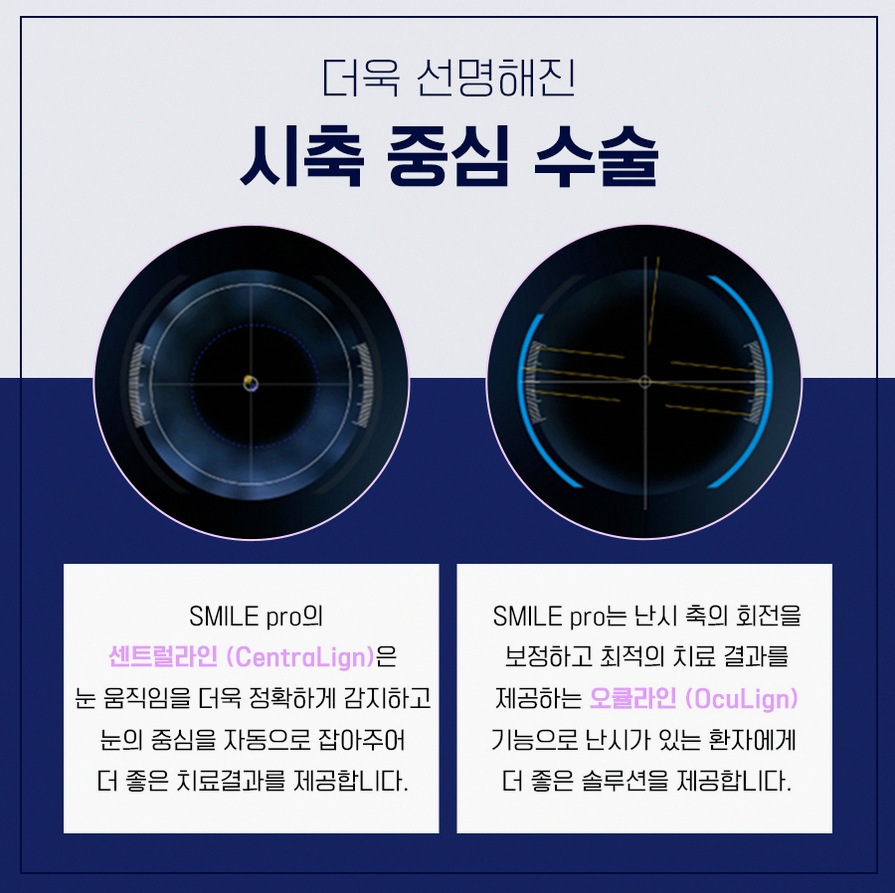
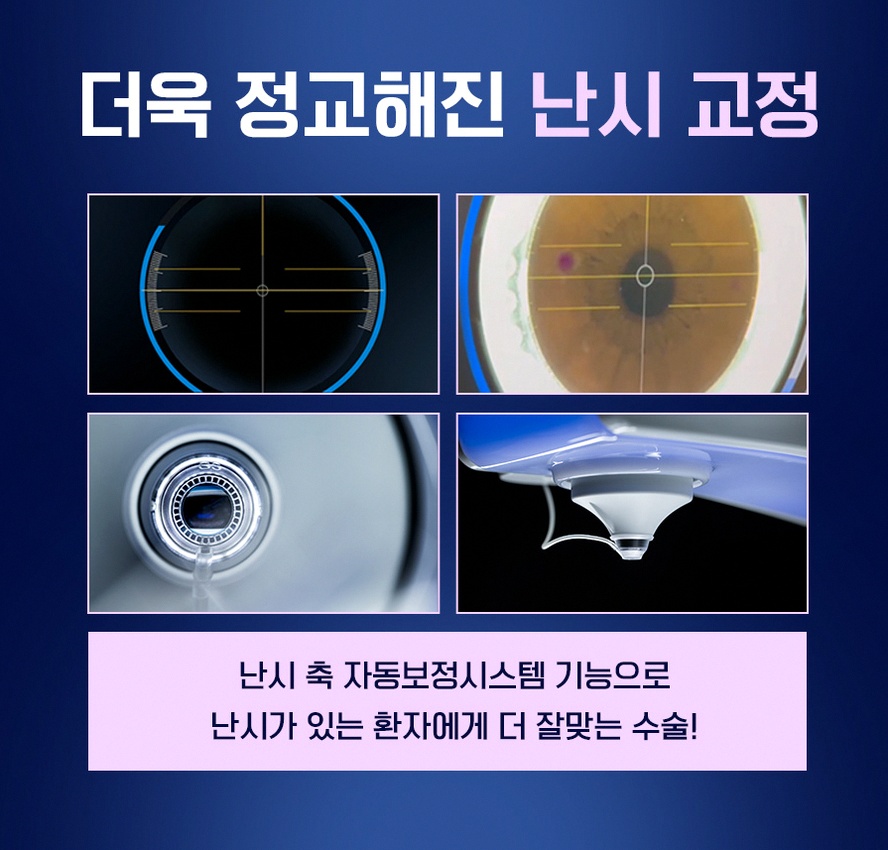
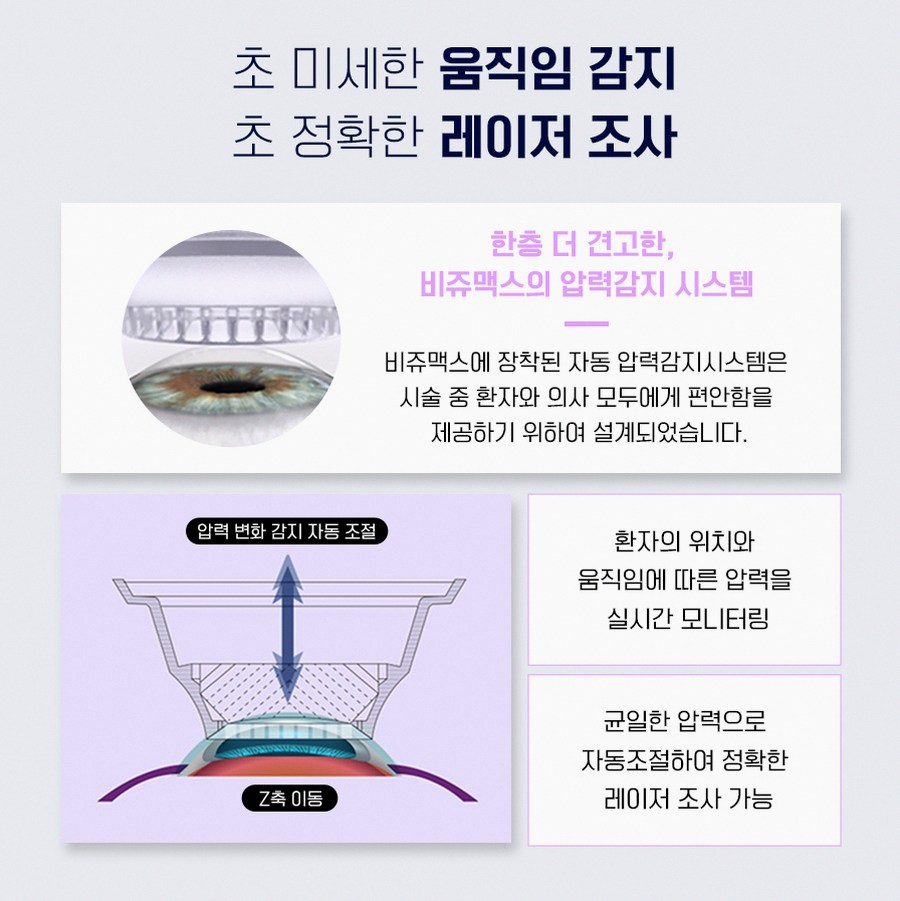
Accurate axis alignment is important for good astigmatism correction. Before the laser is applied, the astigmatism axis is carefully measured and registered. Modern SMILE platforms use advanced eye centering and monitoring techniques to help keep the treatment aligned with the visual axis and to compensate for small eye movements. This attention to alignment helps achieve predictable outcomes for astigmatism.
Preoperative examination and candidacy
Before any laser vision correction, a detailed preoperative examination is essential. For astigmatism treatment with SMILE, typical tests include:
Refraction: Measurement of sphere, cylinder, and axis to determine your exact prescription and to check that it has been stable over time.
Corneal topography and tomography: Three-dimensional mapping of the corneal surface and deeper layers to detect keratoconus or other forms of irregular astigmatism that may not be suitable for SMILE.
Corneal thickness and biomechanics: Measurement of central and peripheral corneal thickness and assessment of corneal strength to ensure that enough tissue will remain after treatment.
Pupil size and tear film: Evaluation of pupil size in different lighting conditions and tests for dry eye to anticipate night-vision symptoms and healing comfort.
Retina and optic nerve check: A dilated fundus examination or imaging to rule out other eye diseases that could affect vision.
You may be a good candidate for SMILE if you are an adult with stable myopia and regular astigmatism for at least one to two years, have adequate corneal thickness, and have a healthy ocular surface without significant dry eye or corneal disease.
You may not be suitable for SMILE if you have suspected keratoconus or highly irregular astigmatism, very high astigmatism beyond the recommended correction range, a very thin or structurally weak cornea, severe dry eye, active eye inflammation, or other medical contraindications. In such cases, the ophthalmologist may recommend alternative treatments or advise against surgery.
SMILE procedure steps and recovery for astigmatism patients
For international patients, the SMILE procedure itself is relatively quick, but careful planning and follow-up are important.
Typical procedure steps include:
Final measurements: On the day of surgery, your refraction is rechecked, and the astigmatism axis is confirmed. Some clinics also mark or digitally register the eye to help align the treatment.

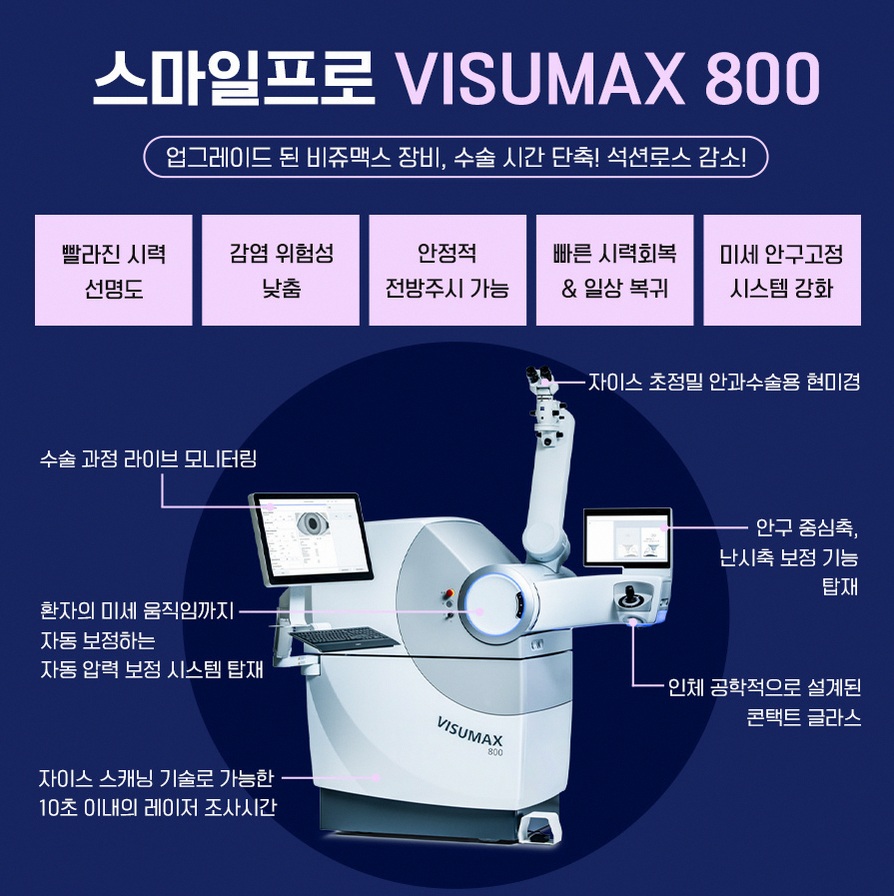
Laser creation of the lenticule: You lie on the laser bed, and numbing drops are applied. The femtosecond laser creates the lenticule and the small side incision inside the cornea. The duration of the laser irradiation step varies by device; for example, VISUMAX 800 (ZEISS) reports laser irradiation of around 9 seconds (device spec, 2023).
Lenticule removal: Through the micro-incision, the surgeon gently separates and removes the lenticule. Once removed, the cornea immediately takes on the new shape programmed to correct your myopia and astigmatism.
No large flap: Because there is no big flap to lift and replace, the surface of the cornea remains largely intact, with only the small side opening.
Recovery expectations
Most patients notice clearer vision within the first one to two days, although mild blurriness is common at first. Over the following days and weeks, vision typically becomes sharper as the cornea stabilizes.
Astigmatism-related blur, shadowing, or ghosting usually decreases as the eye heals and the axis of correction settles. Some people may experience mild halos, glare, or slight residual astigmatism in the early period, which often improves over time. Final visual stability can take several weeks to a few months, depending on individual healing.
During the early recovery, you will usually use prescribed eye drops, avoid rubbing your eyes, and follow activity restrictions to protect the cornea.
SMILE vs other astigmatism treatment options
When considering astigmatism treatment, it is helpful to understand how SMILE compares with other options.
Glasses and contact lenses
Glasses and toric contact lenses are non-surgical and reversible. They can correct a wide range of astigmatism and are the first-line option for many people. However, they do not change the shape of the cornea, and some patients find them inconvenient for sports, work, or daily life.
Conventional LASIK
LASIK uses a flap created with a femtosecond laser or microkeratome, followed by an excimer laser to reshape the cornea. It can treat a broad range of myopia and astigmatism and has a long track record. However, it involves a larger corneal flap, which slightly alters corneal biomechanics and carries a small risk of flap-related complications.
LASEK and PRK
LASEK and PRK are surface ablation procedures where the surface layer of the cornea is loosened or removed, the excimer laser reshapes the cornea, and the surface layer regenerates. These techniques can be useful when the cornea is thinner or when certain irregularities are present. Recovery is generally longer and more uncomfortable than SMILE or LASIK, with more days of blurred vision.
Phakic lens implantation
Phakic intraocular lenses, such as ICL and similar implants, are placed inside the eye without removing the natural lens. They can correct high myopia and astigmatism and are often considered when the cornea is too thin or the prescription too high for corneal laser. This is a lens-based approach rather than reshaping the cornea.
The best option depends on your corneal condition, the degree and type of astigmatism, your age and lifestyle, and long-term safety considerations. A thorough examination and discussion with an ophthalmologist are necessary before deciding.
Why consider GS Eye Center for SMILE astigmatism treatment
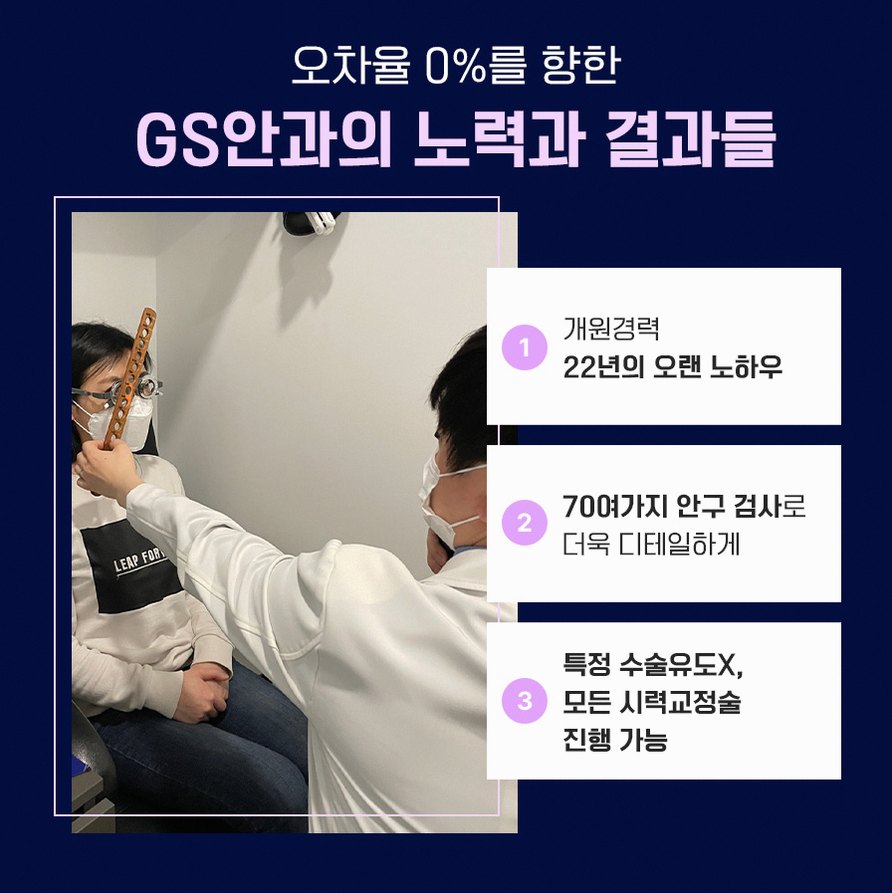
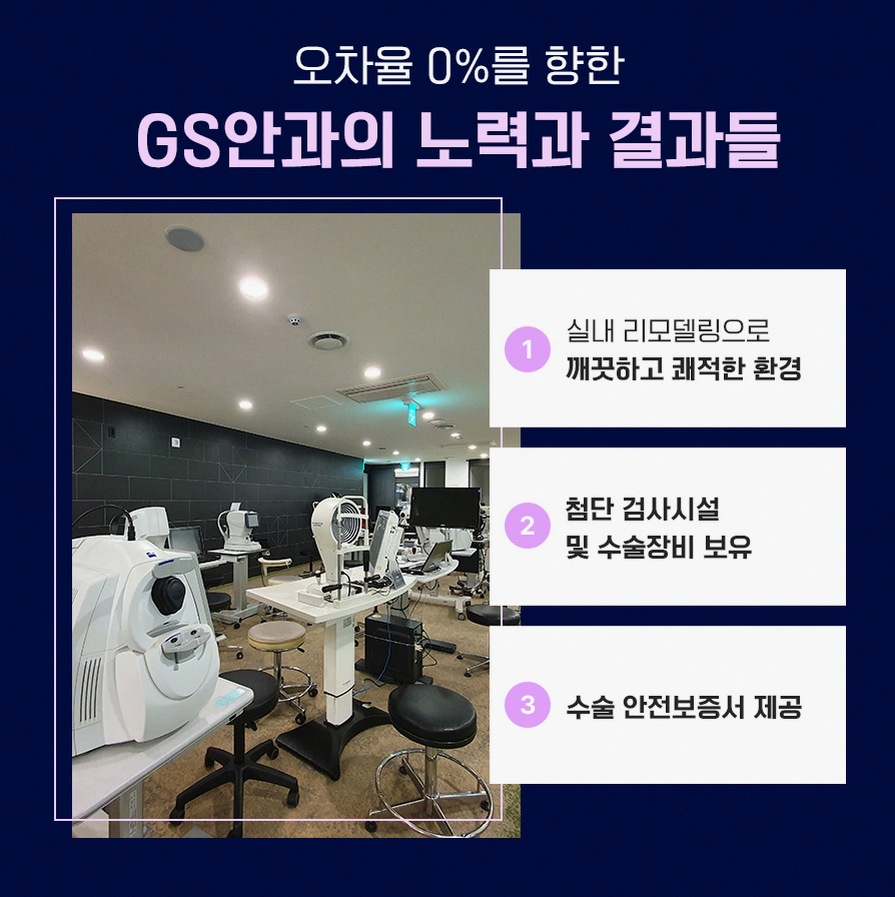
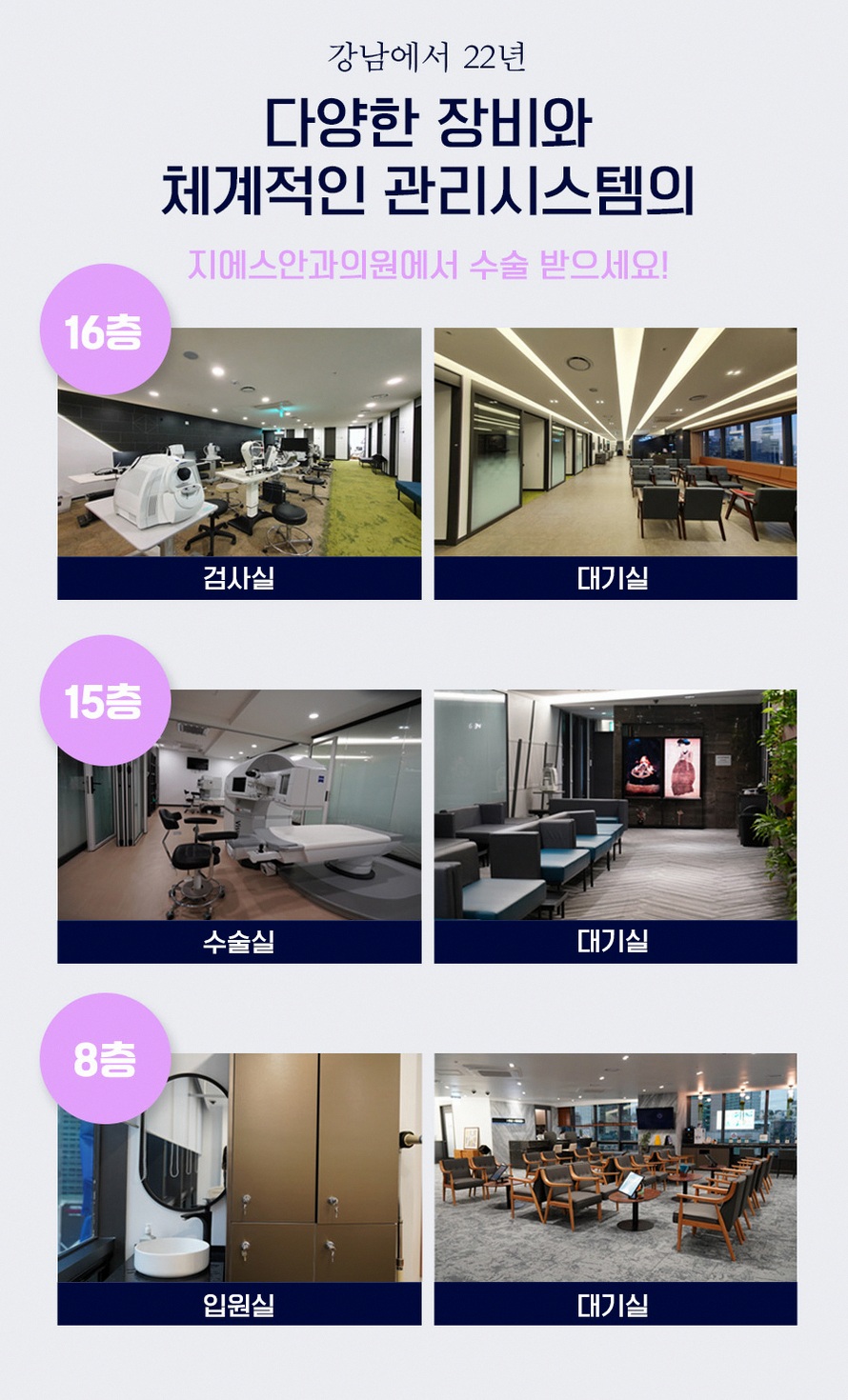
In the Gangnam area of Seoul, GS Eye Center is an ophthalmology clinic established in 2005 and has been operating in the same location since opening. The clinic is led by a board-certified ophthalmologist with a medical doctorate, and all seven doctors are ophthalmology specialists with academic and teaching backgrounds.
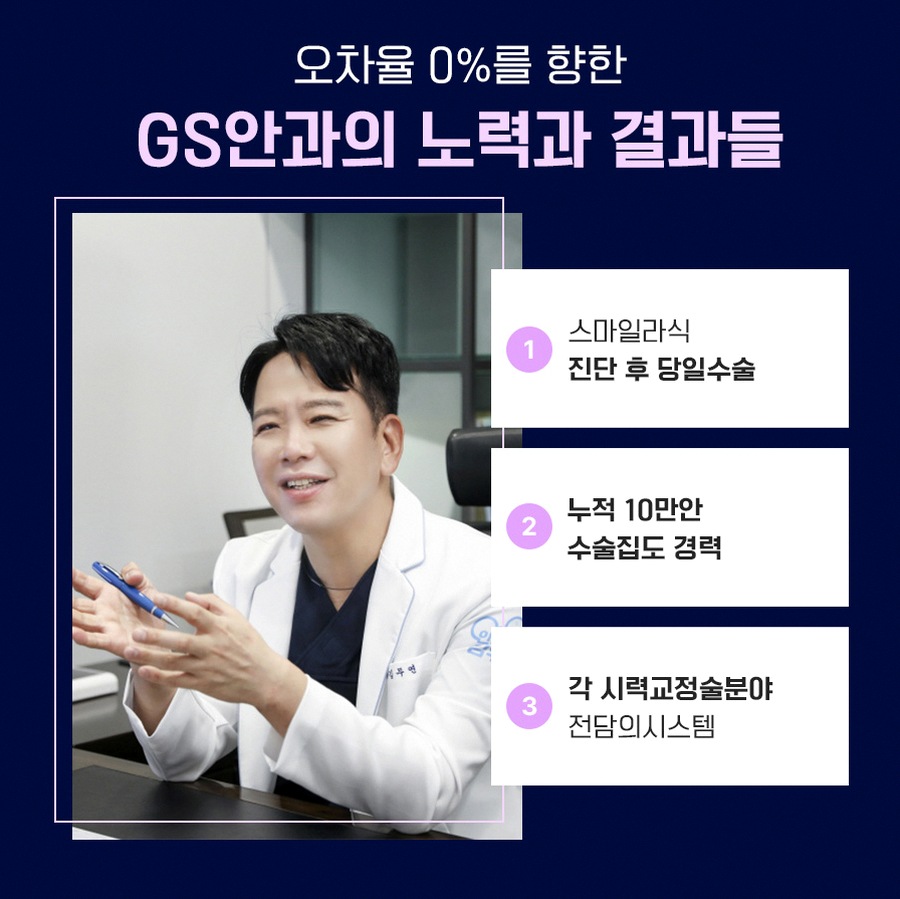
Over the years, the clinic has built substantial experience in vision correction and cataract surgery, reporting 300,000 eyes treated (2023, clinic aggregate). Its SMILEpro volume reached 15,000 eyes (April 2026, clinic data). It has held multiple designations and training-center roles related to SMILE and other refractive technologies, including ZEISS 'SMILE GOLD CLUB' membership (2021), ZEISS 'SMILE pro CENTER' designation (2023), and SILK TRAINING Center designation (2026). The clinic is equipped with multiple SMILE platforms from ZEISS—such as VISUMAX 500 units and the VISUMAX 800 for SMILEpro—which allows the team to select the most appropriate equipment for each patient’s eye condition.
Their approach to astigmatism treatment emphasizes detailed diagnostics, individualized surgical planning, and evidence-based safety criteria rather than applying a single procedure to every patient. For international visitors, this kind of structured evaluation can be especially important because you have limited time in Korea and need clear guidance on what is safe and realistic.

Safety, risks, and realistic expectations
SMILE is widely used and studied, but like any surgery, it has potential risks and side effects.
Common temporary issues after SMILE for astigmatism include dry eye symptoms such as burning or foreign-body sensation, glare or halos around lights, especially at night, and mild night-vision difficulties. Some patients may experience undercorrection or overcorrection, including residual astigmatism. In such cases, glasses for certain tasks, contact lenses, or a secondary enhancement procedure may be discussed after the eye has stabilized.
Rare but serious complications include infection, significant inflammation, or irregular healing that affects visual quality. To reduce these risks, clinics use sterile techniques, modern equipment, and structured follow-up schedules. Your own role is also important: using eye drops correctly, avoiding eye rubbing, and attending follow-up visits.
Realistic expectations are essential. Many patients achieve high uncorrected visual acuity and greatly reduced dependence on glasses or contact lenses. However, results vary depending on your initial prescription, corneal condition, healing response, and adherence to postoperative care. Some people may still prefer thin glasses for night driving or detailed work, even after successful surgery.
Postoperative care and long-term management
After SMILE, you will receive specific instructions. Typical aftercare includes:
Eye drops: Antibiotic and anti-inflammatory drops are usually prescribed for a set period to prevent infection and control inflammation. Lubricating drops can help with dryness and comfort.
Activity restrictions: You are generally advised to avoid rubbing your eyes, swimming pools, hot tubs, and heavy exercise for a recommended period. Light daily activities are usually possible soon after surgery, but your doctor will give personalized guidance.
Follow-up visits: Scheduled check-ups in the first days, weeks, and months allow the surgeon to monitor healing, measure residual astigmatism, and adjust your care plan if needed.
For long-term eye health, regular eye examinations remain important, even after successful laser vision correction. Protecting your eyes from ultraviolet light with sunglasses, managing screen time, and seeking prompt evaluation if you notice vision changes or discomfort will support your long-term results.
Who may consider SMILE in Seoul as an overseas patient
You might consider traveling to Seoul for SMILE astigmatism treatment if you are an adult with stable myopia and regular astigmatism, you want to reduce dependence on glasses or contact lenses, and you are interested in a small-incision laser technique. Many international patients also value the concentration of refractive surgery experience and modern equipment in the Gangnam area.
However, not everyone is suitable. If you have very high astigmatism, known corneal disease, previous complex eye surgery, or significant dry eye, the clinic may recommend other options or advise against surgery. An honest pre-visit discussion and full examination on arrival are necessary to confirm candidacy.
Online consultation and pre-visit preparation
Before booking flights, it is wise to have an online consultation with the clinic. For SMILE and astigmatism, you can prepare the following information:
Your current glasses or contact lens prescription, including sphere, cylinder, and axis for each eye.
Any previous eye examination reports, especially corneal topography or tomography if available.
History of eye problems such as infections, injuries, or previous surgeries.
General health information, including medications and systemic diseases like diabetes or autoimmune conditions.
During the online consultation, you can ask about likely suitability based on your prescription, approximate visit schedule, what tests will be done, how long you should stay in Korea, and what follow-up options exist when you return home. The clinic cannot confirm final candidacy without examining your eyes in person, but they can give you a realistic idea of the possibilities.
Expected Korea visit timeline for SMILE
For many overseas patients, a typical visit schedule for SMILE astigmatism treatment might look like this, although exact plans vary by clinic and individual case.
Day 1: Comprehensive eye examination, including refraction, corneal imaging, tear film evaluation, and retinal check. Discussion of candidacy, procedure options, risks, and expectations. If you are a candidate and decide to proceed, surgery may be scheduled for the next day or within a few days.
Day 2: SMILE procedure for both eyes, if appropriate. The surgery itself usually takes only minutes per eye. You rest afterward and return to your accommodation.
Day 3: First postoperative check-up to assess vision, corneal condition, and comfort. Eye drop instructions are reviewed.
Days 4 to 7: Additional follow-up visits, depending on your schedule and the clinic’s protocol. Many patients can fly home within several days after surgery, once the early healing is stable and the doctor confirms it is safe.
If you plan a short stay, inform the clinic in advance so they can design a follow-up schedule that fits your travel. You should also arrange eye care in your home country for long-term checks.
Aftercare when you return home
Once you leave Korea, you should continue using any remaining prescribed drops according to instructions and avoid eye rubbing or high-risk activities until your doctor says it is safe.
It is advisable to schedule an eye examination in your home country a few weeks after surgery and again at three to six months. Share your surgical report and preoperative data with your local eye doctor if possible. If you notice sudden vision changes, pain, or persistent discomfort, seek prompt evaluation rather than waiting for a routine visit.
Frequently asked questions about SMILE astigmatism treatment
Can SMILE completely cure my astigmatism?
SMILE can significantly reduce or correct regular astigmatism within its approved treatment range for many patients. However, no procedure can guarantee perfect vision for everyone. Small amounts of residual astigmatism or minor visual symptoms may remain, and some people may still prefer glasses for specific tasks. The goal is usually to reduce dependence on correction, not to promise a complete cure.
Up to what degree of astigmatism can SMILE treat safely?
The safe treatment range depends on the specific SMILE platform, your corneal thickness, and overall eye condition. In general, SMILE is used for mild to moderate regular astigmatism combined with myopia. Very high cylinder values may not be suitable for SMILE or may require alternative techniques. Only a full examination and corneal imaging can determine your personal safe range.
Is SMILE better than LASIK for astigmatism?
SMILE and LASIK are both established options for correcting myopia with astigmatism. SMILE uses a small incision and preserves more of the corneal surface, which may be advantageous for corneal biomechanics and potentially for dry eye in some cases. LASIK has a long history and can treat a wide range of prescriptions, including certain higher astigmatism levels. The better option for you depends on your corneal shape, thickness, prescription, and lifestyle, so it is important to discuss both with an ophthalmologist.
How long do the results last, and can astigmatism come back?
For most patients, the corneal reshaping effect of SMILE is long-lasting. Once the cornea has healed and stabilized, the correction tends to remain stable over many years. However, natural changes in the eye with age, such as lens changes or progression of underlying conditions, can affect vision over time. Mild shifts in prescription are possible, and some people may need glasses again later in life, especially for reading or detailed work.
What if I have dry eye or thin corneas?
Mild dry eye is common and can often be managed before and after SMILE with artificial tears and other treatments. Severe dry eye may increase discomfort and affect visual quality, so the clinic will evaluate your tear film carefully. Thin or biomechanically weak corneas may not be suitable for SMILE or other corneal laser procedures. In such cases, alternative options, including phakic intraocular lenses, may be discussed, or surgery may be discouraged for safety.
How is the cost of SMILE for astigmatism determined at a Gangnam ophthalmology clinic?
The cost of SMILE in Gangnam is usually based on several factors: the technology and laser platform used, the complexity of your prescription, the preoperative testing included, the surgeon’s experience, and the postoperative follow-up schedule. Some clinics have package prices that cover examinations, surgery, and early follow-up, while others separate these items. When comparing clinics, it is helpful to ask exactly what is included, what type of SMILE system will be used, and how postoperative care is arranged for overseas patients, rather than focusing on price alone.
Soft call to action for online consultation
If you are considering SMILE LASIK for astigmatism treatment in Seoul, an online consultation with an ophthalmology clinic such as GS Eye Center can help you understand whether you might be a suitable candidate and how to plan your visit. By sharing your current prescription and medical history in advance, you can receive personalized guidance about possible options, expected timelines, and important safety considerations before you travel.
This article is for general information only and does not replace a full eye examination or individual medical advice. Final decisions about astigmatism treatment and SMILE candidacy should always be made in direct consultation with a qualified ophthalmologist after a complete evaluation of your eyes.
- 공유 링크 만들기
- X
- 이메일
- 기타 앱


댓글
댓글 쓰기