SMILE LASIK in Gangnam — equipment, tests, and stay plan
- 공유 링크 만들기
- X
- 이메일
- 기타 앱


SMILE LASIK near Nonhyeon in Gangnam
One of these is GS Eye Center, an ophthalmology clinic that has focused on laser vision correction since 2005 and serves the wider Nonhyeon and Gangnam area.
This guide explains what SMILE LASIK is and what to look for when choosing an eye clinic near Nonhyeon. It gives three practical takeaways: how to evaluate a clinic's equipment and safety protocols, what to expect from preoperative testing at a high-volume Gangnam clinic, and what an overseas visitor should realistically plan for during a treatment trip to Korea.
Direct answer summary for Nonhyeon visitors
If you are based in or near Nonhyeon and want SMILE LASIK, you will usually visit an ophthalmology clinic around Gangnam Station rather than a general hospital. The clinic described here is an ophthalmology clinic with seven ophthalmologists, multiple ZEISS laser platforms for SMILE-type procedures, and a structured system for high-volume vision correction and cataract surgery.
International patients typically complete online consultation first, then plan a short stay in Seoul of about one to two weeks for full examination, surgery, and initial follow-up. SMILE LASIK may be an option if your corneas are healthy, your prescription is stable, and you do not have conditions that interfere with healing. A detailed examination by an ophthalmology specialist is always required before any decision.
What SMILE LASIK is
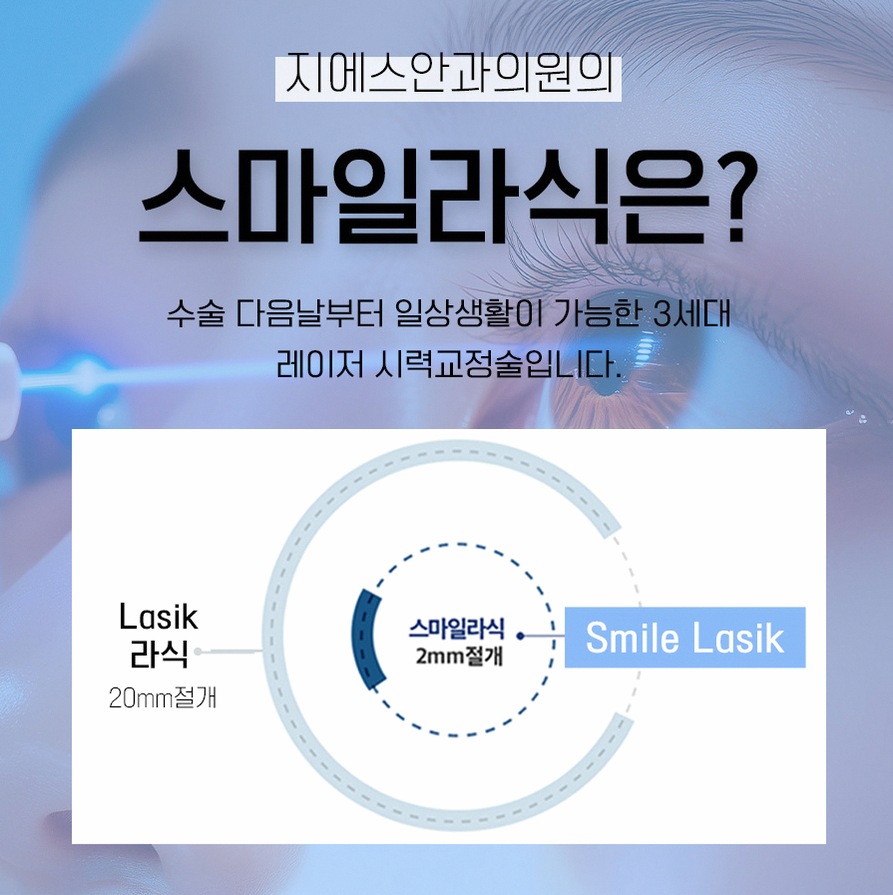
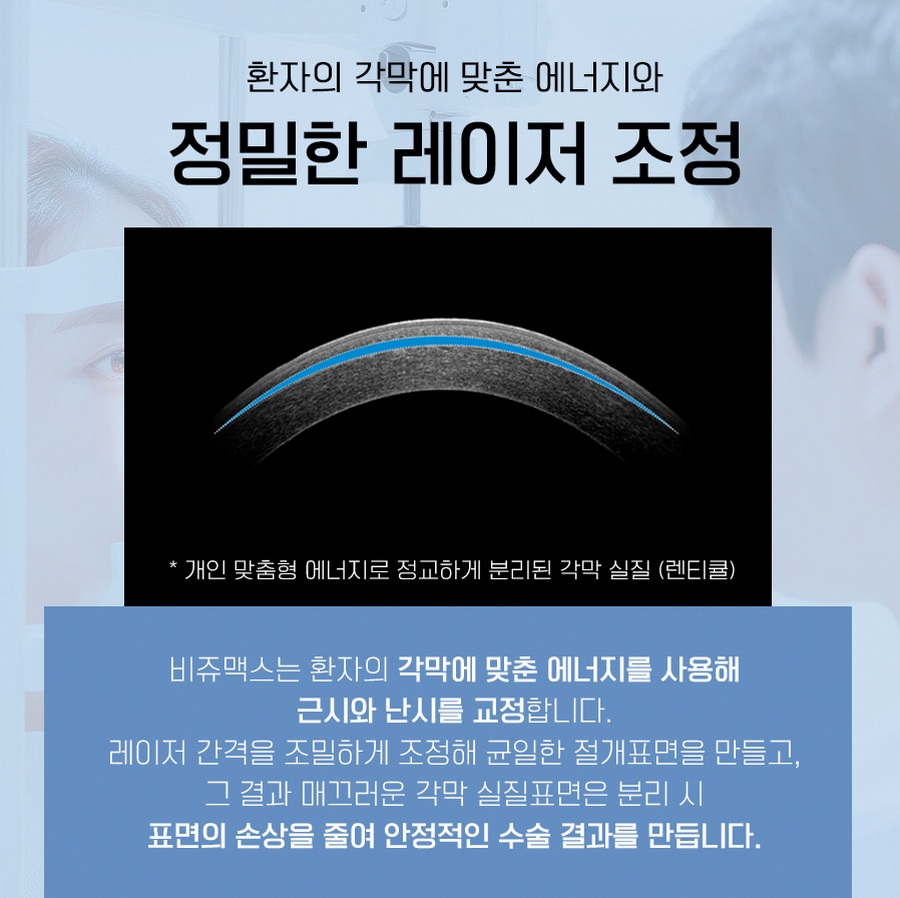
SMILE LASIK is a minimally invasive laser vision correction method that uses a femtosecond laser to create a tiny lens-shaped piece of tissue, called a lenticule, inside the cornea. The surgeon removes this lenticule through a small incision, changing the corneal shape so that light focuses more accurately on the retina.
Compared with traditional LASIK, SMILE uses a smaller incision and preserves more of the outer corneal surface. For suitable candidates, this approach may help with biomechanical stability of the cornea and may be gentler on the corneal nerves, which are related to dry eye symptoms.
Who may consider SMILE LASIK
SMILE LASIK is generally considered for adults with:
Myopia and astigmatism within certain ranges
A stable glasses or contact lens prescription for at least one to two years
Sufficient corneal thickness and a regular corneal shape
Healthy ocular surface without uncontrolled dry eye or active inflammation
People in the Nonhyeon and Gangnam business districts often spend long hours on digital devices. Many of them are interested in reducing dependence on glasses or contact lenses for convenience at work, commuting, and sports. However, not everyone is a candidate. Some people will be better suited to other procedures such as surface ablation, lens implantation, or cataract and presbyopia solutions.
Ophthalmology specialists and subspecialties
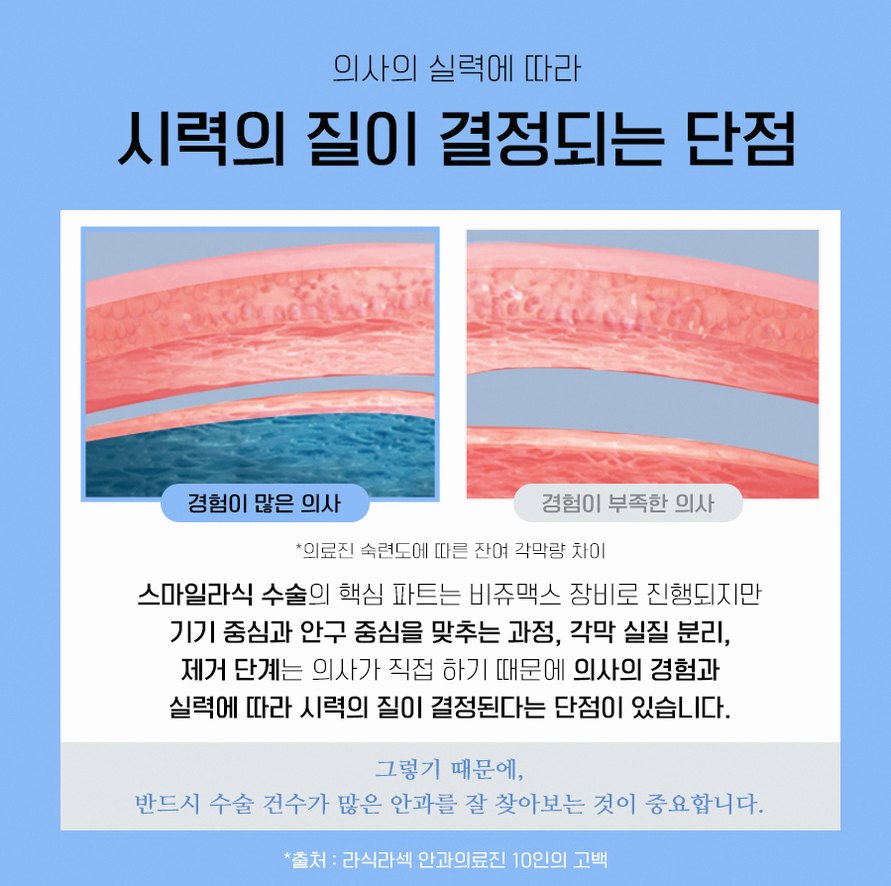
When comparing eye clinics near Nonhyeon, one key point is who actually performs the surgery. At this ophthalmology clinic, all surgeons are ophthalmologists, not general practitioners. The medical team includes seven ophthalmologists who are board-certified eye specialists.
The representative director, Muyeon Kim, is an ophthalmologist and medical doctor with experience as a professor at a major Catholic university medical center and currently serves as adjunct faculty in ophthalmology as of 2024. He also runs an educational YouTube channel that explains eye health and surgery in detail, including risks and realistic expectations.
Other doctors in the clinic include former clinical instructors and assistant professors from large university hospitals, including retina subspecialists and cataract or refractive specialists. This combination allows collaborative management of complex cases, such as high myopia with retinal problems or patients who need both cataract and refractive planning.
For SMILE LASIK, this kind of team structure matters because it supports:
Accurate screening to decide whether SMILE, SMILE Pro, SILK, or another method is safer
In-house management of retinal issues discovered during the preoperative workup
Planning for presbyopia or early cataract in older patients who initially ask for SMILE LASIK
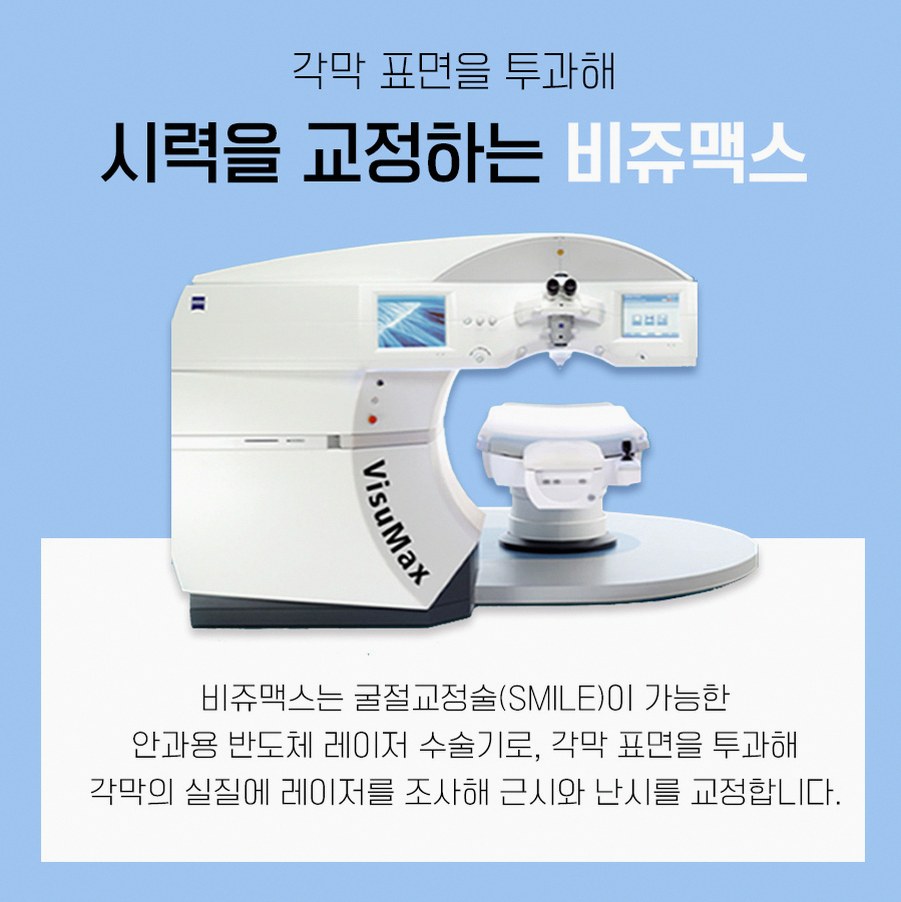
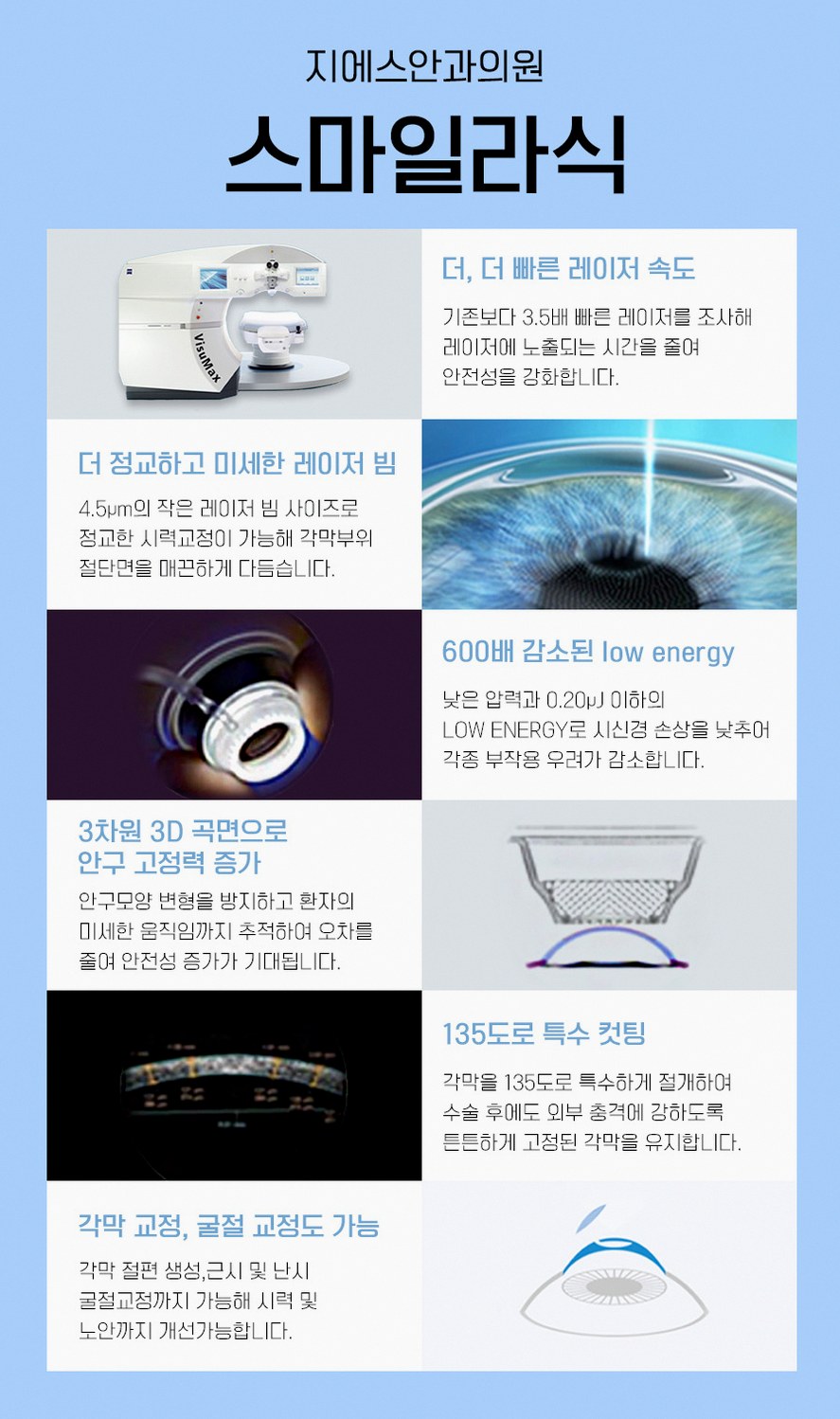
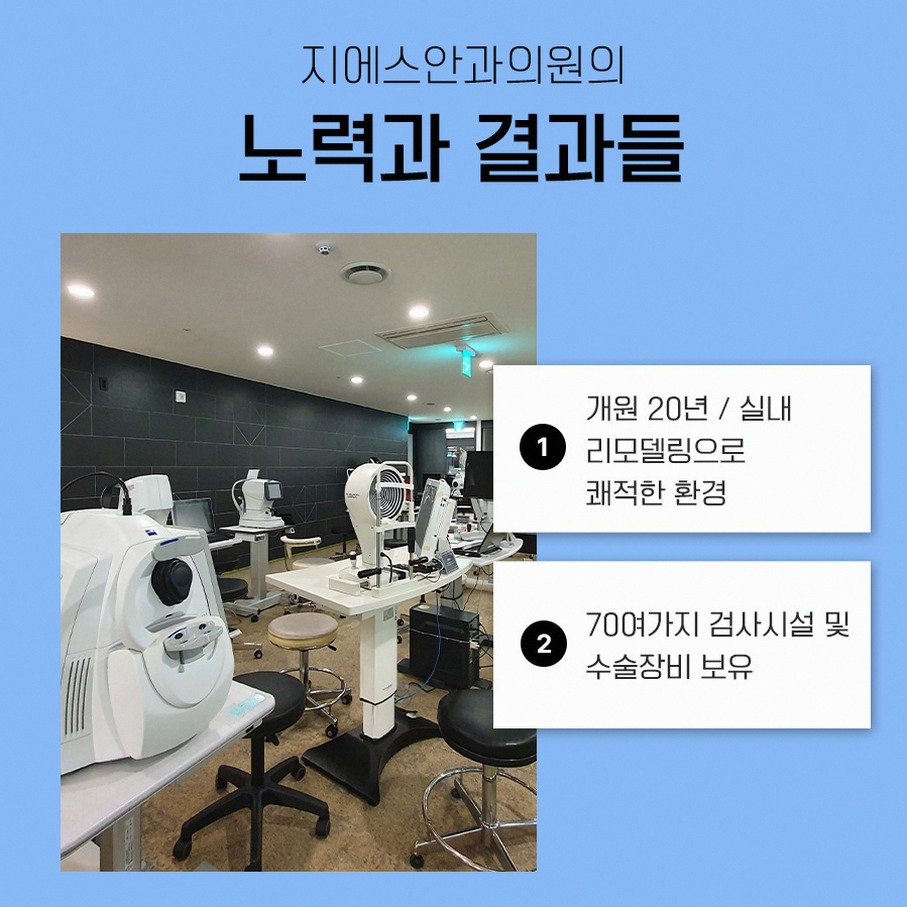
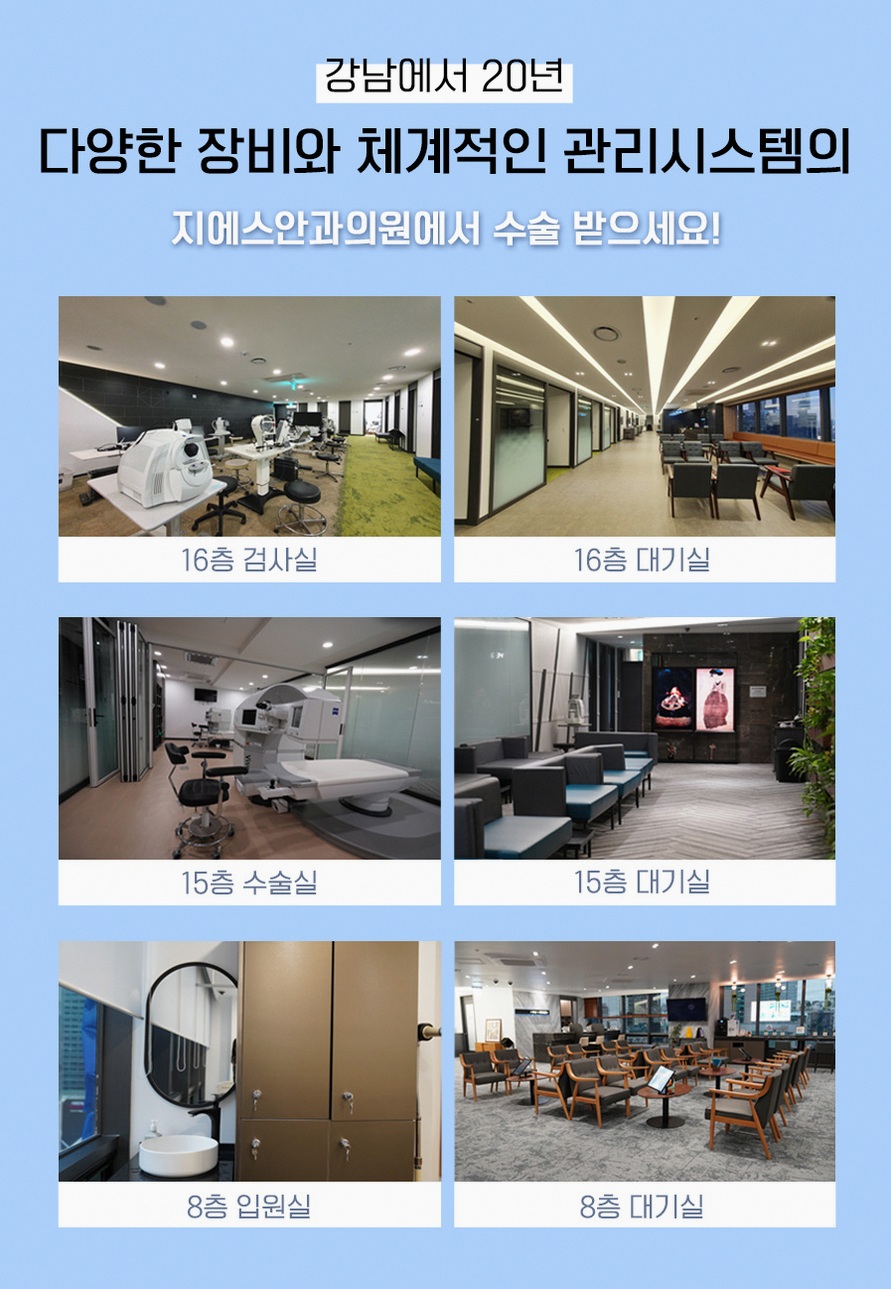
For Nonhyeon residents comparing eye clinics, equipment is another important factor. This ophthalmology clinic owns the main lenticule-based platforms: VISUMAX 500 and VISUMAX 800 (ZEISS), and the ELITA platform (Johnson & Johnson) used for SILK procedures.
VISUMAX 800
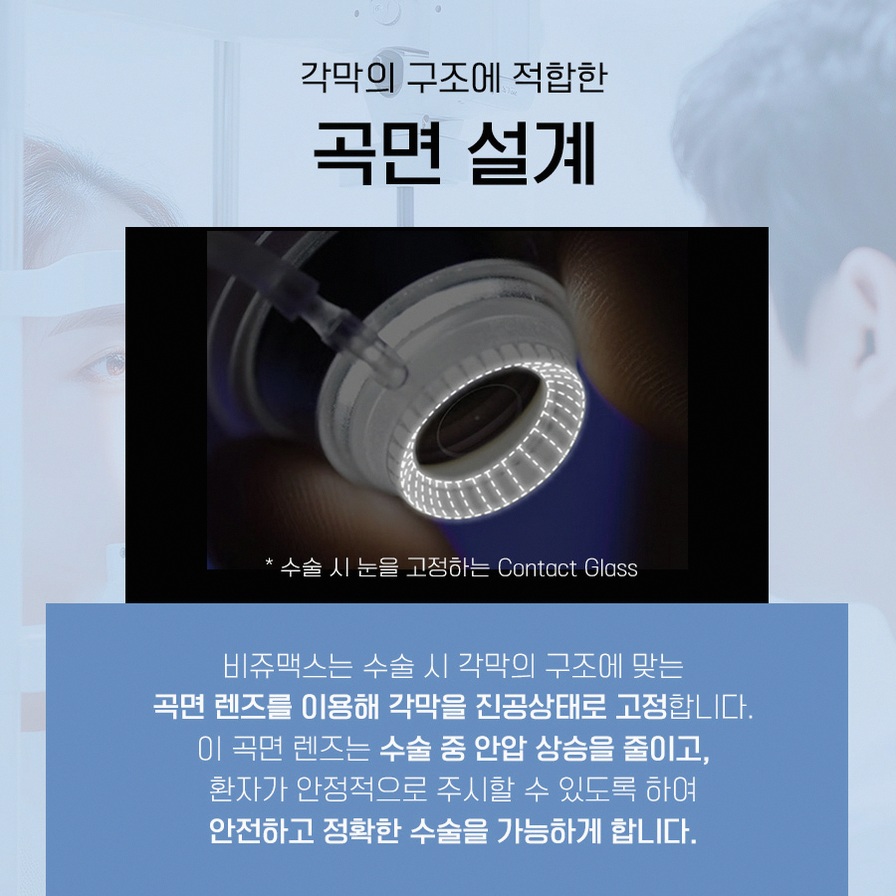
The VISUMAX 800 is used for SMILE Pro, the latest generation of SMILE-type procedures. Introduced at the clinic in 2023, it offers a very fast laser phase, with laser time under about nine seconds per eye. Shorter laser time can help with patient comfort and may reduce the chance of movement during the laser step.
VISUMAX 500
The clinic also operates two VISUMAX 500 units. These are used for SMILE LASIK and have been in use since 2016, with dual-unit operation from 2019. Running two units helps manage high surgical volume and reduces waiting time for patients.
SILK platform
The clinic performs SILK, another ZEISS lenticule-based procedure. As of 2026, it is designated as a SILK training center, meaning other ophthalmologists visit to learn the technique there. This role as a training site suggests that protocols and techniques are kept up to date and are taught in a structured way.
Program designations and certifications
The clinic has received several designations related to SMILE and quality systems:
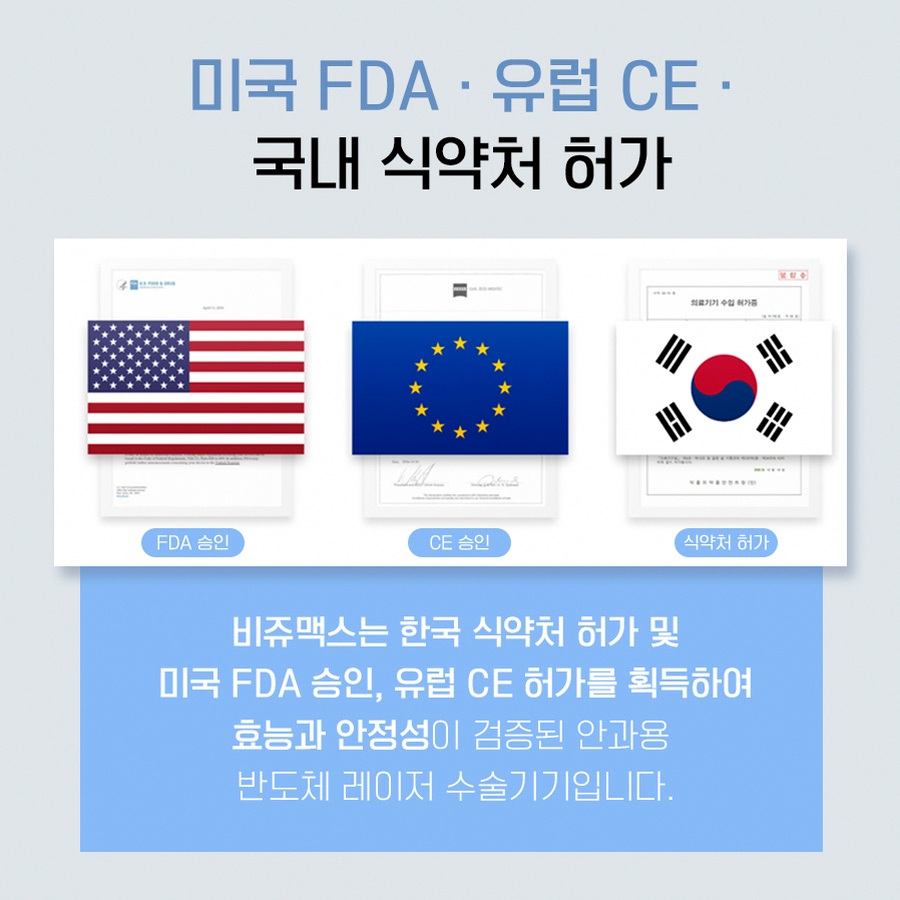
First in Korea to join the ZEISS SMILE GOLD CLUB in 2021, indicating high SMILE case volume and experience
Designated as a ZEISS SMILE pro CENTER in 2023
Designated as a SILK training center in 2026
SMILE LASIK program certified with ISO 9001 and ISO 14001 in 2020, which relate to standardized quality and environmental management systems
These recognitions do not guarantee individual outcomes, but they show that the clinic has invested in structured systems and high-volume experience with SMILE-type procedures.
Surgical volume and experience
When you see large numbers in advertisements, it is important to understand what they mean and what they do not mean.
At this ophthalmology clinic, the combined number of vision correction and cataract surgery eyes reached about 300,000 eyes as of 2023. This is eye count, not patient count. Some patients have surgery on both eyes, and some have more than one procedure over time.
For SMILE Pro specifically, the clinic reached 5,000 eyes by October 2024, 10,000 eyes by August 2025, and 15,000 eyes as of April 2026.
High case numbers alone do not guarantee a good result for any single person. However, they indicate that the surgeons have seen a wide range of corneal shapes, prescriptions, and special situations. This kind of experience can be helpful when planning treatment for patients with borderline measurements, high myopia, or combined conditions.
How SMILE LASIK is planned and performed
For overseas visitors from Nonhyeon or other areas, the process usually follows several steps.
Preoperative evaluation
Detailed refraction to measure your glasses or contact lens prescription
Corneal topography and tomography to map the corneal surface and deeper layers
Corneal thickness mapping to check if there is enough tissue for safe reshaping
Pupil size measurement, which can relate to night vision symptoms
Tear film evaluation and dry eye assessment
Retinal examination, often with input from retina subspecialists
For patients with high myopia, the retina check is especially important because they have a higher risk of retinal thinning, tears, or degeneration. Detecting and treating retinal problems before or around the time of SMILE LASIK can help reduce the risk of serious complications later.
Procedure day
On the day of SMILE LASIK or SMILE Pro:
You receive anesthetic eye drops to numb the surface of the eye.
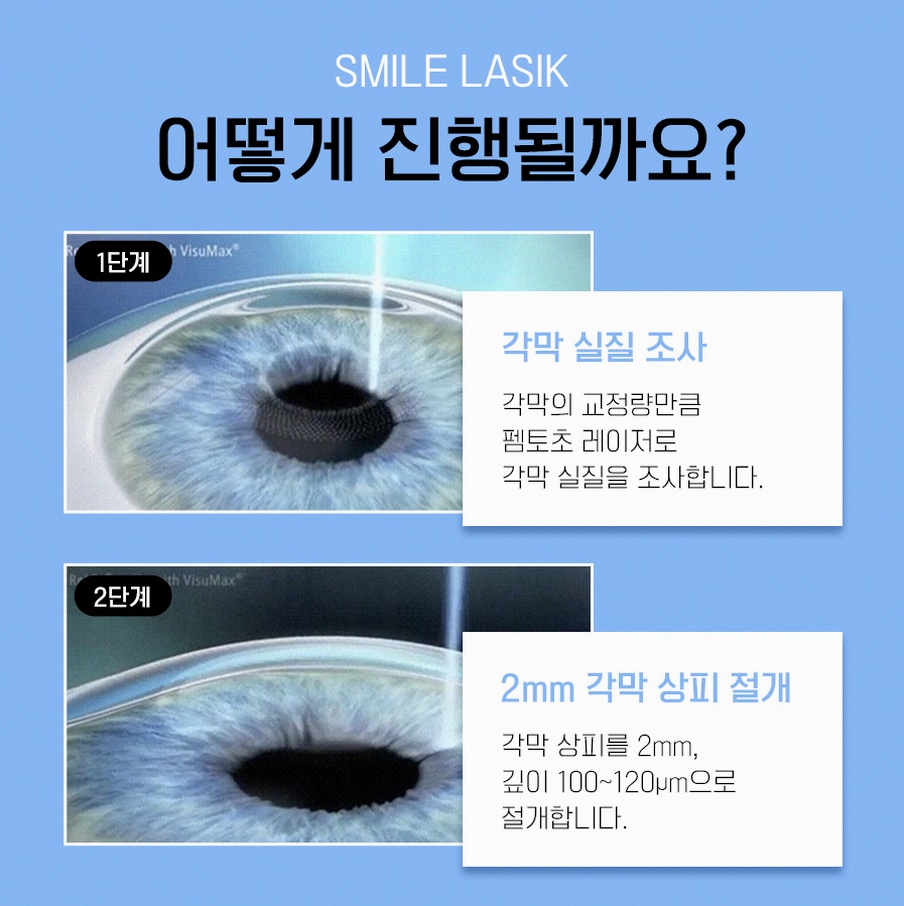
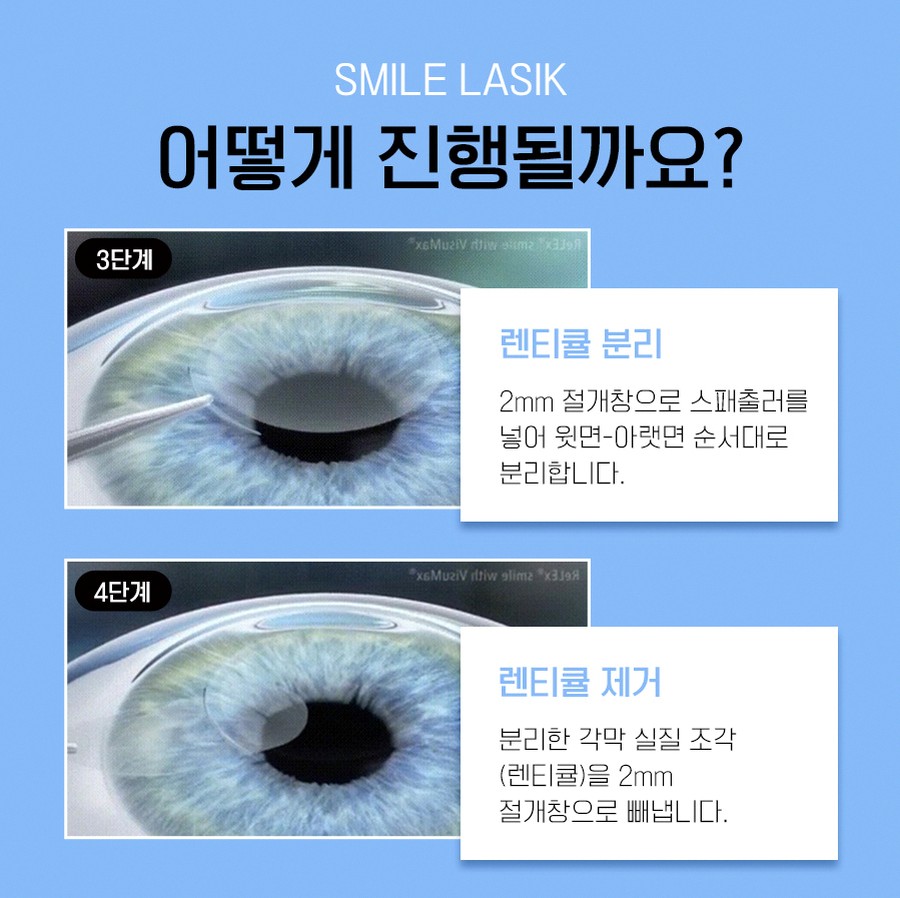
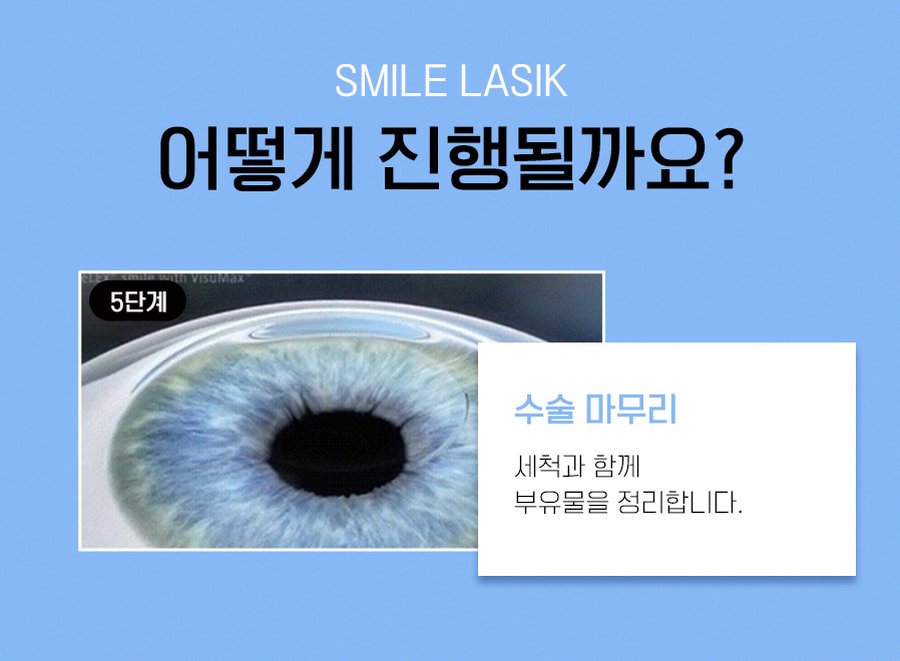
The femtosecond laser creates the lenticule and a small incision inside the cornea.
The surgeon manually removes the lenticule through the small incision.
The laser phase is short, and the total time in the procedure room is typically not long.
With SMILE Pro on the VISUMAX 800, the laser phase is particularly fast, which can help patients who are anxious about keeping still.
Recovery and early aftercare
Many patients notice functional vision within a day or so, though clarity continues to stabilize over several weeks. Typical early experiences may include:
Mild discomfort or foreign body sensation for a short period
Temporary halos or glare around lights, especially at night
Dry eye symptoms, which usually improve with time and eye drops
You will receive instructions on using antibiotic and anti-inflammatory eye drops, artificial tears, and protective shields if needed. Avoid rubbing your eyes, swimming, or heavy exercise for the period recommended by your surgeon. Follow-up visits are important to monitor healing and address any concerns.
Who should be cautious about SMILE LASIK
Not everyone who searches for a Nonhyeon eye clinic for SMILE LASIK will be a suitable candidate. You may need to be cautious or consider alternatives if you have:
Very thin corneas or irregular corneal shape, which may indicate a risk of corneal ectasia
Uncontrolled dry eye, active eye inflammation, or severe allergies affecting the eyes
An unstable prescription, for example in younger patients whose myopia is still progressing
Pregnancy or systemic diseases that interfere with wound healing
In some borderline biomechanical cases, the clinic offers corneal cross-linking procedures such as EXTRA or KXL to reinforce the cornea. In selected situations, cross-linking may be combined with vision correction to improve corneal stability, but this is decided individually after detailed measurements.
Alternatives when SMILE LASIK is not ideal
If SMILE LASIK is not recommended after your examination, other options may be considered.
Surface ablation
Surface ablation procedures such as 2DAY LASEK reshape the cornea from the surface rather than through a flap or small incision. Recovery is usually slower and can involve more discomfort in the first days, but surface methods may be considered in certain corneal shapes or thickness ranges.
Lens implantation
For very high myopia, thin corneas, or certain anatomical situations, phakic lens implantation may be suggested. At this clinic, options include ICL, GLAZE, and PhakiFlex KPL. These procedures place a lens inside the eye without removing the natural lens.
The clinic was the first in Korea to perform GLAZE lens implantation in 2019 and reached 1,000 GLAZE eyes by 2022 and 3,000 Optiflex GLAZE eyes by 2025. This experience is relevant for patients who cannot safely undergo corneal laser surgery.
Presbyopia and cataract solutions
Some patients in their 40s, 50s, or older come for SMILE LASIK consultation but are found to have early cataract or significant presbyopia. In such cases, lens-based solutions may be more appropriate.
The clinic offers laser cataract surgery and presbyopia-correcting lens implantation, including multifocal intraocular lenses such as PanOptix. By 2024, the clinic had performed over 3,000 PanOptix multifocal lens implantations, which supports planning for patients who want both distance and near vision improvement.
Additional services relevant to SMILE patients
Dry eye clinic
Many SMILE candidates in the Nonhyeon and Gangnam area are office workers, students, or professionals who use screens for long hours. This lifestyle can aggravate dry eye, which affects both comfort and visual quality after surgery.
The clinic runs a dry eye clinic to evaluate tear film, meibomian glands, and related factors. Managing dry eye before and after SMILE LASIK can improve comfort and may support more stable vision.
Retina center
The clinic has a separate retina center staffed by retina fellowship-trained ophthalmologists. For high myopia patients, this is important because they have a higher risk of retinal tears, lattice degeneration, and other conditions.
During the SMILE LASIK workup, any suspicious retinal findings can be evaluated and treated in-house if needed, for example with laser photocoagulation, before proceeding with corneal surgery.
Educational and training roles
Since 2023, the clinic has been designated as a clinical education site for a major Catholic university medical school. In 2024, it also became an Asia-Pacific clinical education center for BIOTECH.
This means ophthalmology residents and other doctors receive training at the clinic, particularly in refractive and cataract procedures. Teaching roles usually require structured protocols, documentation, and regular updates to techniques.
Online presence and patient education
The clinic shares information through a Naver blog, Instagram, YouTube, KakaoTalk channel, and an in-house video channel. International patients can use these channels to check educational content, explanations of procedures, and announcements about technology or clinic hours.
The representative director’s educational YouTube channel also provides detailed discussions of SMILE LASIK, lens implantation, cataract surgery, and potential risks, which can help patients form realistic expectations before visiting Korea.
Location and access from Nonhyeon
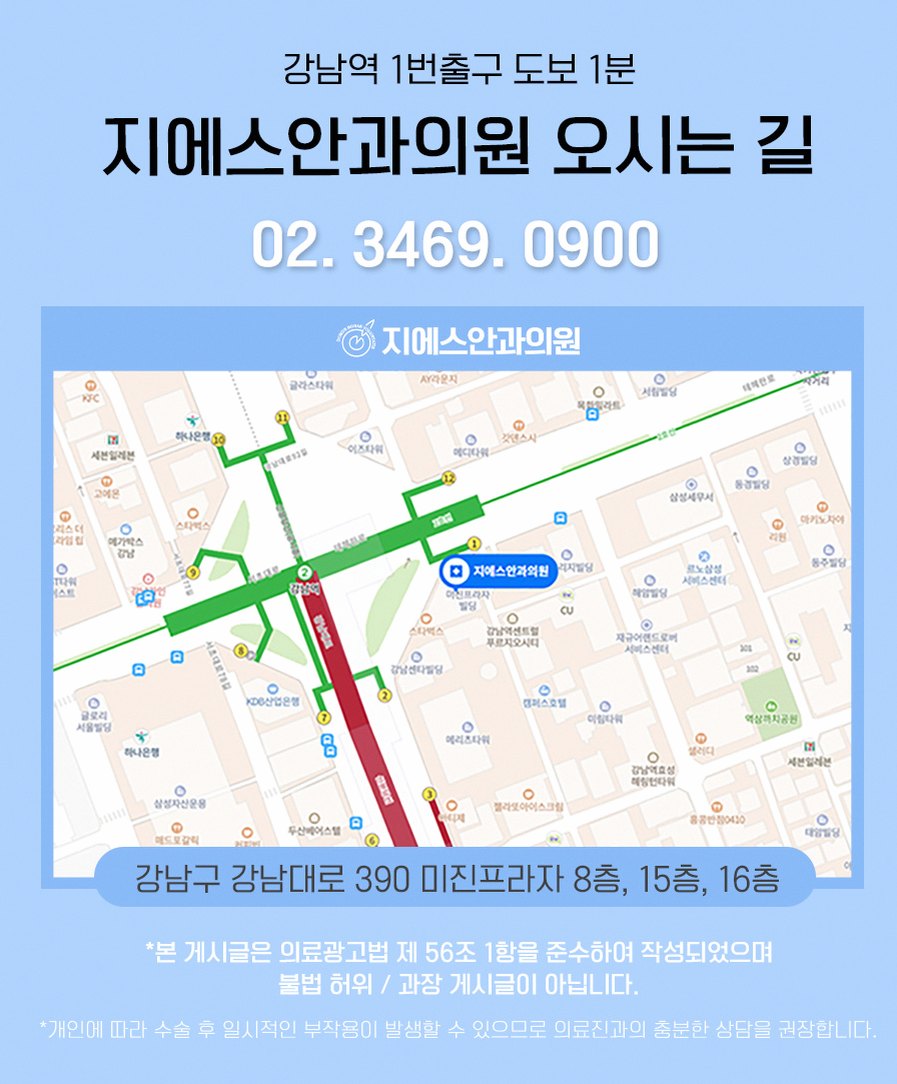
The ophthalmology clinic is located on Gangnam-daero in Gangnam District, Seoul, in a multi-story building with facilities on the 8th, 15th, and 16th floors. It has operated continuously in the same location since 2005.
From Nonhyeon, you can usually reach Gangnam Station quickly by subway, bus, or taxi. This makes it practical for both local residents and overseas visitors staying in nearby hotels or serviced apartments.
Typical clinic hours include weekdays during daytime and early evening, and Saturdays during the day. The clinic is generally closed on Sundays and public holidays and has a set lunch break. Exact hours can change, so it is best to confirm by phone, website, or messaging channel before visiting.
Expected visit timeline for overseas patients
For international patients staying near Nonhyeon or Gangnam, a typical SMILE LASIK trip might look like this:
Before travel
Complete an online consultation form and attach your recent glasses prescription and any previous eye examination reports if available.
Share information about your general health, medications, and any eye symptoms.
Ask about approximate scheduling, expected length of stay, and recommended pre-visit tests.
Days 1–2 in Seoul
Visit the clinic for full examination and consultation.
Discuss whether you are a candidate for SMILE, SMILE Pro, SILK, lens implantation, or another option.
If you and the surgeon decide to proceed, schedule surgery, which may be the same day or within a few days depending on your results and clinic schedule.
Surgery day
Arrive without contact lenses for the period instructed in advance.
Undergo final checks and consent.
Have SMILE LASIK or the chosen procedure.
Rest in the recovery area and receive postoperative instructions.
First week after surgery
Attend one or more follow-up visits to monitor healing.
Use prescribed eye drops and protect your eyes as instructed.
Avoid strenuous activity, swimming, and eye rubbing.
Return home
Before leaving Korea, confirm the schedule for remote follow-up and what to do if you notice any unusual symptoms after you return home.
Arrange a local ophthalmology clinic in your home country for long-term annual check-ups.
Online consultation and pre-visit preparation
To make the most of your visit from abroad, it helps to prepare in advance. When contacting the clinic online, consider preparing the following information:
Your age, occupation, and typical daily visual needs
Your most recent glasses or contact lens prescription
Any history of eye disease, surgery, or trauma
Systemic conditions such as diabetes, autoimmune disease, or medications that may affect healing
Whether you are pregnant or planning pregnancy soon
You may also want to prepare questions such as:
Am I likely to be a candidate for SMILE LASIK, or should I consider SMILE Pro, SILK, or lens implantation instead?
How many days should I stay in Seoul for examination, surgery, and follow-up?
What temporary symptoms should I expect after surgery, and how long do they usually last?
What kind of follow-up should I arrange in my home country?
Aftercare and long-term follow-up
Good aftercare is as important as the surgery itself. The clinic emphasizes structured follow-up schedules, especially during the first weeks and months.
Short term
Use prescribed drops exactly as instructed.
Avoid rubbing your eyes, using eye makeup too early, or exposing your eyes to dusty or dirty environments.
Wear sunglasses outdoors to reduce light sensitivity and protect from wind.
Medium to long term
Attend scheduled follow-up visits to monitor vision stability and corneal health.
Continue regular eye examinations once a year, even if your vision feels fine.
Report any sudden changes in vision, flashes, floaters, or pain immediately, as these may indicate retinal or other issues.
Frequently asked questions for Nonhyeon residents
What is the difference between SMILE LASIK and SMILE Pro at this clinic?
SMILE LASIK at this clinic is performed mainly on VISUMAX 500 platforms, which have been used since 2016. SMILE Pro uses the newer VISUMAX 800, introduced in 2023, and offers a faster laser phase of under about nine seconds per eye. Both are minimally invasive lenticule-based procedures, but SMILE Pro focuses on speed and workflow improvements. The choice between them depends on your eye measurements, surgeon preference, and equipment availability.
Is SMILE LASIK suitable for everyone with myopia in the Nonhyeon area?
No. Even if you live or work near Nonhyeon and have myopia, you may not be a suitable candidate. Factors such as corneal thickness, corneal shape, dry eye status, retinal health, and prescription stability all influence eligibility. Some people are better suited to surface ablation, lens implantation, or cataract and presbyopia procedures. A full examination by an ophthalmology specialist is essential before deciding.
How long do I need to stay in Seoul for SMILE LASIK if I am visiting from overseas?
Many international patients plan to stay about one to two weeks in Seoul. This usually allows time for examination, decision-making, surgery, and initial follow-up. The exact schedule depends on your eye condition, any additional treatments needed, and clinic availability. It is best to discuss your travel dates during online consultation so the clinic can advise a realistic timeline.
What if a retinal problem is found during my SMILE LASIK workup?
If a retinal issue is detected during your preoperative examination, the retina subspecialists at the clinic’s retina center can evaluate it in more detail. In some cases, preventive treatment such as laser photocoagulation may be recommended before proceeding with SMILE LASIK. In other cases, surgery may be postponed or an alternative plan suggested. The goal is always to prioritize eye health and safety over rushing into refractive surgery.
Soft call to action for online consultation
If you are comparing Nonhyeon eye clinic options for SMILE LASIK and are considering a visit to Gangnam, you can contact GS Eye Center for an online consultation. By sharing your basic eye history and travel plans in advance, you can receive guidance on candidacy, likely procedure options, and a realistic schedule for your stay in Seoul.
All medical decisions should be made after a direct examination and consultation with an ophthalmology specialist. The information in this article is for general guidance only and does not replace professional medical advice for your individual situation.
- 공유 링크 만들기
- X
- 이메일
- 기타 앱


댓글
댓글 쓰기