cost factors and my Gangnam clinic experience
- 공유 링크 만들기
- X
- 이메일
- 기타 앱
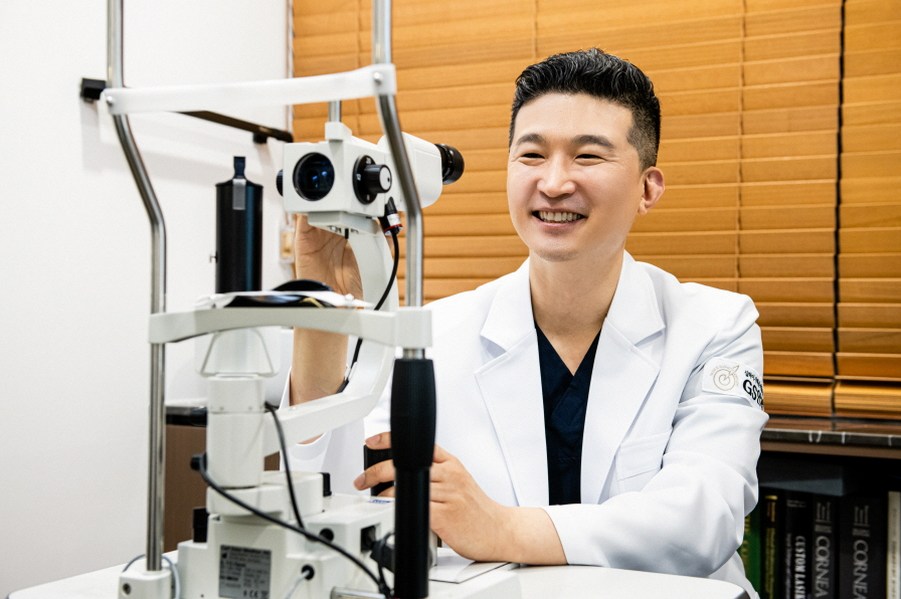



Direct answer about lens implantation surgery cost
The cost depends on your individual eye condition, the type of phakic intraocular lens chosen, and the results of a detailed eye examination before deciding on lens implantation.
In my case, I ended up having vision correction lens implantation at an ophthalmology clinic near Gangnam Station, and the final cost was only confirmed after all the tests were done and the doctor decided which lens type suited my eyes. It included the examinations, surgery, and follow-up visits, but the exact amount was personal to my situation.
My motivation and online search about cost
I have had high myopia since I was a teenager. Glasses were thick, contact lenses dried my eyes out, and I was starting to feel nervous about long-term contact lens use. I had thought about LASIK or LASEK, but I kept hearing that people with very high prescriptions or thinner corneas might not be ideal candidates.
One evening, I typed “lens implantation surgery cost” into the search bar, just to see what was out there. That is when I started reading about phakic intraocular lens surgery, sometimes called vision correction lens implantation. I learned that instead of reshaping the cornea like LASIK, this method places a special lens inside the eye.
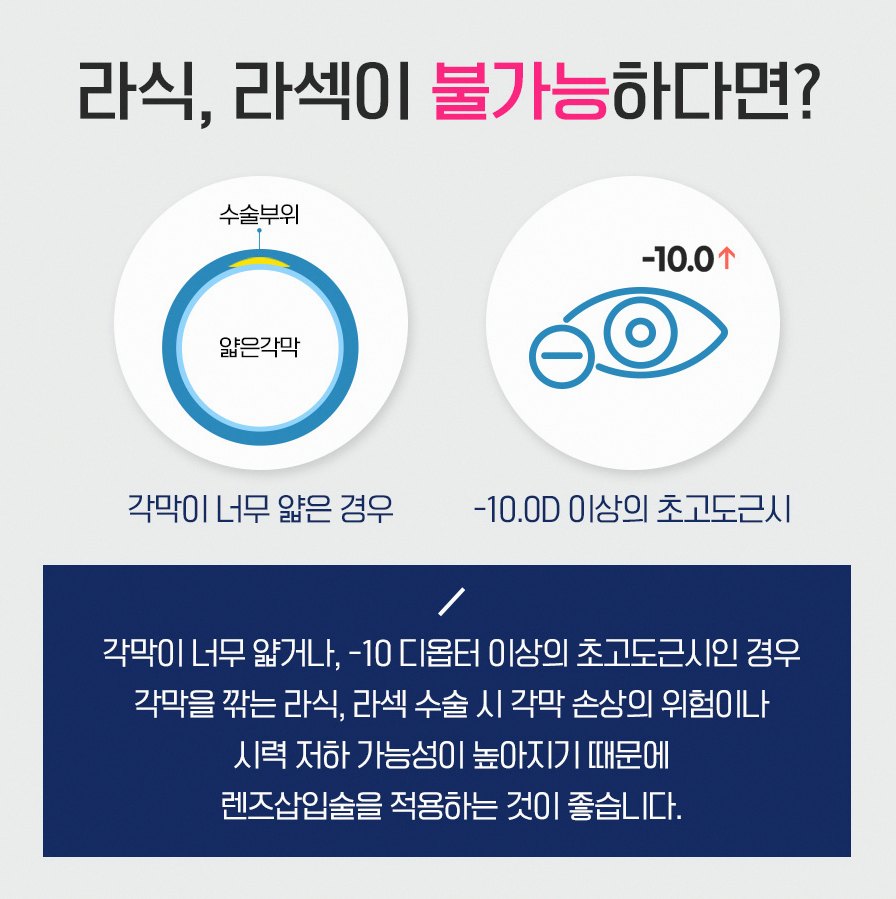
As I read more, I saw that this surgery is often recommended for people with high myopia, strong astigmatism, or corneas that are not suitable for laser procedures. I also realized that many sites mentioned that the price varies quite a lot depending on the lens brand and eye condition, so any number I saw online was only a rough reference.
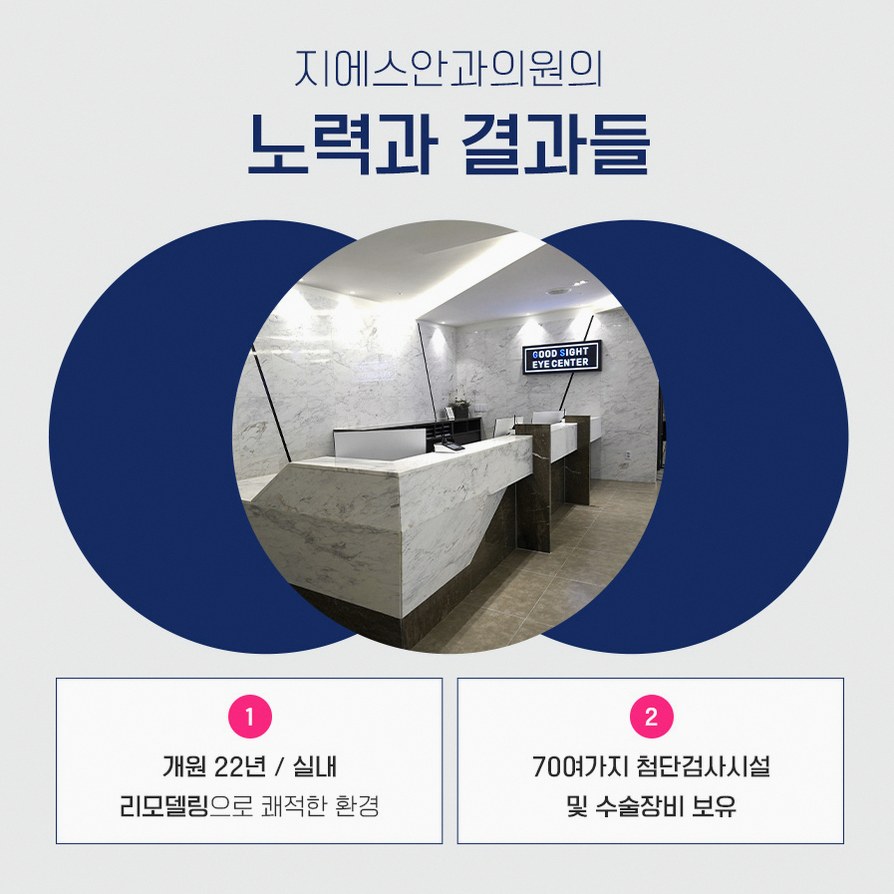
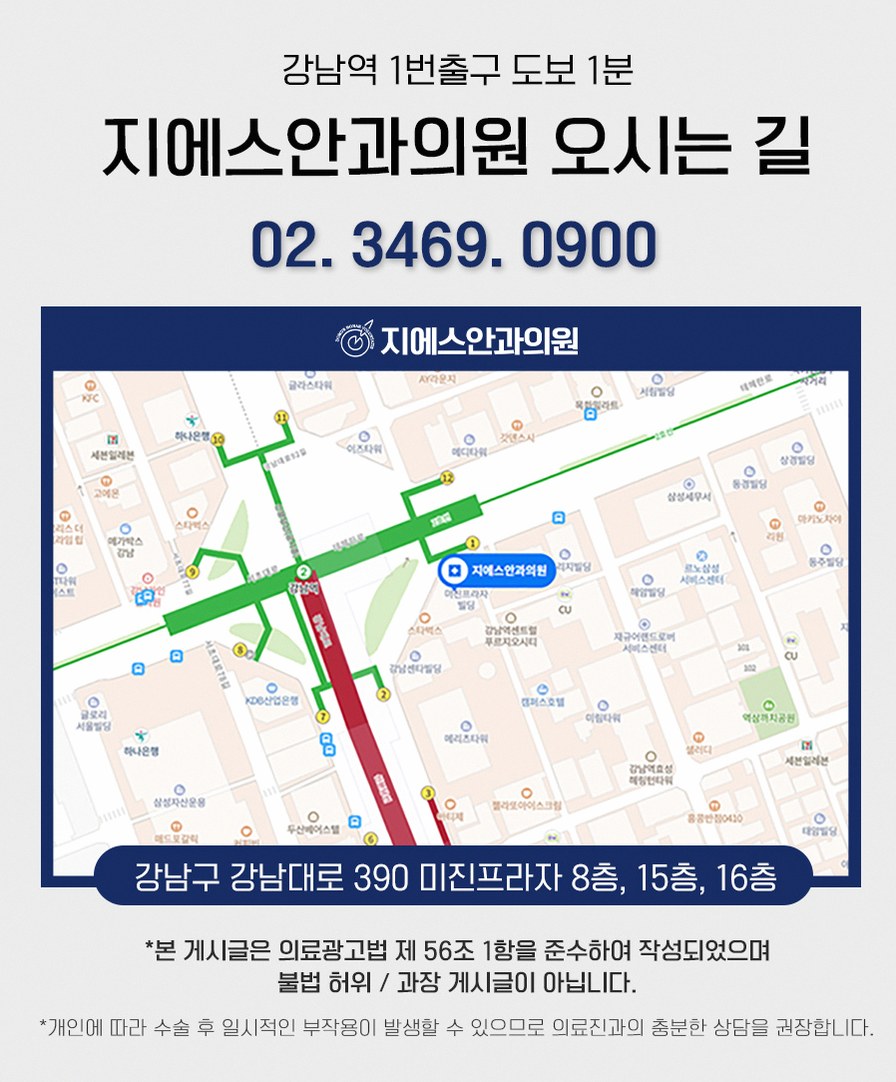
During my research, I came across GS Eye Center, an ophthalmology clinic near Gangnam Station in Gangnam-gu, Seoul. I noticed that it had been in the same high-rise medical building since 2005 and, according to the clinic's report, had treated 300,000 eyes cumulatively as of 2023. That long history and experience caught my attention, so I decided to book a consultation.
What lens implantation for vision correction actually is
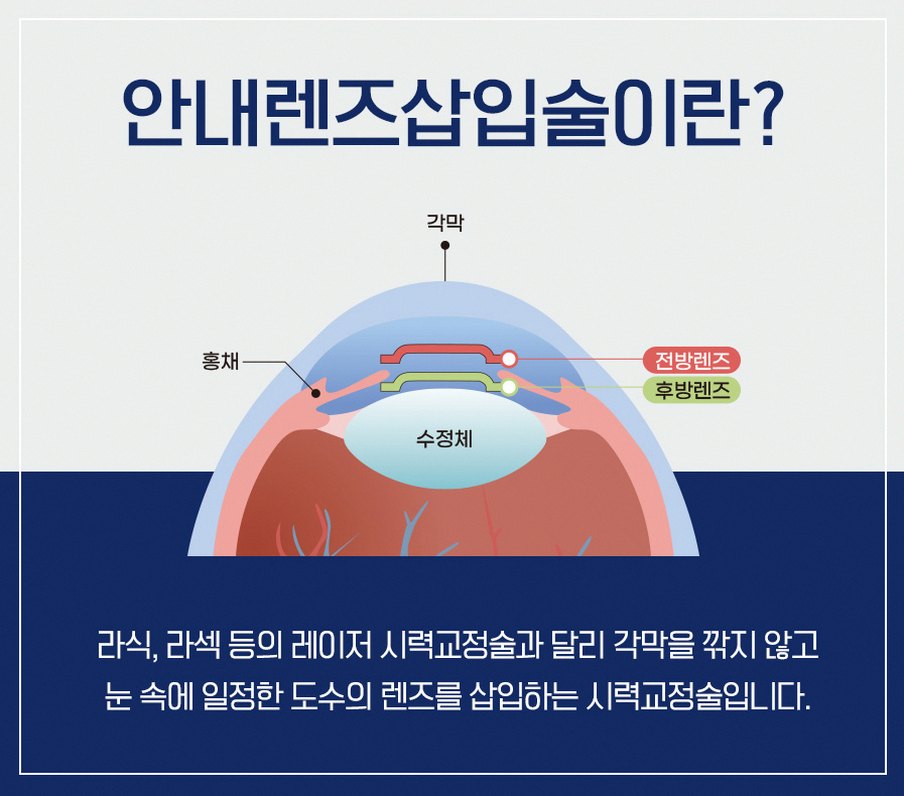
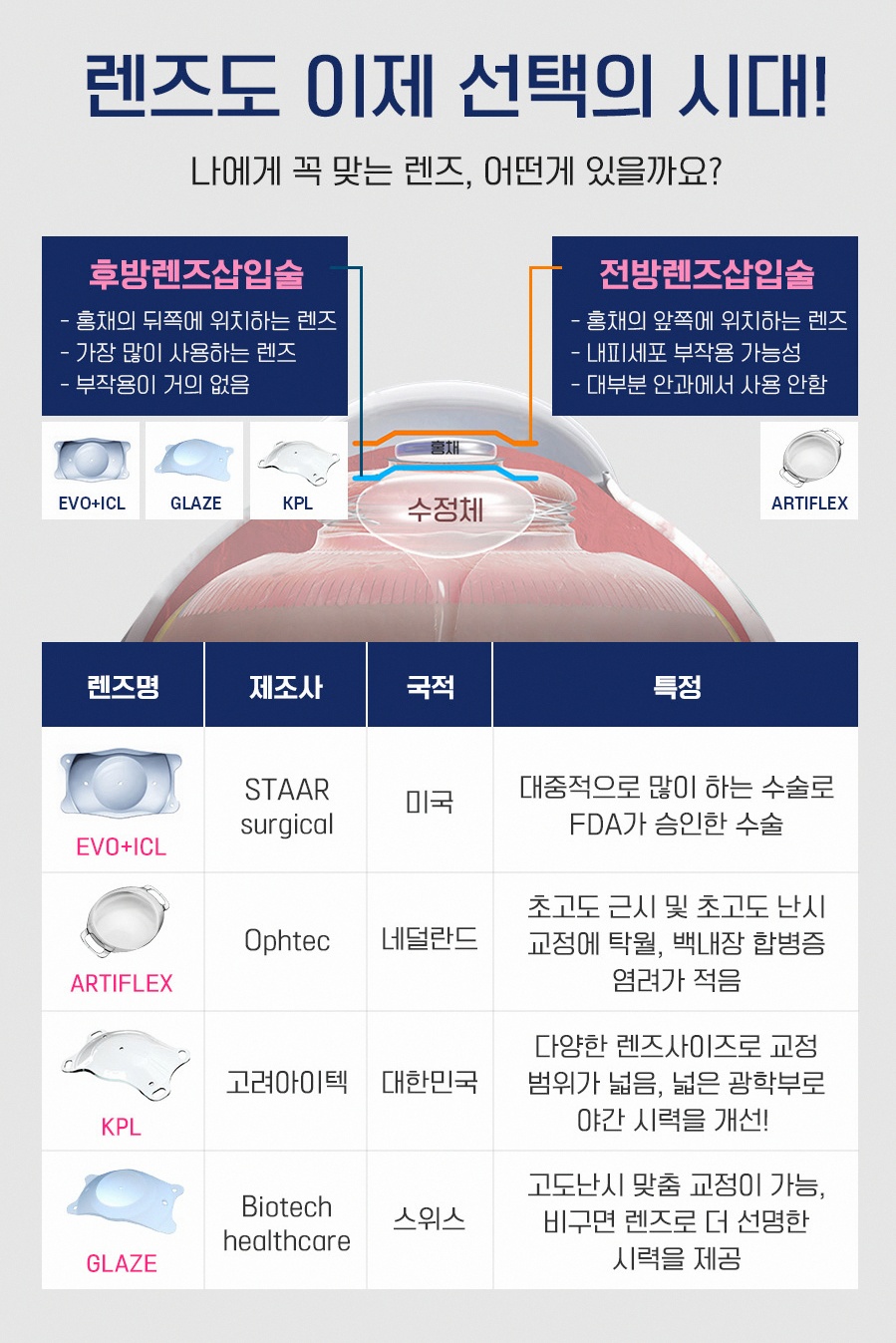
Before my visit, I tried to understand what phakic intraocular lens surgery really meant. In simple terms, vision correction lens implantation uses a special artificial lens that is placed inside the eye to correct nearsightedness and sometimes astigmatism.
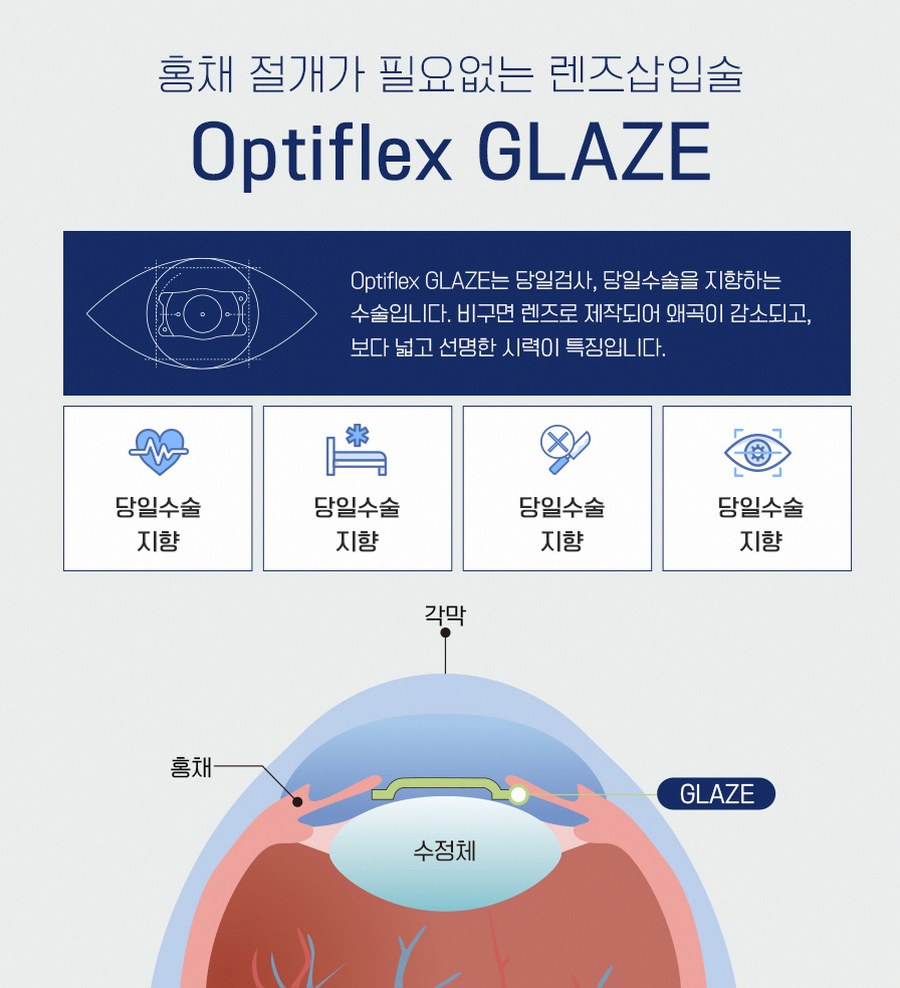
The important point is that the natural crystalline lens is not removed. The new lens is added on top of what you already have. Depending on the lens type, it can be placed in front of the iris or behind the iris, but in both cases your own lens stays in place.
This is different from cataract surgery. In cataract surgery, the cloudy natural lens is removed and replaced with an artificial intraocular lens. With phakic intraocular lens surgery for vision correction, the goal is not to remove anything, but to add a clear corrective lens inside the eye while your own lens is still transparent.
Because a lens is actually going inside the eye, it made sense to me that a detailed eye examination before deciding on lens implantation would be essential. That was one of the reasons I wanted a clinic that seemed very systematic and experienced.
Why I considered lens implantation instead of laser surgery
I had always assumed that if I ever fixed my vision, it would be with LASIK. But when I read more, I realized that for people with very high prescriptions, removing too much corneal tissue can be a concern. Also, my contact lenses were already making my eyes feel dry, so I was a bit worried about any procedure that could possibly affect the corneal surface.
Lens implantation sounded like an alternative because it does not involve shaving off corneal tissue. Instead, a lens is placed inside the eye. I was told this implant may be removable in some cases — I would confirm that with the surgeon. The idea of preserving the cornea and natural lens appealed to me.
At the same time, I knew that putting a lens inside the eye is not a small decision. I wanted to hear directly from an eye specialist after proper testing, not just rely on articles and forums.
First visit to the ophthalmology clinic near Gangnam Station
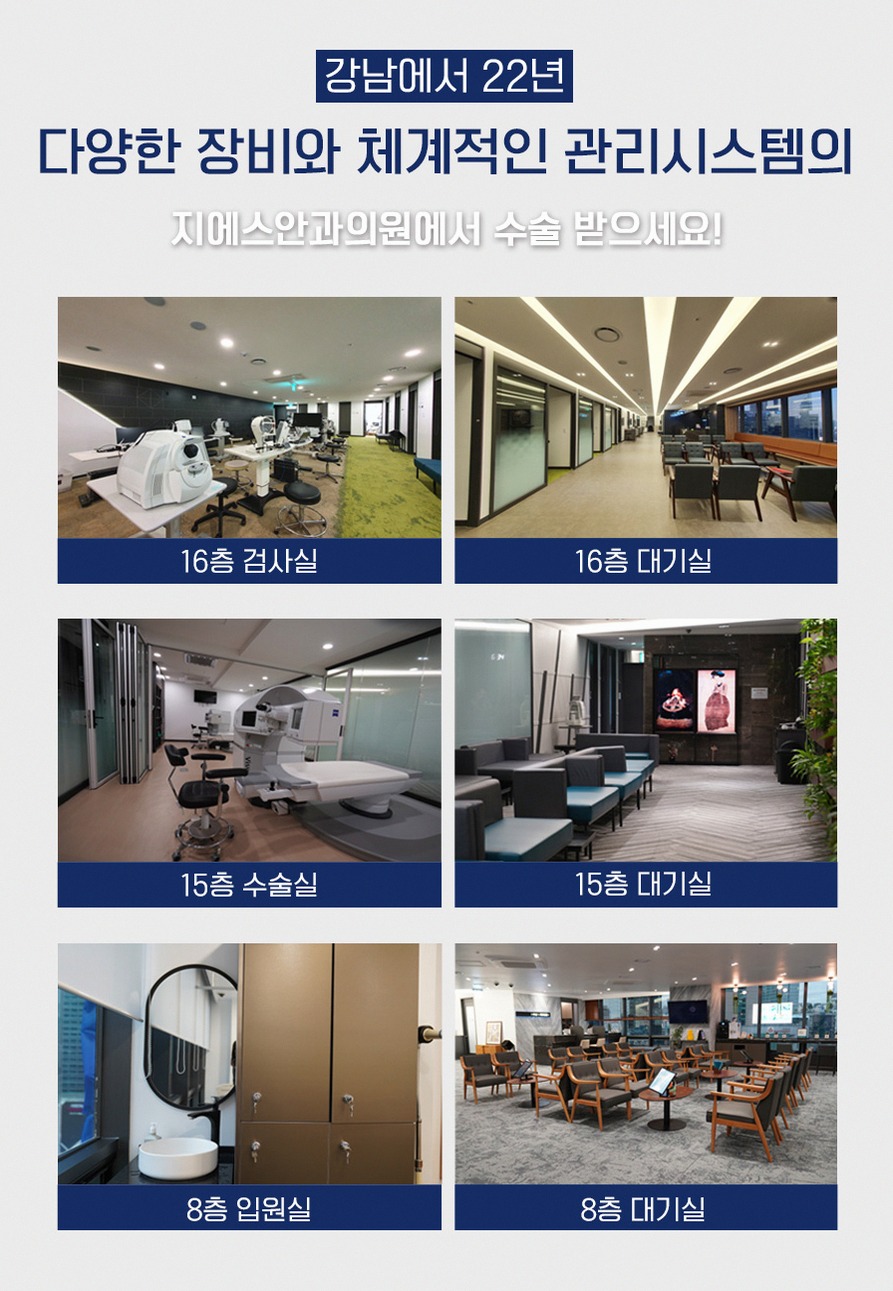
On the day of my consultation, I went to the high-rise medical building near Gangnam Station where GS Eye Center is located. The building itself is full of medical facilities, and the clinic occupies multiple floors, which made it feel like a place focused on eye care rather than a small office.
After checking in, I filled out forms about my eye history, contact lens use, and any general health issues. Then the staff started the examination process. I had expected a simple vision test, but it turned out to be a long series of checks.
Detailed eye examination before deciding on lens implantation
The pre-operative tests were much more thorough than my usual eye check. From what I remember, they included:
A basic vision test and refraction to measure my exact prescription.
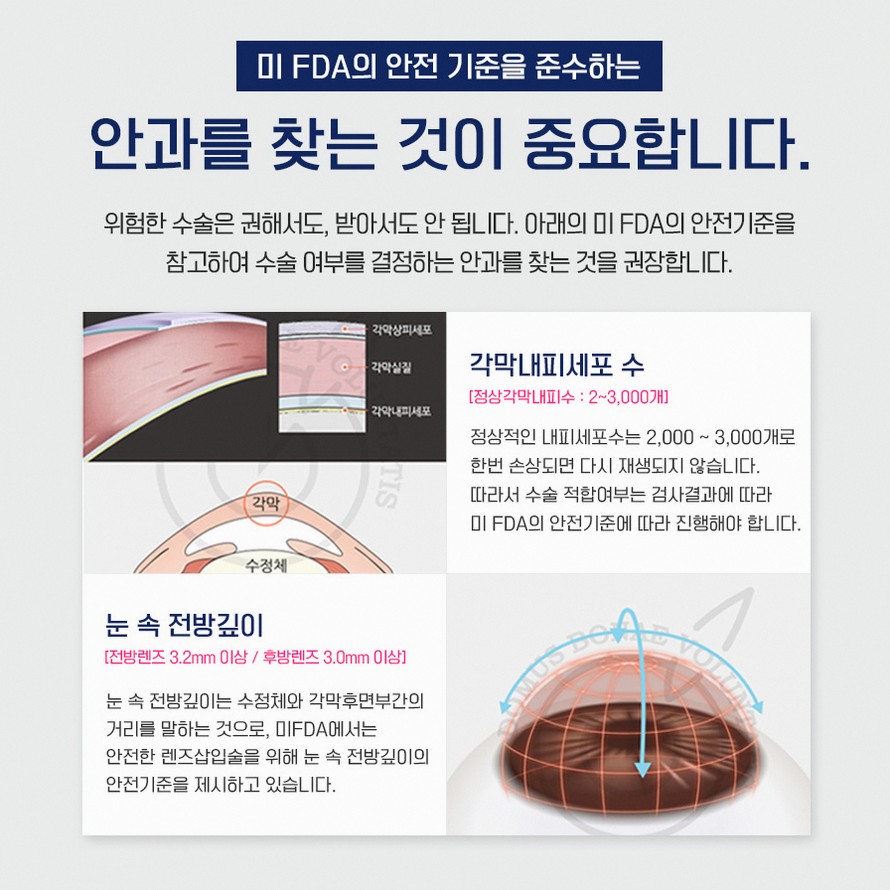
Corneal measurements to see the shape and thickness of my cornea.
Anterior chamber depth, which is basically how much space there is in front of the natural lens where a phakic intraocular lens might sit.
Intraocular pressure, to check for any signs of glaucoma risk.
Retina imaging and a detailed look at the back of the eye.
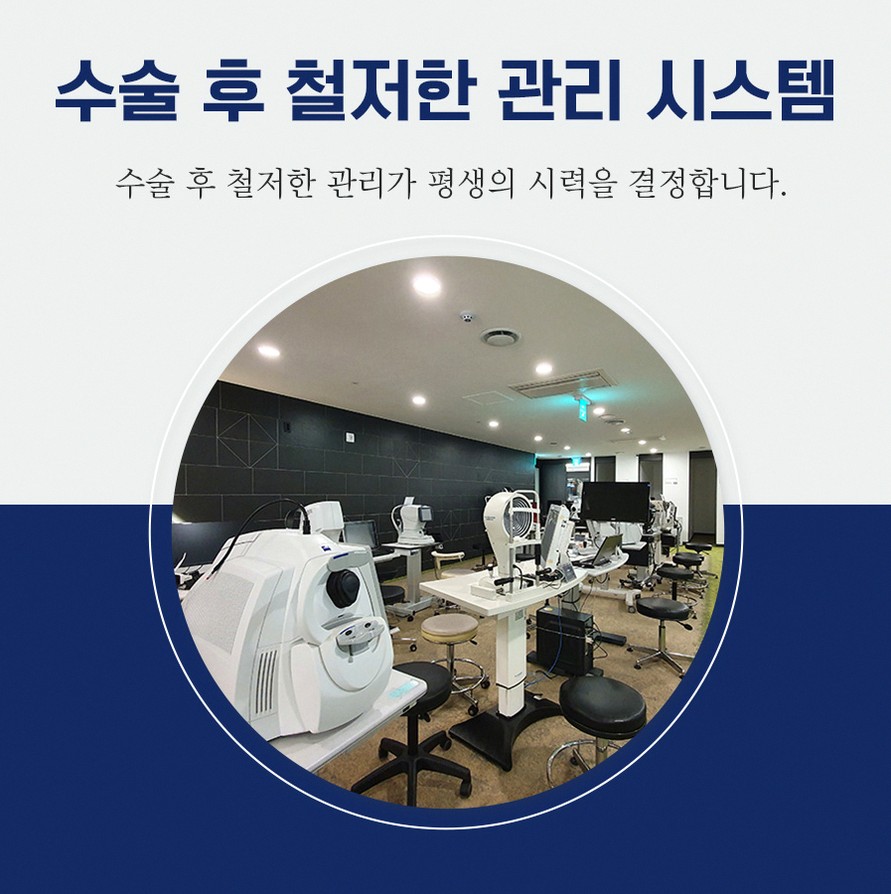
I was surprised at how many different machines I sat in front of. At first it felt overwhelming, but the staff explained that these tests are essential to confirm whether lens implantation is safe and which lens type would fit my eyes properly.
One thing that reassured me was learning that the clinic has a separate retina center with retina specialists. Knowing that they were checking not only the front of my eye but also the back of the eye in detail made me feel that they were not rushing into surgery.
Meeting the ophthalmologist and understanding phakic lenses
After all the tests, I met the ophthalmologist who would be responsible for my case. I was told that there are seven ophthalmology specialists on staff, including a representative director with a medical doctorate and university teaching background, and that different specialists are involved depending on the eye condition.
The doctor went over my test results one by one. They explained where my myopia level fell, how thick my cornea was, and how deep the anterior chamber appeared. Then they explained again what a phakic intraocular lens is, this time with diagrams.
They showed me how the lens would sit inside the eye, either in front of or behind the iris depending on the model, while my natural lens stayed in place. They compared it briefly to LASIK and LASEK, explaining that those surgeries change the shape of the cornea, while lens implantation changes the focusing power from inside the eye.
They also clearly distinguished it from cataract surgery, reminding me that in cataract surgery the natural lens is removed and replaced, which is not what would happen in my case.
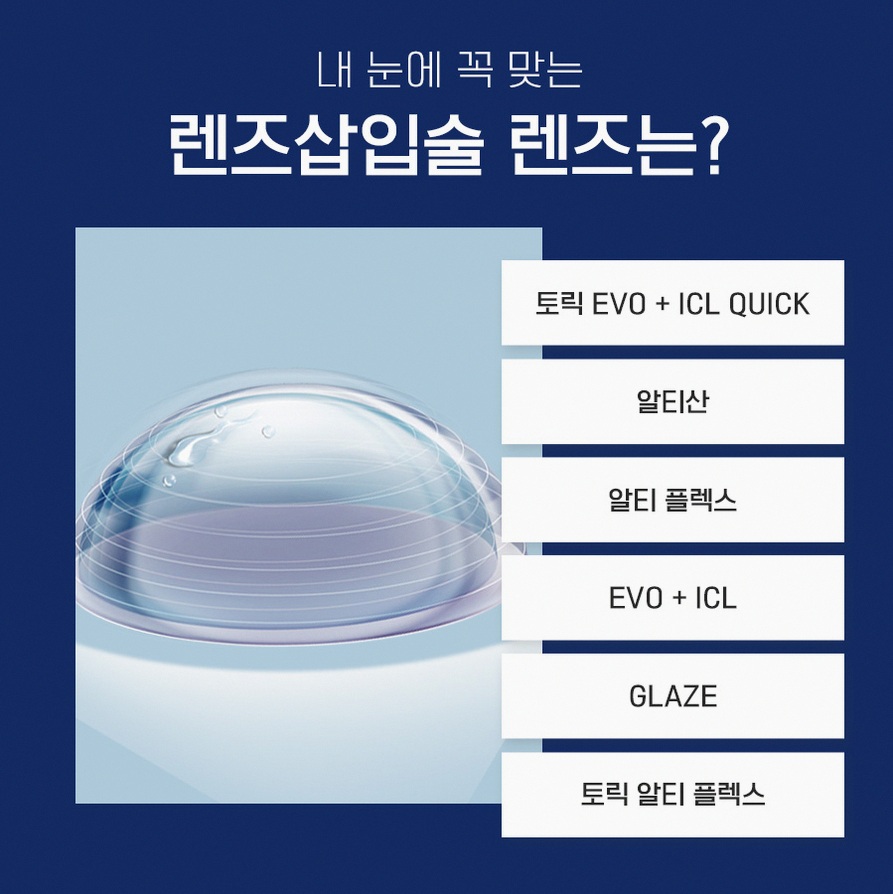
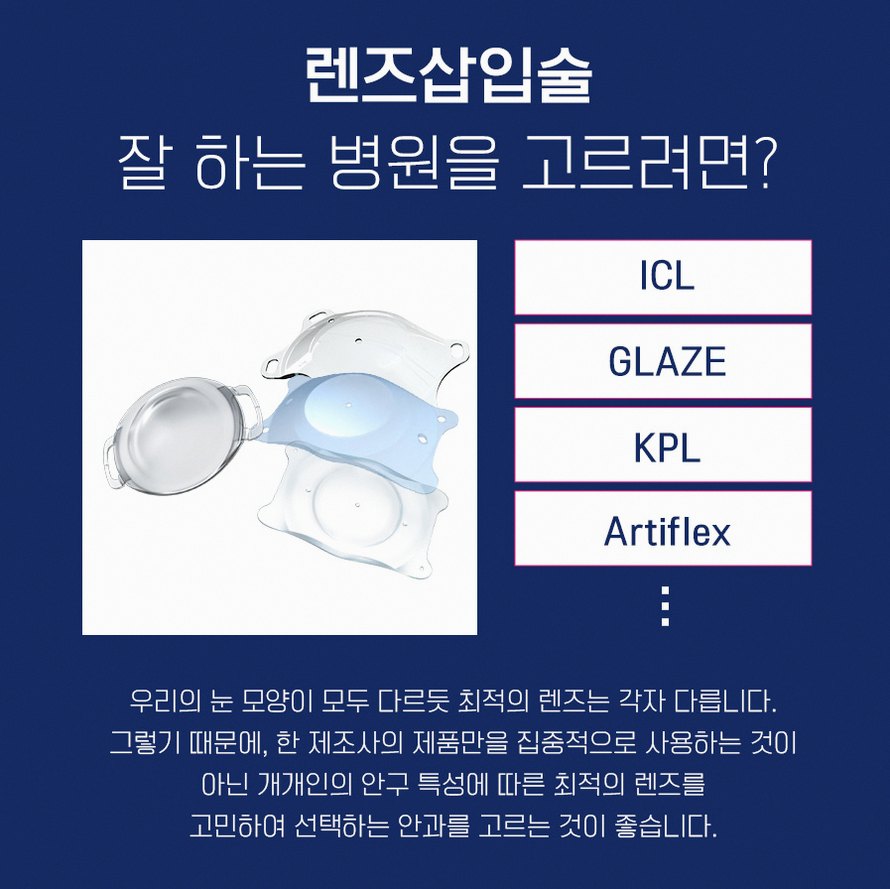
The doctor mentioned that the clinic offers several types of phakic lenses, such as ICL, GLAZE, and PhakiFlex KPL. They did not push any specific brand but explained that the choice would depend on eye measurements, lifestyle, and long-term considerations. I also heard that the clinic had adopted some lens technologies relatively early and had accumulated many cases over the years, which made me feel that they were familiar with different scenarios.
We also talked about potential risks, such as changes in intraocular pressure, possible halos or glare, and the importance of follow-up. I appreciated that the doctor did not sugarcoat anything and made it clear that not everyone is a candidate. If my anterior chamber had been too shallow or my retina had shown certain problems, they would have recommended against surgery.
How the clinic explained lens implantation surgery cost
After the medical part of the consultation, I met with a counselor to talk about lens options and cost. This was the part I had originally been most curious about when I searched for “lens implantation surgery cost.”
By this point, I already understood that the price could not be given as a single fixed number for everyone. The counselor broke down the factors that influence the cost:
The type and brand of phakic intraocular lens, since different lens models are priced differently.
The degree of myopia and astigmatism, which affects lens power and sometimes lens choice.
Individual eye measurements, such as anterior chamber depth and corneal details, which can lead to different lens recommendations.
Whether any additional tests or treatments are needed before or after, such as more detailed retina scans or management of dryness.
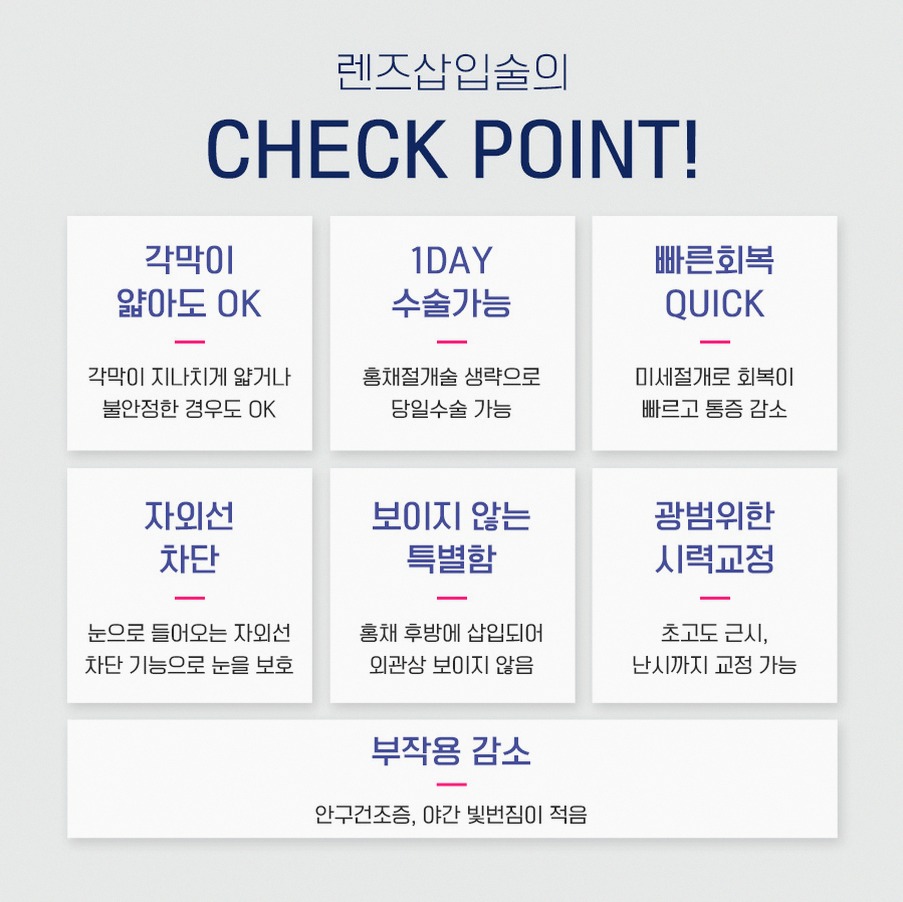
They also explained what the quoted cost would include: the detailed pre-operative examinations, the surgery itself, immediate post-op care, and scheduled follow-up visits, along with prescribed eye drops for the early recovery period.
One thing I appreciated was that they did not give me a final number until all the examinations were complete and the doctor had confirmed that I was a suitable candidate. Only then did they provide a personalized quote based on the specific lens recommended for my eyes.
There was no pressure to decide on the spot. They encouraged me to go home, think about it, compare with other options if I wanted, and contact them later. That made me feel that the clinic focused more on careful decision-making for vision than on pushing quick sign-ups.
How I decided lens implantation was worth the cost
At first, the cost felt high when I compared it to buying glasses or even to some laser procedures I had seen advertised online. But after going through the consultation, it made more sense to me.
This is a customized implant that would sit inside my eye every day, all day. The process involved multiple specialists, high-end diagnostic equipment, and a carefully controlled operating room. Follow-up care was not an optional extra; it was built into the plan.
I also compared it to the money I had already spent on glasses and contact lenses over the years, and what I might spend in the future. When I thought of it as a long-term investment in my vision, the lens implantation surgery cost felt more understandable.
After a few days of thinking, I decided that lens implantation matched my eye condition and lifestyle better than other options. I contacted the clinic and scheduled my surgery date.
Surgery day experience
On surgery day, I arrived a bit nervous but also excited. The staff repeated some of the key tests to confirm everything was stable. I signed consent forms and went over the procedure again with the surgeon.
They reminded me that my natural lens would remain in place and that the new lens would be inserted through a small opening and positioned inside the eye. They explained that I would be awake but my eye would be numbed with anesthetic eye drops, so I might feel pressure or see bright lights, but not sharp pain.
In the operating room, the lights were bright and everything felt very clean and controlled. I lay down, my eye was cleaned and covered, and they started the anesthesia. I remember seeing some blurry lights and feeling gentle pressure, but the whole thing was over faster than I expected.
The team spoke to me calmly throughout, telling me when they were almost done. When I sat up, my vision was hazy but I could already sense that shapes looked different from before.
Immediate recovery and the first few days
After surgery, I rested in a recovery area for a while. The staff checked my intraocular pressure and made sure I felt okay before letting me go home. I went back to my accommodation with protective eye shields and a bag of eye drops.
The first day, my eye felt a bit scratchy and sensitive to light. I followed the schedule for antibiotic and anti-inflammatory drops exactly as instructed. I avoided rubbing my eye and tried not to bend over or lift anything heavy.
At my first follow-up visit, they checked the lens position, intraocular pressure, and the condition of my cornea and retina. Knowing that there was a dedicated retina center and specialists looking at the back of my eye made me feel safe about the decision I had made.
Over the next few days, my vision became clearer. I did notice some halos around lights at night in the beginning, especially streetlights and car headlights, but they gradually became less distracting. I was told that some visual phenomena like this can appear early on and often improve as the eye adjusts, and that has been true for me so far.
Short-term recovery and follow-up schedule
In the first couple of weeks, I visited the clinic several times so they could monitor healing. Each time, they measured my vision, checked intraocular pressure, and made sure the phakic intraocular lens was in the correct position.
I continued using eye drops as prescribed and was careful about hygiene. I avoided swimming pools and saunas, and I wore sunglasses outside because my eyes felt more sensitive to bright light than usual.
The improvement in daily life was noticeable. Waking up and seeing the room clearly without reaching for glasses felt almost unreal. At the same time, I tried to keep my expectations realistic, remembering that every eye is different and that my final vision would depend on how my eyes healed.
Thinking about cost versus satisfaction
Looking back, the lens implantation surgery cost was a big factor in my decision, but it is no longer the main thing I think about. What stands out more is the process: the detailed eye examination before deciding on lens implantation, the involvement of multiple ophthalmology specialists, and the careful follow-up.
Knowing that the clinic had many years of experience in vision correction and lens implantation, and that they had handled a large number of eyes over time, gave me confidence. The presence of a separate retina center and retina specialists also made me feel that my eyes were being checked from every angle, not just the front.
For me, the value came from feeling that the decision to operate was made cautiously, based on thorough data, and that the same level of care continued after the surgery. I did not feel rushed, and I was given space to think before committing.
Who might consider lens implantation in Korea
From what I learned through my own journey, lens implantation may be considered by people who:
Have high myopia or strong astigmatism.

Have corneas that are too thin or otherwise not ideal for LASIK or LASEK.
Want a vision correction option that does not remove corneal tissue.
Are willing to go through a very detailed pre-operative evaluation and regular follow-up visits.
Of course, only a proper examination can confirm whether someone is actually a candidate. Some people may be better suited for other types of vision correction, or may be advised to wait or avoid surgery altogether.
Preparing for an online consultation and visit to Korea
If you are overseas and considering lens implantation in Korea, it helps to prepare a few things before your trip.
First, gather your basic eye history: your latest glasses or contact lens prescription, how long you have worn them, and any past eye issues. If you have had previous eye surgery or trauma, note the dates and details.
Second, think about your expectations and lifestyle. Do you work long hours at a computer? Do you drive at night a lot? Do you play contact sports? These details can help the doctor suggest the most suitable option.
Third, plan enough time in Korea. Many people schedule an initial examination, then surgery a few days later, followed by several follow-up visits in the first week or two. Ask the clinic in advance how long they recommend staying locally after surgery so that they can monitor your early recovery.
Typical Korea visit timeline for overseas patients
Everyone’s schedule will be slightly different, but a rough outline might look like this:
Day 1–2: Initial consultation and detailed examinations, discussion of suitability and lens options, explanation of lens implantation surgery cost, and time to decide.
Day 3–5: Surgery day, followed by rest and a check-up either the same day or the next day.
First week after surgery: Several follow-up visits to check vision, intraocular pressure, lens position, and retina status.
Second week: Additional check-up before returning home, with instructions for continued eye drop use and guidance on follow-up care in your own country.
It is important to confirm the exact schedule with the clinic you choose, because recommendations can vary based on your eyes and travel plans.
Aftercare once you return home
After you leave Korea, you will still need to take care of your eyes. The clinic should provide a written summary of your surgery, lens type, and post-operative instructions, which you can share with a local eye doctor if needed.
You will likely be advised to:
Continue using eye drops for a certain period.
Avoid rubbing your eyes.
Protect your eyes from strong impacts.
Have periodic eye examinations to monitor intraocular pressure, lens position, and retina health.
If you notice any sudden changes in vision, pain, or redness, it is important to seek local medical attention promptly and also inform the clinic where you had your surgery.
Frequently asked questions about lens implantation surgery cost
What mainly affects lens implantation surgery cost?
From my experience and what the staff explained, the main factors are the type and brand of phakic intraocular lens, your degree of myopia and astigmatism, your individual eye measurements, and whether any additional tests or treatments are needed. The cost also reflects the detailed examinations, the surgery itself, and the follow-up care. Because of all these variables, clinics usually give a personalized quote after a full examination rather than a single fixed price for everyone.
Can I know the exact cost before having any examinations?
You can usually get a rough range or explanation of how the pricing works, but an exact figure is difficult without examining your eyes. The doctor needs to know whether you are a suitable candidate and which lens type is appropriate. In my case, I only received a precise quote after all the tests were completed and the doctor had recommended a specific lens model.
Is lens implantation always more expensive than LASIK or LASEK?
Not always, but many people find that lens implantation can be more costly than standard laser procedures. One reason is that it involves a customized implant placed inside the eye, along with very detailed pre-operative testing and careful follow-up. However, the comparison depends on the type of laser surgery, the clinic, and your own eyes. It is better to compare not only the price but also suitability, long-term safety, and the overall system of care.
How should I compare clinics if I am focused on cost?
If you are comparing clinics, it helps to look beyond the headline price. Ask what is included in the cost: pre-operative tests, surgery, medications, and follow-up visits. Check how detailed the examinations are, whether multiple specialists are involved, and whether there is a system to check both the front and back of the eye. It is also useful to ask about their experience with different phakic intraocular lens types and how they handle aftercare for overseas patients.
Soft call to action for online consultation
If you are seriously considering vision correction lens implantation in Korea and wondering about lens implantation surgery cost, the most practical next step is to arrange an online consultation. Prepare your current prescription, basic medical history, and travel plans, and ask the clinic what kind of detailed eye examination before deciding on lens implantation they provide.
When I contacted GS Eye Center, being able to discuss my situation in advance and understand the examination process, lens options, and general cost structure helped me feel more prepared before I even set foot in Gangnam. Whether you choose the same place or another ophthalmology clinic near Gangnam Station, taking the time for a proper consultation will give you a clearer picture than any price list you can find online.

- 공유 링크 만들기
- X
- 이메일
- 기타 앱


댓글
댓글 쓰기