Gangnam SMILE for international patients
- 공유 링크 만들기
- X
- 이메일
- 기타 앱



SMILE reshapes the cornea through a very small incision, without creating a large flap as in traditional LASIK. For suitable candidates with myopia and certain degrees of astigmatism, it can help focus light more accurately on the retina and improve clarity at different distances.
This guide explains what astigmatism is, how SMILE works for astigmatism correction, who may be a candidate, what to expect when visiting a specialized center near Gangnam Station in Seoul, and how to prepare as an overseas patient.
Understanding astigmatism and why people seek correction
Astigmatism in simple terms
Astigmatism happens when the front surface of the eye (the cornea) or the lens inside the eye is not evenly curved. Instead of being smoothly round like a basketball, it is more like a rugby ball. Because of this irregular curvature, light entering the eye does not focus at a single sharp point on the retina.
Common symptoms of astigmatism include blurred or distorted vision at all distances, ghosting or shadowed edges around letters, eye strain after reading or using digital devices, headaches, and difficulty with night driving due to glare and halos. Some people also notice that their glasses prescription changes more often than expected.
Non-surgical correction methods
Many people manage astigmatism with glasses or contact lenses. Cylindrical lenses in glasses or toric contact lenses are designed to counterbalance the irregular curvature and help light focus more precisely.
These options are effective for many, but some people find glasses inconvenient for sports or outdoor activities, or they experience dryness or discomfort with contact lenses, especially after long hours of computer work or air travel.
Surgical options for astigmatism correction
For adults who want to reduce dependence on glasses or contacts, several surgical approaches exist, including SMILE, LASIK, LASEK, lens implantation procedures such as ICL or GLAZE, and toric intraocular lenses for people who also have cataract or presbyopia. Note: presbyopia/cataract lens surgery carries potential risks and side effects; discuss specific risks and contraindications with your surgeon.
SMILE (small incision lenticule extraction) is one of the newer laser vision correction techniques. It can treat myopia and certain ranges of regular astigmatism by reshaping the cornea from within, using a femtosecond laser and a very small incision.
How SMILE corrects astigmatism
Basic mechanism of SMILE
SMILE uses a femtosecond laser to create a very precise, lens-shaped piece of tissue (called a lenticule) inside the cornea. The shape and thickness of this lenticule are calculated according to your individual prescription, including both the amount of myopia and the axis and power of your astigmatism.
The steps in simple language are:
The laser creates two smooth layers inside the cornea, outlining the top and bottom surfaces of the lenticule, and marks a tiny side channel.
A small side incision, usually just a few millimeters, is created on the corneal surface.
Through this small opening, the surgeon gently separates and removes the lenticule.
Once the lenticule is removed, the cornea changes shape. This new curvature helps incoming light focus more accurately on the retina, reducing blur and distortion from myopia and astigmatism.
How SMILE differs from LASIK
In traditional LASIK, a thin flap is created on the surface of the cornea and lifted. An excimer laser then reshapes the exposed corneal tissue on the surface. After that, the flap is placed back.
In SMILE, there is no large surface flap. Instead, the reshaping happens inside the cornea, and the tissue is removed through a small incision. This flapless approach may help preserve more of the corneal biomechanics and can be associated with a lower chance of certain types of dry eye symptoms in some patients, although individual experiences vary.
Astigmatism ranges that SMILE can treat
SMILE is designed to correct myopia and regular astigmatism within specific ranges defined by the laser platform and clinical guidelines. The exact treatable range depends on several factors:
Your degree of myopia and astigmatism
The thickness and shape of your cornea
The particular ZEISS SMILE platform and settings used
Overall safety margins determined by your surgeon

Very high or irregular astigmatism, or astigmatism related to corneal diseases such as keratoconus, may not be suitable for SMILE. In such cases, other strategies such as LASEK, LASIK, corneal cross-linking, or lens-based procedures may be discussed.
Who may consider SMILE-based astigmatism correction
Typical factors in candidacy assessment
Candidacy is always individualized, but eye surgeons usually look at several common factors when considering SMILE for astigmatism correction:
Stable prescription: Your glasses or contact lens prescription should be relatively stable for a certain period, often at least one year, to reduce the risk of ongoing changes after surgery.
Amount of myopia and astigmatism: Your numbers need to fall within the safe and effective treatment range for SMILE on the specific laser platform.
Corneal thickness and shape: The cornea must be thick enough to allow safe reshaping, with no signs of corneal ectasia or keratoconus on detailed imaging.
Ocular surface health: Dry eye should be manageable, and there should be no active eye infections or significant inflammation.
Retinal health: Especially in high myopia, the retina and optic nerve should be checked carefully for conditions that might affect vision.
Why a detailed examination is essential
Even if your glasses prescription seems straightforward, only a comprehensive eye examination can confirm whether SMILE is appropriate for you. This typically includes:
Objective and subjective refraction to measure your exact myopia and astigmatism
Corneal topography or tomography to map the shape and detect early irregularities
Pachymetry to measure corneal thickness at many points
Tear film and ocular surface evaluation to assess dryness
Pupil size measurement, especially in low light
Retinal and optic nerve examination, often with dilation
If SMILE is not suitable, your surgeon may recommend alternatives such as LASIK, LASEK, corneal cross-linking in certain corneal conditions, or lens implantation options like ICL or GLAZE.
Examination and planning at a specialized SMILE center in Gangnam
Location and background
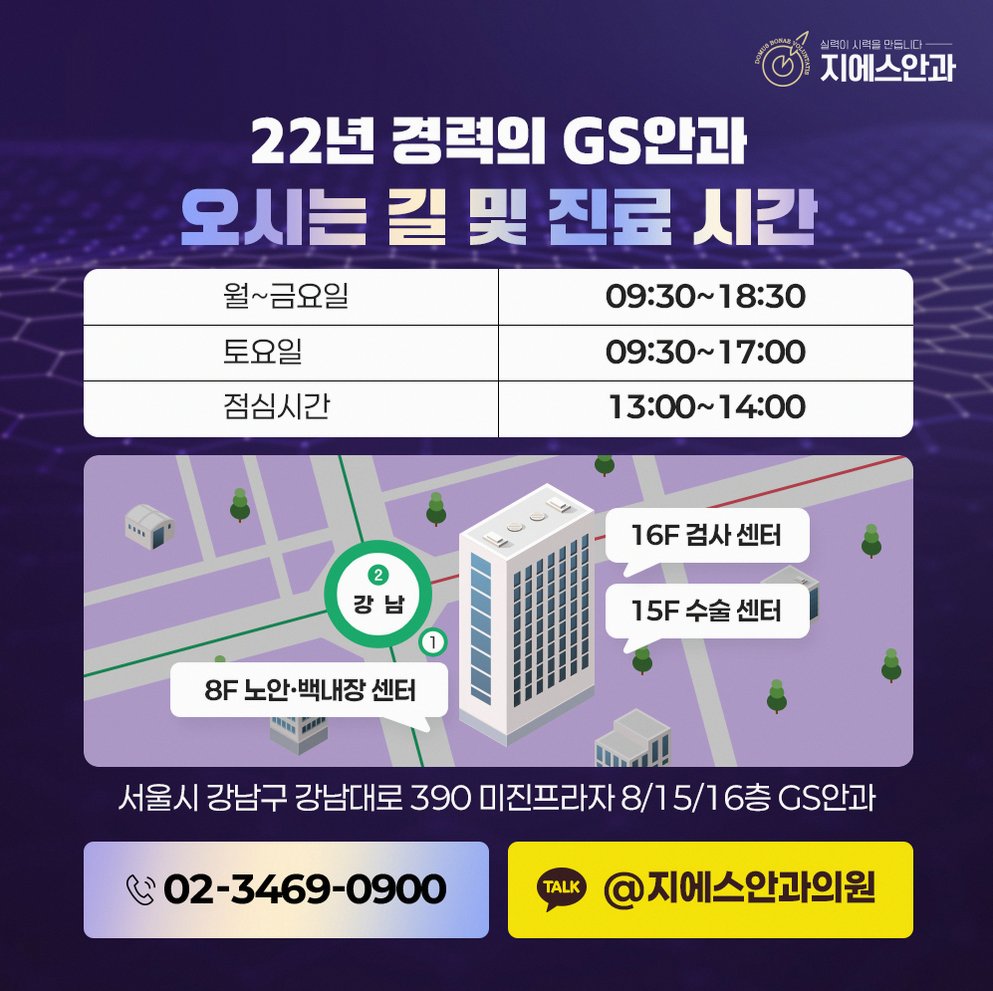
In the Gangnam Station area of Gangnam-gu, Seoul, there are specialized centers focusing on SMILE and related vision correction procedures. GS Eye Center, for example, has been operating on Gangnam-daero since 2005 and focuses strongly on SMILE-type procedures, lens implantation, LASEK, presbyopia and cataract surgery, and retina care.
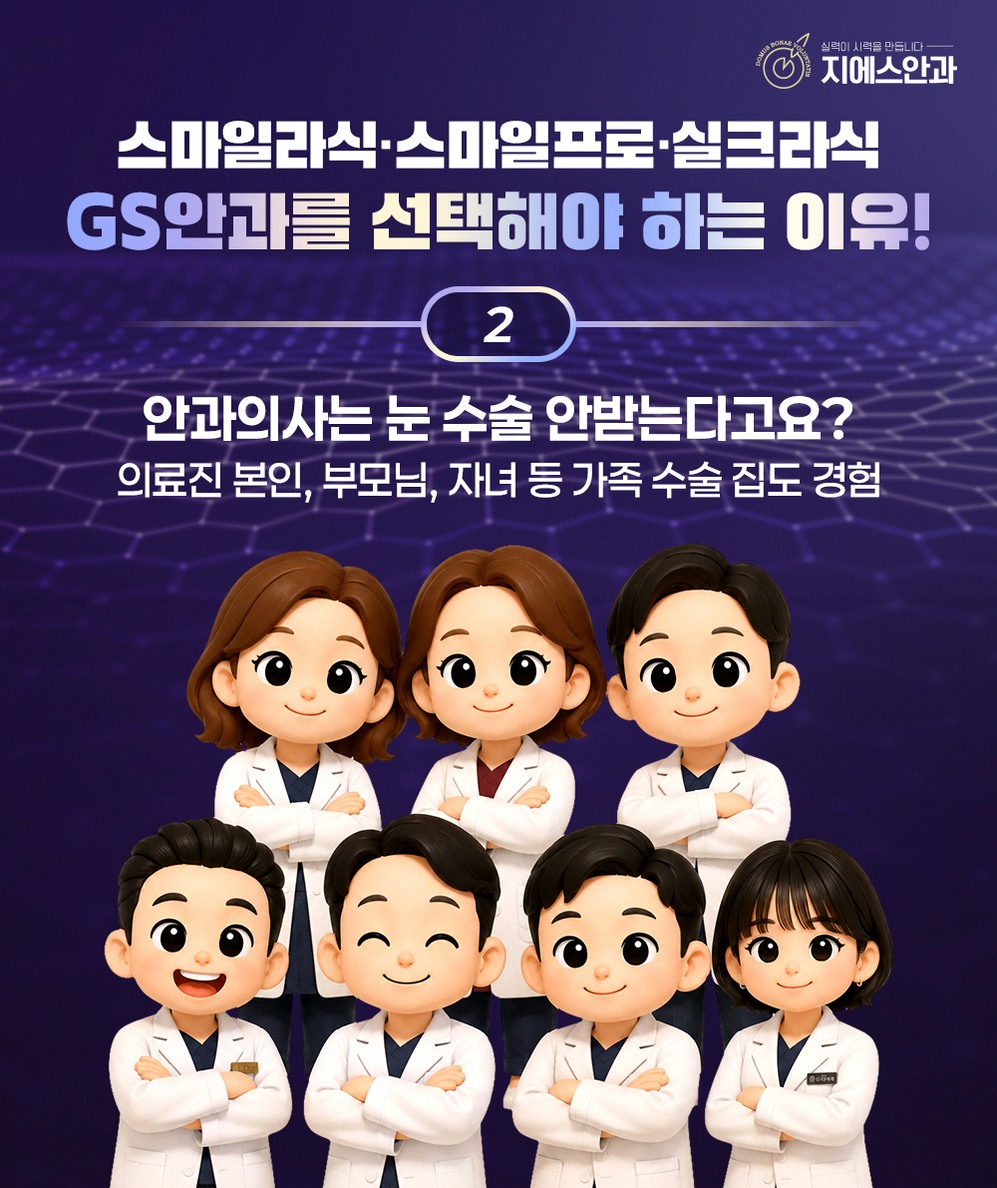
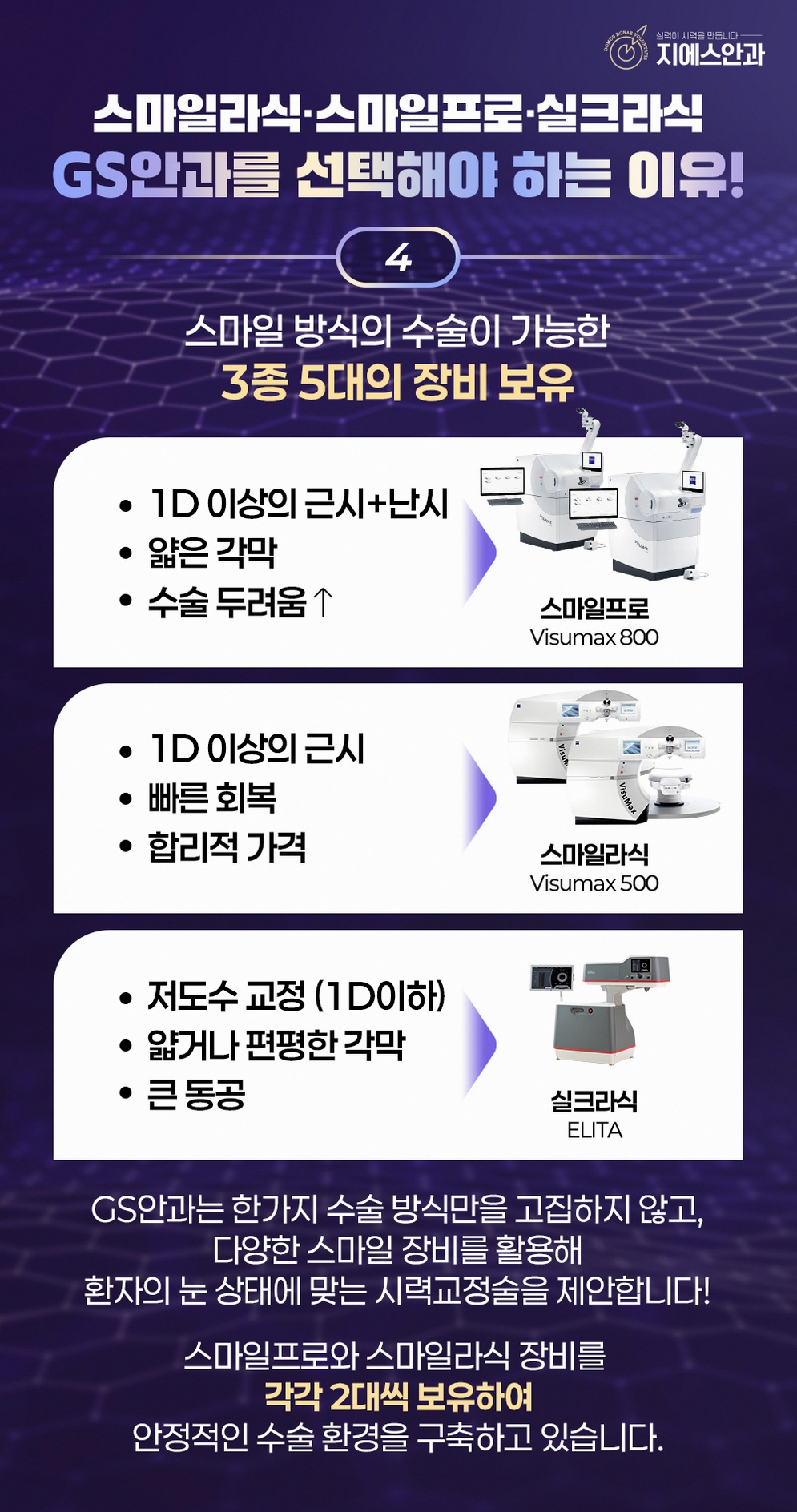
As of 2023, the team has reported over 300,000 cumulative vision correction and cataract procedures, and by April 2026, 15,000 SMILE Pro eyes. The clinic holds three major SMILE-related platforms — the ZEISS VISUMAX 800 (used for SMILE Pro and known for very fast laser times of under about 9 seconds), two ZEISS VISUMAX 500 units for SMILE LASIK, and the ELITA system (Johnson & Johnson) used for SILK.

Preoperative workflow for international patients
For overseas visitors, the examination and planning process is usually designed to be efficient while maintaining safety. A typical workflow may include:
Medical and lifestyle history: Discussion of your visual needs, work environment, sports or hobbies, night driving habits, and digital device use.
Refraction tests: Automated and manual measurements to refine your prescription and confirm the degree and axis of astigmatism.
Corneal imaging: High-resolution topography or tomography to detect any suspicious patterns and to plan the laser treatment profile.
Corneal thickness measurement: Pachymetry to ensure enough tissue remains after reshaping.
Ocular surface evaluation: Tear film tests and slit-lamp examination to identify dry eye or other surface issues that may need treatment before or after surgery.
Retina and optic nerve check: Especially important for high myopia, using dilated examination and sometimes additional imaging.
Matching the procedure type to your eyes and lifestyle
At a high-volume center equipped with multiple ZEISS platforms, the team can choose between SMILE Pro, SMILE LASIK, SILK, or other methods depending on your corneal characteristics and lifestyle.
For example, someone with a strong preference for minimal incision and concerns about dry eye might be guided toward SMILE Pro, while another person with specific corneal shapes or prescription ranges might be better suited for SMILE LASIK, LASEK, or a lens-based procedure.
SMILE vs LASIK vs LASEK for astigmatism correction
What all three procedures have in common
SMILE, LASIK, and LASEK all aim to reshape the cornea so that light focuses more accurately on the retina. All three can correct myopia and regular astigmatism within defined ranges. The choice between them is not about one being universally better, but about which is more suitable for your eyes and your daily life.
Key differences in technique
SMILE: Uses a femtosecond laser to create and remove a lenticule through a small incision, without a large flap.
LASIK: Creates a thin corneal flap, lifts it, reshapes the underlying tissue with an excimer laser, and then replaces the flap.
LASEK: Works on the surface. The outer epithelial layer is loosened and moved aside, the excimer laser reshapes the surface, and the epithelium is repositioned or allowed to regrow.
Considerations specific to astigmatism
All three methods can address astigmatism, but the best choice depends on:
The amount and regularity of your astigmatism
Your corneal thickness and topography
Any history of dry eye or surface sensitivity
Your occupation and hobbies, especially if you are at higher risk of eye trauma
SMILE’s small-incision, flapless approach may help preserve more of the corneal biomechanical strength and may be associated with a different dry eye profile compared with flap-based LASIK. LASEK, working on the surface, may be considered when the cornea is thinner or when other factors make flap creation less desirable. Your surgeon will explain which option aligns best with your examination findings.
Safety, limitations, and realistic expectations
What SMILE can and cannot do
For many suitable candidates, SMILE significantly reduces dependence on glasses or contact lenses for everyday activities. However, results are not identical for everyone. Factors such as your starting prescription, corneal characteristics, healing response, and age all influence the final outcome.

SMILE is not ideal for every type of astigmatism. Very high astigmatism, irregular astigmatism, or corneal diseases may require other strategies. Some patients may still need thin glasses for certain tasks, such as night driving or very fine detail work, even after successful surgery.
Importance of following instructions
Your role in the healing process is important. Typical recommendations include:
Avoid rubbing your eyes during the early healing period.
Use prescribed eye drops exactly as directed to reduce inflammation and support healing.
Attend all scheduled follow-up visits so that your surgeon can monitor your recovery.
Protect your eyes from dust, smoke, and strong impact, and use sunglasses outdoors as advised.
Over time, your vision usually stabilizes as the cornea heals and the tear film normalizes. Any dryness or visual fluctuations should be discussed with your surgeon during follow-up.
Why some patients choose a high-volume SMILE center in Gangnam
Experience and case volume
Some international patients feel more comfortable choosing a center that has managed a large number of vision correction and cataract cases over many years. As of 2023, the team at GS Eye Center reports over 300,000 cumulative procedures in these categories, and 15,000 SMILE Pro eyes by April 2026. Such experience can support standardized protocols and team coordination.
Technology and training roles
A center that holds multiple ZEISS SMILE platforms, including the VISUMAX 800 for SMILE Pro and VISUMAX 500 units for SMILE LASIK, can tailor the approach more precisely to different corneal conditions and prescriptions. Designation as a ZEISS SMILE Pro Center in 2023 and a SILK Training Center in 2026 reflects ongoing involvement with current techniques and professional education.
Some centers in the Gangnam Station area also serve as clinical education sites for medical schools and industry partners, which can indicate structured processes and an emphasis on protocol-based care.
Who may consider traveling to Seoul for SMILE
International patients often choose Seoul for astigmatism correction when they:
Want access to SMILE Pro or multiple SMILE platforms in one location
Prefer a center with long-term experience and a large case volume
Plan to combine treatment with a short stay in a major urban area with convenient transport, hotels, and amenities around Gangnam Station
Online consultation and pre-visit preparation
Initial online consultation
Before booking flights, most overseas patients start with an online consultation. You may be asked to send:
Your most recent glasses or contact lens prescription
Any previous eye examination reports, especially corneal topography or tomography if available
Information about your general health, medications, and any eye diseases in your family
During this stage, the medical team can provide a preliminary opinion on whether SMILE for astigmatism correction seems feasible, and what alternative options might be considered. Final candidacy, however, is always confirmed after in-person examinations.
Questions to prepare before contacting the clinic
To make your consultation more productive, it helps to prepare a checklist of questions, such as:
Is my degree of astigmatism generally within the treatable range for SMILE on your platforms?
If SMILE is not suitable, what alternatives do you usually consider for similar cases?
How many days should I plan to stay in Seoul for examination, surgery, and follow-up?
What are the main preoperative instructions, especially regarding contact lens use before my visit?
How are language support and interpretation handled during the visit?
Having these questions written down can help you compare different centers and feel more confident in your decision.
What to prepare before traveling
Stop wearing soft contact lenses for a period before your examination, often at least several days, and longer for rigid lenses, as advised by the clinic.
Bring your current and previous glasses prescriptions, as well as any eye health records you can obtain.
Prepare a list of medications and supplements you are taking.
Arrange accommodation near Gangnam Station to minimize travel time on examination and surgery days.
Consider bringing sunglasses and preservative-free artificial tears for comfort after surgery, if recommended.
Expected Korea visit timeline for SMILE
A common schedule for international patients may look like this, although individual plans vary:
Day 1: Comprehensive eye examination, including refraction, corneal imaging, thickness measurement, tear film evaluation, and retinal check. If you are a suitable candidate and you decide to proceed, surgery may be scheduled for the next day or a nearby date.
Day 2: SMILE procedure. The laser portion usually takes only seconds per eye, though you will spend longer in the clinic for preparation and post-procedure checks. You typically rest afterward and return to your accommodation.
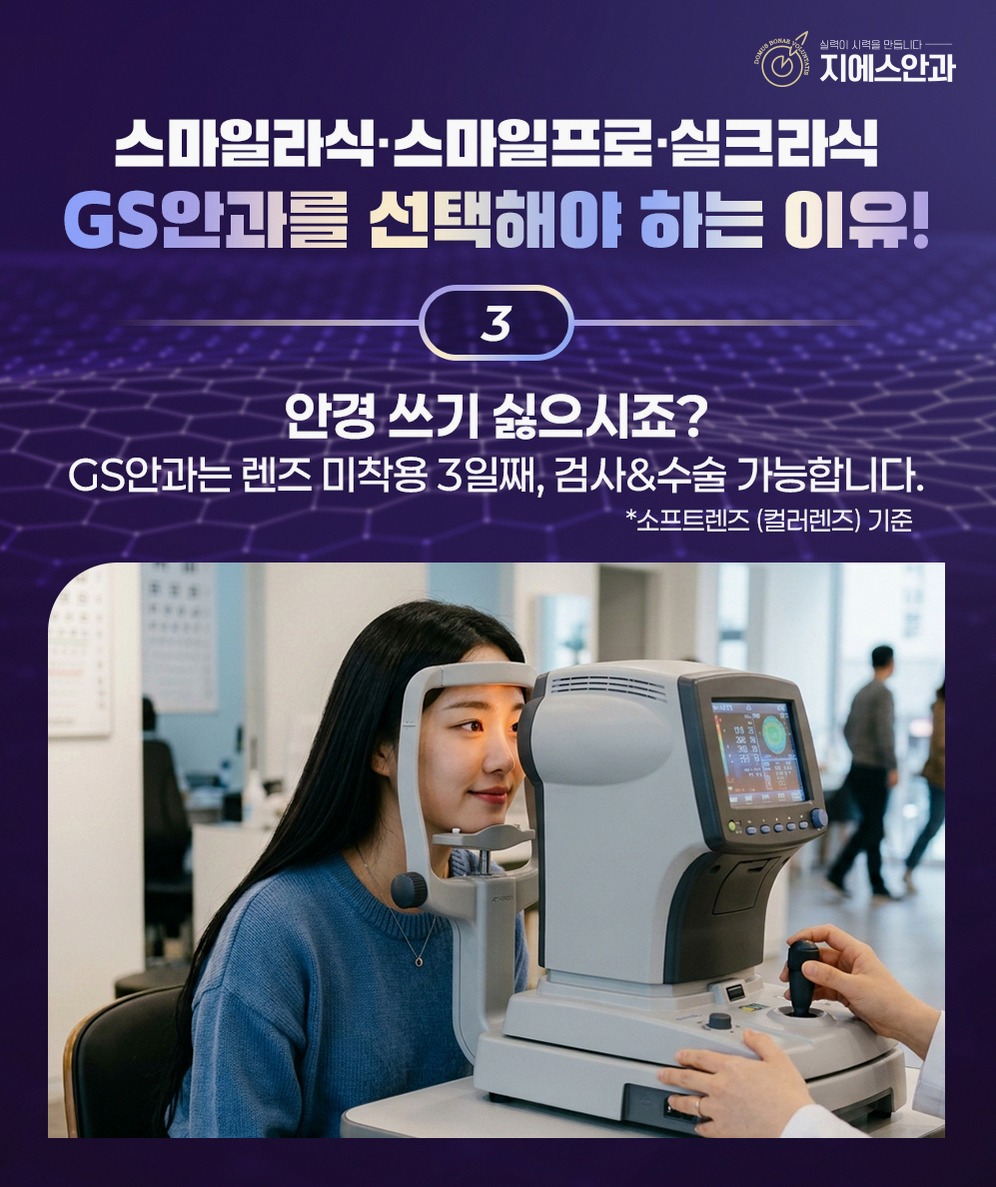
Day 3: First follow-up visit. The surgeon checks your cornea, tear film, and early visual recovery, and reviews eye drop instructions and activity restrictions.
Day 4–7: Additional follow-up visits as advised, especially if you plan to leave Korea soon. Some patients may be cleared to fly after a short period, but this is decided individually.
After you return home, online check-ins can sometimes be arranged, but you should also have access to a local eye doctor for any unexpected issues.
Aftercare and long-term considerations
Early postoperative period
In the first days after SMILE, you may notice:
Fluctuating vision, especially in low light
Mild dryness, foreign body sensation, or light sensitivity
Gradual improvement in clarity as the cornea stabilizes
Using your prescribed eye drops regularly and avoiding eye rubbing are key. Many people can resume light daily activities fairly quickly, but you should follow your surgeon’s guidance on when to return to work, exercise, and swimming.
Medium to long term
Over the following weeks and months, your vision typically continues to refine. Dryness usually improves as the ocular surface recovers, although some patients may need ongoing lubricating drops for comfort.
Regular eye examinations, either at the original center or with a trusted local doctor, help ensure that your corneas remain stable and that any late changes are detected early.
Frequently asked questions about SMILE astigmatism correction in Gangnam
Is SMILE suitable for all types of astigmatism?
No. SMILE is designed for myopia and regular astigmatism within specific ranges. Very high astigmatism, irregular astigmatism, or astigmatism linked to corneal diseases may not be suitable. Detailed corneal imaging and a full examination are needed to decide whether SMILE, LASIK, LASEK, corneal cross-linking, or lens-based options are more appropriate.
How long do I need to stay in Seoul for SMILE?
Many international patients plan a stay of about 4 to 7 days, allowing time for preoperative tests, the procedure, and at least one or two follow-up visits. The exact duration depends on your eyes, your travel schedule, and the clinic’s recommendations. It is important not to rush your departure, so that early healing can be monitored and any concerns addressed before you fly home.
Can SMILE completely remove my need for glasses?
Many suitable candidates experience a large reduction in dependence on glasses or contact lenses after SMILE, but complete freedom from glasses cannot be guaranteed. Some people may still use thin glasses for certain tasks, such as night driving or very fine detail work. As you age, presbyopia (the need for reading glasses) can also develop, regardless of whether you have had SMILE.
What should I compare when choosing a center in Gangnam?
Instead of focusing only on cost, consider several factors: the center’s experience with SMILE and other vision correction procedures, the range of ZEISS platforms and technologies available, the thoroughness of the examination process, language support for international patients, and the clarity of explanations about risks, benefits, and alternatives. You may also ask whether the center is involved in training or educational activities, which can indicate structured protocols and ongoing engagement with current techniques.
Soft call to action for online consultation
If you are considering SMILE for astigmatism correction during a visit to Seoul and would like to know whether your eyes might be suitable, you can start with an online consultation. By sharing your recent prescriptions and any previous eye test results, the medical team at GS Eye Center can provide preliminary guidance and help you plan an efficient visit to the Gangnam Station area.
A personalized examination and discussion with an ophthalmologist remain essential before any decision. Taking time to ask questions, compare options, and understand realistic expectations will help you choose the approach to astigmatism correction that best fits your eyes, your lifestyle, and your travel plans.
- 공유 링크 만들기
- X
- 이메일
- 기타 앱


댓글
댓글 쓰기