Gangnam SMILE LASIK Review: GS Eye Center Surgery & Recovery Experience, Plus Tips for Choosing a Clinic
- 공유 링크 만들기
- X
- 이메일
- 기타 앱
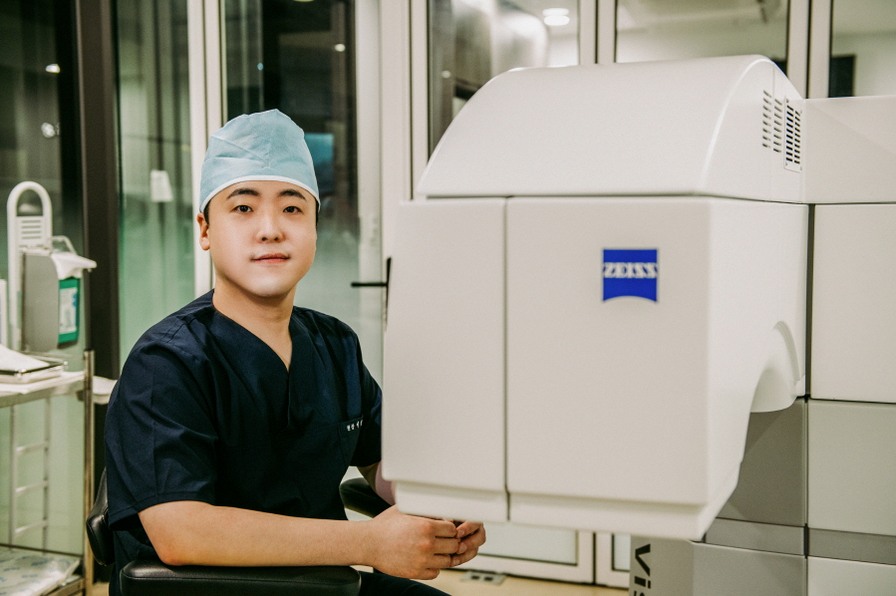


If you are searching for a real Gangnam SMILE LASIK review from someone who actually went through vision correction surgery in Gangnam, here is my honest summary.
I had SMILE LASIK at an ophthalmology clinic near Gangnam Station, GS Eye Center. After a detailed eye examination, the doctor confirmed that my eyes were suitable and recommended a SMILE-type procedure. It was still surgery, with all the usual cautions and follow-up visits, but for me it has been a very positive change.
In the rest of this article, I will walk through my personal journey step by step: how I chose the clinic, what SMILE LASIK actually is (in normal language), my consultation and surgery day, how recovery felt, and what I would tell overseas patients thinking about SMILE LASIK in Gangnam.
Why I started searching for Gangnam SMILE LASIK reviews
I spend a lot of time in Gangnam for work and commuting, and I had been wearing glasses or contact lenses for years. My glasses fogged up every time I wore a mask or walked into a warm building in winter. My contacts made my eyes dry at the office, especially when I stared at screens all day. Traveling was annoying because I always had to pack extra lenses, solution, and glasses.
At some point I realized I was organizing my life around my poor eyesight. That is when I started searching online for "Gangnam SMILE LASIK review" and "SMILE LASIK in Gangnam" to see what options were available near Gangnam Station.
What I learned about SMILE LASIK while researching
Before this, I only knew the word LASIK. During my research and later at the clinic, I learned that SMILE LASIK is a type of laser vision correction that works differently from traditional LASIK.
The way the staff explained it to me was simple. In SMILE, a laser creates a tiny, lens-shaped piece of tissue (called a lenticule) inside the cornea. Then the doctor removes that lenticule through a very small incision. By removing this piece, the shape of the cornea changes and corrects nearsightedness and astigmatism.
The big difference from classic LASIK is that SMILE does not require creating a large corneal flap. With LASIK, they make a flap on the surface of the cornea, lift it, reshape the underlying tissue, and then put the flap back. With SMILE, there is no large flap, just a small opening. I liked the idea of a smaller incision and less disturbance of the corneal surface.
How I chose this ophthalmology clinic in Gangnam
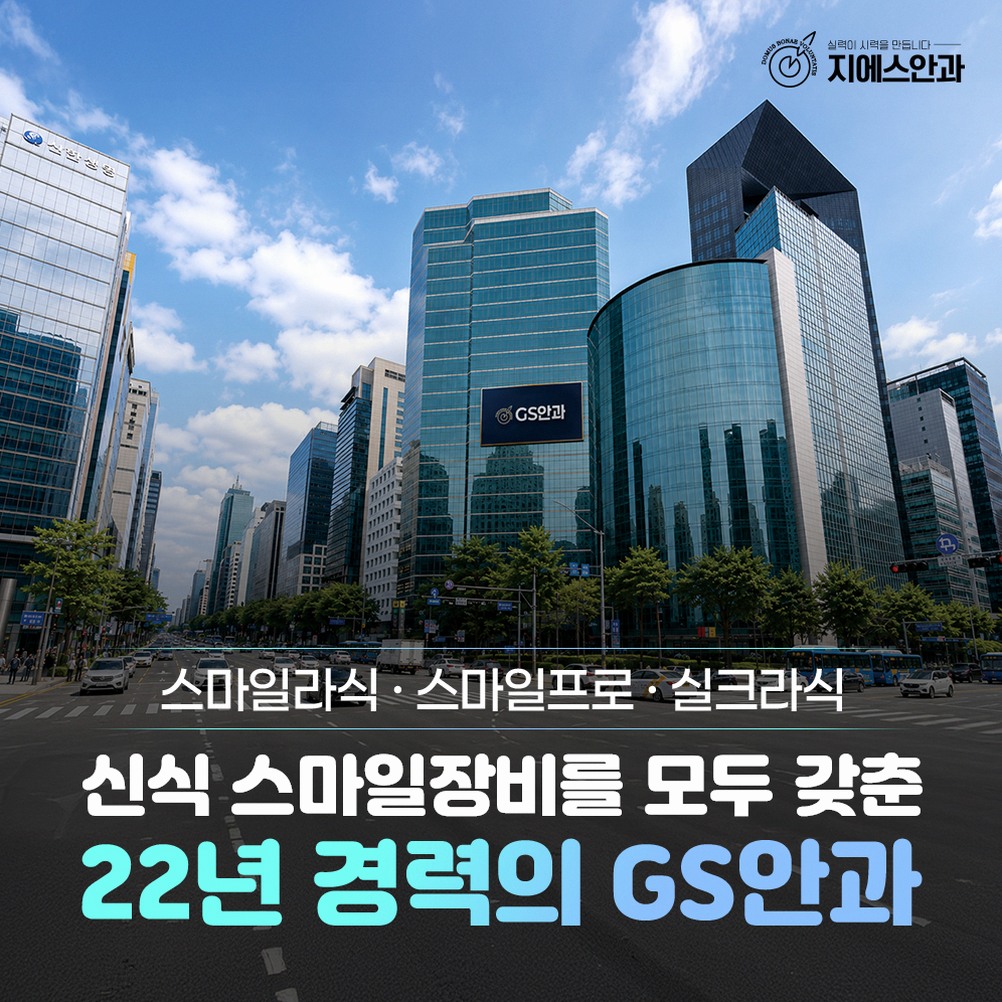
There are many eye clinics around Gangnam Station, so I tried to be systematic. I looked at several ophthalmology clinics in Gangnam and compared them based on a few points that felt important to me.
First, I wanted a place that clearly focused on SMILE-type procedures, not just general LASIK. The clinic I chose emphasized SMILE LASIK, SMILE pro, SILK, and its own "Golden SMILE" program. That specialization made me feel they had deep experience with this particular technique.
Second, I checked their surgical experience and official designations. This clinic opened in 2005 in the same Gangnam location and has accumulated a large number of vision correction and cataract surgeries, over 300,000 eyes as of 2023. For SMILE pro alone, they had reached 5,000 eyes in October 2024, 10,000 eyes in August 2025, and 15,000 eyes as of April 2026. They were the first in Korea to join the ZEISS SMILE GOLD CLUB in 2021, then became a ZEISS SMILE pro CENTER in 2023 and a SILK TRAINING Center in 2026.
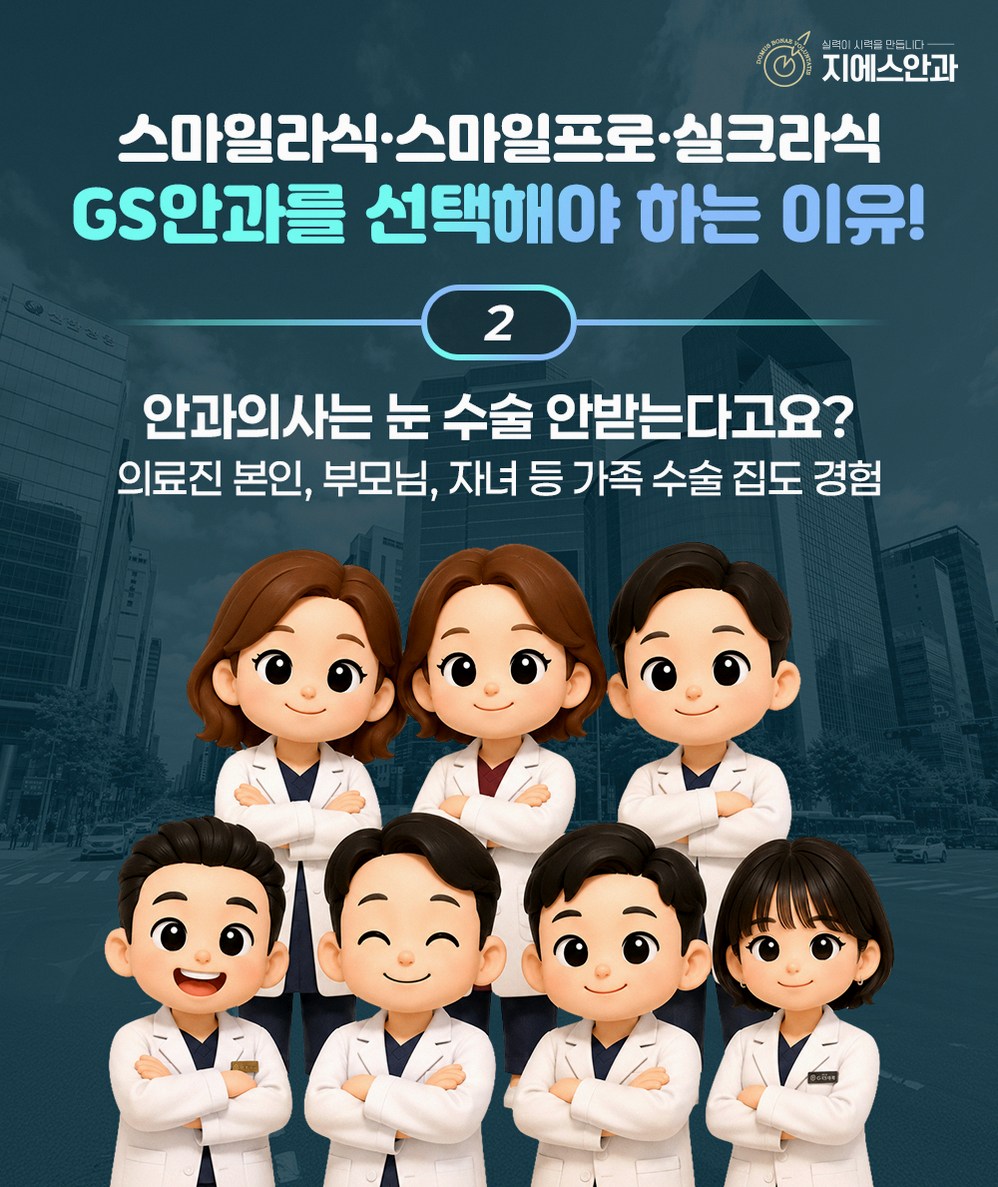
Third, I liked that they had a team of seven ophthalmology specialists and a separate retina center with retina fellowship-trained doctors. Knowing there were retina experts in the same clinic gave me extra confidence about overall eye safety and long-term monitoring.
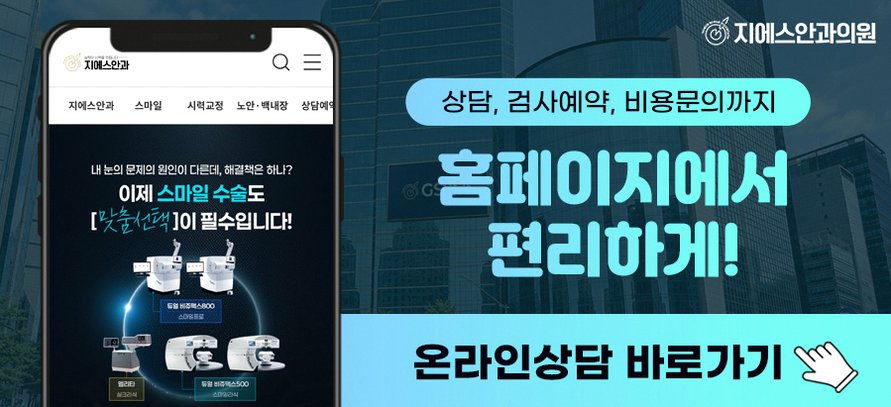
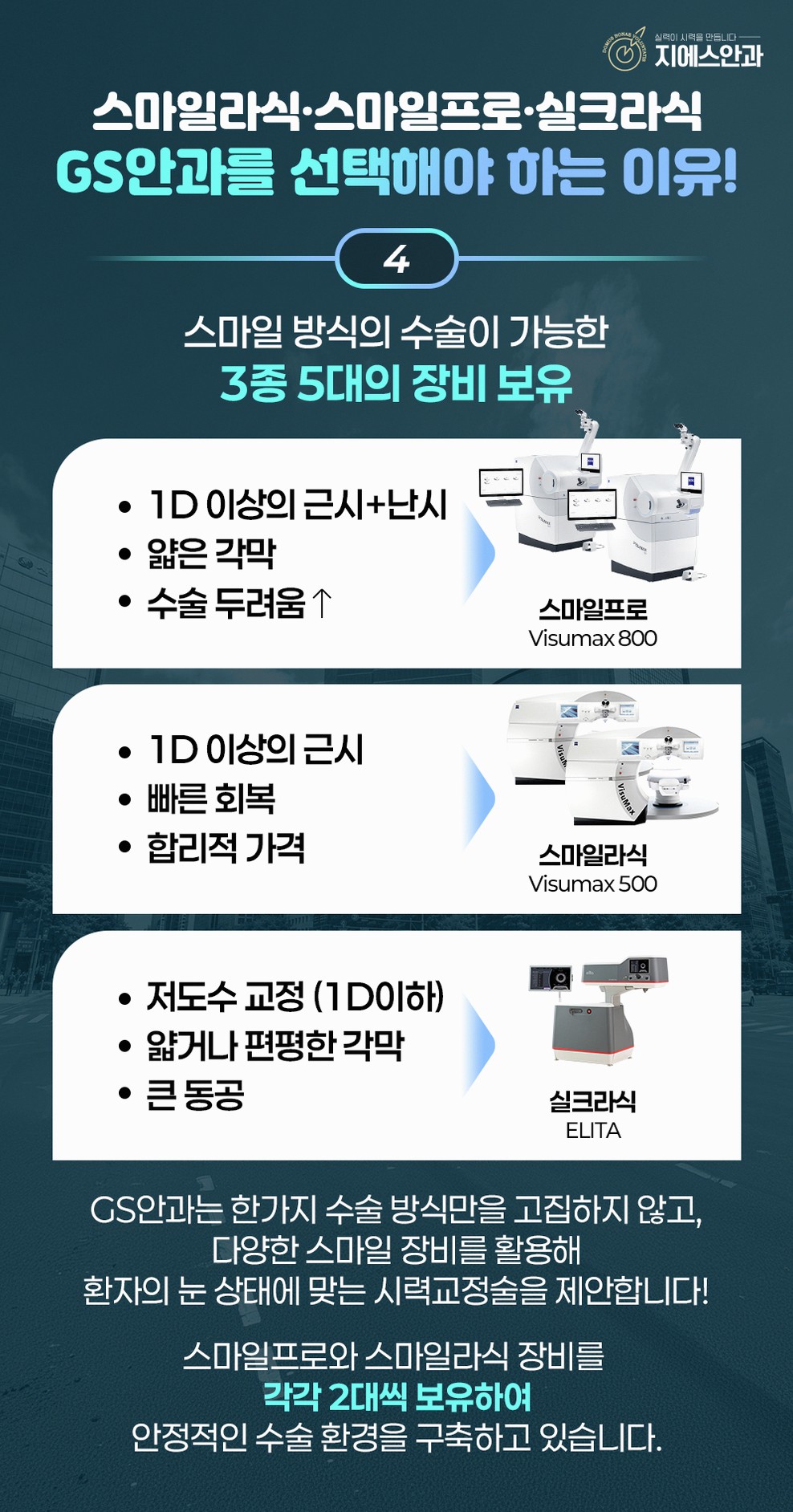
Fourth, I checked the laser equipment. The clinic runs three SMILE-related platforms (ZEISS VISUMAX 800, two ZEISS VISUMAX 500 units, and the ELITA system from Johnson & Johnson). The VISUMAX 800 is used for SMILE pro and is noted for a very fast laser time (around 9 seconds), while the two VISUMAX 500 units are used for SMILE LASIK. I had seen these model names mentioned a lot in my research, so it reassured me that they were using well-known systems.
Finally, I watched the medical director’s YouTube channel. The director, Dr. Kim Mu-yeon, is an ophthalmologist and medical doctor with experience as a university hospital professor. In the videos, he explained eye surgery concepts clearly and calmly, with a lot of detail. That academic background and communication style made me feel more comfortable.
In the end, I decided to book a consultation at GS Eye Center, since it matched all of the criteria I cared about.
Arriving at the clinic near Gangnam Station
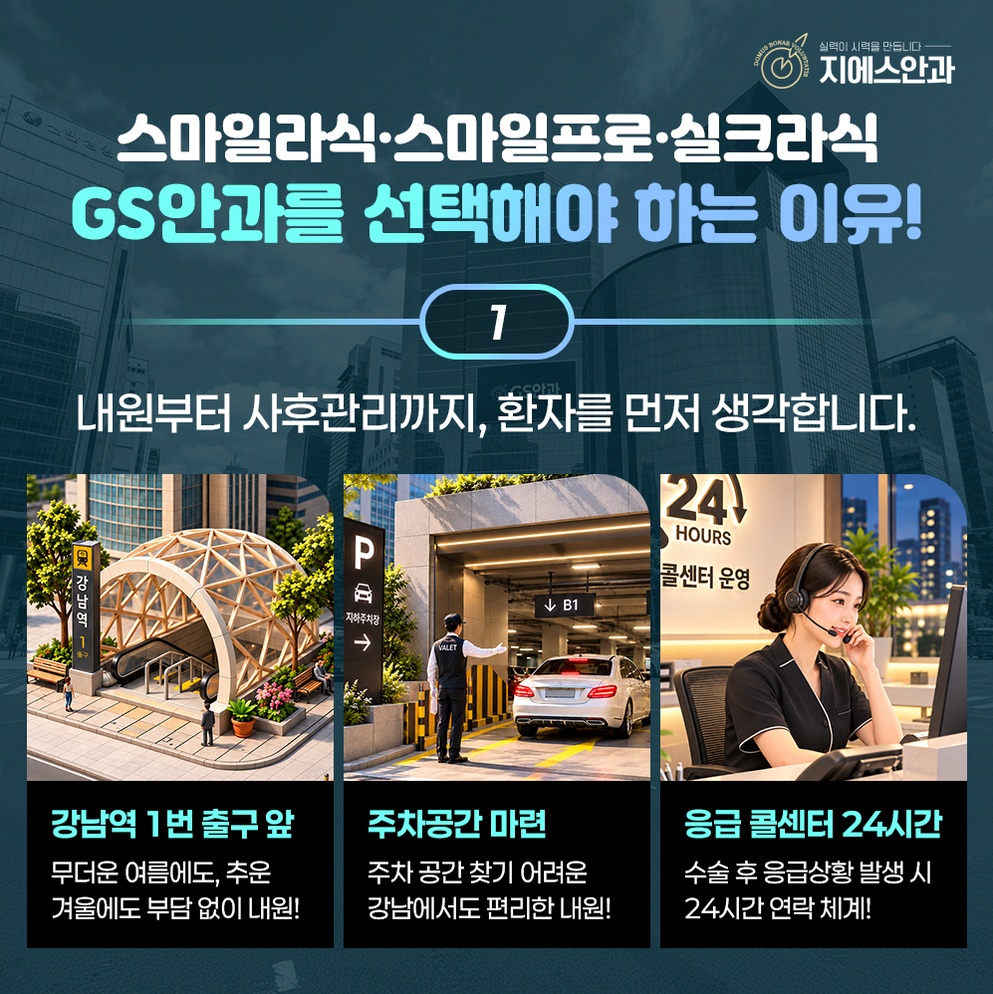
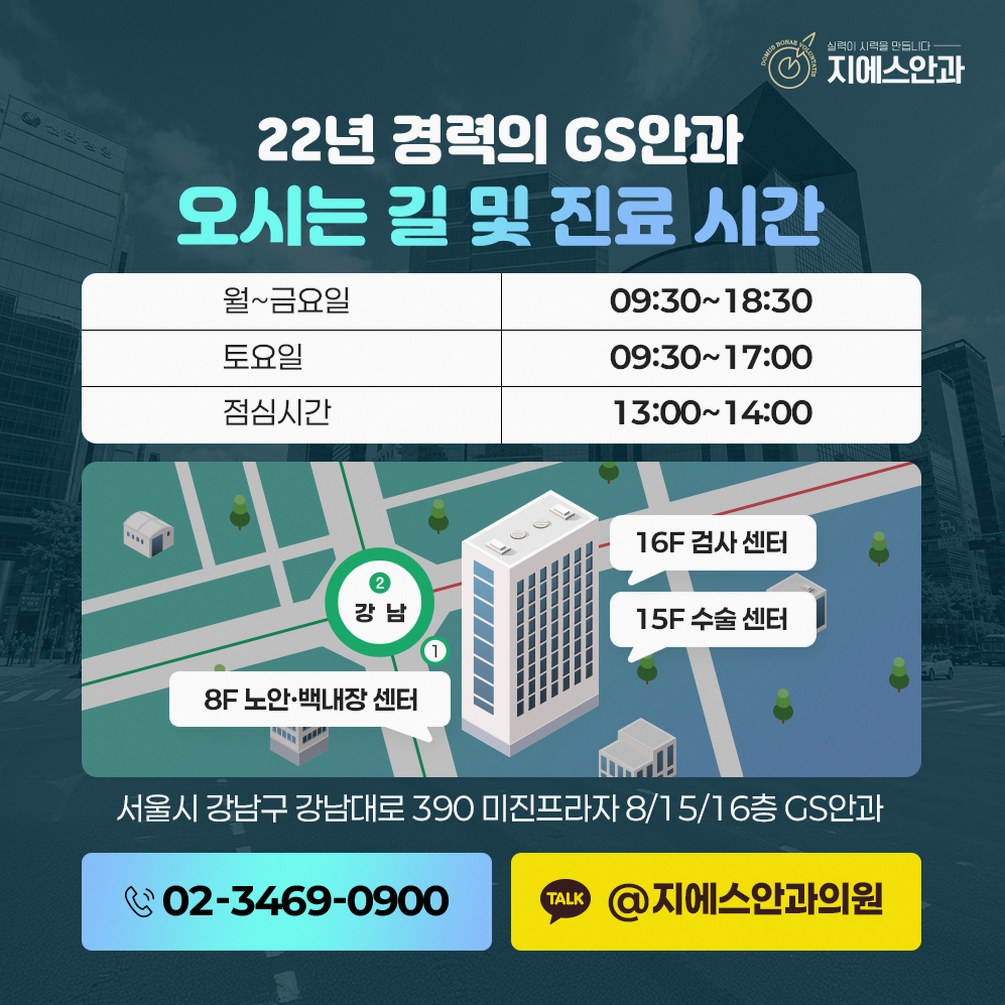
The clinic is very close to Gangnam Station, so it was easy to find. When I arrived for my first visit, I was surprised by how many people were already there for eye examinations and vision correction consultations. It felt busy but organized, more like a specialized eye center than a small local practice.
After registration, I sat down with a counselor who briefly asked about my current glasses prescription, how long I had been wearing contacts, any eye problems in the past, and what I expected from surgery. Then they explained that I would go through a series of detailed tests before the doctor would decide whether I was suitable for SMILE LASIK, SMILE pro, or maybe not suitable for surgery at all.

The preoperative eye examination process
The examination process was much more detailed than a normal glasses check. I moved from one machine to another with guidance from the staff.
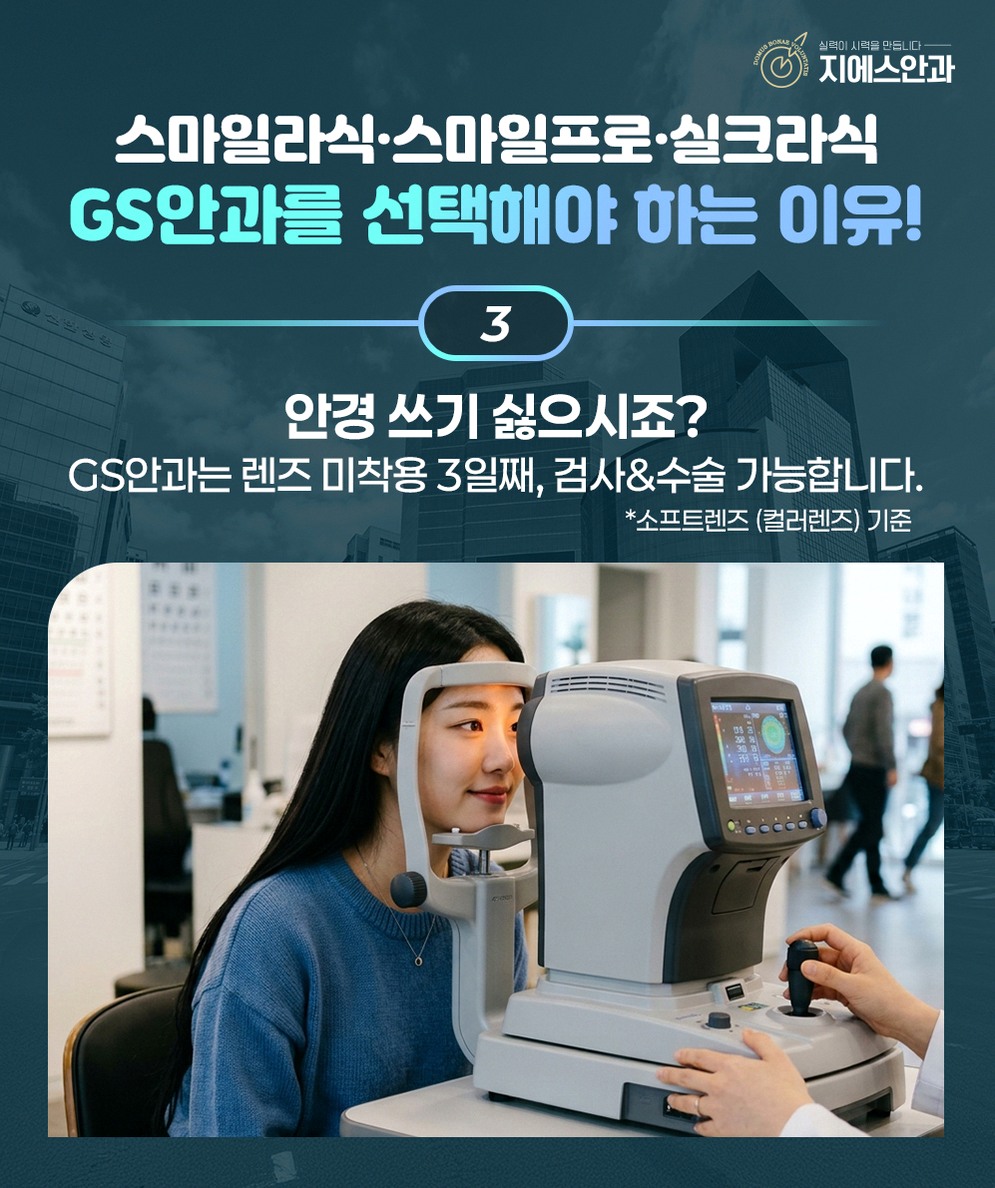
They measured my current refractive error (myopia and astigmatism) and checked my corneal thickness and curvature. There were machines that took 3D maps of my cornea, checked my pupil size, and measured intraocular pressure. They also evaluated my tear film because dry eye can affect both surgery and recovery.
Later, I went to a darker room where they examined my retina. This part was important to me, because I knew the clinic had a retina center with fellowship-trained retina doctors. They checked for any weak spots, holes, or other retina issues that might need attention before or after surgery.
Throughout the tests, the staff explained in simple language what each machine was doing and why it mattered. They emphasized that suitability for SMILE LASIK depends on several factors together: refractive error, corneal thickness and shape, and overall eye health, including the retina.
Understanding LASIK, LASEK, and SMILE
Before I met the doctor, one of the staff members sat with me and went through the differences between LASIK, LASEK, and SMILE.
They explained that in LASIK, a flap is created in the cornea, lifted, and then the underlying tissue is reshaped with a laser. Recovery is generally quick, but there is a flap involved.
In LASEK, there is no flap, but the surface of the cornea is treated directly. Recovery can be more uncomfortable and longer, with more days of sensitivity.
In SMILE, the laser creates a lenticule inside the cornea and then the doctor removes it through a small incision, without a large flap. The idea is to keep more of the corneal surface structure intact. They also mentioned that SMILE may help preserve more corneal nerves, which can be relevant for dry eye, although individual experiences vary.
Meeting the doctor and hearing my options
When I met Dr. Kim with all my test results, he went through them one by one. He showed me my corneal thickness, the shape maps, my degree of myopia and astigmatism, and the retina findings.
He said my cornea was thick enough, the shape was stable, and the retina looked healthy. My refractive error was within the range for SMILE-type procedures. Based on this, he said I was a good candidate for SMILE LASIK or SMILE pro.
He also emphasized safety several times. He explained that if my cornea had been too thin, or if the shape had shown certain risk patterns, he would not recommend surgery at all, even if I really wanted to get rid of my glasses. Long-term eye health, he said, is more important than convenience.
Deciding between SMILE LASIK and SMILE pro
We then discussed the different options: SMILE LASIK, SMILE pro, and other methods. He explained that SMILE pro uses the newer ZEISS VISUMAX 800 platform, with a very fast laser time under about 9 seconds, and some workflow improvements. SMILE LASIK uses the VISUMAX 500 platforms, which are also widely used and established.
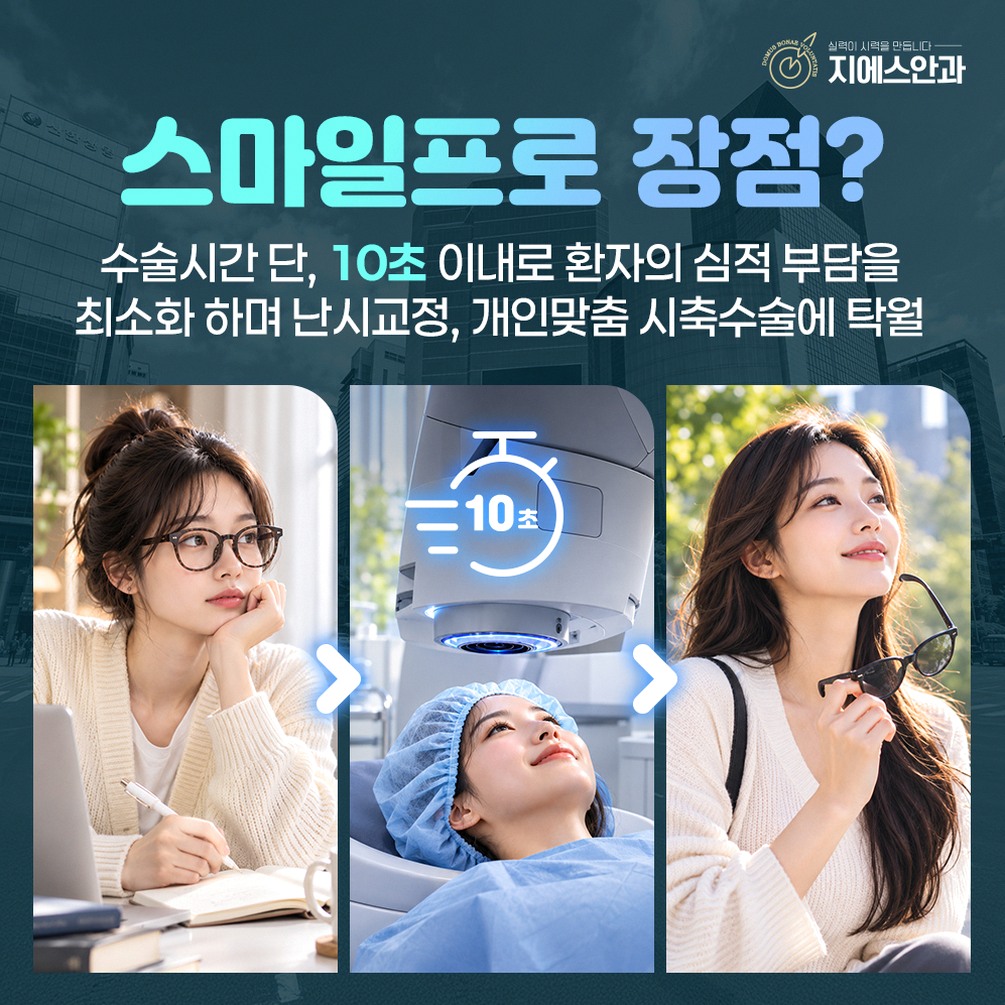
Because my degree of myopia and corneal condition were suitable for both, it became more of a preference decision. I liked the idea of a small incision and no large flap, and I was also concerned about dry eye. The doctor explained that SMILE-type procedures may help preserve more corneal nerves compared to flap-based methods, but that dryness can still happen temporarily and varies by person.
The counselor then went over realistic expectations and possible side effects: temporary dryness, glare, or halos at night, and the need to use eye drops and attend follow-up visits. They were clear that this is surgery, not magic, and that results can vary from person to person.
What I appreciated most was that there was no pressure to decide on the spot. They gave me printed information and told me to think it over. After a few days of considering everything, I decided to go ahead with SMILE LASIK and booked a surgery date.
Preparing for surgery day
Before surgery, the clinic gave me instructions: avoid wearing contact lenses for a certain period before the operation, keep my eyes clean, and arrange for someone to accompany me if possible, because my vision would be hazy right after.
On surgery day, I checked in at the reception, signed consent forms, and had some last-minute checks. They repeated some measurements and confirmed that nothing had changed significantly since my initial exam. I met the doctor again, and he reviewed the plan and answered my final questions.
The atmosphere was calm but efficient. There were other patients also waiting for vision correction surgery, which oddly made me feel less nervous. It felt like a routine day for them, even though it was a big day for me.
What the SMILE LASIK surgery felt like
In the operating area, they asked me to lie down on the laser bed. The nurse put numbing drops in my eyes, and they carefully cleaned the area around them. I did not feel any sharp pain at any point, just some pressure and a strange sensation.
The doctor asked me to focus on a light and reminded me to stay as still as possible. During the laser step, I felt some pressure but no pain. It was more like a firm push on the eye. The staff kept talking to me calmly, telling me what was happening and how long each part would take.
For the SMILE part, the laser created the lenticule inside my cornea. Then the doctor removed that lenticule through the tiny incision. I could not see exactly what was happening, just some blurry lights and shadows. The whole laser part felt surprisingly short.
After they finished both eyes, they checked my corneas again under a microscope. Then they guided me to a recovery room where I rested with my eyes closed for a while.
Right after surgery: first impressions
When I opened my eyes for the first time after surgery, my vision was foggy and hazy, but I could already tell that something had changed. Even through the haze, I could see shapes and signs more clearly than before without glasses.
The staff gave me protective eye shields to wear while sleeping, a schedule of eye drops, and written instructions in case I forgot anything. They reminded me not to rub my eyes, to avoid heavy exercise and swimming for a while, and to come back for my follow-up visit the next day.
Going home and the first night
On the way home, my eyes were sensitive to light, so I kept my sunglasses on and tried to keep my eyes closed as much as possible. There was a mild foreign body sensation, like having a small eyelash stuck in the eye, and some tearing, but it was manageable.
That evening, I followed the eye drop schedule carefully. I tried not to look at screens and just rested. Sleeping with the protective shields felt a bit awkward but not painful. I was mainly worried about accidentally touching my eyes in my sleep.
The next morning: first follow-up in Gangnam
The next day, I went back to the clinic for my first follow-up. They checked my vision, examined the small incision, and looked at the area where the lenticule had been removed. The doctor said everything looked clean and stable.
My vision was still a bit hazy around the edges, but I could already read signs in the subway station in Gangnam without glasses. It felt surreal to stand on the platform and clearly see the station names on the opposite side.
The doctor reminded me to keep using artificial tears regularly, to avoid rubbing my eyes, and to be careful with makeup and heavy exercise for a while. They emphasized that vision usually stabilizes over time, and that some fluctuations in the first days and weeks are normal.
The first week: adjusting to life without glasses
Over the first week, my vision became clearer day by day. I noticed that screens at work were sharper, and I no longer had to push my glasses up my nose or deal with fogging when I grabbed a hot drink.
I did have some temporary dryness, especially in air-conditioned rooms, but the artificial tears helped. Night driving was a bit more sensitive at first, with some halos around lights, but this gradually improved as my eyes healed.
I followed the instructions carefully: no rubbing, no swimming, no heavy workouts, and being gentle when washing my face. It felt like a small price to pay for the freedom of not needing glasses.
Later follow-ups and retina monitoring
At a later follow-up visit, they checked my visual acuity more precisely and repeated detailed examinations of my cornea. What impressed me was how thorough they were with retina monitoring as well, using the equipment from their retina center.
Knowing that retina specialists were involved in the overall system made me feel that if anything unusual ever appeared in the back of my eye, it would be noticed early. For me, that combination of cornea-focused vision correction and retina expertise was a key reason I had chosen this clinic in the first place.
How SMILE LASIK changed my daily life
Now that my eyes have settled, the biggest change is in everyday convenience. My Gangnam commute is much easier. I can check my phone, read subway signs, and work long hours on the computer without worrying about contact lenses drying out.
Sports and travel feel more spontaneous. I can go to the gym, run, or join a last-minute trip without packing spare lenses and solution. Rainy days are no longer a nightmare of raindrops on glasses.
Looking back, what convinced me was not just marketing, but the combination of factors:
SMILE GOLD CLUB, SMILE pro CENTER, and SILK TRAINING Center. The clinic runs three SMILE-related platforms: ZEISS VISUMAX 800, two ZEISS VISUMAX 500 units, and the ELITA system from Johnson & Johnson. They hold ISO 9001 and ISO 14001 certification for SMILE LASIK since 2020. There is a team of ophthalmology specialists, including retina experts, and the clinic is a clinical education site for a medical school and for BIOTECH in the Asia-Pacific region.
For me, all of this together created a sense of safety and professionalism.
Who might consider SMILE LASIK in Gangnam
Based on my experience and what I learned, SMILE LASIK in Gangnam might be worth considering if you:
Have been wearing glasses or contacts for many years and are tired of the inconvenience.
Have nearsightedness and possibly astigmatism within the range for SMILE-type procedures.
Prefer a smaller incision and no large corneal flap.
Are concerned about dry eye and wish to discuss options that may help preserve more corneal nerves.
Want an ophthalmology clinic in Gangnam with experience in SMILE, SMILE pro, and related procedures.
However, only a detailed eye examination by an ophthalmologist can confirm whether SMILE LASIK, SMILE pro, another method, or no surgery at all is appropriate for your eyes. Factors like corneal thickness, corneal shape, and retina condition are critical.
Tips for overseas patients: online consultation and preparation
You can usually share your basic information: age, current glasses or contact lens prescription, any known eye conditions, past eye surgeries, and medications. Some clinics may ask for a recent eye exam report from your local eye doctor, including your prescription and any notes about your cornea or retina.
Before your trip, prepare a list of questions, for example:
Am I likely to be a candidate for SMILE LASIK or SMILE pro based on my current prescription?
How many days should I plan to stay in Korea for surgery and follow-up?
What kind of aftercare is provided, and how will follow-up work once I return home?
What side effects should I realistically expect in the first days and weeks?
Having these answers in advance will help you plan your travel schedule and feel more prepared.
A typical Korea visit timeline for SMILE LASIK
Every clinic has its own schedule, but a common pattern for overseas patients might look like this:
Arrival and initial consultation: You arrive in Seoul and visit the clinic near Gangnam Station for a full eye examination and consultation. The doctor confirms whether you are suitable for SMILE LASIK, SMILE pro, or another method. If you are not suitable, they should explain why and suggest alternatives or continued glasses/contacts.
Surgery day: Depending on your schedule and the clinic’s policy, surgery may be done the next day or within a few days after the exam. The procedure itself is short, but you should plan to rest afterward and avoid other activities that day.
Early follow-up: You typically have a follow-up the next day to check your cornea and vision. Some clinics may schedule another visit a few days later before you leave Korea.
Return home and long-term follow-up: After you go back to your country, you can continue general eye check-ups with your local ophthalmologist. If you have any concerns, you can contact the clinic by email or online consultation, and share your local exam results if needed.
Again, the exact schedule should be confirmed directly with the clinic, especially if you have a tight travel plan.
Aftercare and realistic expectations
After SMILE LASIK, you will likely receive:
Prescription eye drops to prevent infection and reduce inflammation.
Artificial tears to manage dryness.
Instructions to avoid rubbing your eyes, swimming, and heavy exercise for a certain period.
Guidance on makeup and face washing around the eyes.
It is important to understand that healing is gradual. Many people notice a big improvement quickly, but small fluctuations in vision, temporary dryness, or night glare can happen as the cornea stabilizes.
Also, even after successful surgery, regular eye check-ups remain important, especially if you spend long hours on screens or have any retina risk factors. Vision correction does not replace general eye health care.
Frequently asked questions about SMILE LASIK in Gangnam
Is SMILE LASIK painful?
In my experience, and according to the explanations I received, SMILE LASIK is not usually described as painful. During surgery, numbing drops are used, so you mainly feel pressure and a strange sensation rather than sharp pain. Afterward, there can be mild discomfort, foreign body sensation, tearing, or light sensitivity, but these were manageable for me with the provided eye drops and rest.
How long did it take before I could see clearly?
I noticed an improvement in my vision already on the day of surgery, but it was hazy. By the next day, I could move around Gangnam and read signs without glasses, though things were still a bit soft around the edges. Over the first week, my vision became clearer and more stable. Everyone is different, so your own timeline may vary, and your doctor will guide you based on your healing.
What made me trust this ophthalmology clinic in Gangnam?
Several factors together built my trust: the clinic has been in the same Gangnam location since 2005, it has accumulated over 300,000 vision correction and cataract surgeries as of 2023, and it focuses strongly on SMILE-type procedures such as SMILE LASIK, SMILE pro, and SILK. It was the first in Korea to join the ZEISS SMILE GOLD CLUB in 2021 and later became a ZEISS SMILE pro CENTER and SILK TRAINING Center. The presence of multiple ophthalmology specialists and a separate retina center also reassured me about safety and long-term monitoring.
Can overseas patients consider SMILE LASIK at GS Eye Center?
From what I experienced, GS Eye Center is used to seeing many patients, and its location near Gangnam Station makes it convenient for visitors. If you are an overseas patient, it is important to start with an online consultation, share your basic eye information, and discuss how many days you should stay in Korea for examinations, surgery, and follow-up. The clinic can then advise whether SMILE LASIK, SMILE pro, another method, or no surgery is appropriate for your eyes.
Final thoughts and a gentle suggestion
Looking back on my own Gangnam SMILE LASIK journey, I am very satisfied with the result and with how carefully the process was handled. At the same time, I want to stress that SMILE LASIK is still surgery. It is not suitable for everyone, and results can vary depending on your eyes and general health.
If you are considering SMILE LASIK in Gangnam, I recommend taking the time to:
Read real experiences, not just advertisements.
Check the clinic’s history, surgical volume, and official designations.
Confirm that multiple ophthalmology specialists, including retina experts, are available.
Ask detailed questions about examinations, equipment, aftercare, and realistic expectations.
If you are curious about whether your own eyes might be suitable, you can start with an online consultation with GS Eye Center or a similar ophthalmology clinic in Gangnam. Share your current prescription and any past eye history, and let an ophthalmologist guide you with personalized advice. That way, you can decide calmly and safely whether SMILE LASIK is the right step for you.
- 공유 링크 만들기
- X
- 이메일
- 기타 앱


댓글
댓글 쓰기