Is SMILE in Gangnam Right for Adults with Astigmatism?
- 공유 링크 만들기
- X
- 이메일
- 기타 앱



Direct answer summary
SMILE laser eye surgery can treat many cases of myopia with astigmatism by reshaping the cornea from the inside through a very small incision. It is especially considered for adults whose glasses prescription has been stable, whose corneas are healthy and thick enough, and whose astigmatism is within the treatable range of the SMILE platform. A detailed eye examination at an ophthalmology clinic in Gangnam, Seoul is essential to confirm whether SMILE, SMILE Pro, or another method is the safest and most accurate option for your eyes.
Introduction: what astigmatism is and what treatment really means
Astigmatism is a focusing problem that happens when the front surface of the eye (the cornea) or the internal lens is not perfectly round. Instead of being shaped like a smooth basketball, it is more like a slightly uneven rugby ball. Because of this irregular curvature, light does not come to a single clear focus on the retina, and vision can look blurred, shadowed, or stretched at all distances.
When people search for astigmatism treatment, they may mean different things. For some, treatment means getting the right glasses or contact lenses to temporarily correct the blur. For others, especially adults tired of long term lens wear, treatment means changing the eye’s refractive power more permanently with procedures such as laser vision correction or lens implantation.
SMILE is one of the modern laser procedures that can correct myopia and certain degrees of regular astigmatism by gently reshaping the cornea. In urban areas like Gangnam, Seoul, it is a common option for adults who want to reduce dependence on glasses or contact lenses.
How SMILE corrects astigmatism
SMILE, which stands for Small Incision Lenticule Extraction, uses a femtosecond laser to reshape the cornea from the inside.
During SMILE, a laser is used to create a tiny, lens shaped piece of tissue called a lenticule within the cornea. This lenticule is shaped according to your prescription, including both myopia and astigmatism. The laser also creates a very small side opening, usually only a few millimeters wide, on the surface of the cornea.
Through this small opening, the surgeon gently removes the lenticule. Once the lenticule is removed, the cornea changes shape. This new curvature helps light focus more accurately on the retina, correcting both nearsightedness and regular astigmatism within the platform’s range.

How SMILE differs from LASIK
In LASIK, the surgeon creates a thin flap on the surface of the cornea, lifts it, and then uses an excimer laser to reshape the exposed corneal surface. After the reshaping, the flap is placed back.
In SMILE, there is no large flap. The laser works inside the cornea to form the lenticule, and the tissue is removed through a small incision. This flapless approach is one reason some patients and surgeons prefer SMILE, especially for people concerned about flap related issues.
For astigmatism correction, both LASIK and SMILE rely on precise mapping of the cornea and accurate alignment of the laser treatment with the axis of astigmatism. With SMILE, careful centration and control during the lenticule creation and removal steps are important to achieve the intended effect.
Why accurate measurements matter for astigmatism
Astigmatism is not only about strength but also about direction, called the axis. To treat it with SMILE, the laser must remove tissue in a pattern that matches both the degree and axis of your astigmatism. This requires detailed preoperative measurements, stable fixation during the laser step, and experienced planning by the ophthalmologist.
When SMILE is considered for astigmatism treatment
SMILE is generally considered for adults with myopia and regular corneal astigmatism who want to reduce dependence on glasses or contact lenses. Typical situations where SMILE may be discussed include:
People with myopia and regular astigmatism within the treatable range of the SMILE platform. The exact limits depend on the laser system and the clinic’s safety guidelines.
Adults whose prescription has been stable for a period of time, meaning no rapid or large changes in recent years.
Patients with adequate corneal thickness and a healthy corneal structure, without signs of corneal weakness or ectasia.
Eyes without active disease such as uncontrolled dry eye, significant corneal scarring, advanced retinal problems, or other conditions that would make laser vision correction unsafe.
Suitability is never decided by a single number such as corneal thickness alone. An ophthalmologist will look at the overall pattern of your cornea, the stability of your prescription, your age, your general health, and your visual needs.
In some cases, even if you have myopia and astigmatism, another method such as LASIK, surface procedures like LASEK, or phakic lens implantation may be safer or more accurate. The decision is individualized.
Preoperative examination and planning in Gangnam
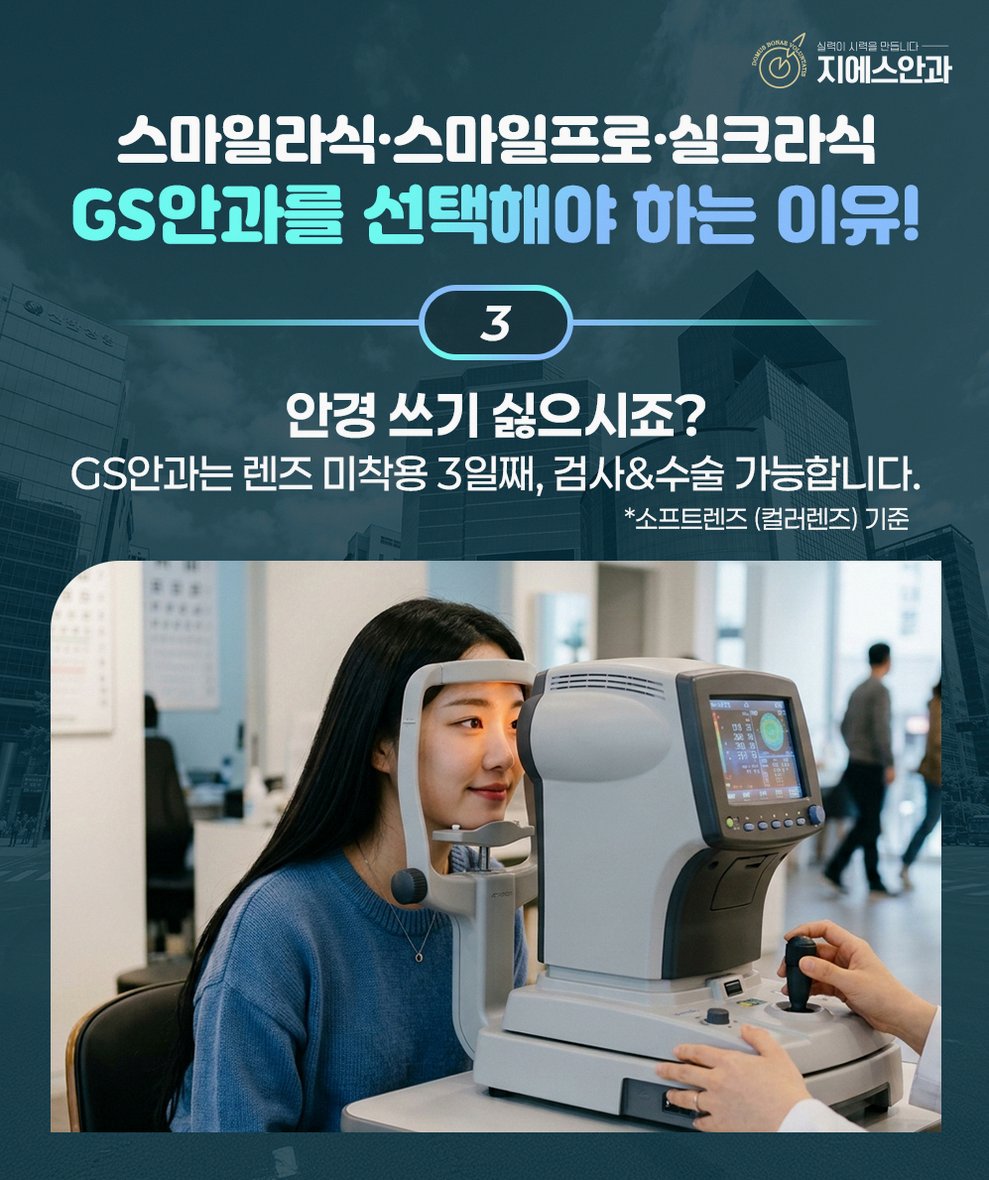
In a specialized ophthalmology clinic in Gangnam, Seoul, the preoperative workup for SMILE and SMILE Pro is usually detailed and structured. The goal is to confirm that your astigmatism is suitable for treatment and to choose the safest method for you.

Typical examinations include:
Detailed refraction
This is a careful measurement of your prescription, including the degree and axis of astigmatism. Both automated devices and manual refraction with trial lenses are often used to cross check the results.
Corneal topography and tomography
Topography maps the curvature of the corneal surface, showing how regular or irregular it is. Tomography adds information about the deeper layers and overall shape of the cornea. These tests help detect early forms of corneal weakness such as keratoconus, which can make laser reshaping unsafe.
Corneal thickness mapping
A map of corneal thickness across the entire surface helps the doctor plan how much tissue can be safely removed and whether SMILE, LASIK, or another method is more appropriate.
Pupil size, tear film, and dry eye evaluation
Pupil size in different lighting conditions and the quality of your tear film are checked. Existing dry eye symptoms are assessed because any laser vision correction can influence the ocular surface, at least temporarily.
Retina and optic nerve examination
Especially for patients with high myopia, a careful check of the retina and optic nerve is important to rule out tears, degeneration, or other issues that might affect vision or require separate treatment.
Some clinics, including GS Eye Center in Gangnam, operate a dedicated retina clinic with retina trained ophthalmologists. This can be helpful for high myopia patients who need more detailed retinal evaluation before proceeding with SMILE or other vision correction.
All of these tests are combined to answer key questions: Is your astigmatism regular and treatable with SMILE? Is the cornea thick and strong enough? Are there any warning signs that suggest another method or continued use of glasses would be safer?
Technology and SMILE platforms
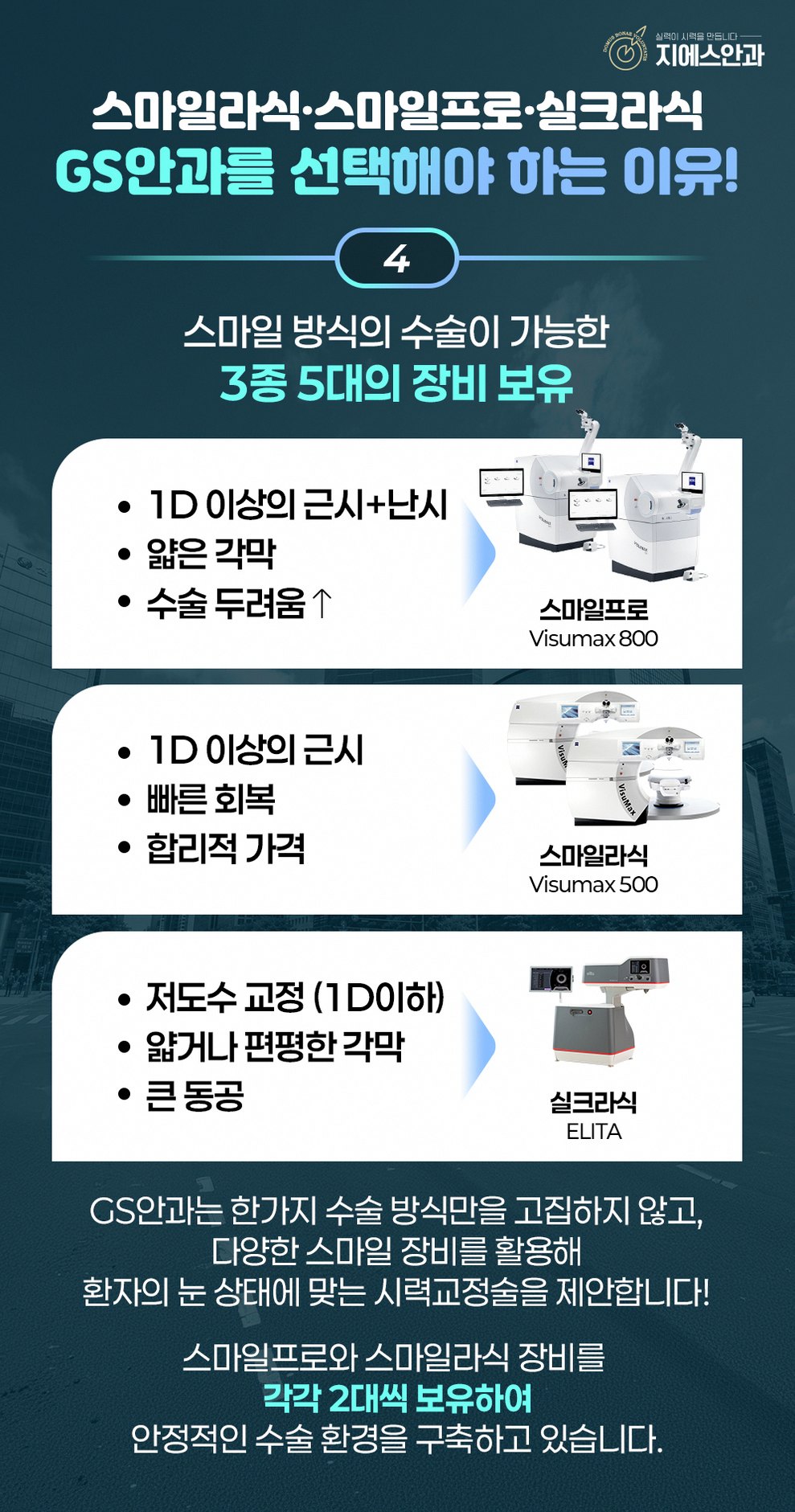
In Seoul, some ophthalmology clinics use more than one SMILE capable laser platform from the same manufacturer. This can include a newer generation system designed for SMILE Pro, along with additional SMILE capable systems.
The ZEISS VISUMAX 800, used for SMILE Pro, can complete the lenticule creation step in about 9 seconds. Shorter laser time may improve comfort and reduce the suction duration on the eye. For astigmatism treatment, this can help maintain centration and lower the risk of movement while the laser shapes the lenticule.
Having multiple SMILE platforms in one clinic also allows greater flexibility in scheduling and provides backup capacity. It can support a consistent workflow and quality control, as the team gains experience with different systems and can select the most suitable platform based on individual corneal characteristics.
GS Eye Center in Gangnam, Seoul was designated a ZEISS 'SMILE pro CENTER' in 2023 and named a SILK TRAINING Center in 2026. The clinic also holds ISO9001/14001 certification for SMILE-related processes (2020). These recognitions reflect structured protocols, systematic training, and a large accumulated case volume that includes many patients with myopia and astigmatism.
SMILE compared with other astigmatism treatments
When thinking about astigmatism treatment, it is useful to understand how SMILE fits among other options.

Glasses and contact lenses
Glasses and contact lenses are non surgical, adjustable, and widely available. They can correct a wide range of myopia and astigmatism, including types that are not suitable for laser surgery.
However, they require ongoing maintenance, regular replacements, and careful hygiene in the case of contact lenses. Long term contact lens wear can be associated with discomfort, dryness, and risk of infection. Some people also find glasses or lenses inconvenient for sports, travel, or certain occupations.
LASIK and LASEK
Both LASIK and LASEK are laser procedures that reshape the cornea to correct myopia and astigmatism.
LASIK involves creating a thin flap, lifting it, and using an excimer laser to reshape the corneal tissue underneath. The flap is then repositioned.
LASEK and similar surface procedures work on the outermost layer of the cornea without creating a flap. The surface cells are temporarily moved aside or removed, the excimer laser reshapes the surface, and the cells heal back over time.
SMILE uses a small incision and internal lenticule removal instead of a flap. Some patients and surgeons prefer SMILE for its flapless approach, while others may choose LASIK or LASEK based on specific corneal features, degree of astigmatism, or other medical considerations.
Phakic lens implantation
Phakic lens implantation, such as ICL and similar lenses, involves placing a thin lens inside the eye without removing the natural lens. This option is often considered when the cornea is too thin or the prescription is too high for safe laser reshaping.
For astigmatism, special toric versions of these lenses can be used. However, this is an internal eye surgery and has its own set of risks and follow up requirements. It may be recommended when laser options like SMILE or LASIK are not suitable.
There is no single best method for everyone. The choice depends on your corneal shape and thickness, the amount and type of astigmatism, your age, your lifestyle, and your long term vision goals.
Safety, expectations, and limitations of SMILE for astigmatism
Realistic expectations are important for anyone considering SMILE for astigmatism treatment.
For many adults with myopia and regular astigmatism in the treatable range, SMILE can significantly reduce or sometimes eliminate the need for glasses or contact lenses in daily life. However, individual results vary. Some patients may have a small amount of residual astigmatism or refractive error after surgery.
In certain cases, an enhancement procedure may be discussed if the remaining error meaningfully affects daily activities. Whether an enhancement is appropriate depends on corneal thickness, stability, and overall eye health.

Like any surgical procedure, SMILE carries potential risks. These can include temporary dry eye symptoms, glare or halos especially at night, infection, inflammation, or partial regression of the effect over time. Serious complications are uncommon but must be discussed during consultation.
Proper screening, conservative planning, and adherence to postoperative instructions are key to minimizing complications. Not all types or degrees of astigmatism are suitable for SMILE. Very high astigmatism, irregular astigmatism, or astigmatism associated with corneal diseases may be better managed with other methods or with continued use of glasses.
Who may consider SMILE in Gangnam, Seoul
Adults living in or visiting Gangnam often consider SMILE when they:
Have myopia with regular astigmatism and want to reduce dependence on glasses or contact lenses.
Have a stable prescription and no significant eye disease.
Prefer a flapless laser procedure and are comfortable with the idea of corneal reshaping.
Have been evaluated by an ophthalmologist who confirms that their cornea is suitable for SMILE.
International patients visiting Seoul for medical tourism may combine SMILE with a short stay in the city. In such cases, careful planning of the examination, surgery date, and follow up schedule is important.
Online consultation and pre visit preparation for overseas patients
If you are considering traveling to Gangnam for SMILE, an online or remote consultation is often the first step. While a final decision requires in person examination, online communication can help determine whether you are a likely candidate and how to plan your visit.
Before your online consultation, it is useful to prepare:
A recent glasses or contact lens prescription, including the cylinder and axis values for astigmatism.
Any previous eye examination reports, especially corneal topography or tomography if you have them.
Information about past eye problems, surgeries, injuries, or infections.
Details about your general health and medications.
A list of questions about SMILE, SMILE Pro, alternatives, and recovery.
During the online consultation, you can discuss your goals, daily visual demands, and travel schedule. The clinic can explain what to expect during your stay in Seoul, how many days are recommended for preoperative checks and postoperative visits, and what kind of follow up you will need once you return home.
Expected Korea visit timeline for SMILE
The exact schedule can vary, but a typical visit for international patients might look like this:
Day 1: Comprehensive eye examination
On your first full day in Seoul, you usually undergo a complete set of tests: refraction, corneal imaging, thickness mapping, dry eye evaluation, and retinal examination. Your pupils may be dilated, which can temporarily blur near vision. After reviewing the results, the ophthalmologist will confirm whether SMILE is suitable and discuss details of the procedure, risks, benefits, and alternatives.
Day 2 or 3: SMILE procedure
If you and the doctor decide to proceed, SMILE is often scheduled for the next day or shortly after, depending on your eye condition and the clinic’s schedule. The procedure itself is relatively quick, but you should plan extra time for preparation and rest afterward.
First week: early follow up
A follow up visit is usually scheduled within the first few days after SMILE to check healing, confirm that the cornea looks stable, and review any early symptoms. For international patients, it is common to stay in Seoul for several days after the procedure so that any early issues can be addressed promptly.
After you return home, you may be advised to see a local eye doctor at set intervals. The clinic in Seoul can often provide a summary of your procedure and postoperative plan to share with your local ophthalmologist.
Aftercare and lifestyle considerations
After SMILE, you will receive detailed instructions on eye drops, hygiene, and activity restrictions. While specific timelines vary, general points often include:
Using prescribed antibiotic and anti inflammatory drops as directed.
Avoiding rubbing your eyes during the early healing period.
Keeping water, soap, and makeup away from the eyes for a certain time, as advised by your doctor.
Wearing protective eyewear if recommended, especially during sleep or sports.
Limiting very dusty, smoky, or dirty environments in the first days after surgery.
You may notice changes in vision over the first days to weeks as the cornea stabilizes. Mild dryness, light sensitivity, or glare at night can occur and usually improve with time and proper care. Any sudden pain, significant drop in vision, or unusual symptoms should be reported to the clinic immediately.
What to ask during consultation at a Gangnam ophthalmology clinic
To make an informed decision, it helps to prepare specific questions before your consultation. Examples include:
Is my degree and type of astigmatism suitable for SMILE, or would you recommend another method such as LASIK, LASEK, or lens implantation in my case?
How do my corneal thickness and topography look? Are there any signs that make you cautious about laser vision correction?
Which laser platform will be used for my SMILE or SMILE Pro procedure, and why is it suitable for my cornea and astigmatism pattern?
How many SMILE cases with astigmatism similar to mine has this clinic managed, and what is your general approach if small residual astigmatism remains?
What is the follow up plan for international patients, and how can I coordinate with my local eye doctor after returning home?
When comparing clinics, consider factors such as the presence of board certified ophthalmologists with subspecialty training, the range of diagnostic equipment, the availability of multiple SMILE platforms, and the clarity and transparency of explanations about risks, benefits, and alternatives.
Brief introduction to GS Eye Center
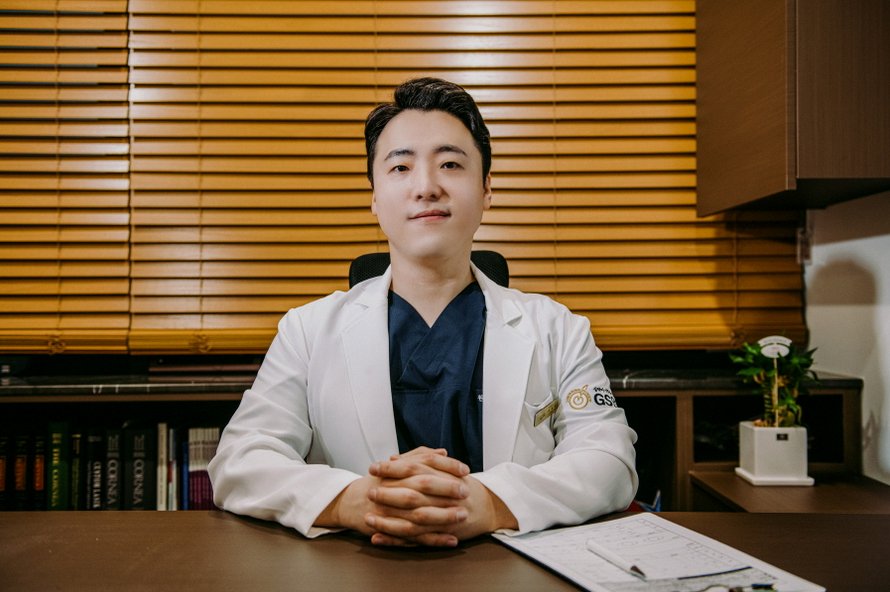
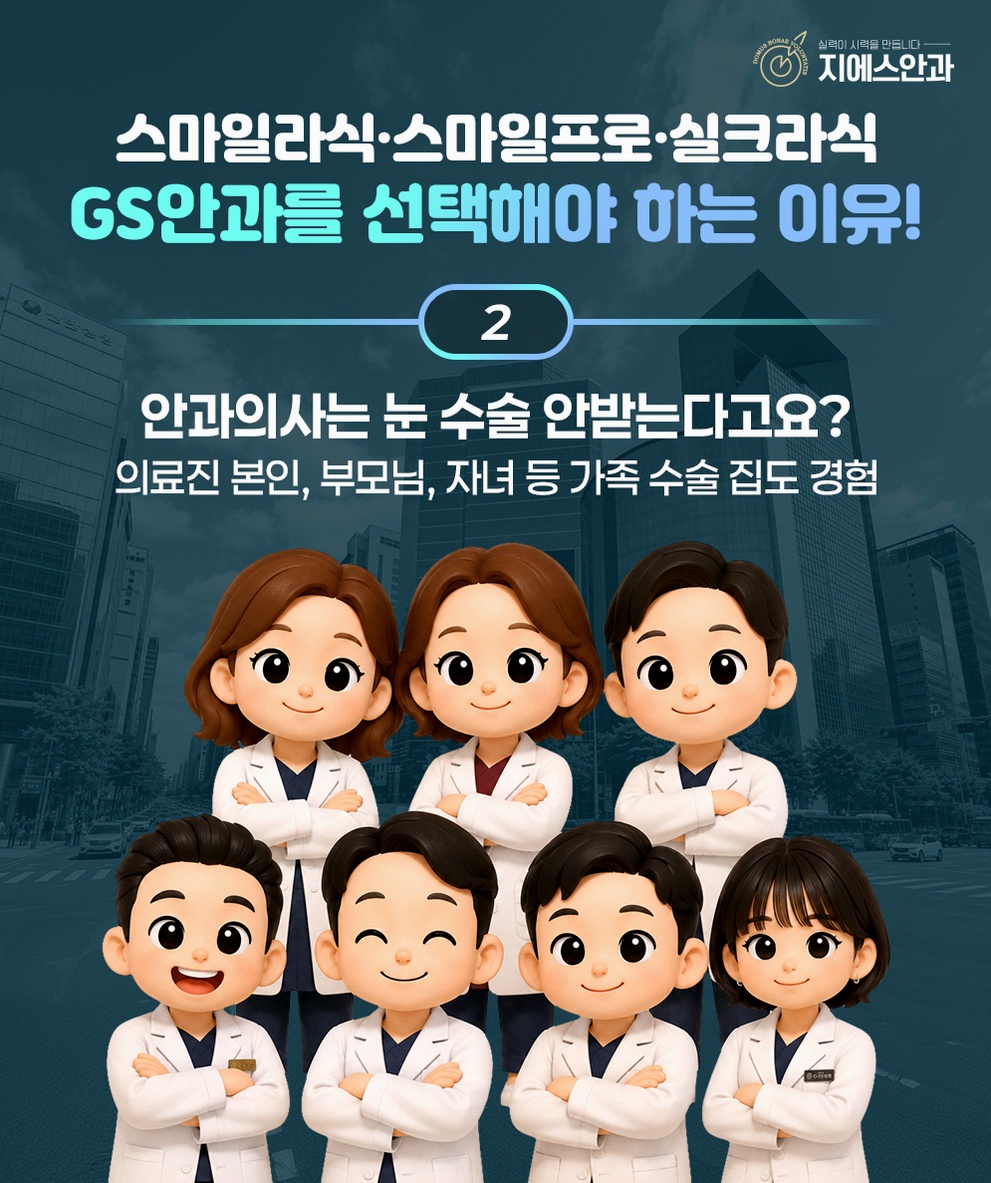
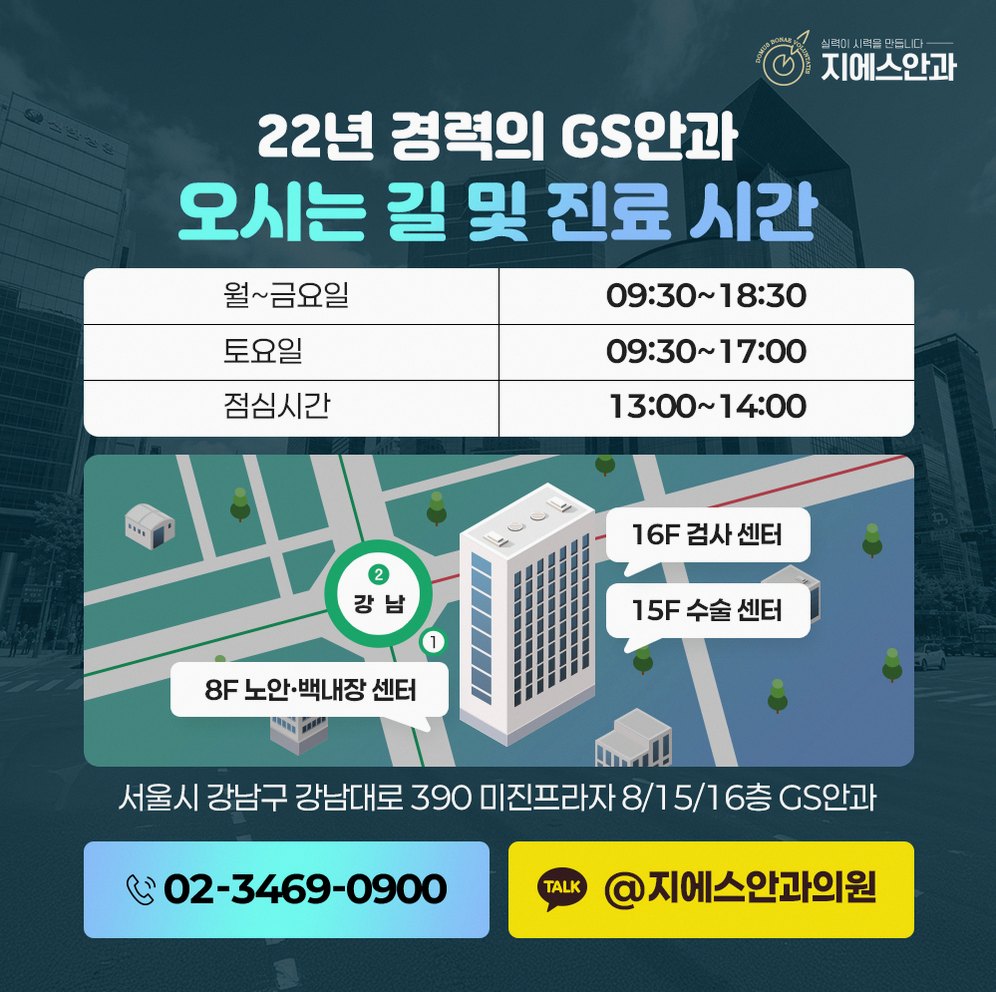
GS Eye Center is an ophthalmology clinic in Gangnam, Seoul, established in 2005 and focused on vision correction procedures including SMILE, LASIK, LASEK, and lens implantation. The clinic uses multiple SMILE capable laser platforms and operates a dedicated retina clinic, with all seven doctors being board certified ophthalmologists, including retina fellowship trained specialists. It serves as a clinical education site for medical trainees and industry partners, reflecting structured protocols for examination, surgical planning, and postoperative care.
If you are considering traveling to Seoul for SMILE, an online consultation with GS Eye Center can help you understand whether your astigmatism is likely to be suitable and how to plan your visit.
FAQ about SMILE for astigmatism
Can SMILE completely cure my astigmatism?
SMILE can significantly reduce or sometimes almost eliminate regular astigmatism in many patients whose prescriptions fall within the treatable range. However, no procedure can guarantee perfect vision for every individual. A small amount of residual astigmatism or refractive error may remain, and this is influenced by your original prescription, corneal characteristics, healing response, and other factors. Your ophthalmologist will discuss realistic expectations based on your specific measurements.
Is SMILE better than LASIK for astigmatism?
SMILE and LASIK are both established methods for correcting myopia and astigmatism. SMILE uses a small incision and internal lenticule removal without a large flap, while LASIK uses a flap and an excimer laser on the corneal surface. Whether one is better for you depends on your corneal thickness, shape, degree of astigmatism, lifestyle, and medical history. In some cases, SMILE may be preferred; in others, LASIK or LASEK may offer advantages. A comprehensive examination is needed to compare options.
Up to what level of astigmatism can SMILE treat?
Each SMILE platform has its own approved treatment range for astigmatism, and clinics may apply additional safety margins based on experience and current evidence. In general, SMILE is designed to treat low to moderate regular astigmatism in combination with myopia. Very high or irregular astigmatism may not be suitable. Instead of focusing on a specific diopter number, it is more accurate to say that your doctor will evaluate whether your astigmatism pattern and corneal structure fall within a safe and effective range for SMILE.
Is SMILE suitable if I have dry eyes or thin corneas?
Mild dry eye is common and does not automatically exclude SMILE, but it needs to be evaluated and possibly treated before and after surgery. Some patients with dry eye may benefit from the flapless nature of SMILE, while others may still be better suited to different approaches. For thin corneas, the surgeon must calculate how much tissue would remain after reshaping. If the remaining cornea would be too thin, SMILE and LASIK may not be recommended, and alternatives such as surface procedures or phakic lens implantation might be discussed. Only a full examination can determine suitability.
How is astigmatism measured and checked before SMILE?
Astigmatism is measured using several methods, including automated refraction, manual refraction with lenses, and corneal imaging such as topography and tomography. These tests provide information about the strength and axis of astigmatism, as well as whether it is regular or irregular. The ophthalmologist compares and cross checks the results to ensure accuracy. This careful measurement is essential to designing the lenticule for SMILE and aligning the treatment correctly.
Can SMILE be combined with other procedures if my astigmatism is high?
In some complex cases, doctors may consider combining or staging different procedures, such as SMILE followed by a surface enhancement, or choosing lens based options instead of corneal reshaping. However, such strategies depend heavily on corneal thickness, stability, and overall eye health, and they are not suitable for everyone. If your astigmatism is high or irregular, your ophthalmologist will explain whether a combined approach is reasonable or whether non surgical correction remains the safest option.
Soft call to action
If you are an overseas patient with myopia and astigmatism and are considering SMILE in Gangnam, Seoul, an online consultation is a practical first step. By sharing your current prescription and eye history, you can receive individualized guidance on whether SMILE or SMILE Pro may be appropriate, what examinations you will need, and how to plan your travel and recovery. A structured, evidence based discussion with an experienced ophthalmology team can help you make a calm and informed decision about astigmatism treatment.
- 공유 링크 만들기
- X
- 이메일
- 기타 앱


댓글
댓글 쓰기