LASIK vs SMILE Recovery in Seoul — Overseas Guide
- 공유 링크 만들기
- X
- 이메일
- 기타 앱
Direct answer: how long is LASIK recovery time?
Most people notice clearer vision soon after LASIK, but full recovery takes time. Typical milestones include:
- Within 1–3 days: clearer vision and the ability to perform basic daily tasks such as reading and light computer use.
- First week: reduced discomfort and improving stability; symptoms like dryness and light sensitivity often begin to ease.
- Several weeks to a few months: vision continues to stabilize, with gradual improvement in night vision and fine detail.
Temporary dry eye, light sensitivity, and fluctuations in clarity—especially at night—are common during recovery. Follow your surgeon’s instructions, attend scheduled follow-ups, and use prescribed eye drops to support healing.
SMILE LASIK is a related vision correction method that uses a small incision without creating a large flap on the corneal surface. Because the technique is different, the recovery experience can feel different as well, especially in terms of early comfort and functional return to work. This guide explains how LASIK recovery time usually progresses, how SMILE LASIK compares, and what international patients visiting an eye clinic near Gangnam Station in Seoul can realistically expect.
Overview of LASIK and SMILE LASIK
LASIK in simple terms
LASIK is a vision correction procedure that reshapes the clear front part of the eye (the cornea) to reduce myopia, hyperopia, or astigmatism. During LASIK, a thin flap is created on the surface of the cornea. This flap is gently lifted, and an excimer laser reshapes the underlying tissue. The flap is then placed back into position, where it adheres without stitches.
Because a flap is involved, the surface nerves and tissue are temporarily disturbed. This is one reason why dryness, light sensitivity, and a foreign body sensation are common in the early recovery period.
SMILE LASIK in simple terms
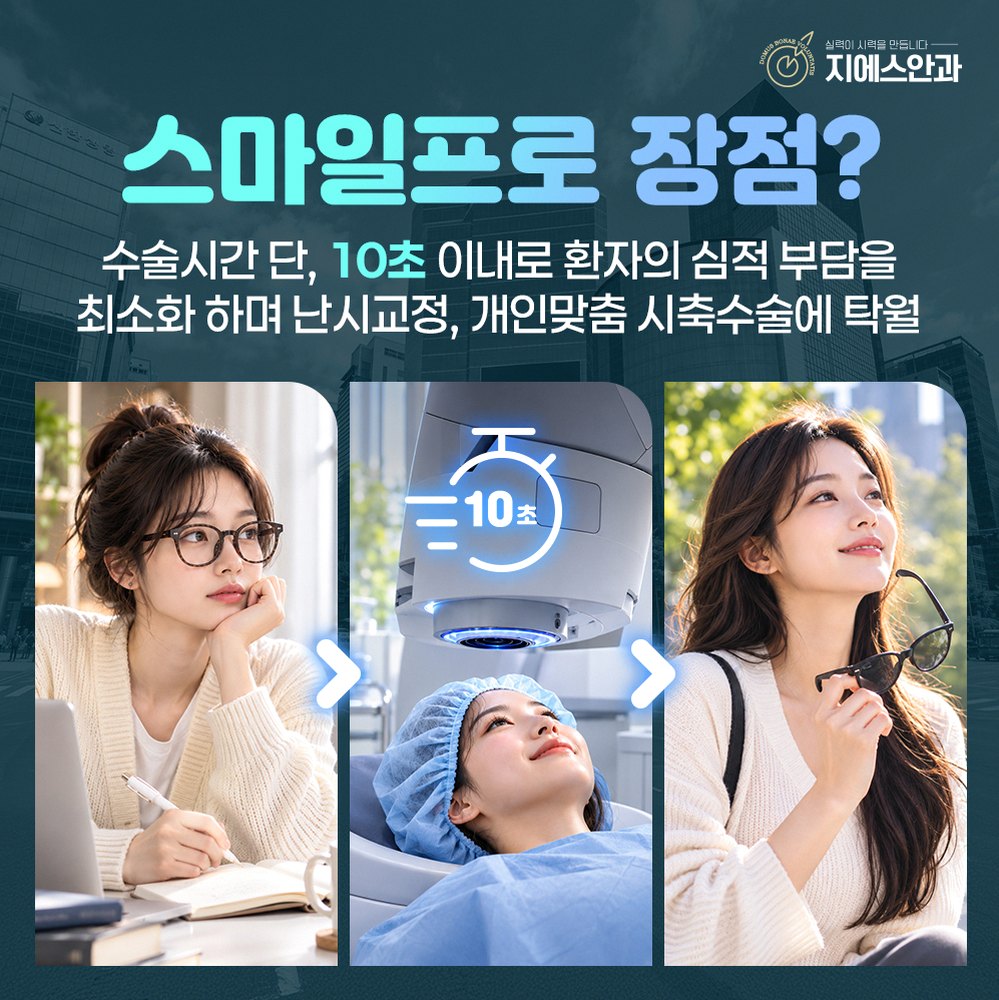
SMILE LASIK is also a laser vision correction method, but the technique is different. A femtosecond laser creates a small lens-shaped piece of tissue (called a lenticule) inside the cornea. This lenticule is removed through a very small side incision, without creating a large surface flap.
The small-incision, flapless approach means that more of the corneal surface is left structurally undisturbed. This can influence how the eye feels after the procedure, how quickly patients are comfortable using their eyes, and how certain symptoms such as dryness may be perceived.

Why the technique matters for recovery
In LASIK, the flap creation step temporarily affects a wider area of corneal surface nerves. In SMILE LASIK, the laser work is mostly inside the cornea, with only a small opening on the surface. For many patients, this difference can be reflected in:
Less surface irritation or scratchy feeling in the very early period
A different pattern of dry eye symptoms
How quickly they feel comfortable with screens, air conditioning, or wind
However, both LASIK and SMILE LASIK involve reshaping the cornea, and both require time for the eye to settle and for vision to stabilize. Individual recovery varies, and the choice of procedure should be based on detailed examination, not on one single factor such as recovery time.
Typical LASIK recovery timeline
Immediately after surgery
Right after LASIK, vision is usually blurry or hazy. Many people describe a gritty or foreign body sensation, tearing, and light sensitivity. The eyes may feel tired, and it is common to prefer keeping them closed.
Patients are usually asked to rest, avoid rubbing the eyes, and use prescribed eye drops to prevent infection and support healing. Protective shields may be placed over the eyes to prevent accidental touching or rubbing, especially during sleep.
First 24 hours
Within the first day, many patients notice that they can already see better than before without glasses or contact lenses, although the vision is still not fully clear. The eyes may still feel dry, watery, or slightly uncomfortable.
Activities are usually limited to basic indoor tasks. Reading and screen use are often possible for short periods, but frequent breaks and lubrication are important. A postoperative check is typically scheduled to confirm that the flap is in good position and that the early healing is on track.
First week
Over the first week, vision usually becomes progressively clearer, although some fluctuation is common. Dryness, glare, halos around lights, and light sensitivity are typical during this phase, especially in the evening or at night.
Patients are usually advised to:
Avoid rubbing or pressing on the eyes
Avoid eye makeup for a period recommended by the surgeon
Avoid swimming pools, hot tubs, and saunas
Limit intense exercise and contact sports
Many people can resume desk work within several days, but this depends on the individual eye condition, job demands, and how the eyes feel. Long hours of concentrated screen work may still be tiring, so planned breaks and good lubrication are important.
First 1 to 3 months
During the next few weeks to months, the cornea continues to stabilize. Vision often becomes clearer and more consistent, and night-vision symptoms such as glare or halos may gradually improve. Dryness often becomes less noticeable, especially with proper use of prescribed drops and environmental adjustments.
Follow-up visits during this period are important to:
Monitor visual acuity and stability
Check the corneal surface and tear film
Adjust drop schedules if needed
These timelines are general patterns, not promises. Some people feel comfortable very quickly, while others need more time. Pre-existing dryness, higher prescriptions, and individual healing responses all play a role.
How SMILE LASIK recovery compares
Early comfort and surface healing
Because SMILE LASIK uses a small incision and does not create a large flap, less of the corneal surface is lifted. This can mean that the surface layer and its nerves are disturbed in a different way compared to LASIK.
Many patients report that the eyes feel relatively comfortable earlier after SMILE-type procedures, with a different pattern of dryness or scratchiness. The small incision usually heals quickly, but the internal reshaping of the cornea still needs time to stabilize, just as with LASIK.
Return to work and daily activities
For both LASIK and SMILE LASIK, many office workers are able to return to desk-based tasks within a few days, depending on how their eyes feel and the advice of their surgeon. With SMILE LASIK, some patients feel ready to use screens and perform light tasks relatively quickly, though they still need to follow instructions about breaks, lubrication, and lighting.
Driving, especially at night, should only be resumed once a postoperative check confirms that vision is adequate and stable enough for safety. This decision is individualized and may differ between LASIK and SMILE LASIK depending on each eye’s response.
Dryness, glare, and night vision
Both LASIK and SMILE LASIK can cause temporary dryness and night-vision symptoms during the recovery period. Because SMILE LASIK does not involve a large flap, there may be differences in how corneal nerves and the tear film recover, which can influence how dryness feels.
However, it is important not to assume that one method will always be more comfortable or faster for everyone. Existing dry eye, corneal shape, prescription level, and other factors can influence the experience. Careful preoperative evaluation and realistic expectations are essential.
LASEK and surface procedures
Some patients are advised to consider LASEK or other surface procedures instead of LASIK or SMILE LASIK, for example when the cornea is thinner or has certain characteristics. Surface procedures usually involve a longer early recovery period, with more discomfort and slower visual clearing in the first days to weeks, but they can be appropriate for specific eye conditions.
The choice among LASIK, SMILE LASIK, and LASEK should be based on a detailed examination and discussion, not just on the desire for the quickest recovery.
Factors that affect recovery time
Preoperative factors
Several individual characteristics influence how quickly and comfortably you recover:
Degree of myopia or astigmatism
Corneal thickness and curvature
Existing dry eye symptoms
Age and general health
Occupational visual demands (for example, long hours at a screen, night driving, or frequent flying)
Eyes with higher prescriptions or more fragile tear films may need more time to feel stable, regardless of the procedure type.
Intraoperative factors
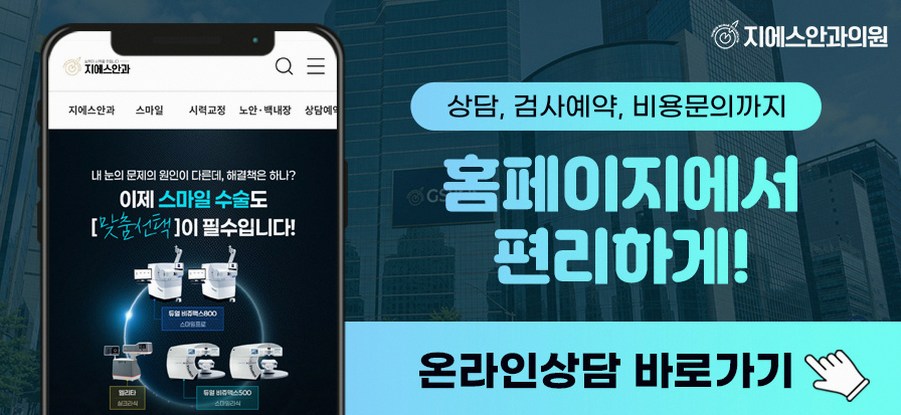
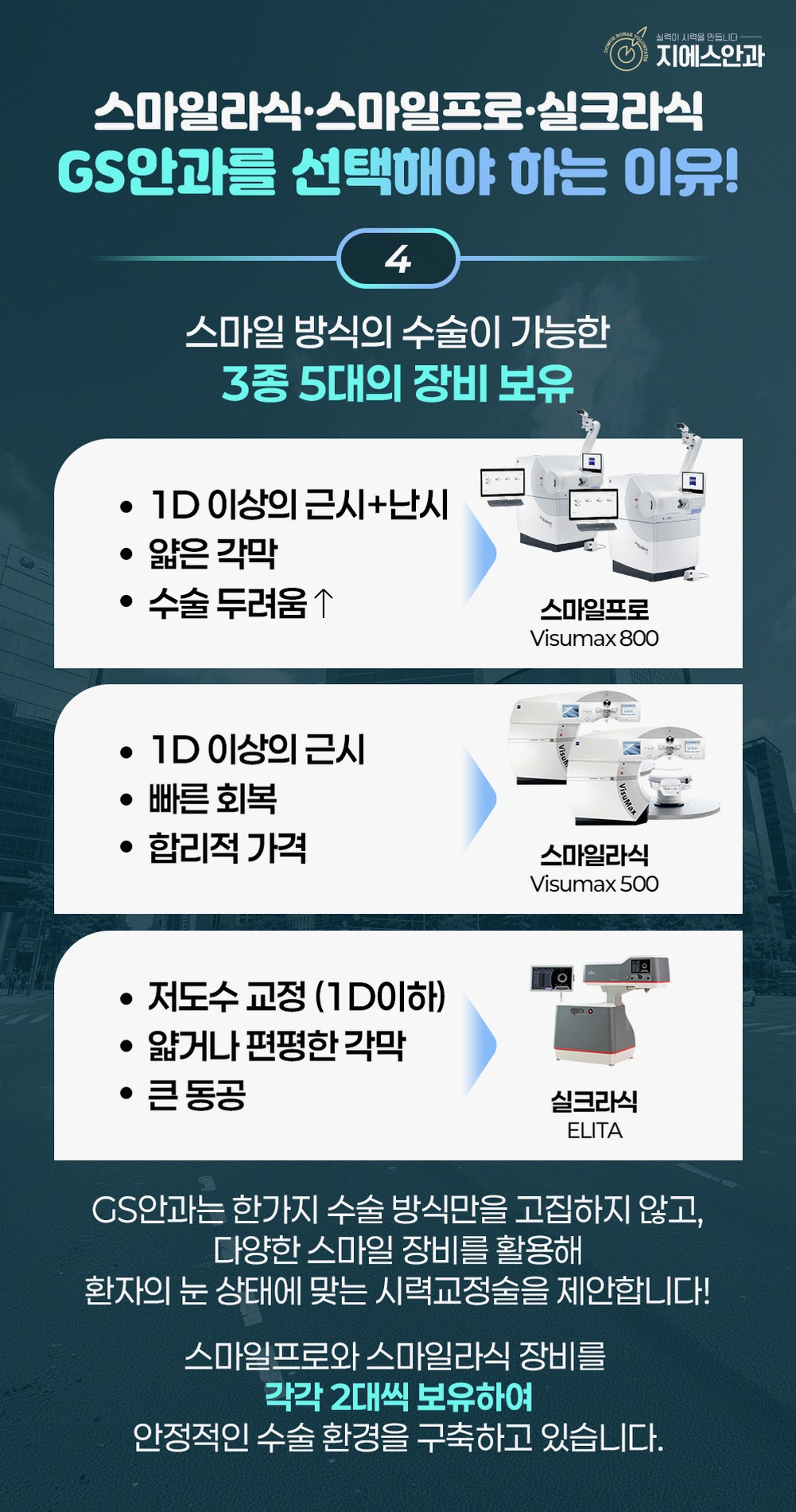
The type of laser platform, the precision of centration, and whether any additional procedures are performed can also affect recovery. For SMILE LASIK, some ophthalmology clinics in Seoul use advanced platforms such as VISUMAX 800 for SMILE pro and VISUMAX 500 units for SMILE LASIK, allowing them to select settings and techniques suited to each eye.
An ophthalmology clinic with large cumulative experience in vision correction and cataract surgery may have standardized protocols for planning, performing, and following up procedures. This does not guarantee specific outcomes, but it can support consistent processes and monitoring.
Postoperative factors
How you care for your eyes after surgery is a major part of recovery time:
Using prescribed eye drops as directed
Avoiding eye rubbing and pressure on the eyes
Managing screen time with regular breaks
Ensuring good sleep and hydration
Avoiding very dry or dusty environments when possible
Patients who follow instructions carefully and attend all scheduled follow-up visits give their eyes the best chance to recover smoothly.
Practical guidance: work, driving, exercise, and daily life
Returning to work
For both LASIK and SMILE LASIK, many people with office-based jobs return to work within several days. With SMILE-type procedures, some patients feel comfortable resuming light desk work relatively quickly, provided they:
Take frequent breaks from screens
Use lubricating drops as recommended
Avoid rubbing the eyes when tired
Those with physically demanding jobs, outdoor work, or dusty environments may need additional time or protective measures. Your surgeon will give more specific guidance based on your job and eye condition.
Driving again
Driving should only resume after a postoperative check confirms that your vision meets safety standards and that you feel confident. Early on, glare and halos can make night driving uncomfortable, whether you have had LASIK or SMILE LASIK.
If you are visiting Korea for surgery, discuss your driving needs in your home country with the medical team so they can advise on a realistic timeline.
Exercise, swimming, and sauna
Light indoor exercise such as walking or gentle stationary cycling is usually allowed relatively early, but intense workouts, contact sports, and activities with a risk of eye impact are generally delayed.
Swimming pools, hot tubs, and saunas are usually restricted for a period to reduce the risk of infection and irritation. Whether you have LASIK or SMILE LASIK, plan your travel and leisure schedule in Seoul so that you avoid these activities until your surgeon confirms it is safe.
Dryness, glare, and halos
Dryness, glare, and halos around lights are common in the early weeks after both LASIK and SMILE LASIK. Many patients notice gradual improvement over time, especially with proper drop use and environmental adjustments, but the exact duration varies.
If you already have significant dry eye symptoms before surgery, this should be discussed in detail during your preoperative consultation, as it can influence both the choice of procedure and the expected recovery pattern.
Who may consider SMILE LASIK in Seoul
SMILE LASIK may be considered by adults who:
Have stable myopia or myopic astigmatism
Want to reduce dependence on glasses or contact lenses
Have corneas that are suitable in thickness and shape for a small-incision procedure
Are willing to follow postoperative instructions and attend follow-up visits
Suitability is not determined by desire alone. A thorough eye examination is essential to decide whether SMILE LASIK, LASIK, LASEK, or another option such as lens implantation is more appropriate.
Pre-visit online consultation and preparation
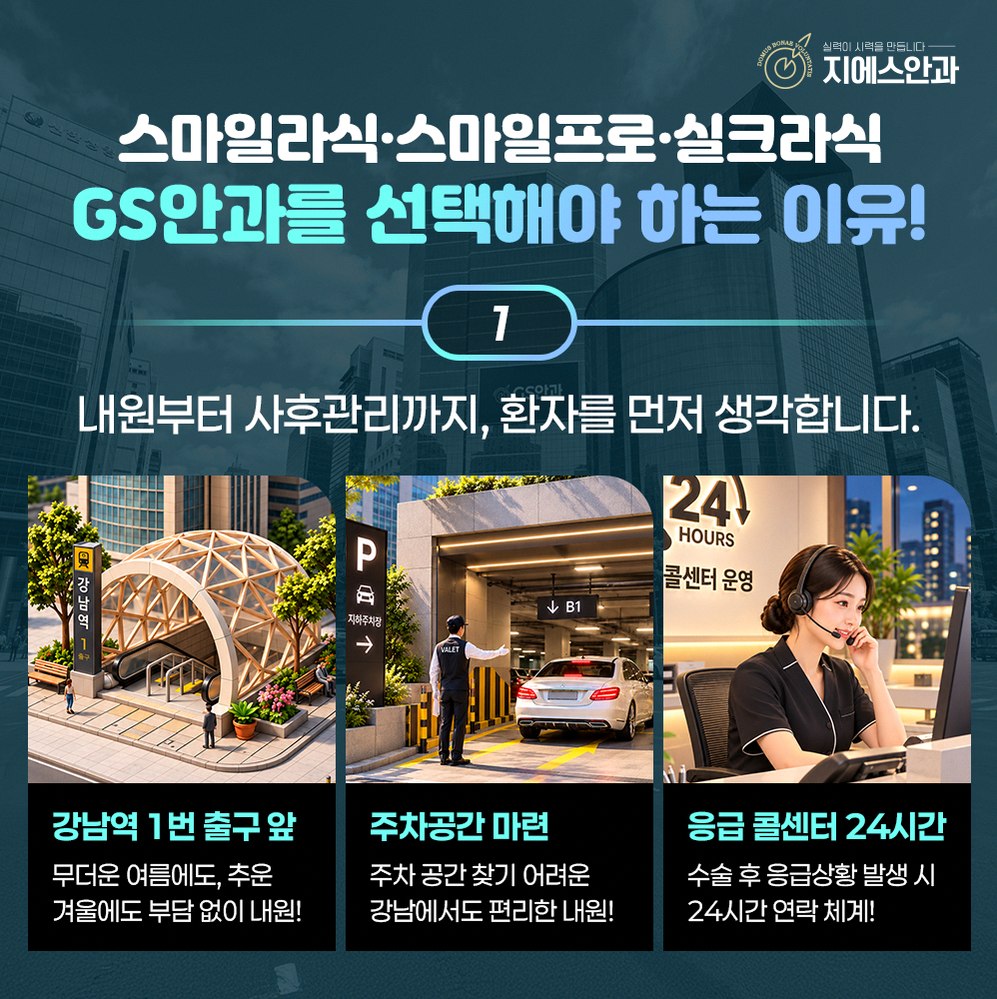
For overseas patients, an online consultation before traveling to Seoul can be very helpful. Many ophthalmology clinics near Gangnam Station offer online channels where you can:
Share your age, prescription history, and any previous eye procedures
Describe symptoms such as dryness, night-vision problems, or floaters
Send recent eye examination results from your local provider, if available
This preliminary information cannot replace a full examination, but it helps the medical team estimate whether LASIK or SMILE LASIK is likely to be suitable and suggest an approximate visit schedule.
Before your trip, it is useful to prepare:
A list of current medications and health conditions
Any known allergies, especially to medications or eye drops
Details of your visual needs at work and in daily life
Questions you want to ask about recovery time, follow-up, and long-term care
Expected Korea visit timeline for LASIK or SMILE LASIK
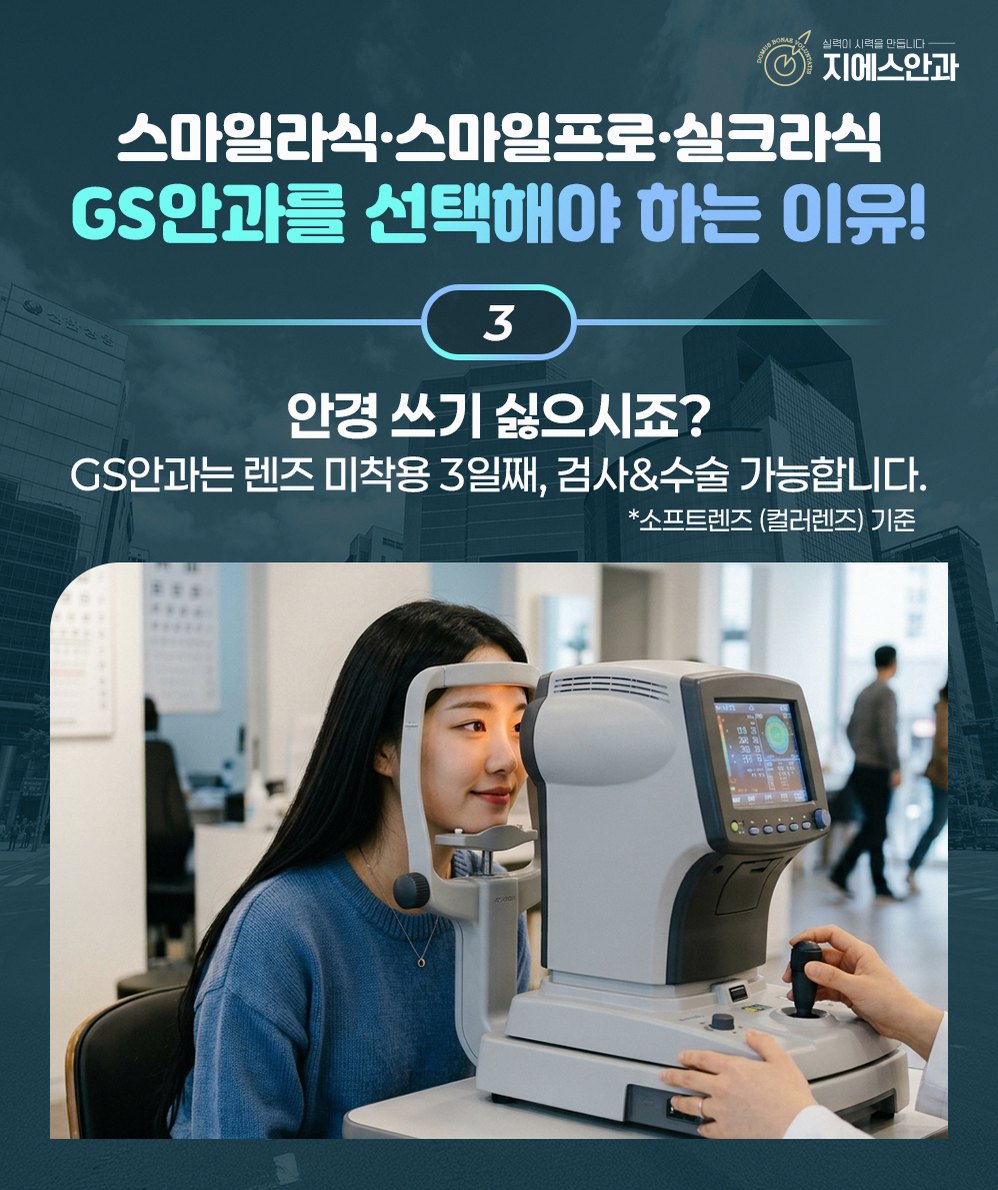
First visit and comprehensive examination
When you arrive in Seoul, your first in-person visit will typically include a detailed eye examination. At an ophthalmology clinic such as GS Eye Center, this may involve:
Measurement of your current prescription
Corneal topography and thickness mapping
Tear film and dry eye assessment
Retinal evaluation, sometimes supported by a separate retina center
These tests are important to confirm that your eyes are suitable for LASIK or SMILE LASIK and to decide which method is more appropriate.
Surgery day
If your eyes are suitable and you decide to proceed, the procedure is usually done on a separate day or, in some cases, the same day as the examination, depending on scheduling and your travel plan. The actual laser time for both LASIK and SMILE LASIK is short, but you should plan several hours at the clinic for preparation, the procedure itself, and immediate postoperative checks.
Postoperative checks in Seoul
Most international patients stay in Seoul for at least several days after surgery to attend one or more follow-up visits. These early checks allow the medical team to:
Confirm that the cornea is healing as expected
Monitor vision and comfort
Adjust drop schedules or add supportive treatments if needed
If you are planning a short stay, discuss this in advance so that your schedule includes essential follow-up visits before you fly home.
Aftercare once you return home
After you leave Korea, you will continue to recover over weeks to months. It is important to:
Follow the written postoperative instructions provided by the clinic
Continue using drops as directed, or as advised by your local eye doctor
Avoid rubbing the eyes and protect them from direct trauma
Many patients coordinate follow-up checks with a local eye specialist in their home country. Ask for a summary of your procedure and early postoperative findings so you can share this with your local doctor.
How this ophthalmology clinic manages recovery
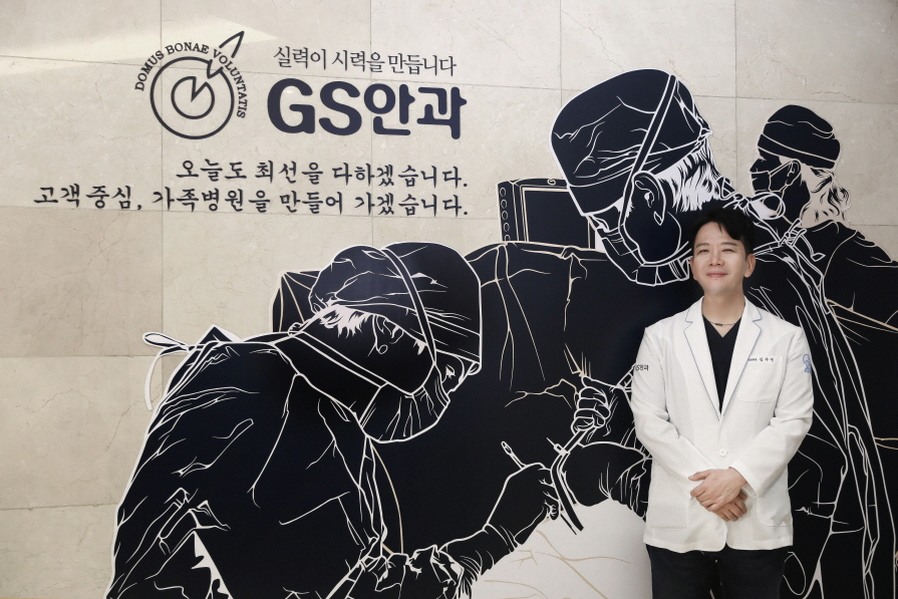
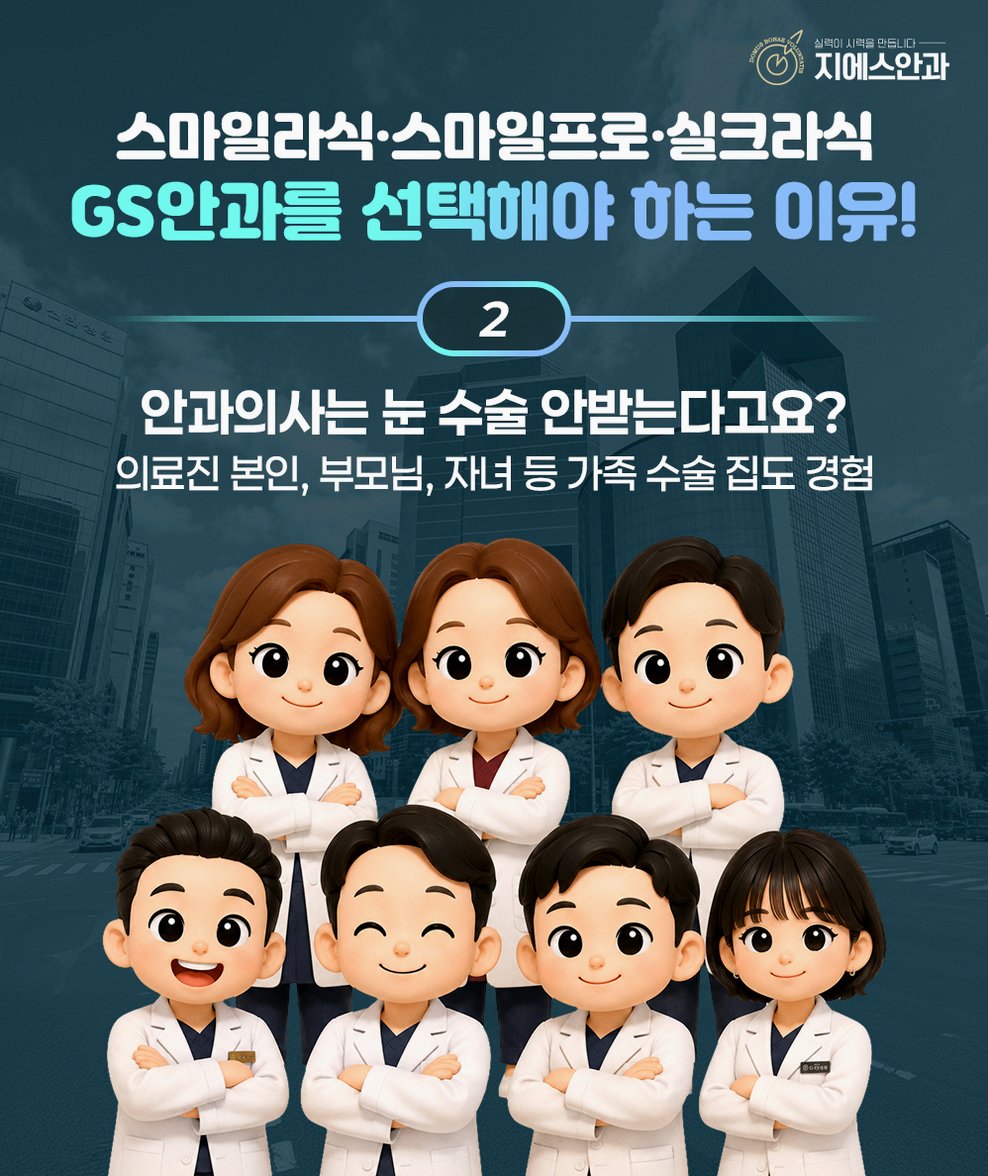
Some ophthalmology clinics in Gangnam-gu, Seoul, have focused on vision correction since the mid-2000s at a single location, accumulating large case numbers in both vision correction and cataract surgery. A team of multiple ophthalmology specialists, including doctors with university teaching experience and educational YouTube activities, may be involved in planning and performing procedures.
GS Eye Center has received several SMILE-related recognitions and equipment upgrades: it joined the ZEISS SMILE GOLD CLUB in 2021, was designated a ZEISS SMILE pro CENTER in 2023, and was named a SILK TRAINING Center in 2026. The center operates VISUMAX platforms, adding VISUMAX 800 in 2023 and maintaining two VISUMAX 500 units (installed in 2016 with a dual-system in 2019). GS Eye Center also holds ISO 9001 and 14001 certification for SMILE LASIK (2020), reflecting established quality and environmental management systems.
Some of these clinics also serve as clinical education sites for medical schools and for Asia-Pacific ophthalmic companies. While these facts do not guarantee specific outcomes or faster recovery, they suggest that the clinic follows structured protocols for examination, procedure selection, and follow-up.
Questions to ask before you decide
Before you choose LASIK or SMILE LASIK in Seoul, it can be helpful to prepare a checklist of questions:
Which procedure (LASIK, SMILE LASIK, LASEK, or lens implantation) is recommended for my eyes, and why?
How might my existing dry eye or night-vision symptoms affect recovery?
What is the expected schedule for postoperative visits while I am in Korea?
How should I coordinate follow-up care once I return home?
What activities should I avoid, and for approximately how long?
Bringing these questions to your online consultation and in-person visit helps ensure that your expectations about recovery time and daily life are realistic and tailored to your situation.
Frequently asked questions about LASIK and SMILE LASIK recovery time
How long does it take to see clearly after LASIK or SMILE LASIK?
Many patients notice clearer vision within a short time after both LASIK and SMILE LASIK, often within the first few days. However, it is normal for vision to fluctuate, especially in the first weeks. Fine details, night vision, and overall stability often continue to improve over several weeks to a few months. The exact pace depends on your prescription, tear film, and individual healing response.
When can I go back to work after LASIK vs SMILE LASIK?
Many office workers are able to return to desk-based work within several days after either LASIK or SMILE LASIK. With SMILE-type procedures, some patients feel comfortable using screens relatively quickly, but they still need regular breaks and lubrication. If your job involves heavy physical activity, outdoor work, or dusty environments, you may need more time before returning. Your surgeon will give personalized advice based on your eyes and your job.
When is it safe to drive after LASIK or SMILE LASIK?
Driving should only be resumed when a postoperative examination confirms that your vision is adequate and you feel confident, especially for night driving. Early on, glare and halos around lights can make driving uncomfortable after both LASIK and SMILE LASIK. If you are visiting Korea for surgery, discuss your driving needs at home so that your medical team can suggest a realistic timeline.
How long do dryness, glare, or halos last after LASIK or SMILE LASIK?
Dryness, glare, and halos are common in the early recovery period and often improve gradually over weeks to months. Some patients notice that these symptoms are more pronounced at night or in air-conditioned environments. The pattern can differ slightly between LASIK and SMILE LASIK because of how the cornea is treated, but individual variation is large. Pre-existing dry eye and prescription level also play important roles.
Soft call to action for online consultation
If you are considering LASIK or SMILE LASIK in Seoul and are wondering about recovery time, an online consultation with an ophthalmology clinic near Gangnam Station can help you understand your options. By sharing your prescription, eye history, and travel plans in advance, you can receive guidance on whether SMILE LASIK, LASIK, LASEK, or another method may be suitable, and how to plan your visit and recovery schedule.
GS Eye Center welcomes inquiries from overseas patients and can provide information about examination steps, procedure options, and follow-up planning so that you can make an informed decision before you travel.
Medical information notice
This article is for general information for international readers and does not replace a professional examination or personalized medical advice. Recovery time and outcomes after LASIK, SMILE LASIK, LASEK, or other vision correction procedures vary between individuals. Always consult directly with a qualified medical professional before making decisions about surgery or changing your treatment plan.
- 공유 링크 만들기
- X
- 이메일
- 기타 앱


댓글
댓글 쓰기