Recovery Timeline for Overseas Patients in Gangnam
- 공유 링크 만들기
- X
- 이메일
- 기타 앱



Direct answer: lens implantation recovery time
For most people, vision correction lens implantation offers noticeably clearer vision quite soon after surgery, often within the first day. However, the eyes still need a stabilization period before everything feels fully natural. Many patients can return to light daily activities relatively early, while complete adaptation and stable vision usually take longer and vary from person to person. Your individual eye condition, the type of lens used, and how carefully you follow postoperative instructions all influence how your recovery unfolds.
This guide is written for international patients considering lens implantation in the Gangnam area of Seoul. It explains what phakic intraocular lens implantation is, what the recovery stages usually look like, which habits help or slow recovery, how to plan a medical trip to Korea, and what to ask a clinic such as GS Eye Center before you decide.
What is vision correction lens implantation
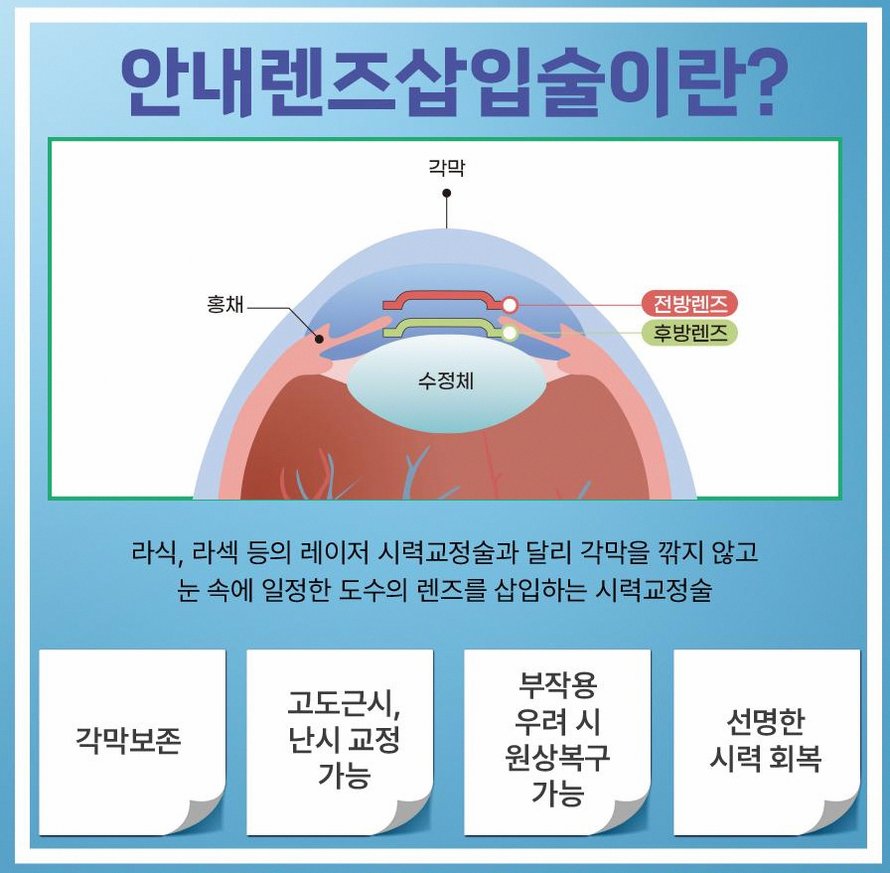
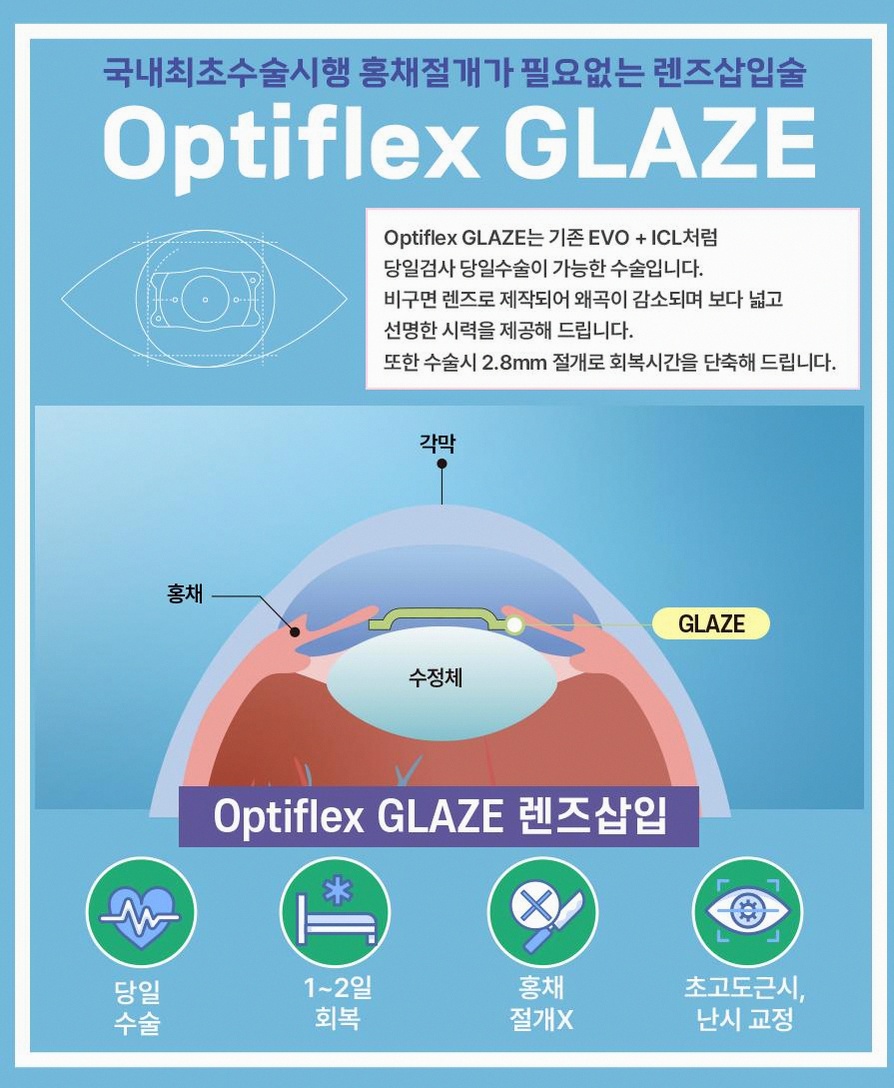
Phakic intraocular lens implantation is a vision correction procedure in which an artificial lens is placed inside the eye while your natural crystalline lens remains in place. Unlike cataract surgery, where the cloudy natural lens is removed and replaced, phakic lenses work together with your own lens to refocus light more accurately on the retina.
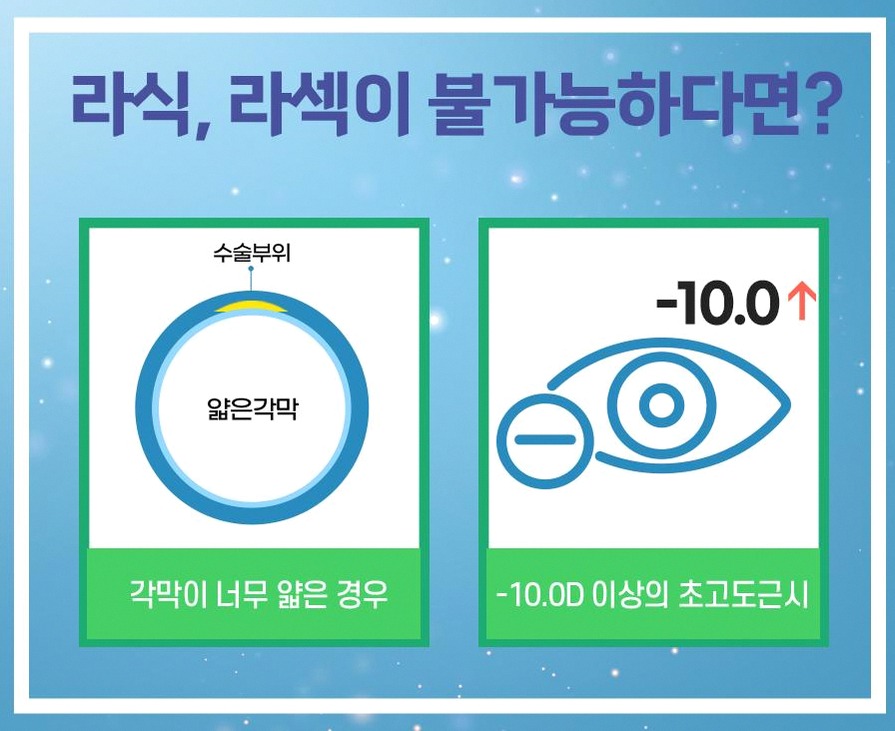
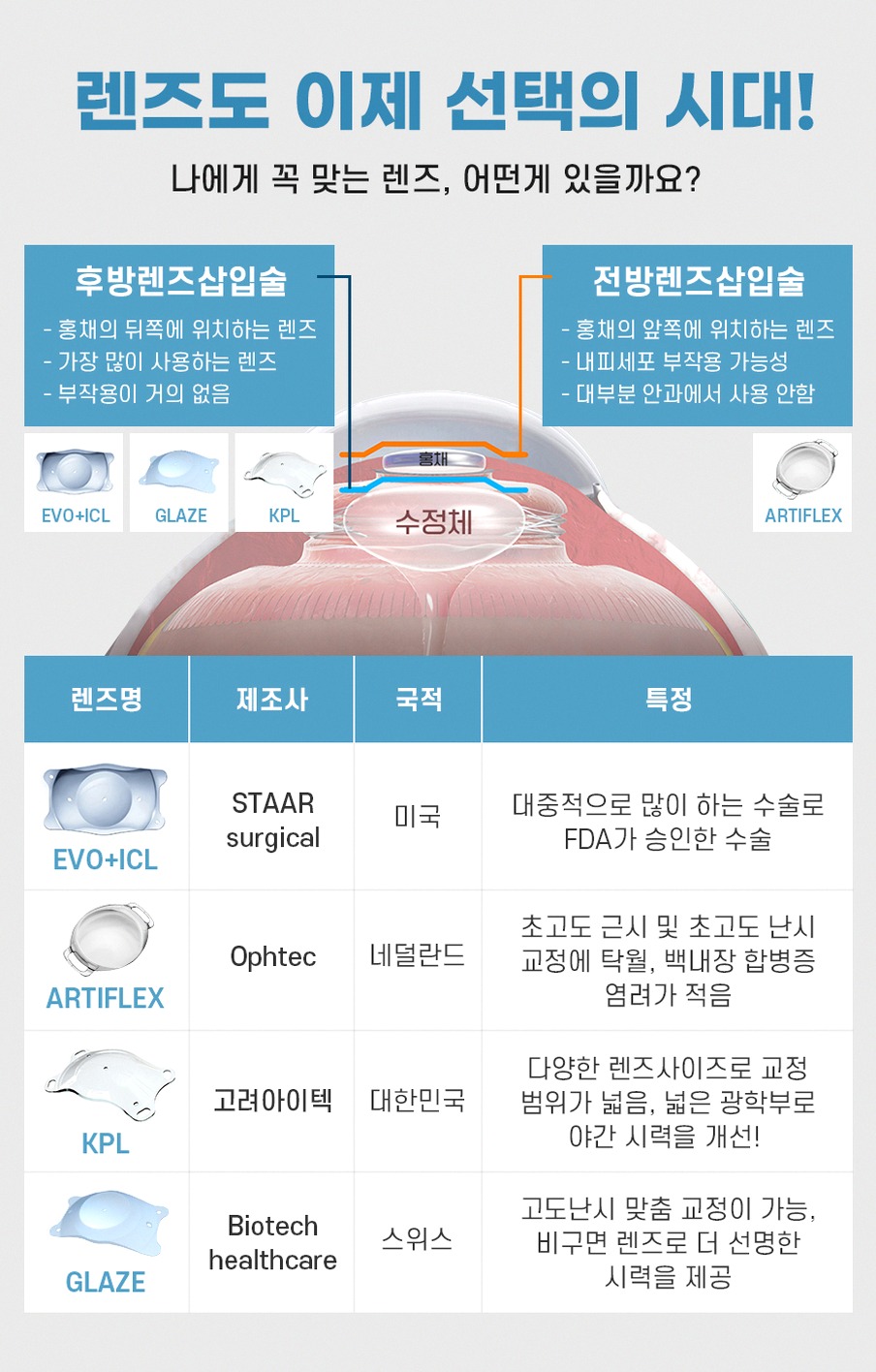
Depending on the lens design, the implant may be positioned in front of the iris or just behind it. These lenses are designed to correct high degrees of myopia and, in some models, astigmatism. They are often considered for people who are not ideal candidates for corneal laser procedures such as LASIK or LASEK, for example those with very high myopia or relatively thin corneas.
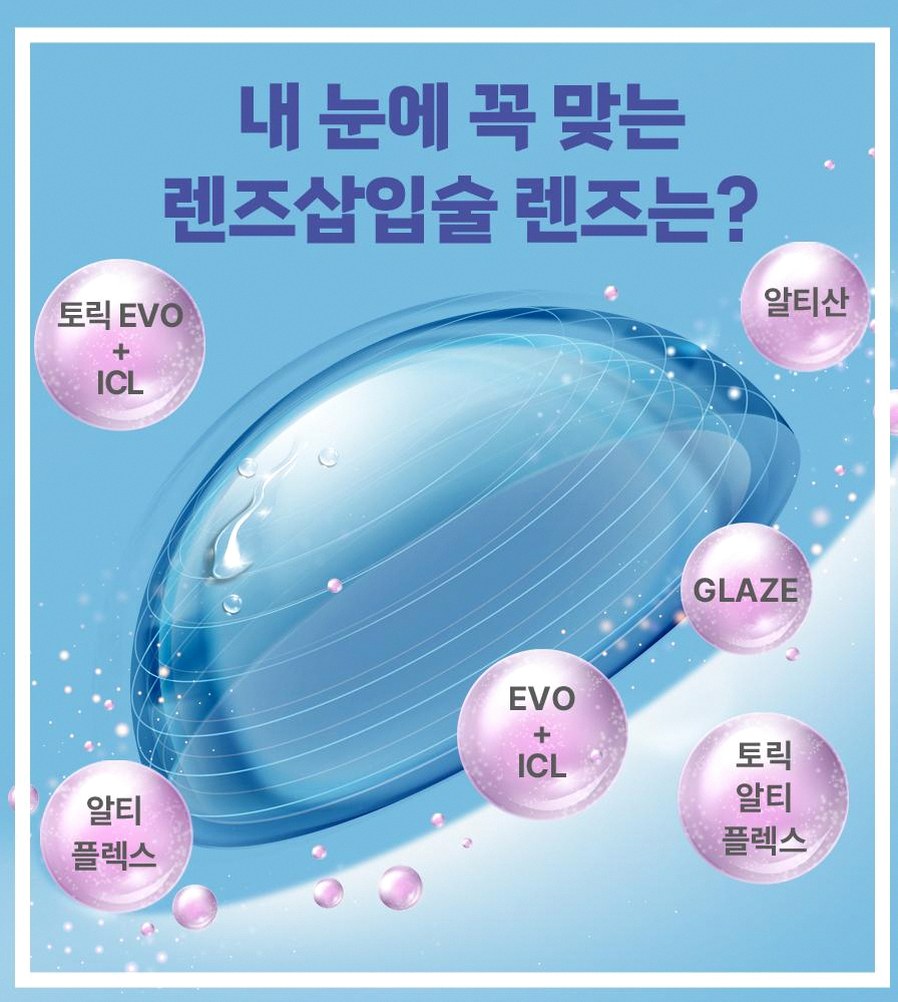
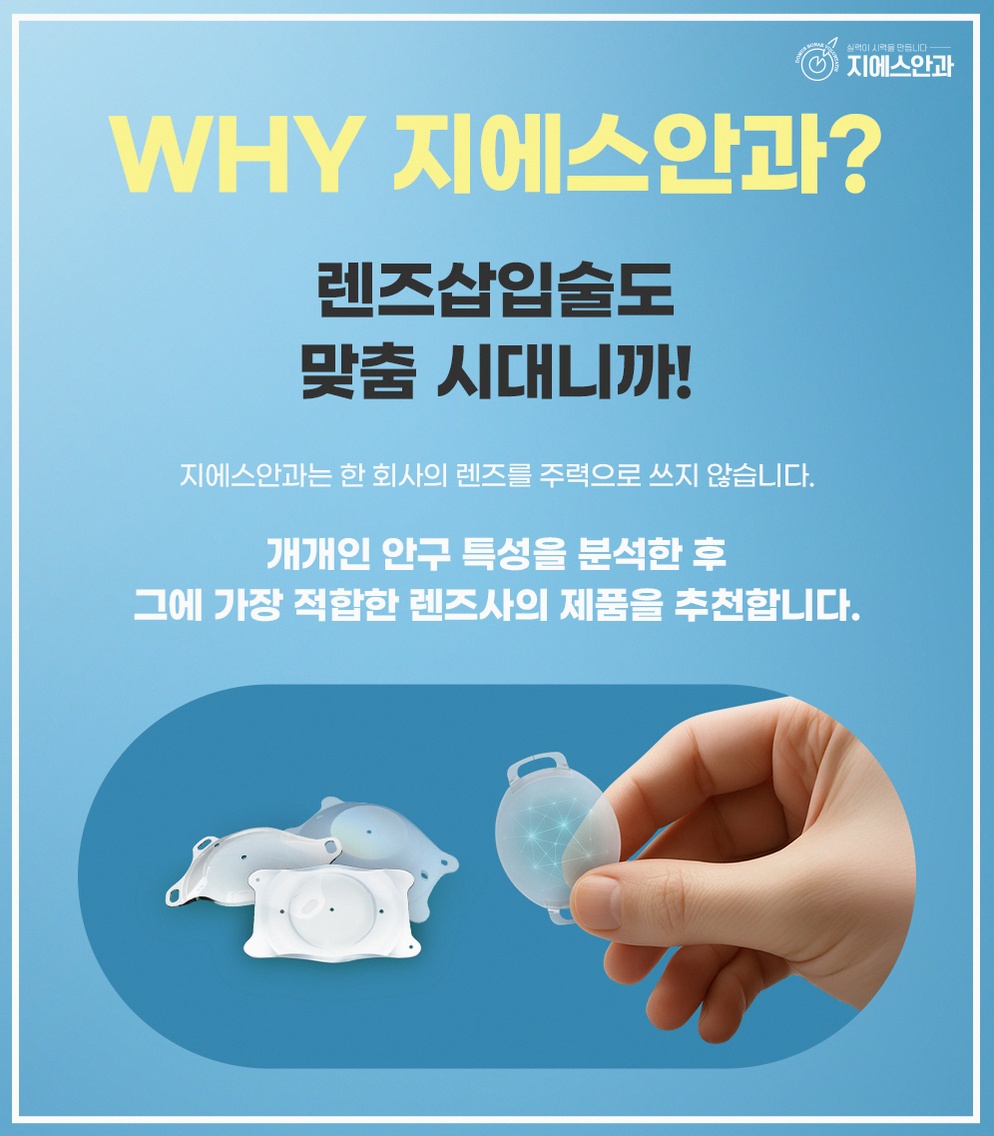
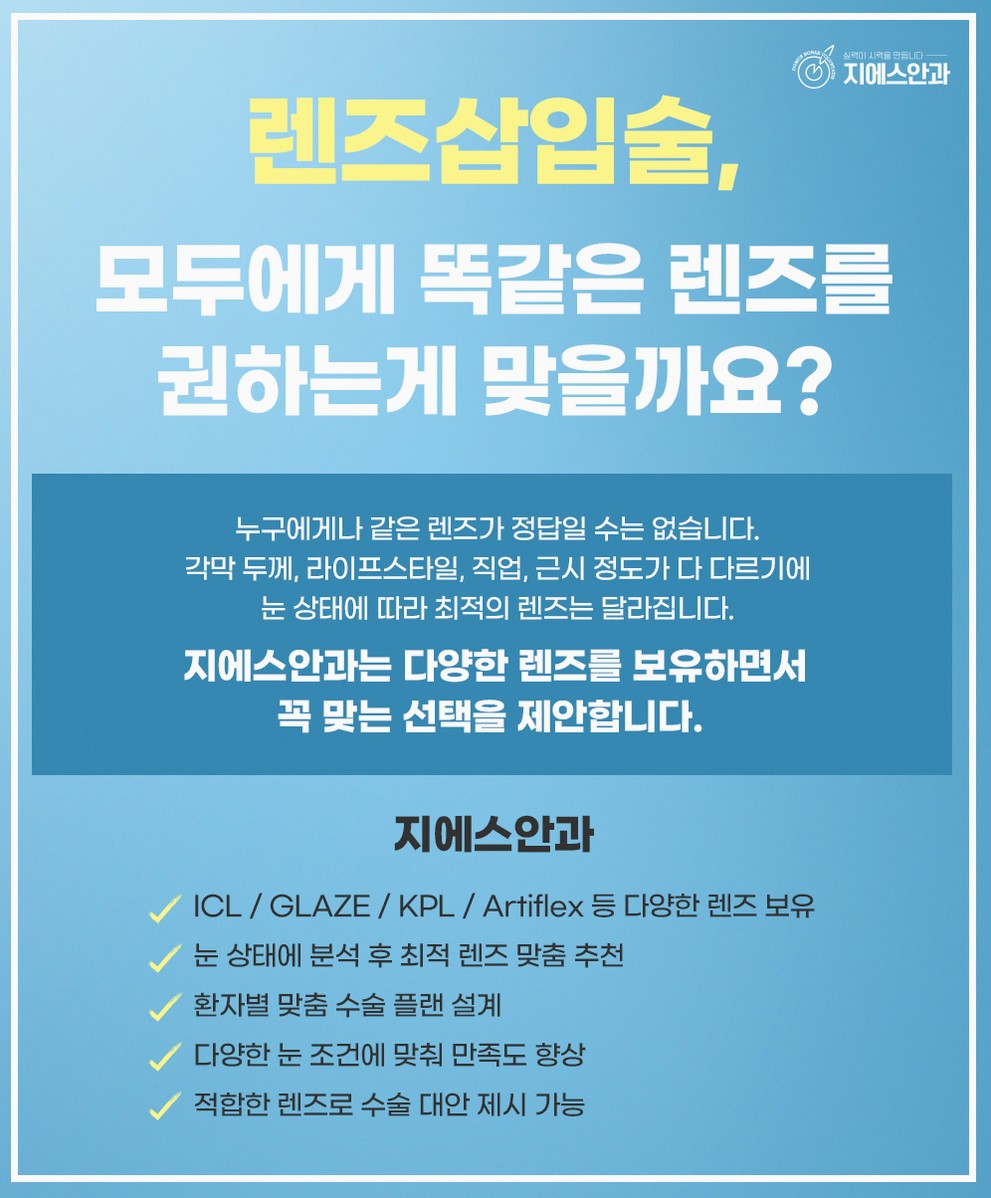
In a Gangnam ophthalmology clinic like GS Eye Center, lens implantation options can include systems such as ICL, GLAZE, and PhakiFlex KPL. The choice among these is based on detailed preoperative measurements of your eye, including corneal shape, anterior chamber depth, and overall ocular health.
Who may consider lens implantation
Typical candidates for phakic intraocular lens implantation include people with high myopia who want to reduce dependence on glasses or contact lenses, individuals whose corneas are too thin or irregular for LASIK or LASEK, and those who prefer a reversible option where the cornea is not reshaped.
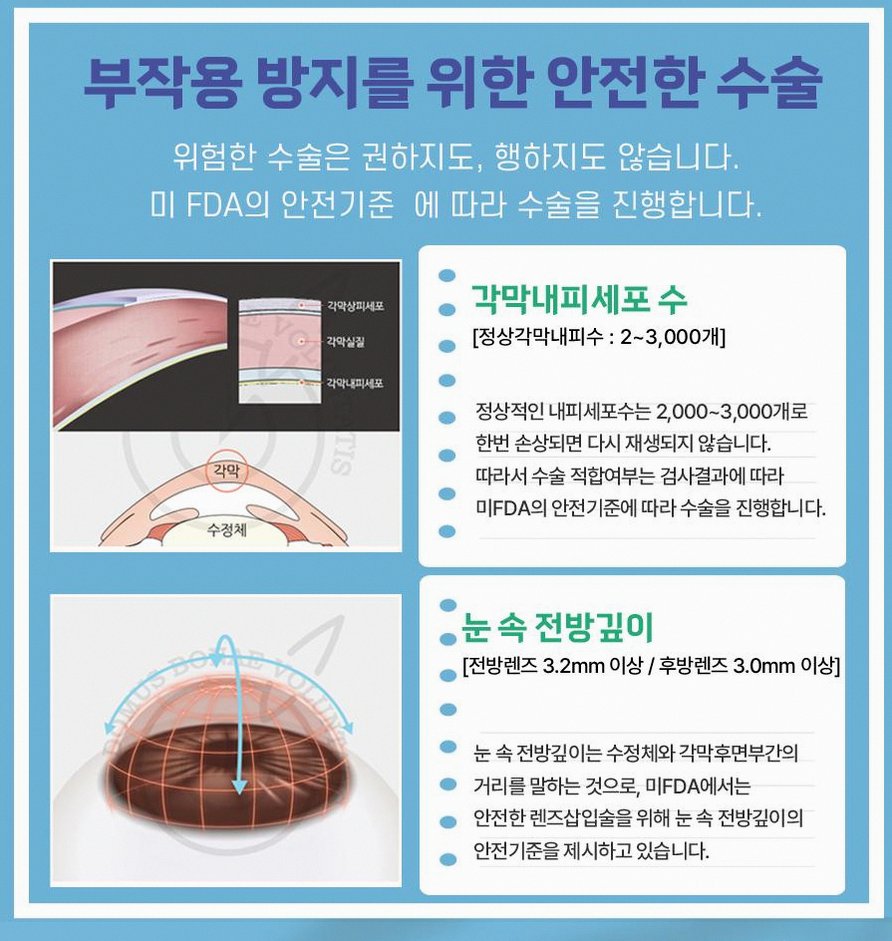
Suitability is never based on prescription alone. The ophthalmologist must confirm that the front part of the eye has enough space for the lens, that the cornea and endothelium are healthy, and that there are no untreated retinal or other ocular problems. Age, general health, and lifestyle are also considered.
Because there are personal differences in eye anatomy and healing, only an in person examination can confirm whether lens implantation is appropriate for you and which lens type may be recommended.
Lens implantation recovery time: short answer
Most patients notice a clear improvement in vision quite soon after surgery, often on the same day or the next day. Even so, the eye needs time to calm down from the procedure and to adapt to the new optical system. During this period, it is normal for vision to fluctuate slightly and for some symptoms, such as light sensitivity or halos around lights, to come and go.
Functional daily activities such as gentle indoor walking, light household tasks, and simple desk work are often possible relatively early, provided you protect the eye and follow the clinic’s advice. However, more demanding visual tasks, intense exercise, and water activities usually need to be delayed.
Complete stabilization, where your vision feels consistently clear and comfortable in most situations, tends to take longer. The exact time frame depends on your starting prescription, the lens model and position, your healing response, and how carefully you follow postoperative instructions.
Typical recovery timeline after lens implantation
The following timeline is a general pattern to help you understand what many patients experience. It is not a promise of results for any individual.
Surgery day and first 24 hours
On the day of surgery, your vision is often already improved, but may be hazy or foggy at first. Common experiences include light sensitivity, a foreign body sensation, mild discomfort, and tearing. You may feel that your eyes are dry or slightly gritty.
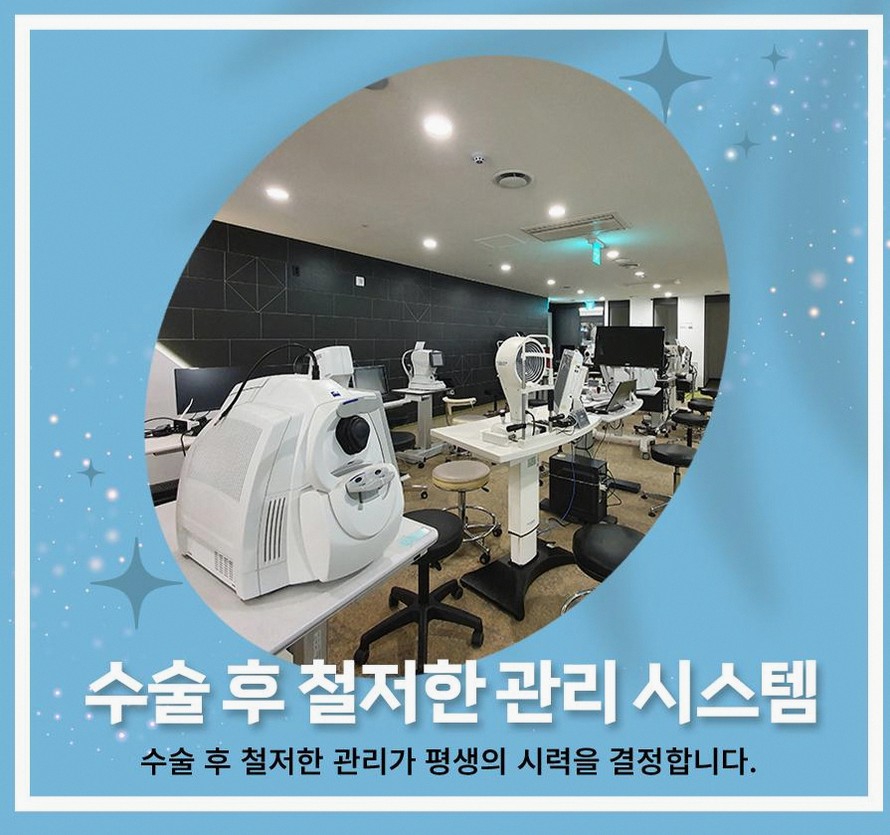
You will usually be given protective eye shields or glasses to wear, especially when sleeping, to prevent accidental rubbing. Prescribed eye drops, typically including antibiotics and anti inflammatory drops, need to be used as directed. Many clinics schedule a first checkup within 24 hours to assess vision, intraocular pressure, and lens position.
First week
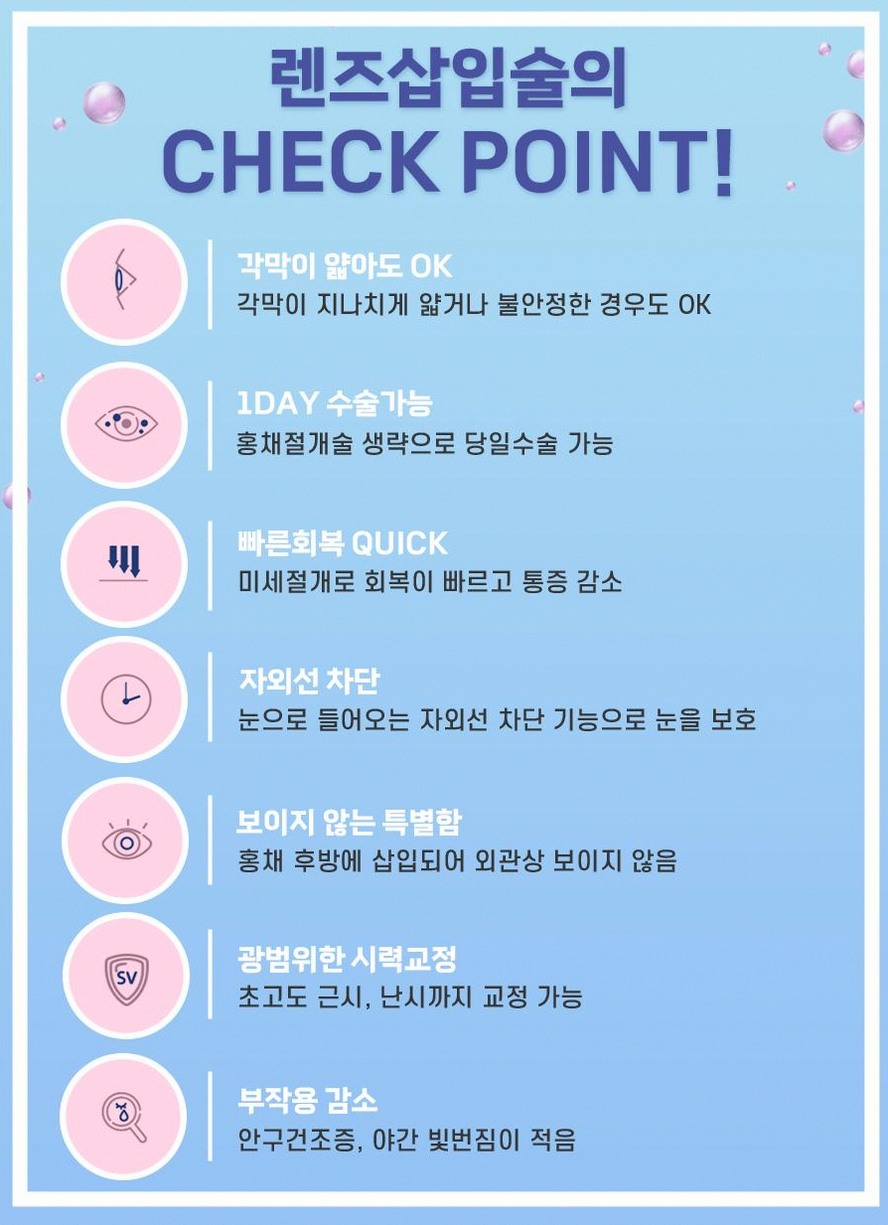
During the first week, vision often becomes clearer and more stable for most daily tasks. Many patients can manage reading, computer use in moderation, and gentle indoor activities. It is important to avoid rubbing your eyes, to keep water, soap, and cosmetics away from the eyes, and to wear sunglasses outdoors to reduce light sensitivity.
Some people notice halos or glare around lights, especially at night, and mild redness or dryness. These symptoms often improve gradually as the eye heals. Regular use of prescribed drops and any recommended artificial tears supports recovery.
First month
Over the first month, vision usually continues to stabilize. Night vision symptoms such as halos or glare may become less noticeable, and contrast sensitivity can improve. The clinic will typically check that the lens remains well positioned, that intraocular pressure is within a safe range, and that there are no signs of inflammation or corneal changes.
Many patients can resume a wider range of activities during this period, such as more extended desk work, light exercise, and limited travel, but intense workouts, swimming, and hot baths or saunas are usually still restricted for a time.
Several months
Over several months, the eyes and brain adapt to the new optical system. This adaptation period can influence how sharp and comfortable your vision feels in different environments, such as night driving or working in low light.
Any residual symptoms are monitored and managed by the ophthalmologist. Long term follow up is important to check intraocular pressure, lens stability, and the health of the cornea and retina. For many patients, this period is when their vision feels the most natural and stable.
Factors that influence recovery time
Recovery after lens implantation is not identical for everyone. Several factors can influence how quickly and smoothly you recover.
Your preoperative eye condition matters. A very high degree of myopia or astigmatism, borderline corneal thickness, or a shallow anterior chamber can affect both the surgical plan and the postoperative experience. Existing dry eye or inflammation may also prolong the time needed for comfortable vision.
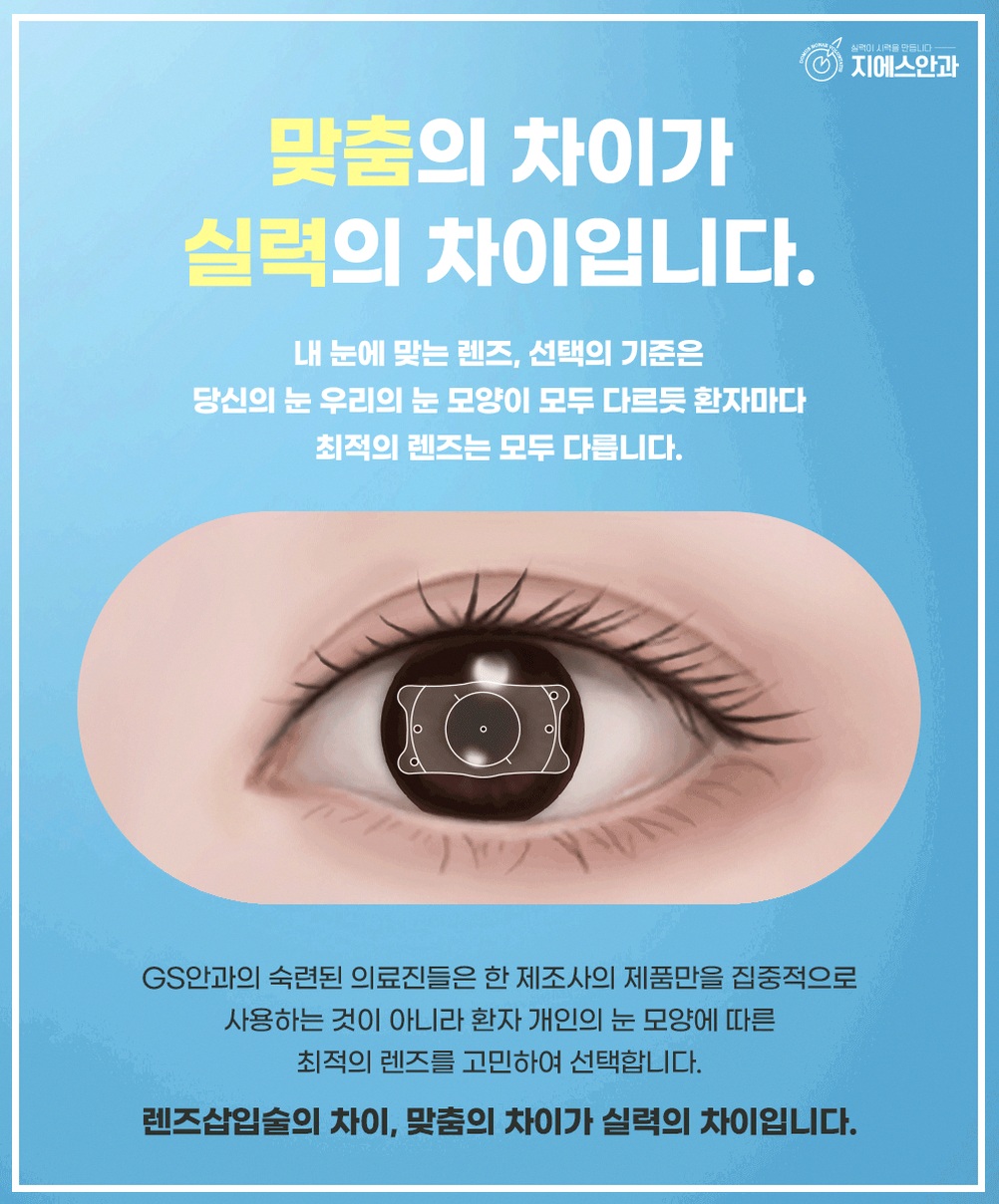
The type of lens and its position in the eye can influence your subjective recovery. Some lenses are placed in front of the iris, others behind it. Design differences can affect night vision symptoms, adaptation, and how your eye feels during the early weeks.
Individual healing response plays a role as well. Some people tend to develop more inflammation or dryness after procedures, while others recover more quietly. General health, sleep quality, and systemic conditions can also influence healing.
Adherence to postoperative care is a major factor you can control. Using eye drops correctly, avoiding eye rubbing, following activity restrictions, and attending scheduled follow ups all support a smoother recovery. Clinics with structured examination and follow up systems, such as GS Eye Center, can monitor changes during recovery and adjust management when needed.
Postoperative care and activity guidelines
After lens implantation, careful self care helps protect your eyes and supports healing.
In the immediate period, you will be advised not to rub or press on your eyes. Keeping water, soap, and shampoo out of your eyes is important, especially in the first days. Many clinics recommend using a clean towel for your face and avoiding eye makeup for a period. Protective shields or glasses may be used while sleeping and outdoors.
Regarding daily life, many patients can return to light desk work and moderate screen use relatively early, but frequent breaks and artificial tears may be needed to reduce dryness and fatigue. It is wise to follow the 20 20 20 rule: every 20 minutes, look at something 20 feet away for about 20 seconds.
Outdoor activities such as gentle walking can usually be resumed soon, with sunglasses to reduce light sensitivity and protect from ultraviolet light and dust. However, environments with heavy dust, smoke, or strong wind should be avoided during the early healing period.
Activities that increase pressure in the eye or expose it to water and heat are typically restricted for a time. These include heavy lifting, intense gym workouts, contact sports, swimming pools, hot tubs, and saunas. The exact timelines for each activity should be personalized by your ophthalmologist based on your eye condition and progress.
Normal vs concerning symptoms during recovery
Knowing which symptoms are expected and which require urgent attention can help you feel more secure during recovery.
Common, usually temporary symptoms include mild pain or discomfort, a feeling of dryness or grittiness, light sensitivity, halos or starbursts around lights, slight redness, and some fluctuation in vision. These often improve as the eye settles and the lens position stabilizes.
However, certain symptoms should prompt immediate contact with your clinic. These include sudden or severe eye pain, rapidly worsening or very blurred vision, marked redness or swelling, many new floaters or flashes of light, or a curtain like shadow appearing in your field of vision. These signs may indicate complications that need prompt examination.
If you are unsure whether a symptom is normal, it is safer to call your ophthalmology clinic rather than wait for the next scheduled visit, especially if you are traveling from overseas and have limited time in Korea.
Why preoperative examination matters for recovery
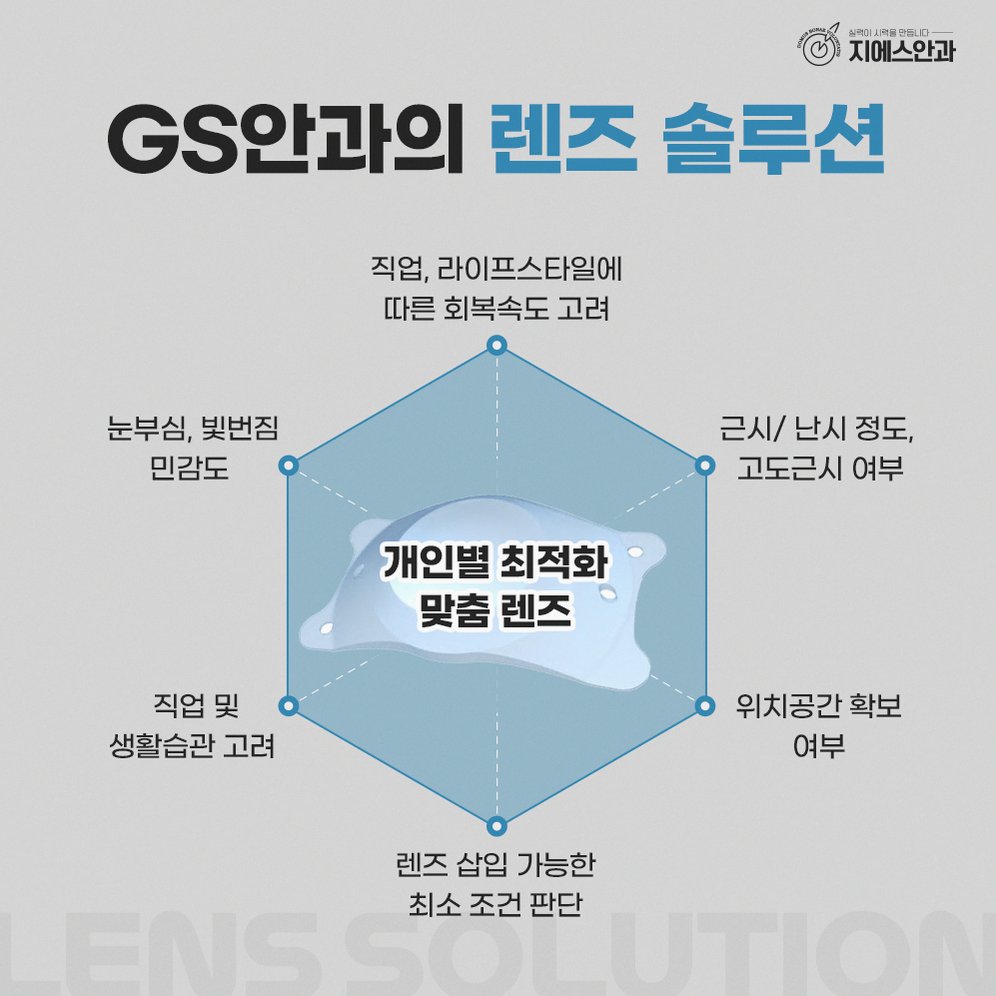
A detailed preoperative examination is essential not only to decide whether lens implantation is suitable, but also to support a smoother recovery. Measurements such as corneal curvature, thickness, anterior chamber depth, endothelial cell count, intraocular pressure, and retinal status help the ophthalmologist select an appropriate lens type and size.
When the lens choice matches the eye’s anatomy and refractive status, it can support more stable visual outcomes and a more comfortable adaptation period. Conversely, skipping or rushing examinations can increase the risk of unexpected issues during recovery.
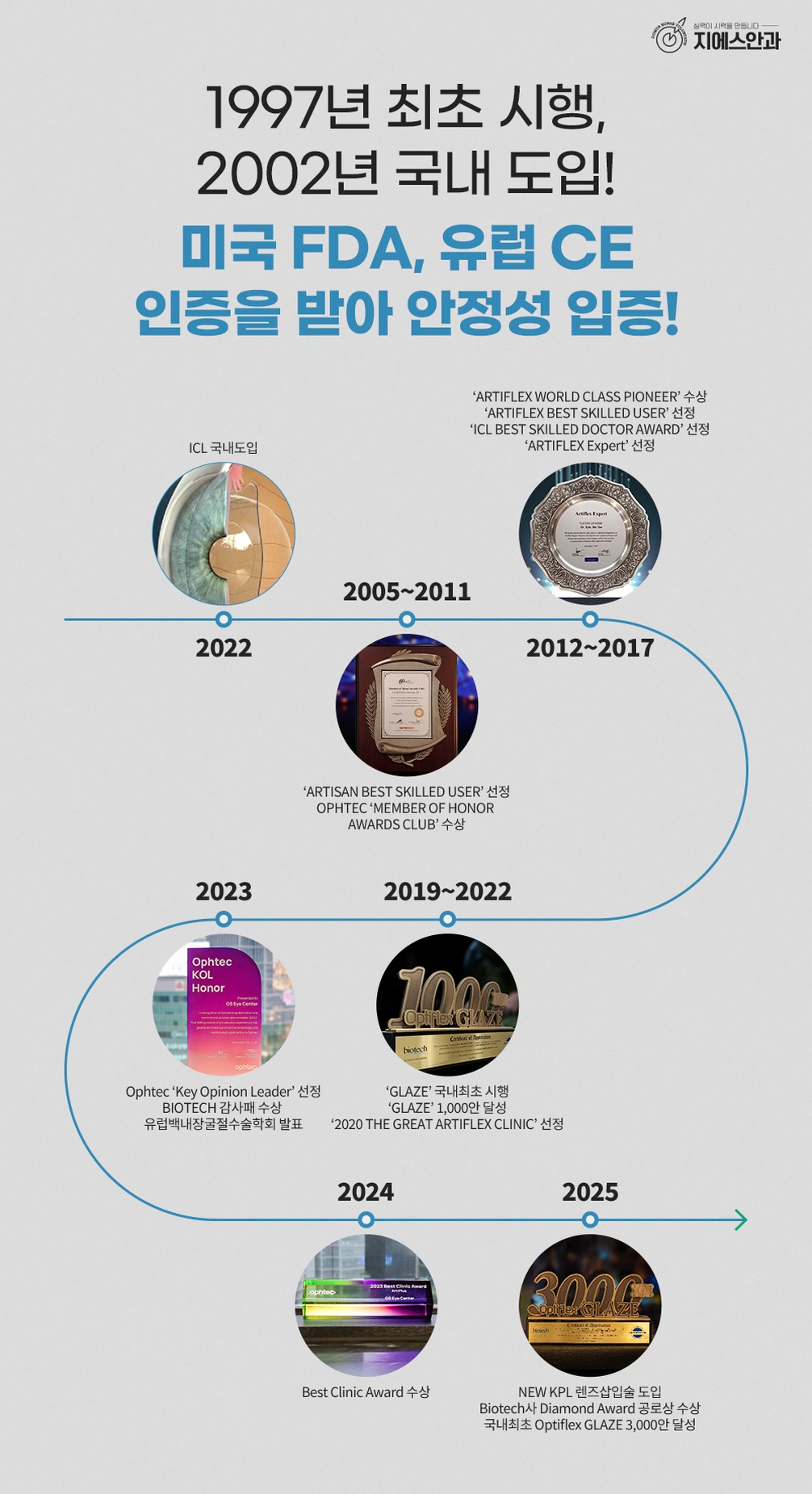
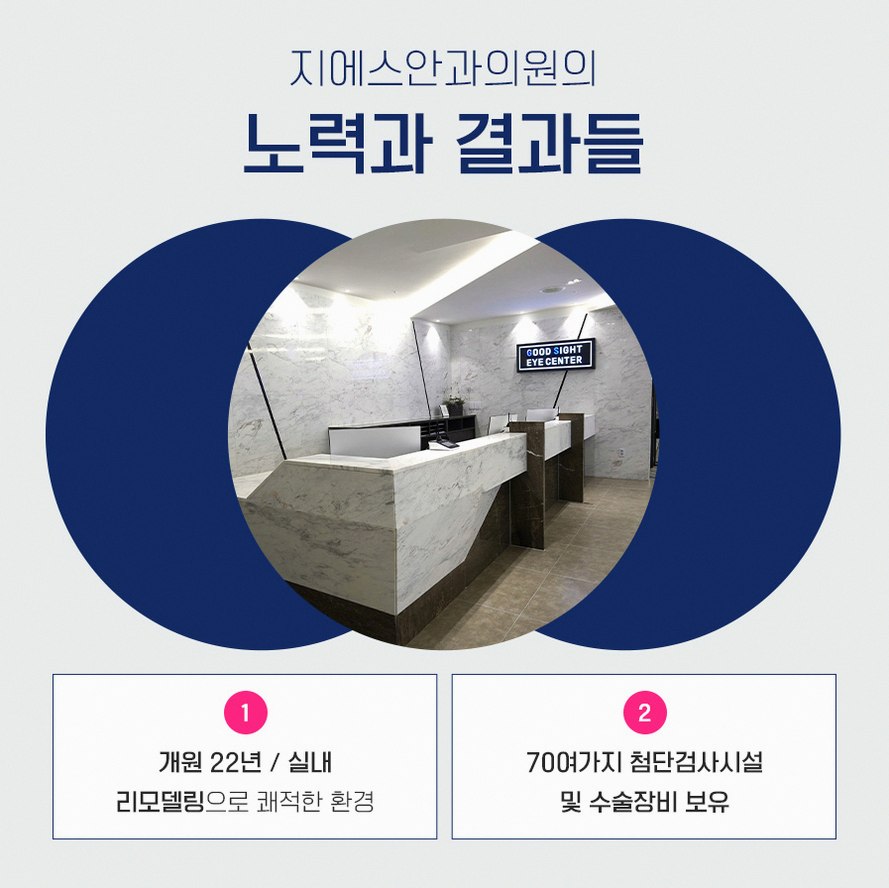
GS Eye Center is an ophthalmology clinic in the Gangnam area of Seoul with a dedicated vision correction lineup, including lens implantation procedures. The clinic uses structured preoperative examination protocols and reports a cumulative total of 300,000 vision correction and cataract procedures as of 2023, which informs its decision-making and follow-up systems. This does not guarantee specific results for any individual, but it helps create a framework for careful planning and monitoring.
Expected Korea visit timeline for overseas patients
If you are visiting Seoul from overseas for lens implantation, planning your schedule in advance is important. While exact plans vary, many international patients follow a pattern similar to this.
Before your trip, you can usually have an online consultation to share your glasses or contact lens prescription, previous eye examination results if available, and information about your general health. The clinic can then advise whether you are a potential candidate and suggest how many days you should stay in Korea.
On arrival in Seoul, a full preoperative examination is usually performed; this can take several hours because of the number of tests and the need for dilating drops. While some clinics can accommodate expedited scheduling in selected cases, most practices base the timing of surgery on the completeness of testing and medical suitability. Confirm the clinic’s scheduling policy and any timing constraints during your pre-visit consultation so you can plan travel and accommodation accordingly.
After surgery, at least one or more follow up visits are needed to check early healing and lens position. Many clinics recommend that overseas patients stay in Korea for a certain number of days after surgery so that they can be monitored during the most critical early period. If your stay is short, it is important to arrange follow up with an eye specialist in your home country before you travel.
Online consultation and pre visit preparation
Before you book flights, an online or remote consultation can help you decide whether a trip to Korea for lens implantation is realistic. During this consultation, you can share your age, current prescription, history of eye problems or surgeries, and any systemic conditions such as diabetes or autoimmune disease.
It is helpful to prepare recent eye examination records, including corneal measurements or retinal scans if you have them, though they do not replace the detailed testing done in Seoul. You can also ask about the clinic’s typical recovery schedule, recommended length of stay, and how they coordinate care with doctors in your home country.
Many patients find it useful to prepare a checklist of questions before contacting the clinic. These may include which lens types they use, what examinations are required, what symptoms are common during recovery, how often follow up visits are scheduled, and what to do if symptoms appear after returning home.
Follow up schedule and long term management
After lens implantation, follow up visits are not optional. They are a key part of safe, long term care. A typical follow up pattern includes an early check soon after surgery, then additional visits in the first weeks and months. The exact schedule can vary by clinic and by individual case.
During these visits, the ophthalmologist usually checks visual acuity, intraocular pressure, lens position, corneal status, and signs of inflammation. If needed, the eye drop regimen may be adjusted. Even if your vision feels excellent, some issues, such as elevated intraocular pressure, may not cause early symptoms, so it is important not to skip these appointments.
Long term, patients with phakic intraocular lenses should continue periodic eye examinations. These visits monitor eye pressure, lens stability, endothelial cell counts, and the health of the retina and optic nerve. This ongoing care helps detect and manage any late changes.
Aftercare once you return home
For overseas patients, aftercare planning should begin before surgery. Ask the clinic how long they recommend you stay in Korea after the procedure, and what follow up they suggest once you return home.
You may be advised to see an eye specialist in your own country at specific intervals. Make sure you receive a summary of your surgery, including the lens model and power used, and a record of your postoperative status when you leave Korea. This information helps your local doctor continue your care.
If any unusual symptoms appear after you return home, such as sudden vision changes or pain, you should seek prompt examination locally and also inform the clinic in Seoul. Clear communication between you, your Korean clinic, and your local doctor supports safer long term outcomes.
What to ask the clinic before deciding
When comparing clinics in the Gangnam area for lens implantation, it can be helpful to look beyond cost alone. Consider the range of lens systems offered, the thoroughness of preoperative testing, the clarity of their explanation about risks and recovery, and how they support overseas patients.
Before you decide, you may want to ask questions such as:
For my eyes, what lens types are likely to be considered, and why
How long do you usually advise overseas patients to stay in Korea after surgery
What is your typical follow up schedule in the first month
How do you handle urgent questions or unexpected symptoms for international patients
What instructions do you provide for aftercare once I return home
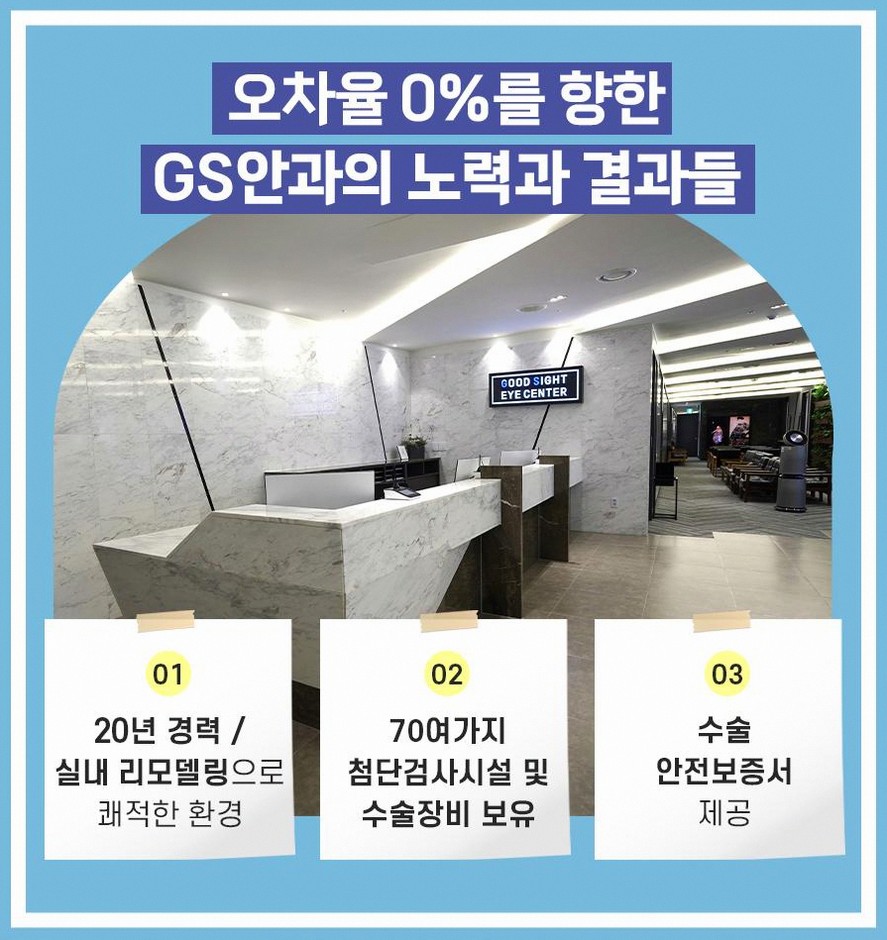
GS Eye Center, opened in 2005 in the Gangnam area and led by ophthalmology specialists, focuses on vision correction including lens implantation, SMILE type laser procedures, and cataract and presbyopia surgery. Final decisions on suitability, lens selection, and detailed recovery expectations must always be made after an in person examination with an ophthalmologist.
Frequently asked questions about lens implantation recovery time
How long does it take to see clearly after lens implantation
Many patients notice clearer vision within the first day after lens implantation, sometimes even within a few hours. However, it is common for vision to be slightly hazy or to fluctuate in the early days. Over the first week, vision often becomes clearer for most daily tasks, while finer stabilization and adaptation can continue for several weeks to months. Exact timing varies depending on your prescription, eye condition, and healing response.
When can I go back to work and use a computer
Light desk work and gentle computer use are often possible relatively early, sometimes within a few days, if your job does not involve heavy physical activity or exposure to dust or water. It is important to take frequent breaks, use lubricating drops if recommended, and avoid straining your eyes during the first weeks. Your ophthalmologist will give you personalized advice based on how your eyes look at the first follow up visit.

Are halos and glare after lens implantation permanent
Halos and glare around lights, especially at night, are common in the early recovery period after lens implantation. For many patients, these symptoms gradually decrease as the eye heals and the brain adapts to the new optics, often over weeks to months. In some cases, mild night vision symptoms may persist, but they are often less noticeable over time. If halos or glare are very strong or seem to worsen suddenly, you should inform your clinic.
Is lens implantation recovery painful
Most people experience mild discomfort, a foreign body sensation, or light sensitivity rather than strong pain. These symptoms typically improve over the first days. If you experience severe or sudden pain, especially with decreased vision or marked redness, this is not typical and should be evaluated promptly. Your clinic will explain which symptoms are expected and which require urgent attention.
Soft call to action for online consultation
If you are considering lens implantation in Seoul and want to understand how the recovery timeline might look for your specific eyes, arranging an online consultation can be a helpful first step. You can share your current prescription and medical background, ask detailed questions about recovery stages, and discuss how long you may need to stay in Korea.
A clinic such as GS Eye Center can then guide you on whether you appear to be a potential candidate, what examinations will be needed on arrival, and how they support overseas patients during both the early and long term recovery periods.
Medical information notice
The information in this article is intended for general educational purposes for international readers and does not replace a personal consultation, examination, or diagnosis by a qualified ophthalmologist. Recovery experiences and outcomes after lens implantation vary between individuals. Decisions about surgery, lens selection, and postoperative care should be made only after a thorough in person evaluation and discussion of potential benefits and risks with your eye specialist.
- 공유 링크 만들기
- X
- 이메일
- 기타 앱


댓글
댓글 쓰기