SMILE in Gangnam: flap-free LASIK alternative & candidacy
- 공유 링크 만들기
- X
- 이메일
- 기타 앱



Direct answer summary
If you are searching for astigmatism surgery in Korea, SMILE LASIK is one of the main modern options to consider. It is a minimally invasive laser vision correction method that can treat both myopia (nearsightedness) and certain degrees of astigmatism by gently reshaping the cornea through a very small incision. A specialized ophthalmology clinic near Gangnam Station, such as GS Eye Center on Gangnam-daero in Seoul, will first perform a detailed eye examination to decide whether SMILE is appropriate and safe for your eyes, or whether another method would be better.
This guide explains what astigmatism is, how SMILE LASIK works as a form of astigmatism surgery, who might be a candidate, how to prepare from overseas, what a typical visit to Korea looks like, and what to expect during recovery.
What astigmatism really is and why it blurs your vision
Astigmatism is a focusing problem caused by an irregular curve of the cornea (the clear front window of the eye) or the lens inside the eye. Instead of being smoothly round like a basketball, the surface is more like a slightly uneven rugby ball. Because of this, light entering the eye does not meet at one sharp point on the retina. It focuses at multiple points or in different directions.
In daily life, this can cause blurred or shadowed vision at all distances. You might notice double or ghost images of letters, lights that look stretched or star-shaped at night, eye strain after reading, or headaches. Many people with astigmatism also have myopia, so distant objects are especially unclear.
Glasses and contact lenses can correct astigmatism by adding the opposite curve needed to refocus the light. However, some people prefer a surgical solution for long-term reduction of dependence on glasses or lenses, especially if they are active, travel often, or have discomfort with contacts.
What people mean by astigmatism surgery
There is no single official operation called “astigmatism surgery.” Instead, this phrase is a general way to describe several surgical methods that can correct astigmatism by adjusting how the eye focuses light.
The main approaches include:
SMILE LASIK: a small-incision laser procedure that reshapes the cornea from the inside by removing a tiny lens-shaped piece of tissue.

LASIK: a laser procedure that creates a thin flap on the cornea, lifts it, reshapes the underlying tissue with an excimer laser, and then replaces the flap.
LASEK/PRK: surface laser procedures that reshape the outer layers of the cornea without creating a flap.
Phakic lens implantation: placing a special lens inside the eye in front of the natural lens, often used for high refractive errors or thinner corneas.
Cataract surgery with toric or multifocal lenses: for older patients with cloudy lenses, the surgeon can implant a lens designed to correct astigmatism at the same time as removing the cataract.
Among these, SMILE LASIK has become a popular choice for myopia and astigmatism because it uses a very small incision and does not require a large corneal flap.
How SMILE LASIK corrects astigmatism
SMILE LASIK (often called simply SMILE) uses a femtosecond laser to create a precise, lens-shaped piece of tissue called a lenticule inside the cornea. The laser also creates a tiny side opening only a few millimeters long. Through this small incision, the surgeon gently removes the lenticule.
By removing this lenticule, the shape of the cornea changes. The new curvature adjusts how light is focused onto the retina, correcting both the spherical component (myopia) and the cylindrical component (astigmatism). In simple terms, SMILE reshapes the cornea from the inside so that light focuses more cleanly at a single point.
Compared with conventional flap-based LASIK, SMILE does not require creating a wide corneal flap that is lifted and replaced. Instead, the surface of the cornea remains more intact, with only a small incision. This small-incision approach may help preserve more of the cornea’s biomechanical strength and tends to cause less disruption to corneal nerves involved in tear production. Some surgeons and patients report fewer dry-eye symptoms after SMILE in certain cases, but outcomes vary and depend on many individual factors.
The laser portion of SMILE is usually very short, and the procedure is performed on an outpatient basis. Patients are typically awake but receive numbing eye drops so they feel pressure rather than sharp pain.
Who may be a candidate for SMILE astigmatism surgery
Not every person with astigmatism is suitable for SMILE, and not every level or pattern of astigmatism can be treated with this method. Candidacy depends on several factors that must be measured carefully.
Typical factors include:
Stable prescription: Your glasses or contact lens prescription should be relatively stable over a certain period, so that the result is not quickly changed by natural progression.
Range of myopia and astigmatism: SMILE is commonly used for mild to moderate myopia and certain ranges of astigmatism. Very high or irregular astigmatism may require a different approach.
Corneal thickness and shape: The cornea must be thick enough and have a healthy shape to allow safe tissue removal while keeping a strong residual layer.
Overall eye health: The surface of the eye, tear film, lens, retina, and optic nerve should be checked for other conditions that might affect safety or results.

Conditions such as keratoconus (a disease that causes progressive thinning and bulging of the cornea), very thin or irregular corneas, or severe dry eye may make SMILE unsuitable. In those situations, alternatives like LASEK/PRK, phakic lens implantation, or other strategies might be recommended.
A single number for corneal thickness is never enough to decide. A full structural assessment is needed, including corneal topography and tomography to map the shape and strength of the cornea in detail.
Preoperative examination and planning at a specialized eye clinic
For astigmatism surgery with SMILE, a specialized ophthalmology clinic in Gangnam will typically follow a structured, multi-step testing protocol rather than relying on one or two quick measurements.
A typical preoperative workup may include:
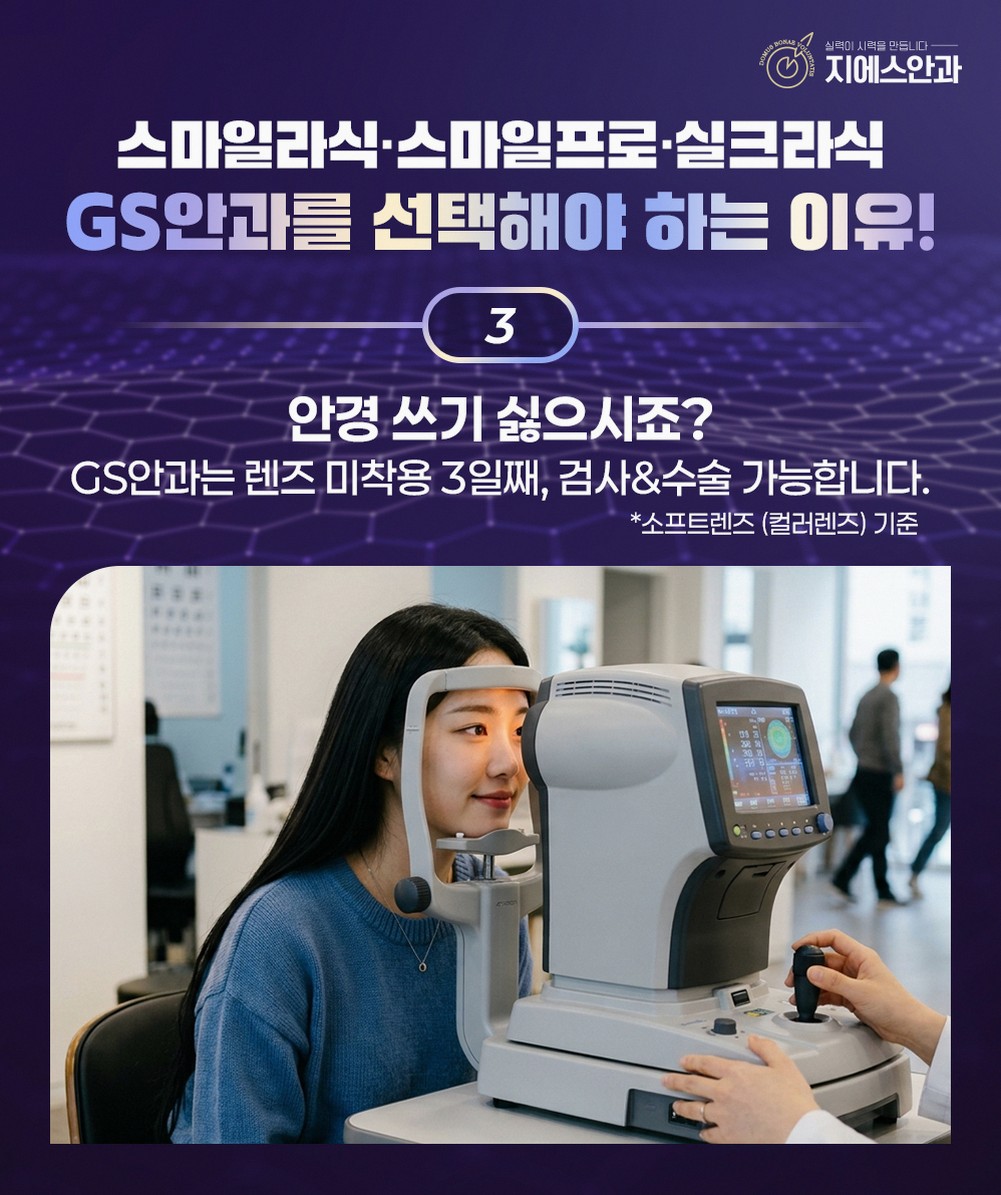
Visual acuity testing and refraction: to measure your current prescription and best corrected vision.
Corneal topography and tomography: to create detailed maps of corneal curvature and thickness across the entire surface.
Pachymetry: to measure corneal thickness at many points.
Tear film and dry eye evaluation: to understand the condition of the eye surface and tear quality.
Retinal and optic nerve examination: often supported by a dedicated retina clinic within the same facility, to ensure the back of the eye is healthy.
At GS Eye Center, all surgeons are board-certified ophthalmologists with subspecialty backgrounds, including retina and refractive surgery, and prior experience at major university hospitals. The clinic has accumulated a large cumulative volume of refractive and cataract procedures and is recognized by major ophthalmic technology companies as a training and reference center for SMILE and related procedures.
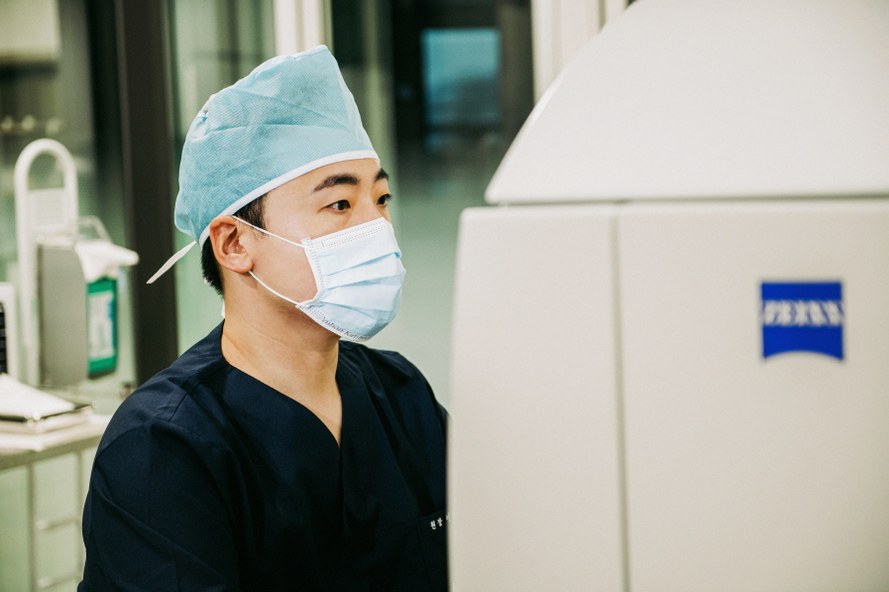
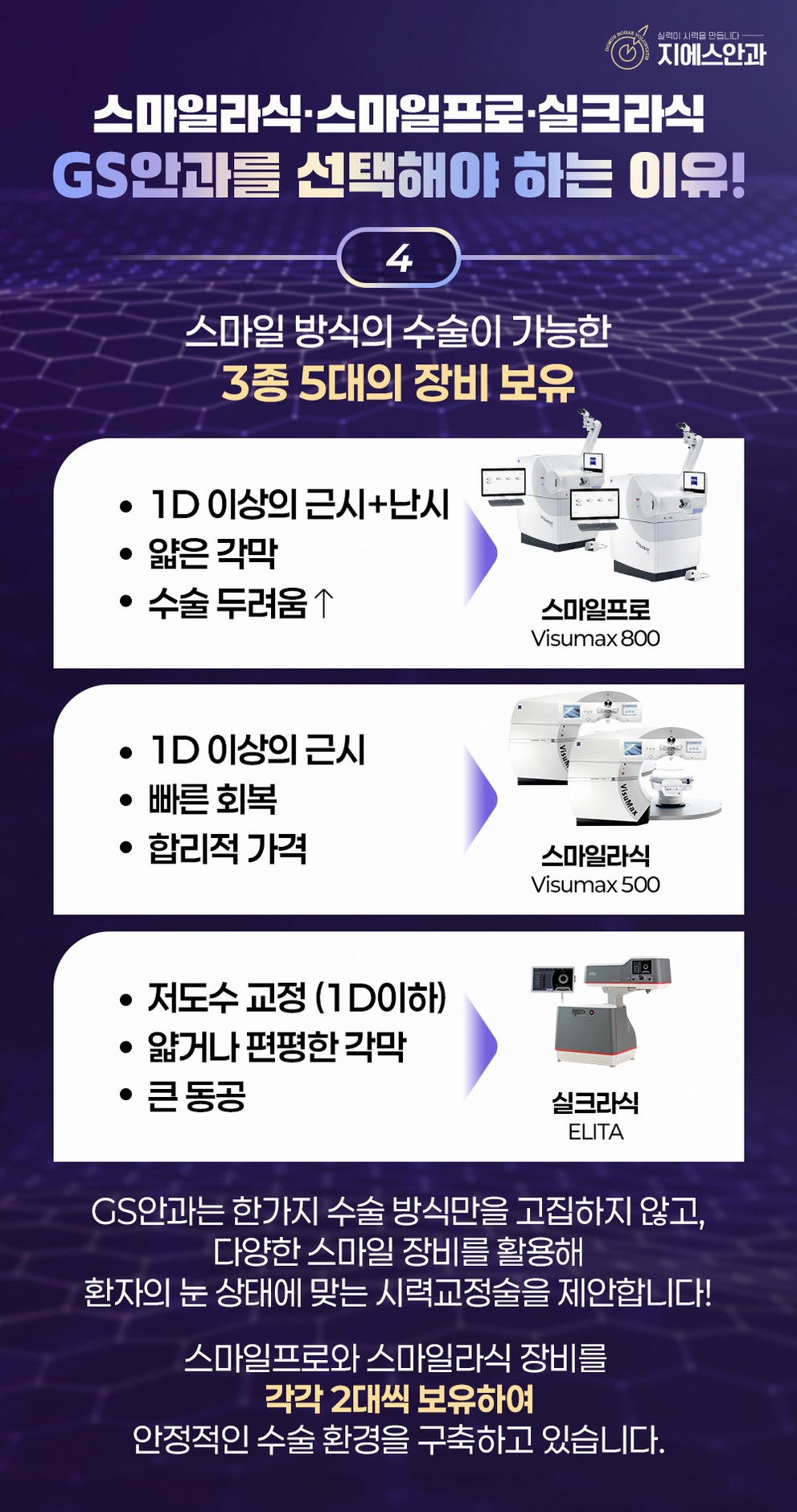
Multiple generations of ZEISS femtosecond laser platforms for SMILE-type procedures, including the latest system, are available. This allows tailored planning for each patient, with laser parameters adjusted to the exact amount and axis of astigmatism, as well as corneal thickness and shape. The goal is to match the procedure to the eye, not to force every eye into the same pattern.
What to expect on the day of SMILE astigmatism surgery
On the day of surgery, most patients follow a simple and organized process.
Arrival and final checks: You arrive at the clinic, complete any remaining paperwork, and undergo brief confirmation tests to verify your prescription and eye condition.
Preparation: Anesthetic eye drops are placed to numb the surface of your eyes. You may receive mild oral medication to help you relax, depending on the clinic’s protocol.

Laser procedure: You lie comfortably under the laser system. The surgeon positions your eye, and the femtosecond laser creates the lenticule and small incision. You may feel gentle pressure and see lights, but not pain. The surgeon then removes the lenticule through the tiny opening.
Some clinics and surgeons perform bilateral SMILE in the same session; others prefer staged procedures. Check the clinic’s usual protocol and follow your surgeon’s recommendation for the best plan in your situation.
Rest and discharge: After a short rest and final check, you can usually leave the clinic on the same day, accompanied by a friend or family member if possible. You receive eye drops and instructions for the first days of care.
Immediately after surgery, many patients already notice that their vision is improved compared with before, but it can be hazy or fluctuating. Clarity and comfort typically improve over time with proper follow-up.
Recovery, results, and possible side effects
Recovery after SMILE for astigmatism is usually gradual. The cornea needs time to settle into its new shape, and the tear film and nerves on the surface must adapt.
Common temporary symptoms can include:
Dryness or foreign-body sensation, especially in the first days or weeks.
Glare, halos, or starbursts around lights at night.
Fluctuating vision, where some days are clearer than others.
Light sensitivity and mild discomfort.
These symptoms often improve as the eye heals, but the pace is different for each person. Regular use of prescribed eye drops and artificial tears, plus attending follow-up visits, is important.
In a small percentage of patients, there may be residual astigmatism or myopia after healing. In such cases, the surgeon may discuss whether an enhancement procedure is appropriate, once the vision has stabilized and the cornea is ready. Not everyone needs or is suitable for enhancement, and decisions are based on detailed re-evaluation.
It is important to understand that while SMILE can significantly reduce or sometimes eliminate the need for glasses or contact lenses for many people with astigmatism, no surgical method can promise a specific visual result for every individual. Natural changes in the eye over time, such as presbyopia (age-related near vision difficulty) or cataract formation, can still occur later in life.
When SMILE is not the best astigmatism option
Even in a SMILE-focused center, the safest choice for you may sometimes be a different procedure. Situations where SMILE may not be recommended include:
Very thin corneas or insufficient remaining thickness after planned correction.

Irregular corneal shape or suspected keratoconus.
Extremely high myopia or astigmatism beyond the recommended range.
Certain retinal conditions, uncontrolled systemic diseases, or severe dry eye.
In these cases, alternatives might be considered, such as:
LASEK/PRK: surface laser methods that may be more suitable for thinner or borderline corneas.
Phakic lens implantation: placing a special lens inside the eye, often used for high refractive errors.
Cataract surgery with toric lenses: for older patients who already have lens clouding.
A careful clinic will explain why a particular method is recommended for your eyes and will not push SMILE if another option appears safer or more stable in the long term.
Who should consider SMILE astigmatism surgery
You may consider a consultation for SMILE if you:
Have myopia with mild to moderate astigmatism.
Feel limited by glasses or contact lenses in work, sports, or travel.
Have generally healthy eyes and a stable prescription.
Are willing to follow pre- and post-operative instructions and attend follow-up visits.
On the other hand, you might delay or avoid surgery if you are pregnant or breastfeeding, have uncontrolled systemic disease, or have unrealistic expectations about results. A face-to-face consultation is essential to discuss your goals and medical history.
Preparing from overseas: online consultation and pre-visit planning
If you live outside Korea, an online or remote consultation can be a helpful first step before you decide to travel to Seoul for astigmatism surgery.
For an online consultation, it is useful to prepare:
A recent glasses or contact lens prescription, including sphere, cylinder, and axis for each eye.
Any previous eye examination reports, especially corneal topography or tomography if available.
Information about your general health, medications, allergies, and past eye problems or surgeries.
A list of questions and concerns about SMILE, alternatives, recovery, and travel timing.
Clinics like GS Eye Center often provide educational content through blogs, social media, and videos, so you can learn about procedures, risks, and preparation in clear language before you come. However, final decisions about candidacy and exact planning can only be made after a full in-person examination in Seoul.
Expected Korea visit timeline for SMILE LASIK
The exact schedule depends on your travel plans and the clinic’s protocol, but many international patients follow a similar pattern.
Before arrival: Complete an online consultation, share your prescriptions and medical information, and tentatively schedule examination and surgery dates.
Day 1 in Seoul: Comprehensive preoperative examination at the clinic near Gangnam Station. This includes all measurements and doctor consultation. In some cases, surgery can be scheduled for the same day or the next day, depending on findings and your preference.
Day of surgery: Undergo SMILE LASIK, rest afterward, and return to your accommodation with protective instructions and eye drops.
Early follow-up: Attend at least one or more follow-up visits in the days after surgery so the surgeon can check healing, measure vision, and adjust your drop schedule if needed.
Return home: Once the early healing phase is stable and the doctor is satisfied with your progress, you can fly home. You will be advised about how to continue care locally and when to schedule further checks.
Because each person’s eyes and travel situation are different, it is important to discuss your planned length of stay and flight schedule with the clinic in advance.
Aftercare and long-term eye health
Good aftercare is as important as the surgery itself. Typical aftercare includes:
Using prescribed antibiotic and anti-inflammatory eye drops as directed.
Using preservative-free artificial tears to support the tear film.
Avoiding eye rubbing, dusty environments, and swimming for a certain period.
Wearing protective shields or glasses as recommended, especially during sleep in the early phase.
Attending scheduled follow-up visits and contacting the clinic if you notice unusual pain, sudden vision changes, or persistent redness.
Long term, it is wise to continue regular eye examinations even if you feel your vision is good. This helps monitor the stability of your cornea, check the retina, and detect age-related changes such as presbyopia or cataract.
Choosing a clinic for astigmatism surgery in Gangnam
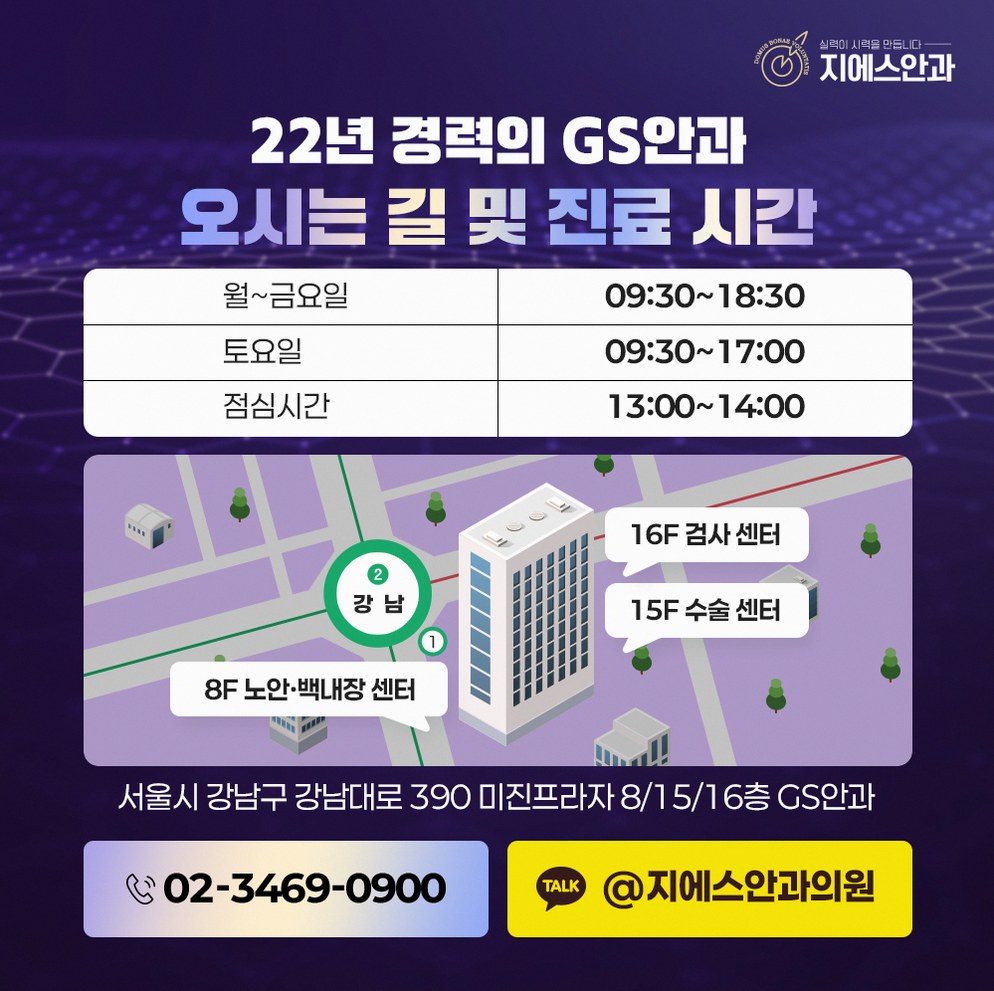
Gangnam-daero and the Gangnam Station area in Seoul host many ophthalmology clinics offering laser vision correction. When comparing options for SMILE astigmatism surgery, you may want to consider:
Whether the surgeons are experienced ophthalmologists with subspecialty training in refractive surgery.
Cumulative experience with SMILE and other refractive procedures, understanding that high volume is not a guarantee but can indicate familiarity with a wide range of cases.
Access to multiple generations of SMILE-capable femtosecond laser platforms and structured preoperative testing.
Availability of a dedicated retina service to evaluate the back of the eye before surgery.
Clear, honest explanations of benefits, risks, and alternatives, without pressure.
GS Eye Center, founded in 2005 and continuously operating in the same Gangnam location, has been designated ZEISS 'SMILE pro CENTER' (2023) and SILK TRAINING Center (2026), and participates in clinical education for other ophthalmologists. This background supports a patient-centered approach that emphasizes careful indication, safety, and realistic expectations.
FAQ: common questions about SMILE astigmatism surgery
Can SMILE correct high astigmatism?
SMILE can correct many cases of mild to moderate astigmatism, especially when combined with myopia. However, there are limits to how much cylindrical error can be safely treated, and very high or irregular astigmatism may be better managed with other methods such as LASEK/PRK or phakic lens implantation. Only a detailed examination, including corneal mapping, can confirm whether your specific level and pattern of astigmatism are suitable for SMILE.
Is SMILE safer than LASIK for astigmatism?
SMILE and LASIK are both established methods of laser vision correction, each with its own characteristics. SMILE uses a small incision and does not require a large corneal flap, which may help preserve more corneal biomechanics and reduce disruption to corneal nerves. LASIK involves a flap and an excimer laser on the surface. It is not accurate to say that one is universally safer than the other; the better choice depends on your corneal thickness, shape, prescription, and lifestyle. A thorough consultation will help determine which method is more appropriate for you.
Will I still need glasses after SMILE?
Many patients experience a major reduction in dependence on glasses or contact lenses after SMILE for astigmatism and myopia. Some people may still use thin glasses for specific tasks, such as night driving or prolonged reading, especially if small residual refractive errors remain. As you age, you may also need reading glasses due to presbyopia, which is a natural change of the lens inside the eye and not a failure of the corneal surgery.
How long do SMILE results last?
The corneal reshaping achieved by SMILE is intended to be long term. For many patients, the corrected shape remains stable over years. However, the eye and body continue to age, so changes such as presbyopia or cataract can still appear later and affect vision in different ways. Regular eye check-ups remain important to monitor these natural changes.
Is SMILE painful?
During SMILE, numbing eye drops are used so most patients feel pressure and light touch rather than pain. The laser step is very quick. After surgery, it is common to experience mild discomfort, dryness, or a gritty sensation for a period, which usually improves with prescribed drops and artificial tears. If you feel significant pain or sudden changes in vision, you should contact the clinic promptly.
Taking the next step
If you are considering astigmatism surgery in Seoul and want to know whether SMILE LASIK is suitable for your eyes, an online consultation is a practical first step. By sharing your prescription, medical history, and questions in advance, you can receive personalized guidance about possible options before planning your trip.
GS Eye Center near Gangnam Station offers structured preoperative testing, SMILE-focused laser technology, and comprehensive retinal evaluation in one location. For detailed advice tailored to your situation, consider contacting the clinic for an online consultation and then scheduling an in-person examination when you are ready to visit Korea.
- 공유 링크 만들기
- X
- 이메일
- 기타 앱


댓글
댓글 쓰기